

IN THE NEWS
Our Kids Are in Therapy More Than Ever – So Why Are So Many Still Struggling?
More young people are receiving therapy than ever before, so why do so many continue to struggle?
In this thought-provoking article, Pacific Quest Admissions Director Kellyn Smythe explores why therapy alone cannot replace the relationships, challenges and meaningful experiences that help adolescents develop resilience, confidence and purpose.
Discover why lasting mental health requires helping young people move beyond the therapy room and engage more fully with life.
Click to read the full article: Our Kids Are in Therapy More Than Ever – So Why Are So Many Still Struggling?
Pacific Quest Redefines Integrative Health with Residential Therapy
Pacific Quest, a leader in adolescent and young adult mental health treatment, is revolutionizing residential care with its nature-based, integrative therapeutic approach. Rooted in the principles of Integrative Medicine, Functional Psychiatry, and Developmental Psychotherapy, Pacific Quest fosters sustainable healing by addressing the mind, body, and spirit in a multidisciplinary, evidence-based, and experiential framework.
Unlike traditional therapeutic programs, Pacific Quest operates within a structured, nature-based residential setting, blending modern clinical modalities with the transformative power of nature. By incorporating functional psychiatry, Pacific Quest ensures a comprehensive evaluation of mental health, physical health, and lifestyle factors, tailoring treatment to each individual’s unique needs. Integrative medicine further enhances the healing process by focusing on nutrition, sleep hygiene, gut health, and mindfulness practices, all essential for long-term well-being.
Click to read the full article: NATSAP Bulletin
Pacific Quest Earns Highest Level of Accreditation for Excellence in Adolescent and Young Adult Mental Health Programs
Pacific Quest has been awarded a three-year accreditation from the Commission on Accreditation of Rehabilitation Facilities (CARF International), the highest level of accreditation the organization grants. This recognition signifies that Pacific Quest meets CARF’s extensive standards, demonstrating substantial conformance across areas such as governance, leadership, individualized treatment planning, risk management, and measurable outcomes.
Click to read the full article: Yahoo News: PQ CARF reaccreditation
7 Signs Your Kid Has Screen Addiction and What To Do About It
The average teen spends nearly five hours per day on social media, according to a 2023 Gallup Poll. And a study from the same year suggests that habitually checking social media in early adolescence could change the brain’s sensitivity to rewards and punishments. Of course, younger kids are also using screens. A 2025 survey from the Pew Research Center found the majority of parents say their kids ages 5 to 7 and ages 2 to 4 use smartphones.
But recent research shows that screen addiction may be more important to pay attention to than screen time itself. A big reason is those who feel addicted to their devices are more at risk for mental health issues.
In this article, Kellyn Smythe, Pacific Quest’s Director of Admissions, provides insight on how screen addiction has corrosive effect on our children’s mental health and well-being.
Click to read the full article: 7 Signs Your Kid Has Screen Addiction and What To Do
Carbon Offset Program
A culture of sustainability extends beyond the boundaries of our gardens. Pacific Quest is proud to partner with Cool Effect to offset the carbon footprint of our daily operations, equipment needs, driving, and company travel. Through this partnership, over 200 tonnes of CO2 are removed each year — the net effect is a neutral carbon footprint.
Pacific Quest also sources as much as possible locally including local grass fed beef, local wild caught fish and of course plenty of veggies from our own gardens.
With administrative and research overhead of less than 10%, 90% of the funds are devoted to novel projects in the fight against climate change. Cool Effect also partners with many major corporations including 3M, Sales Force and American Airlines.
PQ’s Clinical Model Published by CTA Press
Dr. Lorraine Freedle, Clinical Director and Travis Slagle, Horticultural Therapy Director received notice that their article on Pacific Quest’s clinical model has been published through the ChildTrauma Academy Press. The article, titled, Application of the Neurosequential Model of Therapeutics (NMT) in an Integrative Outdoor Behavioral Healthcare Program for Adolescents and Young Adults provides a research-based overview of PQ’s clinical model with an emphasis on the neurodevelopmental applications of horticultural therapy.
First, the article reviews the research behind PQ’s clinical model including its foundations in neuroscience, outdoor behavioral health, horticultural therapy and integrative health care. Next, the article provides an overview of the five components of the Clinical Model. The camp system and horticultural therapy activities are then discussed in the context of neurodevelopment and the four functional domains of NMT: Sensory Integration, Self-Regulation, Relational Functioning, and Cognitive Problem Solving. Finally, research on PQ’s model is presented.
This article is an excellent, accessible resource for parents and professionals interested in learning about Pacific Quest’s clinical model and how it works. The article is published in Proceedings of the Second Annual Neurosequential Model Symposium available on Amazon.
Oprah puts Dr. Bruce Perry and NMT in the Spotlight
By: Kristen McFee, MA, LPCC
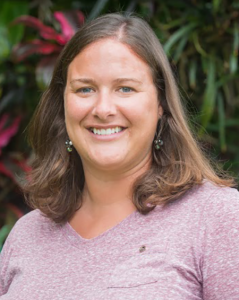
Kristen McFee, MA, LPCC
As Dr. Bruce Perry sat down to an interview with Oprah on 60 Minutes, we watched in anticipation as April marked two years of Pacific Quest being Site Certified in the Neurosequential Model of Therapeutics© (NMT). As Founder and Senior Fellow of the Child Trauma Academy (CTA). Bruce Perry, MD, PhD has expertise in child and adolescent psychiatry, neurodevelopment and traumatology. Dr. Perry is highly respected internationally and has done extensive neurobiological research on the effects of trauma in young people. He has led the Pacific Quest team into certification and maintenance of the NMT.
The Neurosequential Model© integrates neurodevelopment, developmental psychology, traumatology, sociology and other disciplines to understand individuals and the family. Pacific Quest uses this model to inform program design and individualize interventions. Initially, the focus of treatment is developing regulatory capacities to support neurodevelopment and to optimize learning. Next, students strengthen relational health and problem solving abilities.
Our trained clinicians use the NMT assessment process to collect developmental history, assess current functioning and inform clinical decision making. This approach guides treatment through a selection of interventions and program design.
To support brain development Pacific Quest utilizes a “bottom up” approach following Dr. Perry’s sequence of engagement: “Regulate, Relate and Reason.” This is the process of moving from the bottom of our brain (brainstem) up to the top (cortex). The sequence is very important. When a person is regulated or feeling emotionally and physically settled, they are more able to relate or feel connected. When a person is connected, they are more able to reason and engage in higher level executive functioning, which is critical for problem solving, prediction, perspective taking, etc.
At Pacific Quest, the garden lends itself to many opportunities to regulate. Regulation involves patterned, rhythmic, repetitive activity. This includes digging, weeding, breaking apart lava rock to make room for new gardens, building rock walls and clearing land. Regulation also includes daily exercise, expressive therapies such as art, quiet breathing meditations or cooking, chopping and stirring in the kitchen. Our integrative team works hard to build rapport and relationships with students so they can support and challenge them in their daily goals, living skills and group engagement. Through this regulatory and relationship support, students practice reasoning. Reasoning skills include being a camp leader and having to schedule an entire day and hold peers accountable to camp expectations. Students often create garden projects or legacy projects in which they have to plan, organize and problem solve allowing for a natural method to practice executive functioning. Students often process and reason in their therapeutic work as they reflect, come into awareness and work to shift from their old story (negative behavior) into their new story (healthy behavior) . But first, they have to tell their story.
In a 60 Minutes Overtime report, Oprah reflects on her experience of doing this story with Dr. Perry. She described the process as “Life Changing” for her and expressed a hope that this story of trauma informed care will be revolutionary. Dr. Perry and Oprah expressed the importance of connection and having a sense of value. Oprah emphasized the importance of sharing our story and asking the question, “What happened?” She explained, not only is this an important question for those who have experienced trauma, but it is the most important question we can ask of anyone.
To continue and share our work, Dr. Lorraine Freedle, Clinical Director and Travis Slagle, Horticultural Therapy Director will be presenting at the Neurosequential Model International Symposium in Banff, CA, June 13-15, 2018.
Mike McGee Receives Scholarship Award
Pacific Quest is proud to announce that Mike McGee, Family Program Manager, was awarded a National Association of Social Workers (NASW) Hawai`i scholarship! This scholarship supports social work students in good standing who are making a difference in their communities. The NASW Student Scholarships were first awarded in 2009 and aim to assist students in their education as they pursue careers in social work.
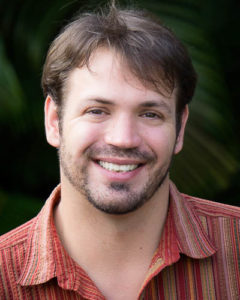
Mike McGee, Family Program Manager
Mike is currently pursuing his MSW at the University of Hawaii – Manoa, focusing on Mental and Behavioral Health. The program itself has a focus on indigenous methodologies and populations, which ties in with the Rites of Passage programming that Mike spearheads at Pacific Quest. Of the award, Mike comments, “ I am truly humbled to be chosen for this scholarship. Social work is such a unique field in its acknowledgement of the strength and capacities of all human beings. Throughout my years of experience at PQ, I see how these strength-based values are essential for the therapeutic process.” Mike will continue to apply his passion for the rich marriage of Rites of Passage and horticulture therapy in his current role of Family Program Manager. Mike hopes to further utilize his education and experience in pursuit of becoming a therapist at Pacific Quest.
This is Mike’s second scholarship award. Last year he received a scholarship from the Zachary Fochtman Foundation to carry on a legacy of a young man who aspired to become a Wilderness Therapist. The award is given annually to individuals that are currently in the wilderness therapy field. Dr. Lorraine Freedle, Clinical Director, comments, “Mike has a solid and unique skill set, which he continues to develop. He will carry Zachary’s legacy forward with integrity. We are proud to have him on our team.”
Mike will receive the award on March 16th in Honolulu – Congratulations, Mike!
Makahiki Celebration at Pacific Quest
By: Crystalee Mandaguit, Logistics Director
Every year Pacific Quest hosts a special day for students and employees that focuses on the Makahiki celebration. This is an important season in Hawaiian culture and honors the God Lono and celebrates the abundance of the aina (land). The Makahiki celebration spans approximately four lunar months – from around October or November until February or March.
This week we will be preparing a feast of turkey, pork and a vegetarian dish called laulau, which will be cooked in an imu (underground oven). Preparing food in an imu requires patience, as the cooking time is a slow overnight process. The night before, meats will be salted and laulaus will be prepared. While this preparation is underway, the imu will be stocked with wood and rocks. Once the wood is set on fire the rocks begin heating up as the fire burns for hours. While the fire is burning, banana trees are cut down, smashed and broken into smaller pieces and ti leaf plants will be harvested.

Preparing the imu with ti leaves
Once the rocks are extremely hot, they’re carefully placed to make a flat surface. The rocks are then covered with pieces of banana stump which contain water and will create lots of steam. Ti leaves are added on top of the stumps to help contain heat and moisture in addition to acting as a fire barrier so the food does not burn. Next, the pans of meat are placed on the ti leaves and then covered with more ti leaves. The last step includes placing wet sheets over the pit and finally covering it with a tarp. Once the tarp is over the food the edges of the tarp will be covered with dirt to trap in heat, moisture and steam. We leave the food in the imu overnight and come back the next day to uncover the imu and pull out the meats. The students are excited to see the covering and uncovering of the imu during this special preparation for the celebration.
The day of the feast each camp will be preparing a special part of the menu which will consist of stuffing, mashed potatoes, cranberries, gravy and salad. For dessert Kalo (taro) is harvested from the land and will be peeled, boiled, grated down, and mixed with honey and coconut milk. This mixture is then wrapped in Ti leaf and cooked. We will also prepare a special favorite – sweet potato haupia pie!
The Makahiki celebration is a special occasion where students and staff work side by side to create a meal for the entire group to enjoy. It’s a day filled with cultural lessons, including games, crafts, storytelling and chants. It’s a time when the ohana (family) gets to connect with each other and share gratitude for the abundance of the land, family, friendship and community.
PQ Featured on LA Talk Radio
Wilderness Therapy Hawaiian-Style
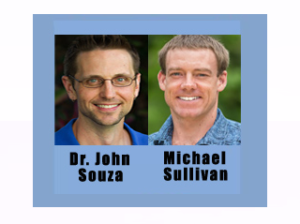 This week Dr. John Souza, Primary Therapist and Mike Sullivan, Alumni & Family Services Director were featured on LA Talk Radio “Answers For the Family“. During the program they shared their experiences with developing and implementing family therapy with young adults, often referred to as “emerging adults”, in an Outdoor Behavioral Healthcare setting. Additionally, Mike and John compared the common “myths” with the facts of emerging adulthood, while also providing insights into the importance of deepening family engagement with this population, as well as how nature-assisted therapy can promote both immediate and long-term improvements in family functioning.
Listen to the full radio show here:
https://www.latalkradio.com/sites/default/files/audio/Answers-100917.mp3
At Pacific Quest we fully utilize family participation in the therapeutic process. By involving the whole family in the healing process, we strive to improve communication, increase empathy and develop usable conflict resolution skills, which help deepen each individual’s understanding and trust in the greater process.
For more information about our Family Program visit:
https://pacificquest.org/our-programs/young-adults/family-involvement/
Hawai`i Hosts International Sandplay Therapy Congress
By: Dr. Lorraine Freedle, Clinical Director
Sandplay therapists and researchers from 24 countries gathered in Kailua-Kona this summer to explore the latest trends in Jungian Sandplay Therapy and to participate in the 24th Congress of the International Society for Sandplay Therapy (ISST).
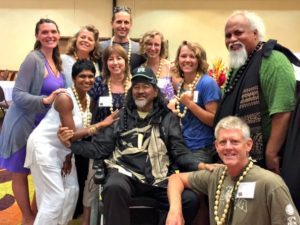 With support from my Pacific Quest ohana and the Hawai`i sandplay community, I served as the primary conference organizer and host. After two years of planning and anticipation, we were excited to realize that the conference surpassed all expectations!
Kahu Kauila Clark offered lessons in Hawaiian culture and ceremony, providing grounding each morning while eight PQ therapists participating in this advanced training opportunity spread the Spirit of Aloha with our visitors.
Research was presented on the effectiveness of Sandplay Therapy in treating individuals with anxiety, trauma, parental distress, and co-occurring disorders.
Neuroimaging data revealed how people access and reprocess memories through Sandplay and also provided evidence for neural synchronization between the therapist and the client during Sandplay Therapy.
I presented original research on the neuropsychology of Sandplay Therapy and the role of Sandplay in the treatment of adolescents and young adults with co-occurring trauma and substance use disorders.
Sandplay Therapy is offered to students at Pacific Quest. This nonverbal method has roots in Jungian psychology, play therapy, and eastern contemplative practices. Touching the sand, using symbols for self-expression, and entering a state of mindful presence activates multiple brain systems for healing. We have found that Sandplay Therapy complements our holistic approach and helps our students to express and resolve emotional and personality issues that may be inaccessible in verbal therapies alone.
On September 29, 2017 twelve therapists on our team will begin a year-long intensive and experiential training in Sandplay Therapy. This series not only allows me to provide STA/ISST-certified training at Pacific Quest; it also improves quality of care for our students and helps my team practice self-care and grow stronger together.
Dr. Lorraine Freedle, Pacific Quest’s Clinical Director is an international sandplay teacher (STA/ISST), serves on boards of the Sandplay Therapists of Hawai`i and the Sandplay Therapists of America and is the Research Editor for the Journal of Sandplay Therapy.
For more info, visit:
International Society for Sandplay Therapy (ISST) https://www.isst-society.com/
Sandplay Therapists of America (STA) https://www.sandplay.org/
Spreading Aloha to Victims of Hurricane Harvey
By: Kellyn Smythe, Admissions & Outreach Manager
This week Pacific Quest’s Executive Director Mark Agosto and I traveled to Houston to share the aloha spirit with victims of Hurricane Harvey. With support from the team at Academic Answers, needs like diapers, mattresses, food, refrigerators, clothing, bedding, and a full set of new kitchen appliances were identified and fulfilled. However, in a whirlwind of shopping, moving, organizing, and delivering, it became clear that the Aloha Spirit was already there. This community has rallied to support each other in the face of a devastating natural disaster. In the wake of gutted homes, flooded cars, and soggy photo-albums, a sea of smiles and busy hands are wringing out the dampness and putting lives back together. The task ahead is daunting, but the seeds of recovery are being sown in the gulf. PQ is honored to be a part of that effort and plant a few seeds or our own.
Pacific Quest Fall Tour 2017
By: Yvette Slagle, Communications Manager
Pacific Quest recently hosted a program tour for some of our referring professionals visiting from the mainland. It’s always a special treat to provide guests the opportunity to see first hand our beautiful gardens, meet our talented team and spend time on the island getting more familiar with what our program entails.
For some, this was a first time visit, while others had been to PQ in the past and were eager to see what has evolved and developed since their last visit. The first day of the tour kicked off with PQ’s Clinical Director, Dr. Lorraine Freedle, who introduced guests to our camp system model and the Neurosequential Model of Therapeutics and Sandplay Therapy.
Afterwards, our visitors were able to see the Adolescent camps as well as the Young Adult kuleana camp in Ka’u and share a healthy lunch while learning more about our Wellness Program and Integrative Psychiatry with Dr. Britta Zimmer, PQ’s Medical Director. The afternoon was spent participating in several student led activities, including making fresh garden salsa and learning about the 5 pillars of health, planting taro in the nursery, and learning more about Polynesian history.
The second day of the visit included a presentation with our Horticultural Therapy Director, Travis Slagle who shared insight on the importance of creating connection and meaning in the work in the garden and how this translates to other areas of a student’s life. Afterwards, we visited the young adult program at Reeds Bay in Hilo and met with a panel of young adult students who shared their experience at Pacific Quest.
Overall, it was a great experience and we are thankful to everyone who made it out to the Big Island as well as to our dedicated team who made this visit a success! Denise Westman, Outreach Director comments, “We appreciate everyone for taking the time to join us for this full two-day intensive visit. This is an incredible opportunity to gain a better understanding of our program and take a glimpse into the powerful work occurring at PQ as well as feel the authenticity that shines through our staff. Mahalo to all!’’
Severance and Intention – A Family Rite of Passage
By Mike Sullivan, Alumni & Family Services Director
I recently presented at the Rocky Mountain Regional NATSAP conference in Whitefish, Montana. Before I continue, I will have to profess that this was one of the most beautiful settings for a conference – situated in a lush mountain valley near the entrance to Glacier National Park. Further, the conference drew many attendees from therapeutic programs scattered throughout Northern Idaho and Montana, lending to an intimate and rich networking event. The seminars were stellar and I hope to return to this conference again next year.
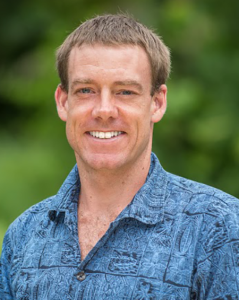
Mike Sullivan, MA, LMHC
The conference specifically targeted the theme of “addressing family systems work,” which especially piqued my interest due to my career focus in family therapy and parent involvement in the treatment process. I chose to present on experiential techniques for promoting a “rite of passage” experience for families, wherein, the family collaborates in deepening awareness into maladaptive patterns and ruts that they wish to sever from, and works together to set goals and intentions of positive characteristics and communication styles they want to work toward. I opened the presentation by defining aspects of a rite of passage. I then shared a case vignette, and highlighted a particular families’ process engaging in family therapy and an actual garden ceremony. The presentation concluded with the audience breaking into small groups where I assigned them to brainstorm experiential approaches that they utilize to engage families in ROP type experiences, and report back to the group at large with ideas generated. It ended up being a neat combination of networking and idea sharing across models, allowing each professional to walk away with applicable tools.
I have always been intrigued with the role a rite of passage can play on a family systems level. Outdoor therapy provides a seemingly paradoxical model. The identified patient (adolescent or young adult) is sent thousands of miles from home, isolated from access to family. The child’s parents describe the deterioration of communication, care, and respect within the family, and trust that the outdoor model will enhance family relationships. Some would question how effective this model can be; that sequestering a child in the woods can’t possibly address the complexity of the family system. So therein lay the paradox – how does the outdoor program address the family system, with members of the family spread out across the country?
Outdoor programs nationwide have invested significant resources in bolstering family treatment, recognizing that individual treatment gains quickly diminish if the primary caregivers aren’t growing alongside their child. Outdoor therapy, when applied correctly, leverages the geographical distance to first foster individual growth and then reunite the family in an intentional manner to facilitate growth needed to sustain therapeutic gains.
As the NATSAP outcome study gains momentum and the sample size continues to grow, quantitative data supports claims that family systems benefit from outdoor therapy. The Family Assessment Device, a trusted measure developed to identify problem areas in family functioning (Epstein, et. al, 1983), has demonstrated that families engaging in outdoor therapy make clinically significant progress. This is remarkable and leads to the question – what factors contribute to that success? Having worked in outdoor therapy for 10+ years, I have observed the power of engaging families in a rite of passage experience.
A traditional “rite of passage” entails a ceremony, clearly marking the transition from one life stage to another. Individuals identify “severance,” or an “old story” that they wish to leave behind. This includes limiting self-beliefs and maladaptive behaviors. The individual then focuses on cultivating the best version of themselves, their “new story,” or “intention.” The process of identifying “severance” and “intention” increases insight and allows for specific goals to emerge. Individual growth is critical, and this same phenomenon can be applied on a family level. Families collaborating in identifying maladaptive family patterns informs the process of family “severance,” and working together to name a shared vision of how the family strives to function creates a family “intention.”
Types of family “rite of passage” experiences may vary. Valuable approaches include exploring themes of severance and intention in a family therapy context, followed with a ceremony to mark the transition. The ceremony may be creating an art project, hiking a mountain, or overhauling an overgrown garden bed and planting seeds. Many approaches exist. The activity itself is not important per se, but the meaning assigned to it. The family should collaborate in identifying what the actual rite is, and assign meaning within a guided context. The process of guiding a family rite of passage is extremely powerful and programs would benefit from continued dialog about family interventions to use in the short duration of outdoor therapy journey.
Kuleana Therapist Role: another layer of clinical support
By: Sharon Findlay, Admissions & Communication Manager
Pacific Quest is excited to announce enhanced clinical services in our young adult program! Based on the need and intensity during the Kuleana Phase, PQ has added another therapist to support students through this critical stage of the program. Students will continue to meet with their primary therapist and now will also engage with the Kuleana Therapist, resulting in field-based therapy four days per week during the Kuleana phase to target individualized treatment goals.
What is the Kuleana Phase in the Young Adult Program?
The second of six phases, Kuleana, or personal responsibility, is the foundation of the Young Adult Program at Pacific Quest. Most of the core themes and expectations are identified in this phase and then further developed and sustained throughout treatment. During Kuleana, young adults begin sharing their “story” while simultaneously taking on the responsibilities which help to maintain a functioning community. Kuleana is about exploring the interplay between who a person is, who he/she wants to become, and what he/she is willing to do to get there. Young adults in this phase are in a separate location from the Reeds Bay facility where they are immersed in land, wellness, and other vital aspects of Pacific Quest’s Rite of Passage model.
This immersion model of therapy is an exciting development for this important phase in our program! The Kuleana Therapist will coordinate directly with primary therapist and the field team, and will function as a field-based extension of the primary therapist while students are in Kuleana. Alex Stitt has been selected to pioneer this role.
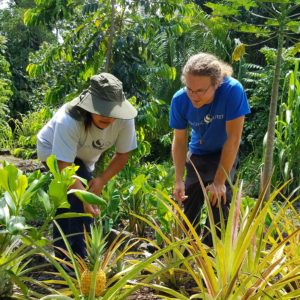
“By having someone there more frequently to manage the steps incrementally, we’ll be able to take full advantage of this specific phase of the program,” shares Dr. Lorraine Freedle, Clinical Director. “Alex brings not only clinical expertise but field expertise from his extensive experience over the past three years at Pacific Quest. His keen understanding of the identity level work and how it ties into the land work makes him an ideal Kuleana Therapist.”
Alex Stitt, Kuleana Therapist, adds, “Given that Kuleana is about personal responsibility, the phase is spent doing a lot of depth work around one’s personal values, what one is accountable for, and their locus control and responsibility. Progressively, our students begin to take ownership of their life.”
With this added layer of clinical support, young adults will more effectively navigate Kuleana and develop a solid foundation for their treatment at Pacific Quest.
Pacific Quest to Donate a Portion of Profits to PQ Foundation
We are pleased to announce that Pacific Quest will now be donating a minimum of 1% of our profits annually to the Pacific Quest Foundation, a 501(c)(3) public charity whose mission is to support the Hawaii County community and its existing non-profit organizations.
Pacific Quest was founded in 2004 and over the years we have developed relationships with more than 60 different local non-profit organizations through donations from our company, its employees and its clients. With the generous support and donations from alumni, families, community members and businesses, we are excited to continue our tradition of stewardship within the Big Island community.
Martha Bouchard, PQ Foundation Director, reflected on this decision to donate profits to the foundation, “It is essential to our mission to both be sustainable and in right relationship with the community in which we work and in which Pacific Quest has built such life changing programming for students. This has to go beyond the community service that our staff and students do. For us, being able to increase our capacity to give back to the island by helping to fund organizations that are the heart and soul of our local communities is a direct reflection of that commitment.” Donations to the foundation help to fund the organizations that sustain our island’s diverse communities, which benefit both residents and visitors alike.
Pacific Quest Foundation will begin accepting applications in Fall 2017. Requests will be considered from Hawaii Island based non-profit organizations in four general categories, including:
- community or public service
- environmental issues
- health and education
- youth and senior citizens
For more information on how to help support the Pacific Quest Foundation, please visit:
Dr. Freedle Published in Routledge International Handbook of Sandplay Therapy
Dr. Lorraine Freedle, Clinical Director at Pacific Quest Wilderness Program, was asked to contribute her original work to The Routledge International Handbook of Sandplay Therapy. Dr. Freedle’s chapter, “Healing Trauma through Sandplay Therapy: A Neuropsychological Perspective” explores the underlying mechanisms of Jungian sandplay therapy that promote neural integration and wholeness of personality. It also chronicles the sandplay journey of Liv, a teenager who came to Dr. Freedle to heal from traumatic grief following the sudden and violent deaths of loved ones.
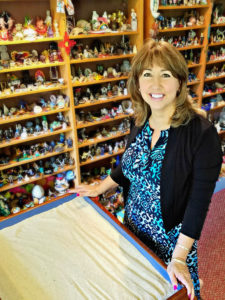
Dr. Lorraine Freedle
“This chapter is not just a brain-based theory, it’s anchored in depth psychology. And so as we explore how sandplay helps traumatized people safely access and reprocess their pain, we don’t lose the importance of connection to the deeper Self,” Dr. Freedle shared.
As a board certified Pediatric and School Neuropsychologist and international Sandplay Teacher (STA/ISST) Dr. Freedle has practiced and lectured at the crossroads of neuropsychology and sandplay therapy for over 25 years. The contents for the chapter emerged over a number of years building upon her prior presentations and publications.
When asked about what makes this chapter unique, Dr. Freedle shares “The chapter makes the neuropsychology of therapeutic change accessible and explains how sandplay works. This is very important for people and programs who would like to utilize sandplay to effect meaningful change.”
This text will be used worldwide in universities to teach sandplay therapy. Pacific Quest congratulates Dr. Freedle on this prestigious honor and accomplishment!
—
For more information on The Routledge International Handbook of Sandplay Therapy as well as information on how to purchase, please visit: https://www.routledge.com/The-Routledge-International-Handbook-of-Sandplay-Therapy/Turner/p/book/9781138101692
For more information on Pacific Quest Wilderness Therapy Programs, please visit: www.pacificquest.org
Pacific Quest Presents at IECA Denver
By: Teresa Bertoncin, LPCC, LMFT
Two Pacific Quest team members recently co-presented at the 2017 Independent Educational Consultant Association conference in Denver. Teresa Bertoncin, Primary Therapist, and Dr. Robert Voloshin, Integrative Psychiatrist, presented “Breaking through Trauma: EMDR in Outdoor Behavioral Health”. It began by engaging the audience in an experiential sensory integration resourcing exercise using elements of sight, sound and smell which are abundant in the natural environment at PQ. This instillation of a calming effect, with dual attention stimuli offered a brief example of the immediate impact of EMDR (Eye Movement Desensitization and Reprocessing) and how resourcing tools can be utilized to self-regulate.
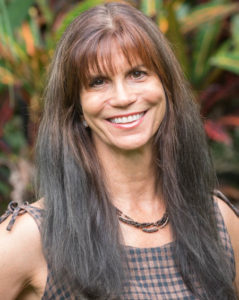
Teresa Bertoncin, Primary Therapist
Teresa shared that EMDR psychotherapy is recommended as an evidence-based effective treatment for trauma by the American Psychiatric Association, The Department of Defense, and the World Health Organization, and that it interfaces comfortably with all other psychotherapies. At Pacific Quest, EMDR has proven to be tremendously helpful for multiple adverse life experiences, including anxiety, depression, eating disorders, and addictions. Teresa explained how maladaptive “undigested” memories and the negative beliefs we maintain about ourselves as a result of those incidents, keep us ‘stuck.’ She comments, “Our brain is a very natural healing mechanism, and just like the rest of our body it wants to heal. EMDR can help us go back to when a root was laid down for a negative belief system, and replace that negative belief system with a positive one.”
Dr. Voloshin integrated the relevance of trauma and memory, and the impact of adverse childhood experiences (ACE) and how these untreated experiences directly correlate to a decline in social, emotional cognitive impairment, later life health and well-being; particularly depression and substance abuse, disease, and early death.
Dr. Voloshin went on to explain the neurobiology of the formation of memory and how our experiences shape us, as well as how the process of EMDR reshapes and creates adaptive newly ‘digested’ memories.
“When we are able to ‘look back’ at a traumatic memory from an empowered stance, the recollection can be updated as though this agency had been available and fully functional at the time of the original trauma. This newly reconsolidated experience then becomes the new updated memory where the empowered present somatic experience profoundly alters the past memory. These emerging resources become the bridging of past and present, the remembered present. The memory updating in no way takes away from the truth that a particular traumatizing event really did happen, that it caused harm, and that grief and outrage may be significant components to restoring dignity and a deep honoring of self. From this present-based platform of self compassion, the memories can gradually be softened, reshaped, and rewoven into the fabric of one’s identity.”
Several attendees remarked about their interest in the psychotherapeutic and neurobiological aspects of the presentation, and how it reflects the unique integrative approach that Pacific Quest embodies, as well as the mind-body-nature connection in the importance of overall healing.
Community Service at Punalu’u Pond
By: Nikki Robinson, Adolescent Program Master Guide
A group of Pacific Quest adolescent students recently joined the community at Punalu’u Black Sand Beach to participate in removing invasive plant species. The pond at Punalu’u is a unique and rare ecosystem – an anchialine pool, it is connected to the ocean by an underground fissure, consists of brackish water, and the water level changes with the tides. Of all the anchialine pools on the planet, more than half of them can be found on the island of Hawai’i! These ponds are home to a plethora of endemic plants and animals. Water hyacinth, an introduced and invasive species, thrives in this pond, crowding out native plants and animals, blocks sunlight into the pond, acts as a breeding ground for mosquitoes, and threatens the existence of many species that only exist in this rare ecosystem. Our job, pulling water hyacinth out of the pond, ensures the survival of endemic species to the island.
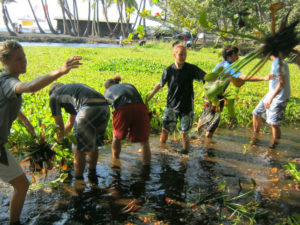
Removing water hyacinth from pond
Upon our arrival to the beach park, most students were eager to jump into the murky pond and work together with members of the community to eradicate the water hyacinth from an area of the pond. As the rest of the group eased into the pond, students broke into groups. Some students pushed clumps of hyacinth in towards the shore, while others threw the plants onto and away from the shore. The students spent time pausing to investigate the life forms in the pond. They discovered crayfish, tadpoles ducks, and the endangered nene. As they cleared the pond, they shared stories with community members; some of whom have lived in the region all of their lives. After some time working, the students were satisfied with the large area of cleared pond and ready to eat lunch.
Before lunch, we all jumped into the ocean to clean off. The cool water felt great after all the hard work we had done. The group circled up, had a round of thanks, and ate lunch over fun conversation topics. We enjoyed lunch and a view of palm trees, black sand, sea turtles, and beautiful blue waves. The weather was perfect for a day at the beach. After digesting for a while, the group decided to go for a refreshing swim in the ocean. Some choose to swim while others chose to float and chat.
Punalu’u was once a major residence for ancient Hawaiians. Hawaiians used this land for fishing and as a major source of fresh water. Punalu’u means “diving spring”, and sits on top of thousands of tons of fresh water flowing underground. During periods of drought, ancient Hawaiians would dive to the bottom of the ocean and fill “ipu” (gourds) with fresh water. Punalu’u is also home to endangered hawksbill sea turtles known as Honu’ea. Tourists come from far away to admire the fascinating creatures, but are warned: “do not touch or ride the turtles”. Students watched as turtles basked in the sun. They were awed by the turtles’ size and gentle nature, but made sure to give the turtles plenty of space.
After taking a nice swim, the students took some time to relax on the beach. The group played an organized bonding game and shared stories over the experience afterwards while loading up the van. We then headed back to Pacific Quest with about an hour to relax before it was time to hop into the gardens and kitchen to prepare dinner.
Horticultural Therapy Training at PQ
By: Dara Downs, Alumni and Family Services Liaison
Pacific Quest recently offered a Horticultural Therapy training for all staff members at our Young Adult campus at Reeds Bay. This training was a unique experience where field managers came alongside field guides, and logistics staff worked side by side with nurses. Therapists and administrative staff traded their computers and phones for a trowel and some compost. In order to participate everyone left their job titles in the parking lot and put on their close toed shoes, long pants, and work gloves. They all knew, it was time to work in the garden!
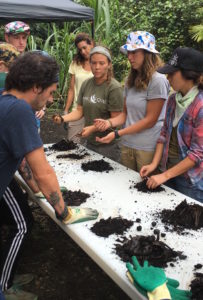
Back to Basics Gardening Stations
One of the main goals of this training was to assist all employees in developing a relationship with the garden, and increase individual’s confidence on the land. In addition, the training was designed to help staff members understand the role of Horticultural Therapy (HT) and the Neurosequential Model of Therapeutics® (NMT) at PQ. In doing so, our Academic Coordinator was able to weave in parts of the HT curriculum into the training events to help set guides up with applicable lessons to use directly in the field.
The day was filled with numerous hands on activities and as every farmer knows, the best way to learn something is to get your hands dirty! The group started off with a scavenger hunt in the ethnobotanical gardens at Reeds Bay called “The Village”. These gardens focus on growing traditional Hawaiian plants which are referred to as canoe plants. Everyone used the clues in the scavenger hunt to find specific plants. Upon finding each plant, participants followed a lesson from the curriculum based off the acronym CARE (Commitment, Awareness, Relationship/Responsibility, Effort). They were able to practice caring for these sacred plants while also racing the clock!
After this competitive challenge, everyone engaged in “Back to Basics Gardening Stations” around campus. These stations focused on educating and providing hands on experiences in the following topics:
- Compost and Soil Health
- Tree Health and Bed Maintenance
- Nursery and Transplanting
- Square Foot Gardening
Presenters at each of these stations role modeled the three “R’s” of NMT: Regulate, Relate, and Reason. Each station started off with a breathing exercise, or something tactile and rhythmic, before jumping into relating to the environment, reasoning and teaching a lesson.
Following this, the group enjoyed lunch, and afterwards set up to process what they gained from the morning activities. PQ’s Horticultural Therapy Director, Travis Slagle, MA, led the group discussion on how to use these activities to engage students in meaningful conversations. He touched upon practicing these gardening techniques while developing
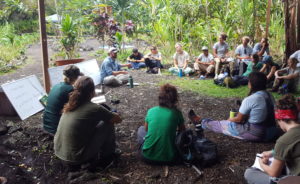
Travis Slagle leading group lesson
relationships with students who may be challenging or disengaged. He comments, “It is essential that we are able to successfully translate skills of intuition and observation from a gardening experience to our daily lives.” Staff members began sharing their stories and openly discussing techniques and experiences of successes they’ve had on the land. Participants shared ideas and methods that worked and helped to reach a wide variety of students.
After this open forum discussion, everyone broke into their groups again for afternoon stations which were focused on specific activities for assisting our students in the NMT model (regulate, relate and reason). The groups included, cordage making, weeding/bilateral movement, planting play, and wellness. These groups introduced themes of music and play into the garden, while also demonstrating tools like cordage making where you can bring the garden to a student. The wellness department also led a group that focused on EFT (a breathing/meditation technique), the bucket theory, and connecting plant health with gut health.
To end the day, everyone was invited to a garden party where music was played and pineapple paradise was saved from weeds and invasive species like african tulip trees. Amanda Moreno, PQ Therapist, mentioned that, “It was a gift to spend a day in the garden connecting with my peers and collaborating with my colleagues. I learned a lot about gardening and can’t wait to use it with the students.” An Adolescent Program Field Supervisor also commented, “One of my key takeaways from this training was the value of regulate, relate, and reason. I learned so many ways to engage in each of these in the field.”
PQ Offers First Annual Free CE Workshop for Hilo Community
By: Kristen Sutton, Therapist, & Lauren Meyer, Field Coordinator
Over 80 people attended a recent continuing education (CE) event offered by Pacific Quest (PQ). Community service and the ability to “give back” are essential cornerstones of the program, therefore, PQ offered this CE event free of charge to Big Island mental health professionals. Attendees included psychologists, play/sandplay therapists, school counselors, social workers and other mental health professionals who had the opportunity to earn three continuing education credits through APA and NASW- Hawai`i Chapter.
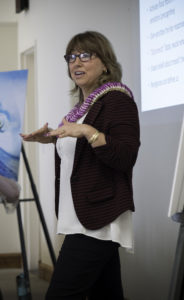
Dr. Freedle presenting at CE Event in Hilo
Dr. Lorraine Freedle, PQ’s Clinical Director, presented “After the Towers Fell: Healing Trauma with Sandplay Therapy, A Neuropsychological Perspective”. Dr. Freedle shared her expertise and passion for both Sandplay Therapy and the Neurosequential Model of Therapeutics® (NMT). The presentation focused on the case study of Jimmy (pseudonym), who as a young boy lost his father in the 9/11 terrorist attacks on the World Trade Center in New York City. At age 22, Jimmy was overwhelmed with OCD, alcohol abuse, guilt and shame and was unable to meet the demands of college. As a result, he sought treatment at Pacific Quest where he engaged in sandplay therapy as part of a comprehensive, holistic treatment approach.
Workshop participants explored a neuropsychological perspective on how sandplay heals trauma and took a journey through Jimmy’s treatment process. They walked away with an understanding of the Neurosequential Model of Therapeutics and a better awareness of the Sustainable Growth model utilized at Pacific Quest. The attendees were also touched by Jimmy’s story and created artwork to express how his story connected with their own experiences.
Lauren Meyer, PQ Field Coordinator, who was in attendance, comments, “Dr. Freedle took her audience through a journey of images Jimmy created in the sand. There were tears throughout the room, as well as in my own eyes, when we saw an image of ‘that fateful day’ through the eyes of an eight year old child.” An intimate look at how Jimmy, as a young adult, accessed healing resources through meditation, horticultural activities and sandplay therapy followed.
“Multiple attendees spoke about feeling moved and inspired by the presentation and Dr. Freedle’s work,” noted Kristen Sutton, PQ Therapist. “One therapist in private practice shared her gratitude for being able to gather together with other professionals to discuss her passion – Sandplay. I left feeling grateful and privileged to do the work that we do.”
Pacific Quest Video Series: Travis Slagle On Horticulture Therapy
“What I find in horticultural therapy that I couldn’t find when I worked in wilderness therapy, adventure therapy and even ropes courses, was the sense of purpose: A sense of purpose and adventure in creating a more sustainable life.” -Travis Slagle, Horticulture Therapy Director
What is Horticulture Therapy
Horticulture has been used as a therapeutic discipline since ancient times. As far back as 2000 BC in Mesopotamia horticulture was used to calm the senses and around 500 BC, the Persians began creating gardens to “please all of the senses.”
“Horticultural Therapy” is based on an ancient practice and has a relatively new title that combines horticulture and rehabilitation disciplines. It employs plants and gardening activities in therapeutic and rehabilitation activities to improve human wellness, showing tremendous positive results for troubled teens and young adults. However, despite its long use in the fields of physical therapy, psychiatric occupational and recreational rehabilitation, awareness about the efficacy of horticulture therapy is still limited.
Since human beings actually evolved from and in a natural environment, an intrinsic physiologic and psychological positive reaction to nature has developed that is involved in maintaining our homeostasis. As Travis says in his video, “One of the most challenging things in our world today is (more…)
Successful Collaboration with Sky’s the Limit Fund!
By: Mike Sullivan, Alumni and Family Services Director
Happy new year! We are diving into another great year of collaboration with Sky’s the Limit Fund, a non-profit organization dedicated to transforming the lives of at-risk youth by providing grants, support and hope through outdoor therapy programs and beyond. Sky’s the Limit Fund has provided financial assistance to a large number of families over the years, and as a partner program, we have matched them dollar for dollar. We enjoy giving back and catalyzing life changing experiences for families who wouldn’t otherwise be able to access the amazing benefits of outdoor therapy.
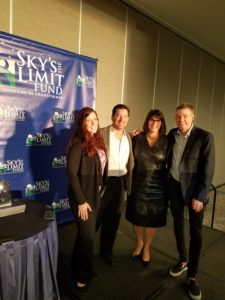
Mike Sullivan and colleagues at STLF event
2016 was a powerful year. As a Sky’s the Limit Fund grant recipient said: “Outdoor therapy saved my son’s life. I don’t know where we would be without Sky’s the Limit Fund and Pacific Quest.” That young man arrived at Pacific Quest in a depressed and anxious state, and emerged with confidence and charisma. The combination of evidence based therapy, whole person wellness, and this particular young man’s decision to grab life by the horns were all pivotal in his growth. This is not an isolated story. Having attended several STLF fundraisers throughout 2016, I was able to witness grant recipients share their success stories in front of large crowds. These are tear jerking personal accounts of suffering and healing. Thank you to Sky’s the Limit for making such things possible!
Looking Ahead
2017 is shaping up to be another great year. Nancy Moore has completely transitioned into her new role as Executive Director, allowing STLF founder Rochelle Bochner to step away and focus her energy on her grandchildren. Pacific Quest is excited to host Nancy and an STLF Chairperson on campus for a site tour later this spring, continuing to showcase the unique horticultural and wellness platform that makes PQ so powerfully therapeutic.
Winter Solstice Celebration at PQ!
By: Clementine Wilson, Adolescent Field Manager
Pacific Quest hosted our annual Winter Solstice celebration for our students and employees last month! We were able to hold it on the actual date of the Solstice – marking the shortest day of the year.
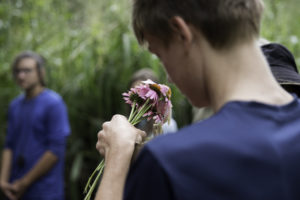
Students preparing for the Winter Solstice celebration
““Solstice” comes from two Latin words: sol meaning “sun” and sistere meaning “to stand still” because it appeared as though the sun and moon had stopped moving across the sky. This longest night of the year, followed by a renewal of the sun, demonstrates the cyclical order of the cosmos. In this way, celebrating the solstice can be a beautiful remembrance that our lives are part of a larger order, always changing, always renewing.”
The solstice holiday focuses on the natural cycles of life, connection to the land, and the winter harvest. Program Guides led students through themed land lessons and activities in camp leading up to the meal. The students choreographed and performed a “Mele Kalikimaka” hula dance, a live performance of the Lorax, and a guided meditation walk over to the imu where the meal was prepared. They ended the activities with a gratitude circle before sitting down to eat together.
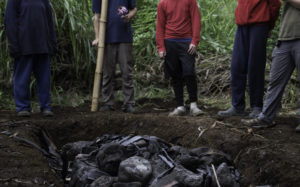
Preparing the imu, traditional underground oven
Sharing food, an important part of any celebration, is particularly meaningful during the solstice, as it represents faith in the return of the sun and the harvest. We prepared pork, turkey and tofu in our imu, a traditional Hawaiian underground oven. To make our imu, we dug a hole in the ground and placed rocks and wood inside. Then a fire was started, creating a bed of coals and heating up the rocks. Next, banana leaves and other plant materials were placed in the pit, which created steam. The foods to be cooked were placed inside, and more plant materials got piled on top, followed by water soaked burlap sacks. Finally, everything was covered and weighted down with rocks and dirt to prevent steam from escaping. The food steamed in the imu for hours, until it was moist and tender. In addition, we used much of our own PQ harvest (especially our kabocha squash) as part of this meal. We enjoyed a delicious feast and it was so beautiful and inspiring to see the students and guides take time to prepare for this celebration. Throughout the day I witnessed a wonderful balance of laughter and reverence!
Makahiki Celebrations at Pacific Quest
By: Janna Pate, Academic Coordinator
Makahiki is a holiday season that marks the end and new beginning of the yearly farming cycle in Hawaii. It is similar in timing and purpose to Thanksgiving, Oktoberfest, and other harvest celebrations. At Pacific Quest, we celebrate Makahiki throughout the month of November.
Our celebrations culminate in a day of cultural lessons, including storytelling, games, crafts, chants, and dancing. At the end of it all, there is a Makahiki feast that we cook in a traditional Hawaiian imu, or underground oven.
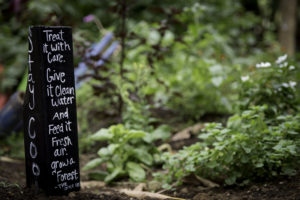
Hand painted garden sign
During the days that lead up to our culminating celebration, students at Pacific Quest turn their attentions to harvesting fresh fruits, vegetables, and herbs from the garden. Some of this bounty goes toward our meal preparations for the Pacific Quest community, and some is donated to the local farmer’s market. During Makahiki season, Pacific Quest students make a special effort to donate to the farmer’s market in abundance. Our donations may include handmade bundles of fresh herbs, greens, or flowers; seedlings and shoots from our nursery; hand-painted gourds and garden signs; hand-picked avocados and citrus fruits from our fruiting trees; a wide-array of organic vegetables; and more.
Traditionally, once tributes like these were collected from around the island, communities gathered to celebrate Makahiki with feasts and games. Both men and women and everyone from chiefs to commoners competed. Pacific Quest students celebrate in a similar way. Throughout the month of November, we teach our students traditional Makahiki games. In ancient Hawaii, the main purpose of these games was to train warriors. As such, Makahiki games tend to focus on building strength, stamina, and agility. We focus on building those skills with our students as well by facilitating traditional Hawaiian games like ikaika (lifting of stones), moa pahe’e (sliding of wooden darts or, at Pacific Quest, lengths of bamboo), and foot races.
In addition to physical challenges, we also teach Makahiki games that challenge the mind. For example, we teach konane, or Hawaiian checkers. Traditionally, konane is played on a board with 64 playing pieces made of black lava stone and white coral. At Pacific Quest, we use black lava stone and red cinder from the paths of our gardens.
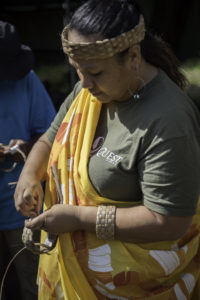
Traditional Hawaiian craft-making, Lauhala weaving
We teach traditional Hawaiian craft-making as well. One such practice is lauhala weaving, or weaving with the leaves of the hala tree. Lauhala weaving has been a part of Hawaiian culture for thousands of years. In ancient times, weavers transformed hala leaves into everything from floor mats to pillows and sails. At Pacific Quest, we teach our students how to craft lauhala bracelets and headbands using hala leaves from the trees in our camps.
We are also lucky enough to have staff who are trained in hula dancing and traditional Hawaiian chanting and who graciously bring those lessons to our students with permission and well-wishes from their own kumus, or teachers. Hula and chanting go hand-in-hand, and both were a major part of Makahiki celebrations in ancient Hawaii, especially in the creation of ceremonial spaces. We use them to create ceremonial spaces at Pacific Quest as well.
In ancient Hawaii, it was a processional ceremony that marked the beginning of the Makahiki season. The chief carried a staff topped by a small carved figure and a crossbar supporting a white sheet of kapa, or cloth, around the island in a clockwise direction. Stopping at the boundary of each ahupua’a, or land division, the chief collected gifts and offerings from a stone ahu, or altar.
Hawaiian staff members from across multiple departments at Pacific Quest came together to create a replica of the traditional staff for students in the adolescent program to observe. This replica stood in the dining area where students brought offerings of food from their camps for the community to share. Some camps made organic salads and homemade dressings while others made honey-glazed carrots, stuffing, or mashed potatoes and gravy.
This year, we cooked kalua turkey and pork in the imu at Pacific Quest. For vegetarians, we also prepared a dish called tofu laulau, or tofu wrapped in taro leaf. And of course, there were also desserts: sweet potato haupia pie and kulolo, a sweet taro dish.
Here is a recipe that our logistics team uses for kulolo:
Kulolo (PQ Style)
Ingredients:
4 cups taro
12 oz honey
1 cup coco milk
8 pc ti leaf
Directions:
Grate taro until you have 4 cups.
Put taro in a ziploc bag. Mix in honey and coconut milk.
Line pan with ti leaf, leaving half of the leaf sticking out from the pan.
Add mixture to the pan on top of the ti leaf and flatten out.
Wrap the remainder of the leaf over the flattened kulolo mixture.
Cover with aluminum foil.
Bake in oven at 400 degrees for 1.5 hours.
Remove foil from tray and cook for another 30 minutes.
Yield 1 half pan
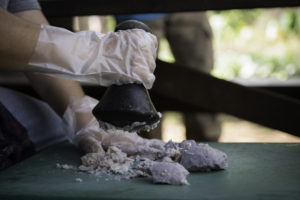
Poi pounding
In addition to this taro-based dessert dish, students in the adolescent program had the opportunity to experience poi, a taro paste that was the main staple of the ancient Hawaiian diet. The Hawaiian cultural liaison at Pacific Quest provided the community with traditional stone poi pounders, and students learned to pound the pa’i ‘ai, or freshly cooked taro, with short, quick strokes and little dabs of water to keep the poi paste moist. This can be a bit of a sticky process, but also a satisfying one, even for students who remain a bit skeptical about the flavor of poi. It’s hard not to enjoy this type of “work.”
Once all of the cultural activities conclude and the food is prepared, therapists at Pacific Quest set the tone for the culminating feast by holding a therapeutic group in each camp on gratitude. Gratitude is culturally significant to the Makahiki season, and, as our therapists teach, it is of great personal significance as well. Gratitude has been shown to improve physical and psychological health, promote healthy relationships, enhance empathy, reduce aggression, promote better sleep, improve self-esteem, and increase mental strength. Whatever our struggles in life, a daily dose of gratitude is surely a part of the cure.
And so, after students bring forward their food offerings and chant the Oli Mahalo, a Hawaiian gratitude chant, the feast at Pacific Quest begins, carrying our Makahiki celebrations to a joyful close. Traditionally, Makahiki begins and ends with the timing of the Makali’i, or Pleiades, in the night sky. At Pacific Quest, students can observe the Makali’i during their nightly meditations, though perhaps it is during the afternoon Makahiki feast when they have the brightest constellation of stars in their eyes.
PQ Presents at IECA Conference in New Orleans
By: Yvette Slagle, Communications Manager
Pacific Quest’s Clinical Director, Dr. Lorraine Freedle and Medical Director, Dr. Britta Zimmer recently co-presented at the 2016 Independent Educational Consultant Association conference in New Orleans. Their presentation “The Gut Brain Connection: Emerging Trends in Integrative Health” began with the simple question, “What comes to mind when you hear the term ‘gut feeling’?” Audience members commented “intuition,” “instinct,” and “trust”. With more than 90 % of the body’s serotonin being created in the digestive tract, this collaborative presentation highlighted how “gut feelings” are real, and how a “second brain” consisting of millions of neural networks and micro bacteria work together to send signals from the gut to the brain. Research suggests an imbalance in the gastrointestinal tract can lead to an imbalance in the brain resulting in a myriad of issues ranging from anxiety, depression, mood dysregulation and autoimmune disease.
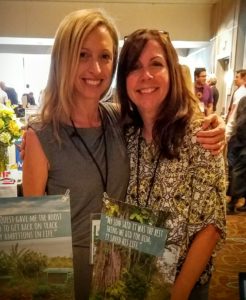
Dr. Britta Zimmer and Denise Westman at IECA New Orleans
The session focused on the importance of treating the whole person in an informed and targeted manner to maximize the effectiveness of treatment. Dr. Zimmer shared current research that suggests inflammation in the gut directly correlates to inflammation in the brain, and the ways in which gut microbiota affects the state of mind. She highlighted the importance of consuming probiotics found in yogurt and fermented foods. In addition, she discussed inflammatory substances – processed foods, environmental toxins and emotional stress and the importance of decreasing inflammation in the body through sleep hygiene, physical activity, deep breathing and stress resiliency.
Following the presentation, Pacific Quest’s Outreach Director, Denise Westman, commented, “I’m always so energized after hearing my colleagues engaged and excited to learn more about this important work we are doing with our students. We are so fortunate to have Lorraine and Britta collaborating on such a timely subject and working closely together to positively impact our students.”
To learn more about Pacific Quest and our integrative, whole person approach, please visit the following links:
Announcing Full Time Integrative Psychiatrist: Robert Voloshin, DO
Pacific Quest is pleased to announce a new member of the Clinical and Wellness teams: Dr. Robert Voloshin, Integrative Psychiatrist. Dr. Robert joins Dr. Shelly Ham and will be on-site full time. We are very excited to add another Integrative Psychiatrist to our team!
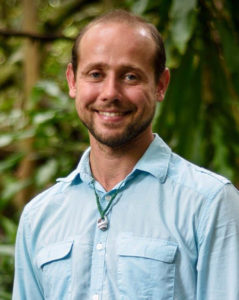
Robert Voloshin, DO
Dr. Robert received his BS from UCSD in Biology where he graduated Cum Laude and Phi Beta Kappa. He went on to complete medical school at Touro College of Osteopathic Medicine in the San Francisco Bay Area, choosing osteopathic medical school because of its orientation towards integrative care and healing. In medical school Dr. Voloshin served as president of the Integrative Medicine Club. Dr. Voloshin went on to complete his Psychiatry Residency at the University of New Mexico as well as an additional year of fellowship training in Child and Adolescent Psychiatry. During his residency and fellowship Dr. Voloshin was involved in cutting edge addictions research. He continued to pursue his passion for integrative psychiatry during his training through research, journal clubs, and conferences.
In addition to Dr. Voloshin’s formal psychiatry training, he has pursued external psychotherapy training in Somatic Experiencing and Hakomi. Both therapies utilize mindfulness and are somatically oriented. Some of Dr. Voloshin’s primary influences in the field of Child and Adolescent Psychiatry are Daniel Siegel MD and Bruce Perry MD, PhD. Dr. Voloshin places a strong emphasis on neuroscience in his work with young people. The Neurosequential Model of Therapeutics which Pacific Quest utilizes and Interpersonal Neurobiology, the study of how our primary relationships affect the development of our brains and nervous systems, has a significant impact on his practice. His multifaceted approach to Psychiatry with an emphasis on family systems theory, developmental psychology, psychopharmacology, nutrition, mind-body approaches, and reconnection to the earth and community makes Pacific Quest an exquisite place for Dr. Voloshin to practice.
In his spare time Robert enjoys playing music, surfing, hiking, reading, travel, yoga, and meditation.
Welcome to the PQ Ohana!
Pacific Quest Receives AHTA Therapeutic Garden Design Award
By: Yvette Slagle, Communications Manager
Pacific Quest’s Horticultural Therapy Director Travis Slagle M.A. recently accepted the national award in Therapeutic Garden Design from the American Horticultural Therapy Association (AHTA). The nomination process included an outpouring of inspiring testimonials from families, alumni, educational consultants, and mental health professionals from across the country. Travis comments, “The greatest part of this award is knowing that our gardens are saving lives, re-invigorating families, and changing the face of wilderness therapy. Receiving this award is a humbling reminder that hard work pays off, and why healing gardens belong at the center of our communities as a reminder of our own resilience and of life’s endless possibilities.”
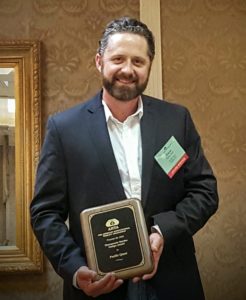
Travis accepting award at AHTA Conference in St. Louis
Pacific Quest’s commitment to stewardship and their neurosequential approach to garden design and program structure makes them well deserving of this recognition. Here is one of the many testimonials that the AHTA committee received during the award nomination:
“Our daughter was lost, struggling, and unhappy. She reconnected to nature and her healthy self through Pacific Quest’s horticultural therapy program. Simple and hard work in nature helped her strip away unhealthy behaviors and unproductive patterns, and empowered her to understand how good process leads to good outcomes. In the garden, she learned how to work with others, delay gratification, tend weeds (psychological and natural), embrace discomfort, and envision a positive future. She developed resilience and sense of self by getting a little dirty and doing a little hard work. Every day, PQ’s guides and therapists helped her see how her work was helping her heal. We will be forever grateful to PQ and that patch of dirt for helping our daughter get past a dark period in her life.”
Upon his return from the AHTA conference and award ceremony, Travis shared, “Looking back to when PQ first began, we spent most our days hauling rocks and burning piles of dead grass to clear the jungle to make space for a visionary garden that would one day become the epicenter of our values as an organization. As we cleared the land, one by one we planted fruit trees and built garden beds that have become a beacon of hope and inspiration for so many people. I feel honored to be a part of it!”
Pacific Quest expands capacity to provide EMDR
By: Teresa Bertoncin, LPCC, LMFT, Primary Therapist
Pacific Quest is excited to announce that a cohort of 13 of its clinical staff recently attended EMDR training with Dr. Roger Solomon, a Senior Faculty Member of the EMDR (Eye Movement Desensitization and Reprocessing) Institute, as they work to join PQ therapists already certified in the practice of EMDR.
Trauma is the body and mind’s response to unprocessed disturbing life events. Unresolved trauma is at the core of many psychological disorders—some more obvious than others, for example Post Traumatic Stress Disorder (PTSD). Yet, trauma is often also at the root of many anxieties, phobias, panic attacks, eating disorders, pain, hyper-vigilance, interrupted sleep, self esteem issues and addictions—many of the symptoms we see here at PQ. Trauma symptoms are often difficult to resolve, particularly with adolescents or young adults, because it may not be obvious that the experienced symptoms are related to trauma.
Teresa Bertoncin, LPCC, LMFT
Eye Movement Desensitization and Reprocessing (EMDR) is a well-established approach to psychotherapy and is an evidence-based treatment proven to be effective in trauma resolution. EMDR therapy is very effective at calming and healing in a short span of time. By focusing on a thought associated with traumatic memories it is very specific and direct. It evokes and integrates information on three levels—cognitive, emotional and somatic—very often targeting a negative cognition or a negative self-belief; I’m unlovable, I’m ugly, I’m unsafe, etc. By tracking physical sensations and feelings in the body, and using eye movements and bilateral stimulations, the negative beliefs become dislodged, replaced with positive beliefs about oneself, while using this positive experience to support a future template of adaptive wholeness.
EMDR has proven to be particularly effective, when working with students in a contained and structured outdoor setting that PQ provides. So often it is not trauma per se, but the student’s unrelenting incongruent beliefs or negative cognitions they have about themselves, that drove the behaviors that led them to PQ. In the safe, tranquil and natural environment at PQ with limited distractions, we have the opportunity to get to the root of trauma more organically than in an outpatient setting. By using the detailed EMDR protocols and procedures therapists help clients activate their natural healing processes fairly rapidly.
As much as the body is capable of recovering from physical trauma, EMDR therapy shows that the mind can heal from psychological trauma. Let’s say you’re walking on a lava field and fall and cut your knee. It might be immediately painful, but the body works naturally to close the wound. If however, there are some lava fragments that had not been cleaned out properly, or you keep bonking your knee up against something, the wound will fester and cause ongoing pain. Yet healing resumes once the block is eliminated. We get stuck in trauma when the brain’s information processing system is blocked by the impact of a distressing event, intense suffering ensues, but once the block is removed the brain, like the body, moves naturally towards mental health. The brain is equipped to manage and handle adversity, and EMDR therapy helps the psyche activate its natural healing process.
Art and Sandplay Therapy Training Series
By: Andrea Sussel, MSS, LCSW
Primary Therapist
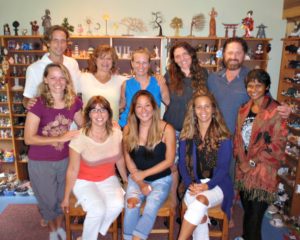
Nine members of the Pacific Quest team completed a 10-month long experiential art and sandplay therapy training lead by PQ Clinical Director, Dr. Lorraine Freedle. Sandplay is a non-verbal, depth-oriented, multi-sensory therapy wherein students use symbols and sand to express and work through their inner experiences. Sandplay rooms are available in both our adolescent and young adult programs. As a primary therapist in the young adult program, I have found this to be especially helpful at various points in treatment with students who are dysregulated and struggling with overwhelmingly difficult emotions. The therapeutic benefits begin as soon as we walk into the room lined with ceiling to floor shelves filled with objects, each of which contain symbolic meaning and energy. Students are incredibly drawn to the collection and it immediately stimulates dialogue, curiosity and expression. Students with trauma sometimes find this form of therapy provides them with a safe way to access and express memories through art, process the experience, and rejoin the world of others.
A Shared Journey
Lorraine held a space for each member of our group to learn concepts and to have a personal journey of healing through a variety of art mediums from pastels, to finger painting, to clay, to creating a “wholeness” project with collage materials. We began each session by making a group sand tray by choosing a personal object from among thousands on the shelves. Together, we created a safe space to go deep, heal and connect in an academically rich, learning experience that was indeed transformative. The experience prepared us to skillfully guide our PQ students on their unique journey.
In our final class, Lorraine prepared a slide show for each of us combining images from our process with her great insights. It felt profound to pause and witness each individual’s transformation in symbolic form.
Personal Reflections
As a Certified Gestalt Therapist, this training will live inside me in perfect harmony with my pre-existing “permission to be creative”, awareness of the here and now, and listening deeply to what emerges in my thoughts, feelings and messages from my body. The entire group expressed heartfelt appreciation for this unique experience to learn about ourselves first, so that we can serve our students well, as they travel their hero’s journey.
Art and Sandplay Therapy at PQ
We offer art and sandplay therapy to our students for many reasons: it’s fun and requires no artistic ability, it transcends verbal communication, and it is multidimensional, allowing for many processes from different levels in the brain and psyche to occur simultaneously. Art therapy is integrative, addressing emotional, cognitive, motor and sensory experiences happening in the here and now. It integrates right and left-brain functions, conscious and unconscious, past and present. And, it facilitates communication through processing what has been created, easing the discomfort that some experience from sharing purely emotional material.
Guiding the Guides: The Unique Role of the Master Guide – Part III
By: Clementine Wilson, Adolescent Field Manager & Jody St. Joseph, Adolescent Program Director
This three part series focuses on the Master Guide position and the significance of this special role at Pacific Quest. The first entry looked at the role itself and highlighted Nikki Robinson. Part II introduced Master Guide Alyson Alde. In this third and final entry we meet Nick Olson and learn about his focus within this role!
Meet Nick Olson
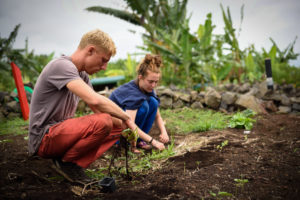
Nick working with a student on the land.
Nick hails from the high plains of Wyoming. There his wonderful parents worked diligently to instill in him a strong connection to a healthy diet, gardening and traveling. He studied International Studies at the University of Wyoming and in embracing his dream of vagabonding, traveled for two years following college. In the backwoods of Thailand with rambunctious kids, he realized that playing with youth in the dirt rules.
Nick started at Pacific Quest in March of 2015. He finds purpose in this job by helping students foster their own connection with the land, their food and their own self worth. He pulls from growing up in his tight knit community to help students build their sense of responsibility to their community, both here at Pacific Quest and back home. It’s a good day for Nick when his students find themselves deep in conversation, comfortably seated on the earth with their hands in the soil. He comments, “What motivates me here at Pacific Quest is when a student transforms a section of the garden and through their hard work they get invested and connected with the well-being of the land.” As a master guide he hopes to help garden-shy guides feel more comfortable working on the land and getting their hands dirty.
In his off time he enjoys the quirkiness of Hilo, the comfort of his porch swing and the adventures with his community here on the Big Island.
Guiding the Guides: The Unique Role of the Master Guide – Part II
By: Clementine Wilson, Adolescent Field Manager & Jody St. Joseph, Adolescent Program Director
This three part series focuses on the Master Guide position and the significance of this special role at Pacific Quest. The first entry looked at the role itself and highlighted Nikki Robinson. Part II will introduce Master Guide Alyson Alde. Check back next week to meet another team member and their focus within this role!
Meet Alyson Alde
Alyson was raised in a small town in Illinois. There, she learned how to climb trees, play in the dirt, and plant seeds. Her love for the outdoors has continued to grow throughout her life. She graduated with a degree in psychology with a focus in environmental studies. Prior to graduating, it was her dream to work with adolescents in a natural setting. Post graduation, she is living this dream at Pacific Quest. The combination of working with The Girl Scouts of America in New York state and working at an all boys residential treatment center in Tennessee gave her the inspiration to combine the two: wilderness and mental health.
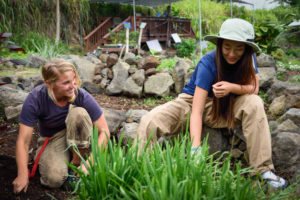
Alyson working with a student in the garden
Alyson loves empowering her students through education at Pacific Quest. She has a firm understanding that there are several types of intelligences, and she utilizes this knowledge with every lesson she teaches. Through her lessons, students are able to draw parallels between themselves and the garden, relate their lives to the Hero’s Journey, and learn sustainability for themselves and the environment. Not only does Alyson empower her students, she empowers her fellow guides as well. Alyson makes it a priority to work alongside her fellow guides to develop new lessons plans each week.
Of her role, Alyson says, “The most rewarding aspect of the job is seeing the students’ growth. Typically, I work the earlier phases in the program – Nalu and Kuleana. Several times a week, a student mentor comes back to Nalu and Kuleana. I love to see how the students have created their own leadership styles and I love to hear their invites on life. Often times, they even teach me something about the garden.”
PQ Presents at Wilderness Therapy Symposium
Pacific Quest’s Horticultural Therapy Director, Travis Slagle, M.A. recently co-presented with Darcy Ottey, M.A. at the 2016 Wilderness Therapy Symposium in Park City, Utah. The three hour experiential workshop focused on the ecological perspective of rites of passage and provided conference attendees hands on activities to activate the senses and deepen their understanding of the integration of rites of passage and nature assisted therapy. Travis comments, “I believe this is the next wave of innovation in wilderness therapy. The challenge of the future isn’t going to be climbing a mountain, or hiking in the desert, it’s helping young people learn how to live a more sustainable life.”
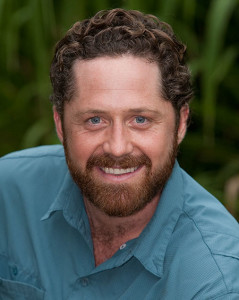
Travis Slagle, Horticultural Therapy Director
This breakout session brought together clinicians and direct care staff from across the country and included a PQ alumni, now finishing her last semester of college. Together, Travis and the alumni led the audience in a lesson on transplanting; offering participants a tangible experience to reflect on the biological process of stress and adaptation in nature and how to use this as a metaphor for the life transitions that clients experience in treatment and beyond. Participants commented that the highlight of the workshop was hearing the PQ alumni talk about her journey toward self-acceptance and describe the role that working in a garden played in overcoming the debilitating effects of depression. The alumni commented, “Two years ago, I would have never imagined that I would be here today planting flowers!”
As the presentation concluded, audience members had the opportunity to reflect on their experience. Participants reported that they felt “deeply moved,” “inspired,” and “hopeful” after the workshop. As Travis states,”We are promoting a paradigm shift in wilderness therapy, and the greatest reward in my work is seeing the change that our alumni students are bringing to the world, and the love and hope they bring to their families!”
To learn more about Horticultural Therapy and Rites of Passage at Pacific Quest, please visit the following links:
Guiding the Guides: The Unique Role of the Master Guide
By: Clementine Wilson, Adolescent Field Manager & Jody St. Joseph, Adolescent Program Director
This three part series focuses on the Master Guide position and the significance of this special role at Pacific Quest. The first entry looks at the role itself and highlights Master Guide Nikki Robinson. Check back next week to meet another team member and their focus within this role!
Clementine Wilson, Adolescent Field Manager
The Master Guide role at Pacific Quest is a pathway for Program Guides to develop into dynamic leaders and mentors in the field. There’s a belief in mentoring and rites of passage work that “you can only take someone as far as you’ve been willing to go yourself.” All guides at PQ begin their journey as Apprentices, learning the trade of guide work in our unique environment from those who are seasoned and experienced. Master Guides have worked with the widest variety of student profiles and therefore have developed a comprehensive skill set in order to work safely and effectively with the students in our care. In their extensive time in the field, they have uncovered joy and passion, faced challenges, navigated growth edges, earned respect, built confidence, and have now come full circle to give back to their peers.
Master Guides are an extension of the Field Management team. They teach and coach their peers through role modeling, open authentic communication, direct leadership, and the feedback loop. With this, they aim to hold a safe and empowering container for our guides to learn and grow. In addition to collaborating with various departments and being highly respected among peers, the Master Guides at PQ currently have a cumulative total of over 1,000 days in the field.
Each Master Guide has identified a niche they are focusing on in their role. Nikki Robinson has an especially keen eye for safety and risk management in the early phases of the program. She holds the big picture of structure and boundaries and is committed to supporting and mentoring Program Guides in this area. Alyson Alde is focused on ensuring our curriculum is being taught with creativity and passion, mentoring guides on lesson planning and dynamic teaching. Nick Olson is our land engagement guide, focusing on working with teams to further incorporate horticulture therapy into activities, and working with guides to increase experiential learning via the garden.
Meet Nikki Robinson
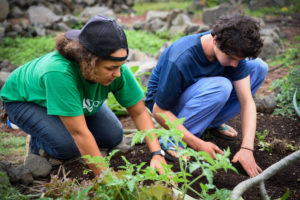
Nikki working with a student in the garden
Master Guide Nikki Robinson graduated from Naropa University with a BA in Contemplative Psychology. She is captivated by human behavior and as a result applied to Pacific Quest to pursue her passions. Nikki started as a Program Guide at Pacific Quest two years ago and found a passion for holding boundaries and providing a consistent safe space for students.
Now, as a Master Guide, Nikki brings her extensive experience to mentor, train and support the Program Guide team. She comments, “I’ve worked as a guide for two years and have been involved in some highly intense situations. As a Master Guide, I want to teach and guide others and be that supportive mentor I believe everyone needs, to not just survive but thrive! The students are our future. My passion lies in assisting in their growth and helping them be the change they seek for themselves.”
Nikki values honesty and genuine connection and in return offers that to the students and guides. She has a strong desire to help others and is driven to create change and continuously grow. She is interested in the human psyche and finds fulfillment in providing support for people who deeply suffer.
When Nikki is not at work you can find her at coffee shops, the beach swimming in the company of friends or studying astrology. She has a passion for reading self help books, studying astrology charts and providing knowledge to others who want to know themselves more.
PQ Offers Additional Academic Credits
By: Sharon Findlay, MS
Admissions and Communications Manager
Pacific Quest is excited to announce that our students now have the opportunity to complete seven academic courses for a total of four (4) high school credits! Most recently, we have incorporated an elective credit with the addition of a Psychology Course. This additional course provides our students with methods for understanding biopsychological, developmental, and cognitive functioning in humans, as well as individual and group variations in behavior. By the end of the course, students know through their own experience this psychological truth, articulated by Abraham Maslow: “What is necessary to change a person is to change his awareness of himself.” This course is aligned with Pacific Quest’s therapeutic curriculum, the Common Core Curriculum and the National Standards for High School Psychology Curricula.
Pacific Quest’s Academic Coordinator, Janna Pate comments, “Pacific Quest is pleased to offer high school credits in the content area of psychology. Perhaps more than any other, this course reflects the knowledge our students come here seeking. Experiential learning takes places around the clock, and the content of our psychology course is at the heart of that work. Throughout the day, students have the opportunity to learn and demonstrate their understanding by doing things like participating in horticultural therapy activities, practicing healthy coping skills, trying out different mindfulness practices, practicing nonviolent communication, and establishing and maintaining healthy relationships.”
All PQ academic coursework is accredited by AdvancEd and the North Central Association Commission on Accreditation and School Improvement, allowing credits to transfer and students to grow their academic skills and knowledge while participating in integrative and daily therapeutic work.
Pacific Quest Directors Present at NMT Symposium
By: Travis Slagle, MA
Horticultural Therapy Director/ Therapist
The world of mental health and neuroscience is built on a foundation of relationships. Whether it be the relationships among billions of neural pathways, or the relationships we contend with in our daily lives; human nature thrives on relationship and connection. We each learn to navigate the hopes and fears embedded in our families and communities, and the power that our relationships have to change our neurobiology. As a clinician with a passion for the restorative benefits of wilderness therapy and outdoor treatment, I have dedicated my career to utilizing nature as a “co-therapist.” At the recent International Neurosequential Model of Therapeutics® (NMT) Symposium in Banff Alberta, Canada, I had the opportunity to take my passion one step further by presenting with Pacific Quest’s Clinical Director and Pediatric Neuropsychologist Dr. Lorraine Freedle on the relationship between nature and neural integration. The symposium was attended by 700 delegates from 14 countries and featured keynote speaker Bruce Perry, M.D., Ph.D., Senior Fellow of The Child Trauma Academy and author of the best selling books Born for Love and The Boy Who Was Raised As A Dog.
L to R: Dr. Lorraine Freedle, Dr. Bruce Perry, Travis Slagle, Agata Freedle
During our research presentation, “Regulation to Resonance: The Neurosequential Model of Therapeutics® (NMT) in Nature-Based Treatment,” participants were introduced to Pacific Quest’s integrative clinical practice, which supports a neurodevelopmental approach to program design and implementation. Case studies and outcome data of Pacific Quest alumni post-treatment illustrated the efficacy of PQ’s NMT-informed and nature-based treatment approach. Building on the teachings of C.G. Jung and Dr. Dan Siegel’s theoretical framework of interpersonal neurobiology, the concept of “resonance” was defined as a dynamic state of attuned, embodied connection to self, others and the natural world.
Immersed in a fast-paced lifestyle, driven by technology and convenience, struggling teens and young adults often come to treatment overwhelmed by the demands of everyday life; they express feeling disconnected, addicted to distraction, and developmentally “stuck.” At Pacific Quest, we are proud to offer a truly holistic treatment approach that reminds us of our most fundamental need for deep and meaningful connection, and a reciprocal relationship with the natural world.
Sportsmanship: Positive Role Modeling for Youth
Pacific Quest is supporting Mike Sullivan in his 2016 race and triathlon training. In this series of posts, Mike will share insights and perspectives throughout his races and training, and drawing parallels between the mind-body connection and wellness – important themes at Pacific Quest Wilderness Program. In his first two posts, Mike shared his insights before and after the Hilo Marathon. Mike parallels navigating transitions in racing, wilderness therapy, and life in his third post. His fourth post looks at acceptance, on and off the course. Today, Mike explores sportsmanship and how we play the game.
By: Mike Sullivan, MA, LMHC
Alumni and Family Services Director
In my quest to raise awareness for the connection between fitness and mental health, I am reeling in the glory of two appearances in the newspaper this week! A dramatic finish in the Kona Half Marathon last Sunday drew significant attention, allowing me to practice what I often teach: good sportsmanship. Despite a knee injury and a laid back approach to the Kona Half Marathon, I found myself in a fierce battle in the final stretch of the race. The young man I was battling enjoyed a solid lead throughout the majority of the race, and in the final mile I closed the gap. He beat me across the finish line, finishing one second before me, clinching first place. We congratulated each other, both grinning about how close I came to passing him in the final stretch. I am a good loser, and respect that he beat me.
Mike Sullivan, MA, LMHC
Thirty minutes later, while hydrating at the Gatorade coolers, the local newspaper approached me. “Michael Sullivan, you won the race and we would like to interview you for an article we are writing for the Hawaii Tribune-Herald.” WAIT, WHAT? That other guy won. I told the reporter he had the wrong person. “Actually, that young man was disqualified for running under someone else’s name and you are now technically the winner.” My stomach turned; I encountered a strange mix of emotions. I wasn’t happy about winning on a technicality. I was surprised and dismayed, as my gut told me that it wasn’t right being awarded first place when I was second across the finish line.
The young man surfaced during the interview with the paper and congratulated me for winning. I immediately rectified the situation and employed my moral compass. “While I may have won on paper due to a technicality,” I told him, “You really won the race.” He smiled and gave me a sweaty hug, and then disappeared into the crowd of people.
Mike Sullivan and Bree Wee, first place male and female finishers in the Kona Half Marathon
It is experiences like this that remind me of yet another aspect of what I appreciate about sports -they serve as a window into human character. According to Miriam Webster’s Dictionary, sportsmanship is defined as “fair play, respect for opponents, and polite behavior by someone who is competing in a sport or other competition.” I strive to inspire youth through sports, and will always convey the age-old lesson: it isn’t about winning or losing, but how you play the game. I feel great about my second place victory, and furthermore, feel even better about the flurry of attention it created in the media, as it allowed me to highlight my sponsor Pacific Quest, and the importance of positive role models for youth.
Check out the two newspaper articles about the event: Half Distance, Full Drama from West Hawaii Today and Athlete of the Week from the Hawaii Tribune-Herald to read more about Mike Sullivan’s race and role as an upstanding leader in the Hilo running community.
Dr. Lorraine Freedle Presents at STA Conference; Receives Research Award
By: Denise Westman, Outreach Director, and Erin Marcus, Clinical Admissions Director
Pacific Quest’s Clinical Director, Dr. Lorraine Freedle, was a keynote speaker at the National Sandplay Therapists of America (STA) Conference in June. With over 200 doctors, clinicians and consultants in attendance, Dr. Freedle shared her expertise and passion for both Sandplay Therapy and the Neurosequential Model of Therapeutics® (NMT) in her presentation, “Making Connections: The Neuropsychology of Sandplay Therapy.” Attendees represented Jungian sandplay professionals from all over the world, including the United States, Switzerland, Australia, Brazil, South Africa, and Italy.
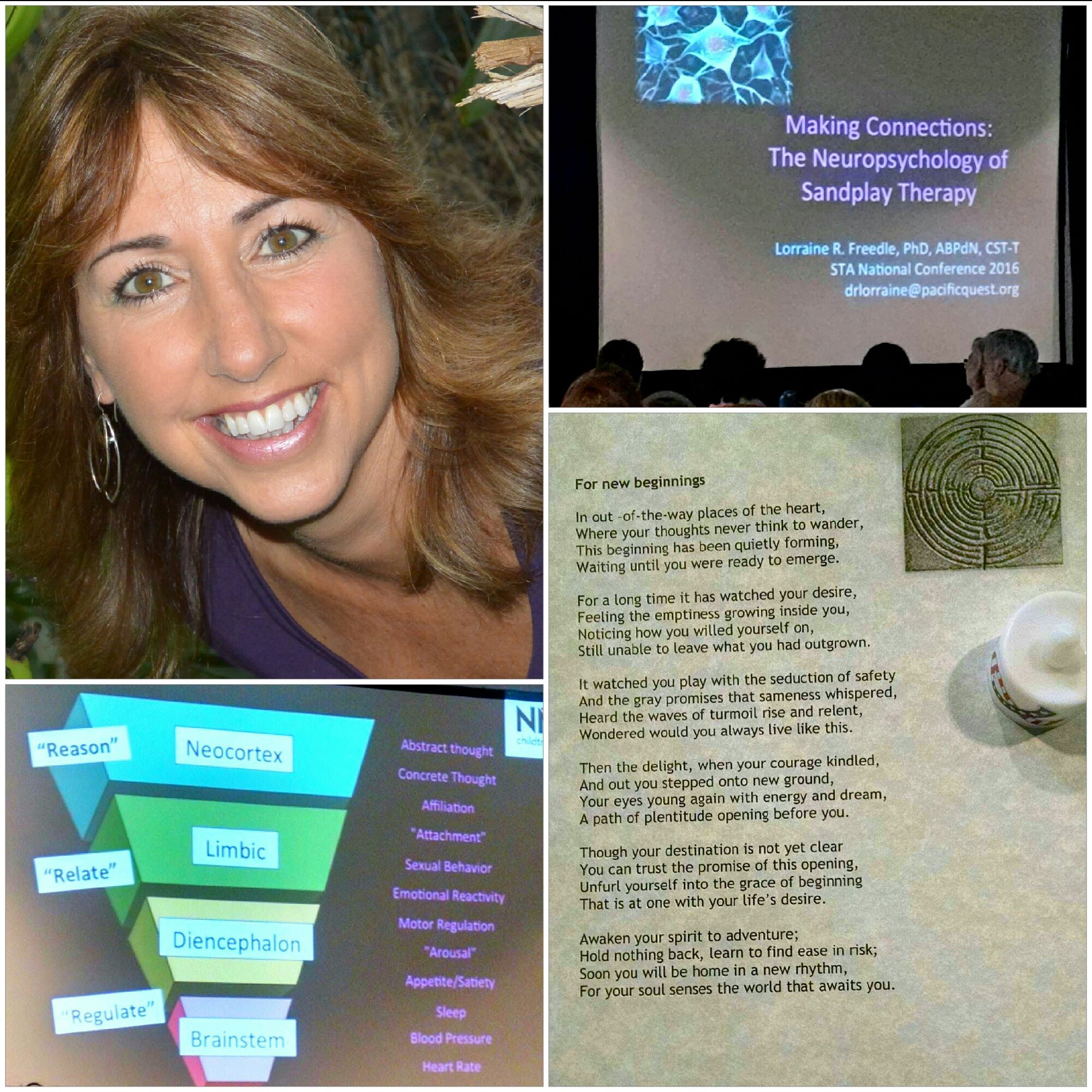 The global group of attendees were presented with a case study of Jimmy (pseudonym) that involved traumatic loss and profound healing through re-connection to self, others and the environment. Due to Jimmy’s implicit traumatic memories and emotional dysregulation, it was essential that the clinical interventions matched his neurodevelopmental stage. He thrived in a multi-sensory natural setting through horticultural therapy, meditation, and a wellness foundation to complement the therapeutic work being done.
We were deeply touched by Jimmy’s journey and mesmerized by the increasingly sophisticated interventions that are available to those that need healing support. The ability to help young people like Jimmy experience a discernible change that is sustainable and portable as they move through life was nothing short of inspirational. Pacific Quest provides a safe place for young people to work through the barriers that are keeping them from functioning at their full physical and emotional potential. Every part of the Pacific Quest treatment model is neurologically informed and designed to help settle the nervous system so that meaningful work can take place. The Sustainable Growth™ Model ensures that our students have the corrective experiences needed to move through developmental blocks and that they develop mastery of the strength based behaviors necessary for a successful transition.
Also while in attendance at the STA Conference, Dr. Freedle was honored with a research award. She was recognized for “Outstanding Contributions to Research in Sandplay Therapy” for original research titled:
- Freedle, L.R., Altschul, D.B., and Freedle, A.M. (2015). The Role of Sandplay Therapy in the Treatment of Adolescents and Young Adults with Co-occurring Substance Use Disorders and Trauma. Journal of Sandplay Therapy, XXIV (2), 127-145.
This is Dr. Freedle’s second STA award for her exceptional research on Sandplay Therapy. Please join Pacific Quest in congratulating Dr. Freedle on this honor!
In addition to being Pacific’s Quest’s Clinical Director, Lorraine Freedle is a board certified neuropsychologist, psychotherapist, and trainer in the Neurosequential Model of Therapeutics®. Dr. Freedle is an award-winning researcher for her work with sandplay therapy and individuals with trauma. Dr. Freedle is an international presenter who illuminates current theory, neuroscience and the principles of depth psychology with compelling case studies. She has published numerous professional journal articles and currently serves as Research Editor for the Journal of Sandplay Therapy.
Neurodevelopment and Play: More Fun than it Sounds
By: Mike Sullivan, MA, LMHC
Alumni and Family Services Director
If you have never heard Dr. Lorraine Freedle laugh heartily, you may not know her very well. In a recent presentation at a symposium on neurodevelopment and play, Leveraging Change Agents in the Treatment Process, an audience member commented on the comforting and authentic nature of Dr. Freedle’s “belly laugh.” Many others in the audience nodded their heads and chuckled in agreement. Dr. Freedle has a playful way of engaging an audience, which unsurprisingly, is neurologically informed. I was lucky enough to be invited by Dr. Freedle to co-present on the importance of play, wherein we facilitated play activities aimed at experiential teaching on the many benefits of play entitled The Archetype of Play and the Neuroception of Safety: Primal Change Agent. Needless to say, the presentation was a lot of fun!
Mike Sullivan, MA, LMHC
Play is valuable on many levels, which is evident across species. It is not only humans who play; animals play too. Play has been observed in most animal species, and interestingly, even between animal species. What is evolutionarily significant about play? If it didn’t contribute to natural selection, it would have ultimately detracted from a species ability to survive and would have been wiped out of existence long ago. On a basic level, play is where people and animals learn to socialize and navigate obstacles. It is the playground of practice, allowing us to develop tools, awareness, and resilience for overcoming more complex obstacles later in life. Beyond that it allows us to engage our imagination, which has proven to be an asset even greater than knowledge. After all, one of Einstein’s most famous quotes highlights that “Imagination is more important than knowledge.”
While it doesn’t take much convincing to teach adults that play is valuable in childhood, some remain skeptical when approached with the idea that it is critical in adulthood as well. In a culture that is achievement and performance driven, what room is there for play? If an activity is not aimed at getting me further toward my goals, why would I waste my time? Well, play lies deep in the sub-brain, and still needs to be stimulated in adulthood. It has implications for our mood and wellbeing, as well as affects our social relationships and meaning we make of the world. While there is a complex neural network stimulated through play, look around and observe what you notice from a behavioral perspective. You may not see adults playing on monkey bars (well, sometimes you do!); you often see them participating in adult forms of play – humor, sports, games, and love. Most parents say that having kids is the best thing that ever happened to them, and fondly reflect on the play within their family story.
In her presentation, Dr. Freedle drew heavily on the teachings of Dr. Stuart Brown, the founder of the National Institute for Play. In his book Play: How it Shapes the Brain and Invigorates the Soul, Dr. Brown maintains, “Play is the highest form of love.” Beyond the biochemical firing occurring on a molecular level in the brain, we seek connection and belonging, and play serves as the main conduit. Can you imagine a life without play? No fantasy, no storytelling, no humor, and importantly – no relationships or connection… it is difficult to imagine. We need to continue to nurture play in ourselves and communities. As, Dr. Brown says, “the opposite of play is not work, it is depression.” For more on Dr. Stuart Brown’s research, you can view his TED talk here.
Family Fridays: Walking the parenting path together
By: Alumni Parent
I have stood in your shoes. I still wear them, although I am further up the path. My child was struggling to the point that sending him to Pacific Quest became our best choice. I had been scared, frustrated, sleepless and worried and deciding to send him so far away added a new, and unwelcome, level of fear to me. If this sounds familiar, then I bet it will also ring true that you are also afraid to hope that this will work. Our hope for our children is fragile, and though surprisingly tenacious, we have learned to hide it for fear that one more failure will finally crush it. I sent my child and my hope to Hawaii. Here’s how it turned out.
Before PQ: Our son had struggles on and off during high school. He was uneven in his academics, but passionate about his extracurriculars. During college however, he spiraled down into a serious depression. He had reached out to the mental health services at school at the urging of friends who saw him changing. He was going to therapy and was on medication. Then I had to drive to his school after he stopped responding to calls and texts. I found him in his room with the curtains drawn, piles of dirty clothes and garbage around him as he slept in his bed. He had barely gotten up, showered, eaten, etc. for the past few weeks. Take a picture and put it in a text book – this is full blown depression. We packed him up and took him home.
The next steps: therapy, medication, a day program that seemed to help him get some traction, then working during the summer full time but still exhausted from that effort. He insists that all the work he did over the past 5 months has given him enough knowledge and preparation to return to school for the Fall semester. By Thanksgiving he was struggling. He failed many classes due to absences and didn’t return for the Spring semester. Now what? He stayed home. More intensive therapy and changes in medication as he worked as a laborer. He was growing hopeless that his situation would change. He was embarrassed to fail and it was hard for him to watch his friends move on without him.
We started with a new therapist who said: weekly therapy and medication will help, but what your son really could benefit from is a more intensive experience to really do the hard work and process what is at the root.
What program could be right? Our choices were traditional wilderness programs or Pacific Quest. Traditional wilderness programs focused on physical challenge and isolation to lead to mental strength. Pacific Quest focused on horticultural work, exercise, diet, whole-being wellness and community along with therapy and processing to build the idea that people, like nature, are imperfect, but by adaptation, experience, and using resources we learn to thrive.
We had so many questions about programs: Can a program get someone mentally healthy in 10 weeks? Can a program modify his behaviors in 10 weeks? For us, the goal was wellness – inside and out – and to start to understand what it takes to maintain wellness. Everyone has overarching issues that will be broken into smaller pieces. He will struggle with practical and emotional obstacles with support of peers and professionals. He will begin to identify ways to grow and support the changes he experiences at PQ.
During the time at Pacific Quest: My son set the following goals for himself: accept the past and the future, love himself, think about the future as opposed to worrying about the future and look in the mirror to see — not to criticize.
Your child is not the only one doing work during this time. You and your family will work too. Weekly calls with your child’s therapist and working through the parent manual is an opportunity for growth for all of us. Confession: I wanted to avoid this component. Isn’t this program for him? The reality dawns on me that I want him to work at this hard stuff and I don’t want to work on this hard stuff. My child has to accept and do the work and I have the same choice. I chose to walk with him. I made the time and put forth my best effort.
What did my child learn at Pacific Quest? Increased ability to handle stress because he experienced stress in a healthy, safe place where the focus is learning these skills. Also, how to make healthy choices when stressed, how to reach out to process stress and discomfort and finding a way to move forward in a way that is healthy and sustainable. Another focus was the power of opening up and being vulnerable and how better relationships lead to self-acceptance.
How was this accomplished? There’s a lot to that answer, but here is some of it. First, individual therapy happens twice a week minimum. Therapy groups are also a part and they are staff-led and peer-led at times. Working with staff one-on-one to develop goals and impromptu peer one-on-ones where they reach out to one and other for support. Finally, there is exercise, in depth wellness with nutrition, curriculum and a lot of horticultural therapy and work.
 An interesting example for me was that my child struggled with quiet. Therefore, something like meditation was very difficult. A therapist discussed this with him and suggested that he learn about it by teaching it. So, my child was assigned to learn about meditation, practice it, journal about it, refine it and then he taught a class on it to his peers. The thinking was: Learn what you don’t know.
This is a lot of work for your child. It may be located in Hawaii, but it’s no vacation. There were many ups and downs that would be too long to chronicle. Again, it is by design that there is discomfort in this supportive environment so that the person actively learns the skills to handle obstacles in the real world.
Post Pacific Quest: During transition from PQ, our therapist took time to prepare us thoroughly for the road ahead. PQ is a start. It can be a foundation, but life isn’t easy and there will be setbacks and pitfalls ahead. A wise man that we know said: “Success isn’t measured in the day-to-day stuff. Success is measured by what happens when he falls into the same old hole. What is he doing to get out of the hole?” He is saying that by identifying what works and using what works, then the holes gets shallower. You build on those skills and build resiliency. Next, can you see the hole coming and avoid it?
When my son left PQ, he was excited to go back into the world. It took about five weeks for the first hole to appear. Somehow, he hadn’t embraced the idea that the “hole” or that a challenge would happen. It was very hard. He felt like a failure, but the foundation held. He got out of the hole and began again. There have been other holes. He is disappointed when they happen, but from the long view, some have been shallower and, more importantly, he does go back to the skills he learned and practiced at PQ.
Parting thoughts to those who are walking the path
If I could take away this struggle from you and your child, then I would. Just like you would like to spare your child what he or she is facing. However, there is no way around it. The only way is through it. I hope that you find the best fit for your family. The key thing to remember is that there is no magic. Neither Pacific Quest, nor any other program will take away the challenges of life. The real goal is to develop skills and form a foundation in a safe, therapeutic place so that our children are well prepared when their challenges occur.
PQ Has Completed Neurosequential Model of Therapeutics® (NMT) Training Certification Phase I Level
Pacific Quest is pleased and excited to announce the completion of an eighteen month training and certification process with The ChildTrauma Academy. Pacific Quest is now site certified in the Neurosequential Model of Therapeutics, or NMT, which is a “developmentally-informed, biologically-respectful approach to working with at-risk children.” NMT is an approach to clinical practice that allows clinicians and programs to use their environment in a neuro-sequential way. This evidence-based practice integrates multiple principles, techniques, and interventions to be applied in a way that promotes brain development and relational health.
Pacific Quest is the first and only outdoor/wilderness program to be site certified in NMT! As such, Pacific Quest utilizes the garden and nature-based setting, mind-body techniques and clinical therapies in a neurodevelop
mentally-informed manner that is individualized for each student. Bruce Perry, M.D., PhD, founder of the ChildTrauma Academy, adds, ”We are very excited to have Pacific Quest become an NMT Trained Site because they have a great deal of experience and knowledge to share with our community. Pacific Quest’s focus on wilderness therapy, nutrition, and holistic practices is a natural compliment to some of the therapeutic recommendations that are generated by NMT principles, and so their expertise in implementing a blending these approaches can be highly successful and offer us all valuable insights.”
As part of the Phase I NMT site certification process, clinicians at Pacific Quest participated in case consultations with Dr. Perry and other trainees from across the globe. They learned to use the clinical practice tools with fidelity, and completed over 100 hours of training in core principles of neurodevelopment and traumatology. Their training continues through case-based staffings, fidelity exercises and review of current research and practice updates.
Pacific Quest Clinical Director, Dr. Lorraine Freedle has completed Phase I, Phase II/Train the Trainer and is a certified NMT provider and trainer. She comments, “Pacific Quest is an enriched environment with an abundance of opportunities to effect meaningful change. NMT is a very helpful paradigm for case conceptualization and targeted treatment planning so that we may use the resources we have at the right time and in the right way for our students.”
PQ Welcomes Tim Mullins to the Clinical Team
Tim Mullins, MA, LCPC has joined the PQ Clinical Team and brings over ten years of experience in the outdoor therapeutic industry. He offers a wealth of personal and professional experience and has the unique ability to balance clinical insight with his sense of humor, a perfect match for working with young people.
Tim Mullins, MA, LCPC
Becoming a therapist has been the natural outcome of a lifelong interest in the inner workings of the mind and central to Tim’s professional interest is his recovery life. With 19 years of sobriety, Tim has had a remarkable journey from a seemingly hopeless frame of mind to a life directed towards health, study, and service. Dr. Lorraine Freedle, Clinical Director, comments, “Tim is rock solid. He blends years of experience in wilderness therapy and addictions recovery with a holistic and transpersonal perspective that deepens the work in a unique and powerful way.”
Working at Pacific Quest aligns with Tim’s integral values. As a yoga practitioner and instructor, he came to understand how people can become attuned to their inner landscape through working in a natural environment. As an organic gardener, connecting with the land and the environment is a spiritual endeavor that feeds the body and the mind. Tim believes that it is a disconnection from the natural world that is at the core of many modern problems. “Getting back to the garden means reconnecting to the source of our physical and psychological sustenance,” adds Tim.
Tim is a licensed clinical professional counselor and considers himself an integrative practitioner. He has a Master of Arts in Counseling Psychology from Prescott College, and is currently pursuing his doctoral degree in psychology at California Southern University, with a focus on the integration of science and the perennial philosophies into an interdisciplinary psychology.
Tim’s interests are wide ranging and eclectic. He is an avid chess player and an Argentine Tango dancer. Tim enjoys hiking, biking, backpacking, and scuba diving. He also designs and (occasionally) builds residential and commercial structures with a particular interest in the psychology of constructed spaces that are attuned to their respective environments.
Gardening in LA: Alumni find solace and camaraderie in service project
By: Mike Sullivan, MA, LMHC
Alumni and Family Services Director
Approaching Wattles Farm from Hollywood Boulevard is surreal. A short walk from the iconic walk of fame in the heart of Hollywood, one navigates speeding sports cars, stoplights (which apparently aren’t enforced), and screaming police sirens to find the gate encircling the margins of Wattles Farm. After traversing an ancient avocado grove, one emerges in the 4.2 acre organic garden of eden- a setting that couldn’t be more dichotomous from the immediate surroundings of bustling Hollywood.
The garden was reminiscent of Pacific Quest- meandering paths lined with rocks and downed limbs, tropical fruits draping from tree branches, and luscious garden beds overflowing with lettuce and kal e. Travis Slagle and I felt at peace as we toured the garden, taking time to absorb every element of the Wattles oasis. We basked in the familiarity of the natural landscape and reprieve from the urban gridlock surrounding us.
Head Gardenmaster for 23+ years, Toby Leaman, introduced Travis and I to the array of work needed to maintain Wattles garden. She identified specific areas that our Pacific Quest alumni group could complete during our community service garden project the following day. Travis observed closely as Toby showed him where the invasive onion grass was overtaking the roses and geranium, as well as where the rock wall was eroding. While many people may view the immense undertaking Toby outlined as a nuisance, Travis and Toby see potential. Being gardeners in their heart and healers/role models for youth, the garden is a means to connecting with something greater – a deeper sense of self and greater connection with community. Excitement grew as we refined our plans for our project the following day.
Our alumni group dug into our community service project at 10 AM. Smiles, laughs, and reminiscing about funny stories from Hawaii ensued, while the group maintained diligence and attention to eradicating the onion grass. The group overhauled the rose and geranium beds, creating a discernable difference. Apparently that project wasn’t enough, as the group then devoured the opportunity to weed a long pathway through the avocado orchard. Toby exclaimed what an amazing group of volunteers we were, highlighting our attention to detail and positive attitudes.
 Over a nutritious lunch and closing circle, the group discussed some observations throughout the day. Many noted “being in the present” and “sharing a common goal,” as being significant aspects of the project. Others shared a sense of fun, camaraderie, peacefulness, and giving back. Each of these observations speaks to the power of gardening and intention- when we set aside computers and phones, carve out a shared gardening project, we find meaning. The group observed that the experience was far from insignificant, but rather served as an amazing conduit for connection and leaving a legacy for others in the future. It was certainly a memorable Sunday!
I want to share a huge THANK YOU to Toby Leaman for being such a warm host and project leader. I also want to thank the Pacific Quest alumni for their dedication to others and desire to continue to deepen their self awareness. And lastly I want to thank the entire community for maintaining Wattles Farm for others to enjoy. Community gardens are a growing movement, and one can see layers of significance far greater than just providing salad greens.
PQ Welcomes Robert Trout to Clinical Team!
Robert Trout, MA, has joined the Pacific Quest Clinical Team as a primary therapist and brings over 17 years of experience in therapy, group facilitation, rites of passage, wilderness therapy, and experiential practices. He utilizes narrative and experiential techniques that influence people’s belief systems while working with metaphors to encourage the exploration of the self. Of working at Pacific Quest, Robert says “In addition to the experiential therapies we employ, my favorite part of being at Pacific Quest is the team-based approach. I work collaboratively with a team of skilled clinicians, talented direct care staff and professional referral sources to create unique and individualized strategies for each student. The ability to take a fresh look at each student and their situation is truly invigorating as a therapist! One of my personal goals is to challenge individuals beyond their own limiting beliefs.”
Robert received his Masters in Counseling from Southwestern College in Santa Fe, New Mexico. He focused on transformational ecopsychology and rites of passage, which is an incredible fit for his work at Pacific Quest. Robert enjoys working with experiential modalities of therapy, including ceremony and psychosomatic activities.
“Robert is a results-driven leader who brings a wealth of industry experience, clinical skills, and pure passion and drive to his work,” says Dr. Lorraine Freedle, Clinical Director. “He is making quite a splash. I could not be happier with his choice to join our team!”
Robert’s unique perspective was shaped largely through his own time in the wilderness, over 1000 days. Robert began to explore the world in a new way, influenced by the many lessons he had learned during his own wilderness experience as a teen. Of this experience, Robert says “The program I attended saved my life, but more importantly pushed me to find purpose and meaning for the rest of my life.” Robert has worked in many outdoor programs since he completed college and has developed into a leader in the field in rites of passage work with youth and adults.
In his free time, Robert likes to backpack, snorkel, scuba dive, swim, fish and generally just play outside. He also loves to garden at home and explore the outdoors with his wife and daughter.
Preparation and Performance converge: Mike Sullivan qualifies for Boston 2017 Marathon
Pacific Quest is supporting Mike Sullivan on his “2016 Road to Kona.” Yes, you heard correctly, Mike is taking another stab at the World Championship Ironman, assuming he is selected to participate through the Hawaii Resident Lottery on May 5, 2016. Mike will share insights and perspectives throughout his 2016 races and training, and drawing parallels between the mind-body connection and wellness – important themes at Pacific Quest.
In his first post, Mike shared his insights before the Hilo Marathon. With this second installment, Mike reflects on the marathon from this past Sunday:
By Mike Sullivan, MA, LMHC
Alumni and Family Services Director
A marathon is a point of convergence. It is the point where immense preparation meets performance. Every athlete strives to maximize performance on race day. In the Hilo International Marathon this past weekend, I drew upon planning, preparation, routines, strategy, a sense of belonging, and mental toughness. I have honed these skills both in my endurance athletics training and my work with youth at Pacific Quest, teaching youth the importance of self discipline, executive functioning, and resilience. The Hilo Marathon was a powerful convergence of many psychological factors, which I tactfully aligned, landing me in 5th place overall and qualifying me for the 2017 Boston Marathon!
The Hilo Marathon was my first race of 2016. The race itself started long before race day. In order to arrive in a calm and balanced mental and physical state, developing routine was a critical tool. Since recovering from the 2015 Kona Ironman last fall, I have incorporated a morning routine that includes a variety of yoga asanas and foam roller techniques. The routine takes 45 minutes, and aims to minimize physical injury, and conjure a calm and present emotional state. It is a mindfulness practice that nurtures mental health and creates a solid foundation for the day ahead.
Mind-Body Training
When it came time to plan out the details for race day, I strove to maintain my routine. While the race itself is drastically different than training days, most coaches and athletes will advise, “Don’t do anything different on race day than you do in training days.” This advice is meant to calm anxiety within the athlete by de-emphasizing the significance of the feat ahead. Race events impose increased anxiety with the impending performance apex, applying more pressure on the athlete than a regular training day. Routines reinforce familiarity and ritual, a major combatant to anxiety. Thus for race day, I planned a 4:00 AM wake up followed by a mini version of my daily routine. This helped me to manage race anxiety, however, there is a fulcrum point with racing that thrives on a bit of anxiety. The neurotransmitters emitted from competition and increased pressure heightens focus, and athletes who are able to harness the balance, are able to achieve amazing feats. My routine kept the levels of anxiety in check, allowing me to calibrate my focus appropriately.
The day before the race I focused on mental and physical preparation. In order to continue to calibrate my anxiety level, decrease chaos, and minimize mental clutter, I prepared my belongings and mentally walked through my morning routine. I practiced the order of operations several times to ensure I was prepared and had everything accounted for. It started with setting my yoga mat and foam roller out in the living room, lining up all my breakfast items on the counter, and then arranging my running equipment by the door– shoes, shorts, nutrition, water, etc. I awoke before my alarm was set to sound and calmly cruised through my morning routine, arriving at the race 45 minutes prior to the start. Sports psychologists say it is equally important for athletes to be prepared for unknown obstacles to emerge, however, in this instance I didn’t have to navigate any. Whew!
 A sense of community and support flourished and created a positive vibe at the starting line. Surrounded by many friends and Pacific Quest coworkers, encouragement was abounding. Mark Agosto, my boss and mentor, brought great energy and enthusiasm to the starting line, giving me an extra pep talk and champion-like confidence. The gun sounded marking the start of the race and the 100+ racers jetted off the starting line. Spectators cheered and athletes hooted and hollered. A sense of belonging within a community is widely understood to be important for wellbeing and increased self-esteem. I am grateful for the Big Island community and all the wonderful connections I have developed through athletics. It certainly contributed to a successful race.
Mind-Body Training & Race Strategy
I ran the first half of the race at a moderate pace – roughly 6:50 min/mile. This was aligned with my race strategy, a plan I created from studying the course and planning for physical and mental challenges. The beginning of the course, where it gains more elevation than it loses, is where athletes can burn themselves out physically or mentally. I planned to start at a moderate pace and speed up in the second half. Indeed, my body was feeling strong toward the second half and I was able to increase my pace. I never hit a “wall” in this race, and was able to stay consistent through the final miles. I finished with a smile in 2:57:29.
Throughout the race I employed mental toughness I established during training. I completed 20-mile training runs every Sunday in the blistering Hilo heat leading up the race. This taught me persistence and proved to myself that I could keep going, despite the aches, pains, and self doubts that emerged. I used my personal mantra of “keep pushing,” and “you can do this all day,” to maintain a fast pace throughout the race. I also kept it light and positive, smiling and encouraging fellow athletes along the way.
I meditated on the phenomena of peak performance throughout training and the race. I thought about the parallels racing has with performance in various contexts. My mind returns to the organic gardens of Pacific Quest. What lessons from racing are similar to gardening, and can be applied to other spheres of performance? Whether in a race, an organic garden, or at school, youth must learn to manage responsibility in their daily lives- completing tasks, managing anxiety, overcoming self doubt. Utilizing the same tools I drew on in the race can absolutely be applied to a variety of contexts, whether it is school, job, or an array of emotional struggles. Check out my PEAK Self article on Seven Tools For Peak Performance for more information.
I want to thank Pacific Quest for the support throughout the race. I also want to thank the amazing Hilo community, Big Island Running Company, and my elaborate family/friend network throughout the world for encouraging my racing habit and interest in sports psychology. I will continue to utilize my own experience and research themes related to sports psychology as I hone my PEAK Self and help others to do the same. Bring on Boston 2017!
Congrats to Mike from your PQ ohana! We are so excited for you!
Pacific Quest Welcomes Sharon Findlay to the Admissions Team
Sharon Findlay
Pacific Quest is excited to welcome Sharon Findlay to our team! Sharon comes to Pacific Quest with extensive experience working with families and professionals in the therapeutic education field. Sharon joins Erin Levine, JD Daubs, and Kellyn Symthe as part of the PQ Admissions Team and will also work closely with the Outreach and Communications Teams in her new role.
Sharon has worked in mental health, education, and management fields for over ten years; she brings a great deal of personal and professional experience to Pacific Quest. Sharon is extremely dedicated to helping our students and their families heal. She appreciates the holistic and intentional approach that Pacific Quest utilizes. She says, “I’m very passionate about working with teens and young adults going through difficulty in their lives. Pacific Quest truly considers the whole person throughout the growth process, cultivating change and growth that occurs in a safe, healing way.”
After Sharon began her therapeutic program experience with a therapeutic boarding school, she earned her Master of Science in Organization Development, with a focus on resilience in individuals and groups. This emphasis, combined with the systemic and consultative approach her studies offered, inspired Sharon to return to the field with a new goal: helping clients reach their full potential while simultaneously addressing the health of the organization, its staff, and program as whole. Sharon had the opportunity to further hone these skills at a residential treatment center and transitional program. Sharon has witnessed first hand the powerful and life changing outcomes that occur at Pacific Quest as result of her tenure in secondary programs. She is excited to now be a part of the first stage of the change process for so many young people.
Pacific Quest has established an exceptional team of highly-respected professionals to assist families in need during the admissions process. Erin Levine, clinical director of admissions, adds, “Sharon is passionate, knowledgeable, and personable. She a natural fit at Pacific Quest. We are delighted to welcome Sharon to our team!”
Lessons From La Jolla
By Mike Sullivan, MA, LMHC
 I dawned my running shoes and am back running the single lane jungle roads of Hilo, Hawaii. Having just spent the last week in La Jolla, California at a professional conference, I have a lot to reflect on. I do some of my best thinking while running. I traveled to the National Association of Therapeutic Schools and Programs (NATSAP) conference with ten of my colleagues from Pacific Quest. Our goal was to tap into the collective wisdom of professionals from around the country, as well as to promote Pacific Quest’s unique outdoor horticultural therapy model. The conference was successful on many levels, as it provided many lessons and insights.
Robert Whitaker, the keynote speaker and author of Anatomy of an Epidemic, captivated conference attendees with his message: The psychological community and public sector must broaden the lens to observe the long term effects of medication in treating mental health instead of falling into the trap of only looking at the short term gains. Whitaker is concerned about the trends in psychopharmacology, and the short sightedness of treating immediate symptoms with medication. While symptoms may be alleviated right away, long-term studies show that patient’s mental health can deteriorate over time. This strikes a chord with the age-old lesson: true gain comes from hard work. Teachers, coaches, role models, and many doctors prescribe to the idea of hard work. Whitaker didn’t seem to be advocating for throwing all medication out the window, rather, utilizing the long term studies as a means to figuring out which medications are proving safe and effective over time. Be aware that the pharmaceutical industry has financial incentive to promote products that show immediate results, despite the long-term effects.
Pacific Quest Clinical Director, Dr. Lorraine Freedle, presented in a collaborative extended session on the topic of working with “twice exceptional” (2e) children. In discussing her presentation, Lorraine highlighted that 2e are typical students in the Pacific Quest population. She spoke to both the potential and vulnerability that stem from being “gifted.” Utilizing case studies, Dr. Freedle reviewed characteristics of 2e students, discussed challenges to treatment, and highlighted effective therapeutic strategies. Dr. Freedle showcased how Pacific Quest utilizes the horticultural therapy environment and the depth of the clinical expertise on the team.
Beyond the intellectual stimulation, as an experiential educator, therapist, and advocate of the mind-body connection, the past week in La Jolla confirmed my belief that in order to learn and teach, we must care for our physical bodies. I witnessed brilliant people give lectures and provide workshops inside the conference halls, while at the same time was surrounded with colleagues getting exercise. People smiled broadly when describing hikes, playing golf, going on runs, surfing, and going for long walks. My PEAK Self lens – that fitness/mental health junky side of me subscribes wholly to the mind-body connection, cheered for my colleagues who were priming their brains to learn (increase critical neurotransmitters) by moving their bodies, improving mood, and increasing energy levels. I am sure the Southern California sun contributed significant vitamin D to the mix.
The therapeutic world is extremely intense and can lead to burnout. Finding a balance of self-care is critical. Healthy bodies equal healthy minds. As I find myself running through the rainforest of Hilo, Hawaii, I bask in the optimal mental health I am earning with each step. I look forward to continuing to contribute to the NATSAP community by promoting Pacific Quest, PEAK Self, and stimulating my mind and body on a daily basis.
Pacific Quest Alumni Join Surfrider Foundation In Beach Cleanup

By Mike Sullivan, Alumni & Family Services Director
Pacific Quest alumni gathered at Torrey Pines State Beach this past Saturday to reconnect and contribute to a larger effort at protecting our ocean ecosystem. Together with volunteers from the Surfrider Foundation, we combed the beach in hunt of marine debris littering the shores and posing environmental threats. We collected everything from tiny shreds of styrofoam to large pieces of plastic. There were over 200 people total and we gathered hundreds of pounds of garbage in the clean up. Go Pacific Quest! Go Surfrider Foundation!
The beach clean up was a fun and relaxing event. Alumni reminisced on stories from their journeys at Pacific Quest and shared about life in Southern California. I was impressed with the continued interest the alumni shared regarding gardening, exercise, and culinary exploration. They have infused elements of these into life outside of Hawaii, sharing photos and discussing future goals. It is absolutely fantastic to see the alumni applying interests cultivated at Pacific Quest in their daily lives at home. We look forward to featuring testimonials and success stories on our “Ohana Fridays” blog updates.
Pacific Quest believes in giving back to the community and maintaining alumni relationships. Horticultural Therapy Director Travis Slagle and I will be traveling to Los Angeles in March to help promote Sky’s the Limit Fund, a non-profit foundation dedicated to raising funds to help families access wilderness therapy who wouldn’t otherwise be able to do so. While in Los Angeles, Travis and I will be hosting an alumni event at Wattles Farm, a 4.2 acre community garden in the heart of Hollywood. We will be leading a gardening workshop and community service project. We encourage any and all alumni who would like to participate to please RSVP to Mike Sullivan at mikesullivan@pacificquest.org.
We look forward to another positive experience of community service, and most of all reconnecting with our alumni families in a fun and meaningful event!
Dr. Freedle Will Co-Present at NATSAP – La Jolla, CA
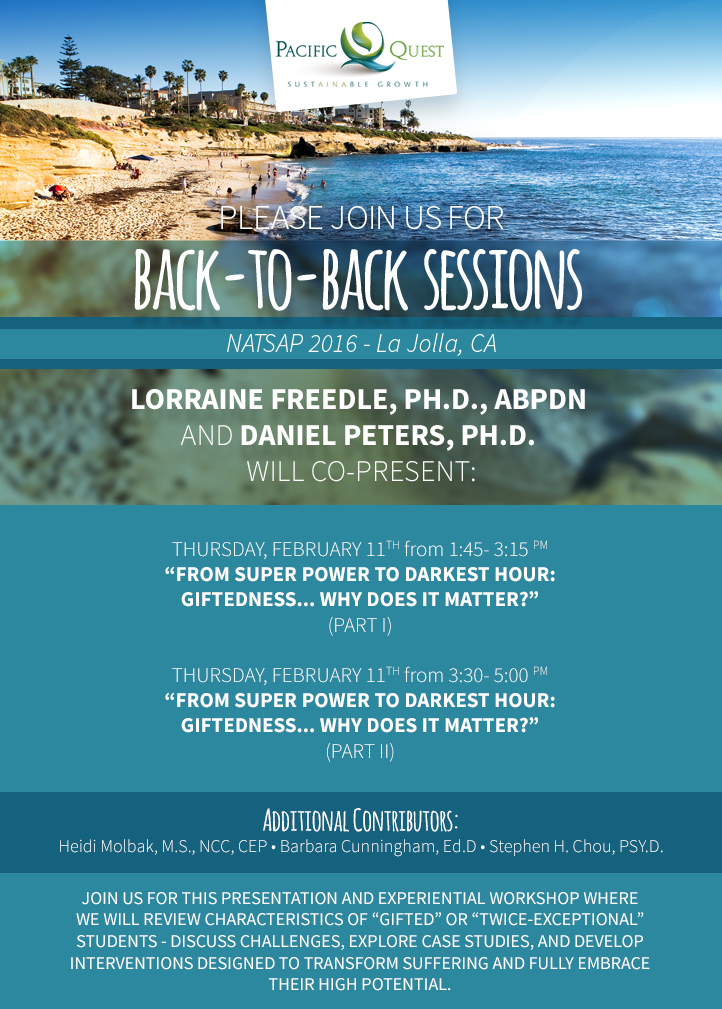
Pacific Quest’s Clinical Director, Lorraine Freedle, Ph.D., ABPdN will be co-presenting at the 2016 NATSAP Conference. The back-to-back presentation entitled, “From Super Power to Darkest Hour: Giftedness… Why Does it Matter?” will take place on Thursday, February 11th from 1:45- 3:15 pm (Part I) and 3:30- 5:00 pm (Part II).
Dr. Freedle and Daniel Peters, Ph.D. will discuss how most educators and mental health providers receive little if any training in the characteristics and needs of students labeled “gifted” or “twice-exceptional (2e).” Gifted and 2e students have unique characteristics, along with tremendous potential and vulnerability. These students are typically more intense, sensitive, excitable and perfectionistic than others, and they are often misunderstood and misdiagnosed. Like other special needs populations, gifted and 2e students require differentiation and accommodation in education and treatment.
Participants in this presentation and experiential workshop will review characteristics of these students, discuss challenges, explore case studies, and develop interventions designed to transform suffering and fully embrace their high potential.
We hope to see you there!
Southern California Alumni Events – Coming Soon!
ALUMNI BEACH CLEAN UP
Date: Saturday, February 13th
Time: 9:00 am- 12:00 pm
Location: Torrey Pines State Beach
Activity: Beach cleanup hosted by Surfrider Foundation
What to bring: Clothes suitable for weather
This is a great opportunity to join forces in promoting healthy oceans and giving back to the community. After all, we all depend on our valued communities and ocean ecosystems, whether living in California or in Hawaii. Let’s work together! After the beach clean up from 9:00-11:00am, we will provide lunch for volunteers and an opportunity to reconnect and visit.
ALUMNI COMMUNITY GARDEN PROJECT
Date: Sunday, March 6th
Time: 10:00 am- 2:00 pm
Location: Wattles Farm, 1714 N Curson Ave, Los Angeles, CA 90046
Activity: Community garden project for all ages – planting, weeding, harvesting, many fun projects!
What to bring: Clothes suitable for weather and gardening projects, sturdy shoes
Join Travis Slagle and Mike Sullivan at Wattles Farm, a 4.2 acre organic community garden in the heart of Hollywood. Join us in giving back through gardening projects and learning more about organic gardening in Southern California. We had a blast at our last gardening event at Golden Gate park in San Francisco – and we plan to make this one even better! We will take a break during our gardening activity to eat a nutritious lunch, provided by Pacific Quest.
Please RSVP! Contact Mike Sullivan, Alumni and Family Services Director at mikesullivan@pacificquest.org
The Power of Gratitude
By Maureen Riley, MPH, MA
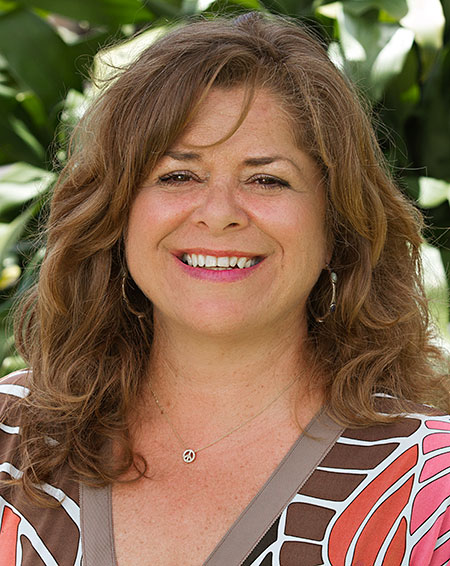 Thanksgiving has passed and the holiday season is upon us. However, for students in a therapeutic wilderness program like Pacific Quest, gratitude is always in season. Feelings of gratitude for one’s family members, life opportunities and material possessions, emerge quickly for students who are away from home for an extended period in a wilderness setting. Many of us can relate to the proverb “absence makes the heart grow fonder.” For students in a therapeutic wilderness program, being away from home, family and many modern conveniences we all take for granted can actually be part of an intensely transformative experience.
The absence of life’s luxuries that many teens take for granted can be shocking at first. Many adolescents report using their cell phones, Netflix and video games as coping mechanisms to relieve stress and anxiety. All too often, parents and other loved ones report being shut out of their child’s world that seems to get smaller and smaller as he/she escapes into a world beyond their parent’s grasp.
In the early stages of the wilderness experience, students are commonly pondering several questions. These include:
- How can I survive without my family and friends?
- How can I survive without electronics?
- How can I survive without my phone?
- How can I survive without my comfort foods?
- How can I survive without my clothes, jewelry, and make up?
Commonly, newly arrived students at Pacific Quest report needing these things as they cannot remember a time when they did not rely heavily on these things to abate stress and anxiety. Throughout a young person’s treatment at Pacific Quest, a gentle shift gradually takes place. The void created by a separation from these ordinary life conveniences and comforts is filled with time connecting to nature, peers, and tapping in to their own inner experience and emotions.
At the beginning of treatment, the silence can be deafening. Ironically, most of us have grown accustomed to our senses being constantly bombarded by the stimulation of sights and sounds of the modern world. Paradoxically, many of our teens view this bombardment of their senses as a comfort they have come to rely on. As students gradually settle into the sights and sounds of the garden, the need for extraneous stimulation gradually fades.
A natural by-product of this process is that many students come to the realization that they took much for granted before their experience in a wilderness setting. Often times, adolescents who have shut out their parents and other loved ones come to the realization that they took their families and the things provided to them for granted. In many teens, this fosters feelings of entitlement. Additionally, the line between “needs and wants” becomes blurred.
The emotion of gratitude is born from the realization and subsequent expression of appreciation for what one has. This is the antidote to the consumer-driven emphasis on the desire to accumulate more things. At Pacific Quest, students experience an intentional process that emphasizes delineation between needs and wants. This process, for many, leads to a natural cultivation of gratitude for the people and things in their lives.
Gratitude is a concept that has received a great deal of attention as the trend towards positive psychology has become mainstream. Credible research on the connections between gratitude, happiness and well-being tell us that gratefulness can be cultivated and grown. A deliberate and intentional practice of looking for things to be grateful for can result in increased feelings of gratitude that lead to elevated feelings of optimism and well-being. At Pacific Quest, the growth of gratitude co-occurs in the same way that the gardens are cultivated and cared for. The results are a bounty of appreciation for people and things once taken for granted.
PQ Therapists Immersed In Art and Sandplay Therapy Training
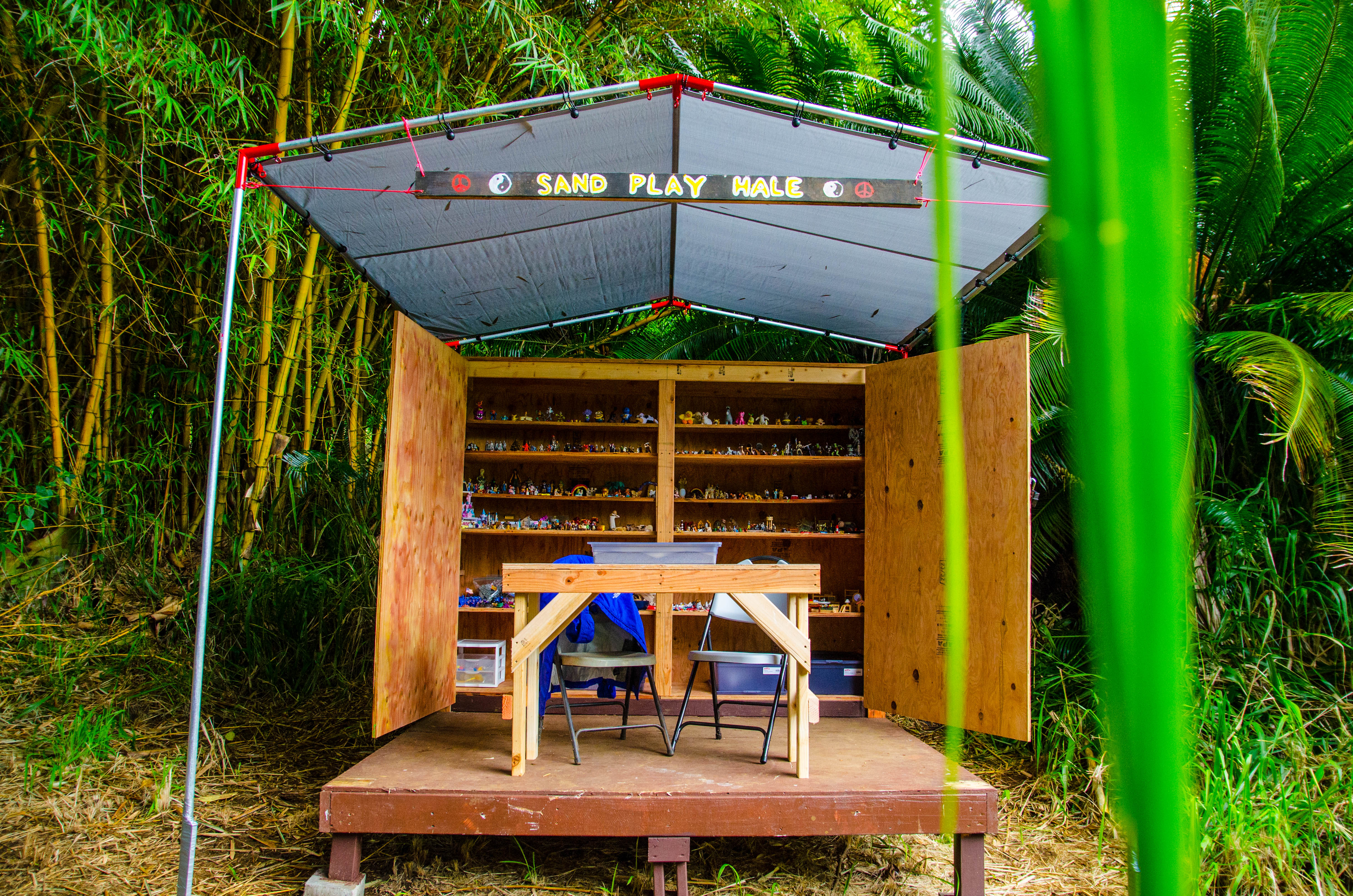 Eight Pacific Quest therapists are currently immersed in the Empowerment and Transformation experiential art and sandplay therapy training program based on the principles of Jungian psychology and the neuropsychology of expressive therapy. Training began in September and will continue until May, 2016. Therapists meet monthly to practice art therapy techniques using mediums such as paint, oil pastels, collage, nature art, and sandplay therapy. Dr. Lorraine Freedle, Clinical Director and international teacher in Jungian sandplay teaches the course.
Freedle states, “It is an honor to bring this powerful training to our team at Pacific Quest. These methods deepen the already robust treatment experience for our students and can really accelerate progress, especially for those who struggle to express their emotions.”
Carl Jung defines the goal of psychotherapy as wholeness of personality through successive encounters with the “lost parts” of ourselves. These parts include our wounds as well as inner resources. Expressive methods like art and sandplay therapy provide a safe and intensive way to access and work through emotional pain to uncover potential – making it possible to move forward in life with a sense of wholeness, meaning and purpose.
Here’s what Pacific Quest therapists are saying about the training:
“This training presents me with a unique opportunity to learn professionally and grow personally. It shows me through direct personal experience something powerful that I can share with my students. I’m very grateful to be a part of it.”
“Sandplay is another modality to help students explore their inner stories, integrating their logical mind with their emotions without relying on words. This training affords practitioners a deeply personal opportunity to understand the healing process from the student’s perspective.”
-Theresa Hasting, LPC-S, LMHC
“As a practitioner I like sandplay because I can do more while talking less; I just find it easier to get in-depth without all the limits of language.”
-John Souza Jr., DMFT, LMFT
“This training makes me a better therapist. Lorraine instills a great respect for the inner quest of the human experience and the relationship between the world we see with our eyes and the world we feel with our heart. I am humbled by the opportunity to weave together the mystery of the sand with the mystery of the Earth and for many of our students, nothing could be more therapeutic!”
-Travis Slagle, MA
Hawaii: A Prodigal Paradise to a Gardener
By Erin Gustin, PsyD
 Students come to Pacific Quest from various parts of the country. Some have never traveled to the warmer, more tropical parts of the world. The plants, weather, and culture of Hawaii are unfamiliar and sometimes shocking to them. Working in a garden is likely something they have not felt like doing before, or have never considered working on the land as an activity that might create self-esteem, or help with anxiety and depression issues. Horticultural therapy is one the five petals of the Pacific Quest model, and it involves a process by which the young person engages in gardening and plant-based activities to achieve their treatment goals.
At Pacific Quest, cultivating and caring for plants are viewed as a metaphor for healthy development, both mentally and physically. Take, for example a plant that is not growing:
A student looks at the seedling questioningly and says “Maybe it needs some water?” and proceeds to water the plant. After a day, the plant is still not growing well. A staff intervenes and asks, “Did you water it?” “Yes, I watered it yesterday,” responds the student. The staff responds, “Why don’t you put it outside where it will get some sun?” “That’s a great idea. I will put it in a place where it will get sunlight. I just hope it’s going to grow well now.” Over the next few days the plant is growing well and the student and staff look in amazement at the beautiful process that just happened of problem-solving and growing something together.
The process of growing a healthy plant, and metaphorically a relationship with yourself and others, involves the same type of work. The student will be required to make strides to grow and make changes to better suit their environment. They will come to understand that things in the world are delicate and sensitive, and that all things can not only grow, but thrive. For each student, the emotional and personal work differs. It may include creating a list of things that they like about themselves, or writing a “not to send letter” to someone who has hurt them in the past. It may involve growing and cultivating things on the land that create self-esteem for the student, or learning to weed to ease their anxiety. For students struggling with anger, they may find release in using a sickle to chop down cane grass or an o’o bar to break up rocks.
Pacific Quest is located in the backdrop of a beautiful island paradise that can support a vast array of plant life. Beyond the physical environment, Hawai’i is an incredibly unique place because of the Hawaiian culture. Native Hawaiian perspectives resonate very strongly with plants growing on the ‘āina (land). Take for example the taro plant:
Early Polynesian settlers brought the taro plant to Hawaii over a thousand years ago. Taro is synonymous with food and nourishment in Hawaiian culture. The taro plant is considered part of the family. The Hawaiian word for family is ‘ohana and is derived from the world ‘oha, which is the name of the stalk that grows from the corm of the plant. Taro is regarded not only as a material object (plant) but also a set of beliefs that pervade every aspect of Hawaiian life from birth to death and from past to future.
Therefore, the interconnectedness between plants and humans permeate all aspects of Hawaiian culture. This perspective is beneficial when facing problems and provides a template for looking at the world in a slightly different and unique way. If we can learn to respect plants, we can learn from them and they will benefit us, just like they have done for people for generations.
Scott Boice Joins PQ’s Clinical Team
 Pacific Quest is excited to announce the addition of therapist, Scott Boice, LPC, LMHC to its Clinical Department. Scott is a Licensed Professional Counselor and a Licensed Mental Health Counselor in the State of Hawaii and will be providing clinical services to adolescent and young adult students.
Scott earned his undergraduate degree from Brigham Young University Hawaii and his Masters Degree in Counseling from The University of Alabama. He has worked in various capacities in several treatment environments including serving as Executive Director at a counseling and consulting company, Clinical Director at a residential treatment center, and most recently as a Senior Administrator and Director of Clinical Services at one of the nation’s top boarding schools.
Scott also has a broad business background that includes a career as an award winning television journalist and a licensed investment consultant. He has presented at national and regional conferences primarily on the topics of effective parenting and attention deficit disorder.
As a therapist, Scott uses cognitive behavioral therapy and other evidenced based approaches. He strongly believes in attachment based treatment modalities and feels that making strong, healthy connections can be an anchor and foundation for people who are struggling emotionally and behaviorally. Scott has exceptional skills in providing individual, group and family counseling to adolescents and young adults in therapeutic settings. He has extensive experience working in the areas of ADHD, mood disorders, effective parenting, wellness, addiction and recovery, and anxiety disorders.
PQ’s Clinical Director, Dr. Lorraine Freedle, comments, “We are very fortunate to have Scott as part of our PQ Ohana and look forward to great things ahead!”
In his free time, Scott enjoys trail running, travel, open water swimming, and has just discovered paddle boarding.
Malama I Ka ‘Aina: A Community Service Project
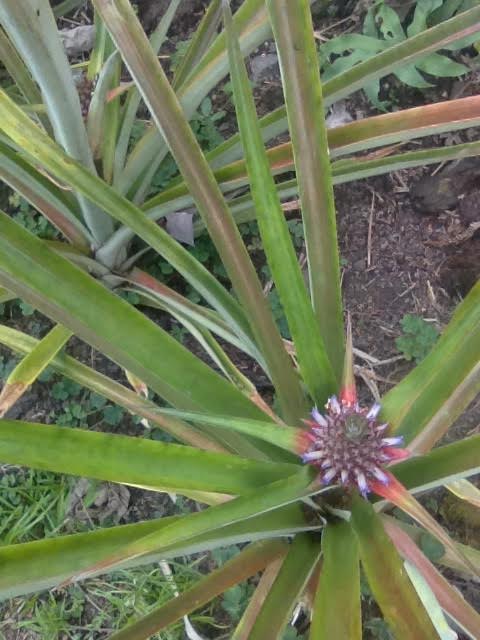 This past Friday, a few of our Malama students took a break from camp to set out into the community of Na’alehu with a purpose. With a trunk full of tools, and smiles on our faces, we took off down the road to a neighbor’s house. In this house lives two, once very active members of our small community here in Ka’u. The wife has been diagnosed with a terminal illness, and the husband, who has been giving his fullest self to take care of her, was recently diagnosed with cancer as well. The students weren’t able to shake the hands of these two, as they were out for the day, but our task was to give them something to smile about when they returned.
“Mike Sullivan… YOU ARE AN IRONMAN!”
Mike Sullivan, M.A., LMHC
Family & Alumni Services Director
It was mile 16 of the final leg of the Kona Ironman World Championship that I hit the proverbial “wall.” My running pace slowed dramatically as my feet began to feel like cement blocks. My hips ached and my stride weakened. My right calf muscle seized with painful cramping. The arid Kona landscape was horribly unforgiving. A slight breeze off the ocean helped cut the intense temperatures and humidity, however, race officials report that the temperature on the asphalt measured 120 degrees Fahrenheit. Heat waves obscured my view of the Pacific Ocean, blurring the horizon line between sea and sky. In retrospect, the wavy horizon line may have been a combination of the heat waves rising from the asphalt mixed with heat exhaustion. My body was certainly doing its best to stay cool under such extreme stress.
At this point I had been on the Ironman course for roughly ten hours– having already completed the first two legs of the race- a 2.4-mile open ocean swim and a grueling 112-mile bike ride with 3500 feet of elevation gain. Only ten miles left to go to complete the 26.2-mile marathon run – the final leg of the Ironman. As I gazed over the ocean at the setting sun, I calculated how much longer until dark, calling into question my goal of finishing in the daylight. For many athletes, this is where the wheels come off. “Hitting the wall,” is too much to overcome. The physical demands intensify and the mental collapse follows. Tentacles of self-doubt invade the mind, deteriorating the mental stamina needed to persevere to the finish. The “mental muscle” is the foundation of success, and when weakened and exhausted, the athlete crumbles.
The day started off great. I swam out to the starting line at 6:50, five minutes before the official start of the race. I looked back at the shore to see the thousands of spectators snapping photos and cheering. Helicopters hovered above, video cameras capturing the iconic start of the world championship. With the sun just above the horizon, the water had a morning glow and pleasant temperature. I acknowledged the soft feel and buoyancy of the salt water, sensing a oneness with ocean. Everything felt like it was falling into place, and at that moment, the cannon fired loud in the sky, signaling the start of the race.
The water exploded with swimmers fiercely charging off the starting line. I knew it would be chaotic and was expecting such, however, as flailing arms, legs splashed water through the air and tiny air bubbles clouded the visibility underwater, it was hard to maintain a sense of direction and calm. My head was kicked, almost knocking my goggles off of my face. People were scrambling over and around one another, vying for position. I had to even my keel. I focused on my breath, maintaining the consistent steadying breath that carried me through a year of training. I became mindful of each arm stroke, each kick, and keeping my head level. My mind and body merged, the chaos decreased, and I glided through the water. Throughout the 1:22:18 I was swimming, I maintained a mantra I learned in training at the pool- “I can do this all day.” This mantra grew to be a self-affirming belief that carried me through the race.
As I neared the end of the swim, I began running through my mental checklist of what I needed to do in T1 (Transition 1- swim to bike). I mentally walked through the process of taking a quick shower, throwing on my socks, cycling shoes, helmet, and glasses. Lastly, and importantly, spraying as much sunscreen as I could to prepare for the 112-mile bike ride. This proved to be valuable preparation, as I was wobbly and a bit disoriented when I got out of the water and climbed the staircase onto the pier. I transitioned onto the bike and was pedaling up the street in a matter of minutes (4:37 to be exact!).
The cycling leg is proportionally the longest part of the race. It took me 6:13:49 to bike the 112-mile trip to Hawi and back. The Kona Ironman has a reputation for being the hardest of all Ironman courses, largely because of the heat and humidity, and also because of the quintessential wind on the cycling course. The wind gusts have historically been so extreme, that cyclists have literally been blown off the course and crashed their bicycles. I have trained in winds like these, gripping my handlebars and repeating prayers of survival under my labored breath. This year, the wind was rather moderate, with the most significant winds being head/tail winds. I was thankful there weren’t side winds, however, the headwinds were somewhat debilitating. I persevered through the conditions, maintained focus, and kept my muscles firing at a consistent cadence. My cycling practice helped me recognize the importance of attention and relaxation. The bike is moving at a high speed and it is important to maintain focus on the road and avoid obstacles (and flat tires!). I also paid close attention to the nuances of my body and where I was holding stress. I kept my neck and back loose, and reminded myself to release my shoulders down.
Knowing running is my strength, I was eager to get off the bike and start on the marathon portion of the race. The cycling waned on for an eternity, exacerbated by a grueling headwind for the last 25 miles back to Kona. My bony butt hurt with each pedal revolution. I returned to my morning mantra of “I can do this all day,” and kept putting one foot in front of the other. As I descended the final street into Kona and saw the spectators cheering from the sidelines, I felt a wonderful sense of elation and rejuvenation. At that point I knew I was going to crush the run. Excitement pulsed through my veins.
My transition from bike to run (T2) was slow, yet it seems to be what I needed. Not only did I stop for my only bathroom break on the course, but I also was given an ice cold wet towel to put over my head and shoulders. It felt divine! Cooling off at this point was dangerous, as I slowed to change my shoes and talked with some of the other athletes at the same time. I now see why my transition time was more than nine minutes- I was enjoying cooling off a little too much.
I broke out of the transition area at a fast clip. I felt great on my feet. Spectators cheered loudly waving signs and hands. I encountered my family and friends, clad in green Peak Self t-shirts cheering ecstatically. I smiled HUGE and my pace accelerated. I felt like I was floating on air. My watch beeped, indicating I had completed the first mile. I looked down and was stunned. I had run the first mile at a 6:30 pace- an incredibly fast gait. I slowed my pace a bit and put my body in gear, ramping up for the next 25 miles of running.
My body was firing on all cylinders. Fear, doubt, and extraneous thoughts melted away and I entered a “flow state.” Mihaly Csikszentmihalyi, pioneering positive psychologist originally from Croatia, describes the flow state as extreme presence. I wasn’t thinking, rather, I was in a state of knowing and experiencing. My mind and body became one. I glided past a multitude of athletes- calm, collected and feeling strong.
At mile 13 I climbed the hill out of town and turned north along the desolate stretch of highway. I was officially half way through the run. I maintained my pace for another 3 miles and then I hit the “wall.” I wanted to maintain the tremendous pace I had maintained thus far, yet it was slipping away from me. I felt helpless to reclaim it. I honored that my body was hurting and slowed it down, choosing to walk slowly through the aid stations and focus on nutrition and electrolytes. I drew on my psychological tool bag- using positive mental imagery. I imagined myself running through the finish line. I tapped into the gratitude I held for all the love and support from friends and family. Lastly, and critically, I tapped into my most important tool: a sense of knowing that I was going to be successful. I worked hard to sculpt this “knowing” over 34 years of living, and this was my chance to unleash it. I pushed through miles 16-20 and overcame the “wall,” launching into a strong finish. The last 5 miles were fast, culminating in a two-mile sprint to the finish.
I fought to race to the setting sun. I was in hot pursuit as the sky turned pink and faded to dusk. As I neared the finish line, I lost track of the sky. The finish line culminated in a final chute, lined with spectators and giant fluorescents lights. As I entered the chute I felt like I was soaring. Faces of family and friends emerged and then blurred as I sprinted by. I threw my arms in the air as I crossed the finish line at 11:23:34. I finished the race in a true Ironman euphoria, elated and high on endorphins. I had done it. The announcer echoed through the speakers, “Mike Sullivan… YOU ARE AN IRONMAN!”
I want to share my gratitude for my family, friends, teachers, mentors, healers, role models, and students who helped me achieve this unparalleled goal. I couldn’t have done it without you. Further, I want to thank everyone who came to the race and endured the berating sun. Having such a fantastic ohana throughout the race and at the finish line was hugely inspiring. I want to thank Pacific Quest for the amazing support throughout the past year (or six rather!). Thank you!!
In The Field: A Conversation with Program Supervisor, Deborah Givens
 Deborah Givens, BA
YA Program Supervisor
Deborah is a Program Supervisor at our Young Adult program. Her primary responsibilities are risk management for the program and providing field support for the students and guides during daily field operations. Program Supervisors are the first line of support for the Program Guides. The position is a residential shift that requires being “on-call” 24 hours a day and staying at the facility, as well as spending time in the various groups/camps.
Tell us a little about yourself…school, previous experience?
I graduated from Trevecca Nazarene University with a Bachelor’s degree in Interpersonal Communication in May of 2014. Before coming to PQ, I had spent four years running a teen quiz program and three years working with young adults as they transitioned into college. In both of these programs, I enjoyed being able to work with young adults as they explored their own abilities and struggled to figure out how those could align with the kind of person each wanted to be in their communities. It was rewarding work that I am pleased to be able to continue while at Pacific Quest.
What brought you to PQ?
The horticultural emphasis was what originally drew my attention to PQ. It was new and interesting and I’d always wanted to learn how to garden but never felt like I had the right time, space, or tools to do so. I was also drawn to the therapeutic approach that gardening implied to me: a more deliberate focus on caring and tending to wounded areas in the students, rather than the “break ’em down to build ’em up” approach that some survival-based therapeutic programs seemed to use. PQ’s approach allowed me to care for others in a supportive way while also enabling me to learn a new skill I’d been interested in. That’s why I’m here.
Where does your motivation to work in this field come from?
No matter which end of therapy you’re on, therapeutic work is often exhausting. What motivates me are the small moments that are found in the midst of that work: the classic “lightbulb” moments, the times when a student finally opens up and entrusts me with a piece of their story, seeing the students gather together with guides for shared meals and laughter…these quiet moments encourage me that the work I am doing is worthwhile. In my experience, people need to know that they matter; the more an individual is hurting, the more that person needs to know that he or she is not forgotten. I do this work so that others will know that someone sees them and that their story matters.
Describe your attributes that you bring to the field.
I try to bring a calm, practical point of view to my work in the field. It helps balance out the highs and lows of a normal day and reminds us all to take a deep breath when things get hectic. I also let myself act a little bit silly throughout the day. I think that we need to be reminded not to take ourselves and our problems too seriously all the time and silliness can be a great rapport building tool with students. I’m also a detail-oriented person; in the field, this means that I help the day to run smoothly from one session to the next and I like to help others problem-solve when conflicting needs arise within the community.
What are some of the most rewarding aspects of your job?
Being part of such a great team is one of the most rewarding parts of my job. I love the care and intention that most people bring to the field and it’s great to be able to bounce ideas off of each other. I also feel really rewarded when I see new guides come in and start feeling comfortable enough to lead their own group sessions; it’s great to see the variety of talents and perspectives that work with our students and it’s amazing to see the students respond to that as well.
What’s the most important thing you’ve learned about yourself from a student?
From my students I’ve learned that sometimes my appreciation for problem-solving can become overwhelming for others. I’ve learned to step back and recognize those situations where the problem doesn’t need to be solved right away. I’ve also learned a lot about how to empower others and found a few techniques that work well with my personality.
How will working at PQ prepare you for your next step in life?
My intent in coming to work for PQ was to develop more practical leadership techniques and to learn more about how individuals’ past experiences impact their current actions. No matter what my next step turns out to be, knowing how to work well with others and how to motivate a group can only help. I’ve also learned just how interested I am in helping others develop their skill sets and I look forward to incorporating this passion more in my current role at PQ as well as in whatever next step I end up taking.
It’s Race Day!
 Mike Sullivan, M.A., LMHC
Family & Alumni Services Director
The air in Kona is electrified! It is World Championship Ironman race week and the world’s most elite athletes are pouring into town. The streets are packed with sinewy triathletes clad in neon triathlon suits acclimating to Kona humidity and sweltering temperatures. They pedal machines that cost more than some cars, and can be seen hopping off their bicycles and transitioning into running at lightning speed. One can feel the intensity in the air. I can feel it in my blood- as I will be on the starting line with 2,500 other athletes and thousands of spectators from around the world.
The mental and physical preparation I started ten months ago are in high gear. I have been appropriately “tapering” my physical workouts to allow my muscles to rest and rehabilitate, maximizing their performance for race day. Mentally, I am feeling confident and excitment. That being said, I am also hyper aware that I am walking into an unknown territory, and tread lightly with humility. Despite the significant training I have completed, none of it has tested my psyche to a degree that the actual 140.6 mile race will. What will my body feel like during a marathon, after completing a 2.4 mile swim and 112 mile bike ride? What justifications will my mind conjure, convincing myself of the reasons to give up and not finish? Interestingly, the body is adapted to do remarkable things to evade danger and promote survival, however, we are not adapted to put ourselves through such strain with no threat to our existence. The mind will strive to take over and preserve the body by convincing oneself to stop. One must overcome the body’s natural instinct to preserve energy, and push through to new extremes.
The Kona Ironman will be an exploration into my personal depths. My training has reinforced and entrenched important qualities, including tenacity, self discipline, and commitment. I am sure that the race itself will deliver other valuable lessons in the areas of vulnerability, resilience, and trusting in oneself. I feel lucky to have the support of my family, friends, and my ohana at Pacific Quest. Because this race absolutely implores people to dig as deep into themselves as possible, it is critical to be surrounded by such love and optimism. I am eternally grateful.
Please follow me on race day! The official Ironman website has a live “Athlete Tracker” that is automatically updated online. Follow links from the Ironman Homepage and use my name or bib number 1738 to get a live feed of the race: https://www.ironman.com/triathlon/events/americas/ironman/world-championship.aspx#axzz3nkqq0oag
I look forward to publishing another blog article following the race. Stay tuned to hear about it first hand!
Second Annual Ka’u Coffee Trail Run
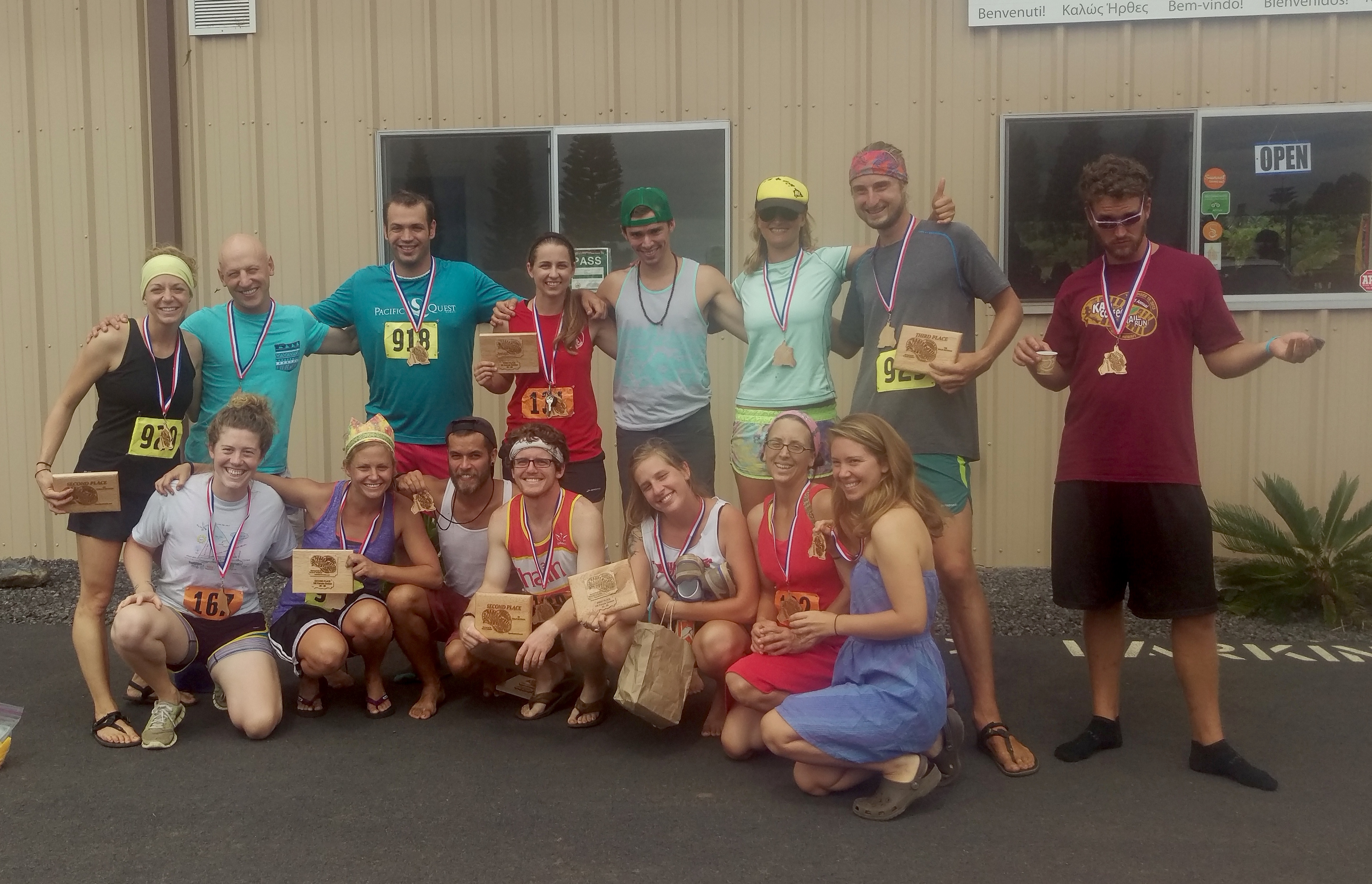 On Saturday, September 19th, approximately 18 Pacific Quest employees participated in the 2nd Annual Ka’u Coffee Trail Run–The Southernmost Coffee Trail Run in the USA! The goal of this event was to help raise money for the economically depressed community, via the non-profit organization O Ka’u Kakou. All funds raised went to O Ka’u Kakou to help them better serve the community and become more self-sustaining as well as to promote Ka’u coffee and to promote Ka’u as an international tourist destination.
Staff members registered for either the 5K, 10K or half marathon. Pacific Quest took Second Place overall in every race!
5k- TJ Kuhn (2nd)
10k- JP Swanson (2nd), Kyle Sullivan (3rd), Meggie Olsen (1st Overall Female)
Half-Marathon- Topher Fast (2nd)
A group of PQ students attended the post-race ceremony and were very excited to cheer on the staff as they received awards for finishing the run. The students were eager to give back to the community and they worked together, taking down several large tents and cleaned up the area where the ceremony and performances took place.
Pacific Quest’s Adolescent Field Coordinator, Mike McGee, who ran the 10K, comments, “As for me, I had a blast! It was great to see community members that we have worked with over the years on community service projects here in Ka’u. The race is the hardest race I have ever done, with 2,800 foot or so climbs in the middle on the course. It was a great atmosphere, with the dancers and great food given to participants. It was nice for the students to see the staff here as real people that “live the life” that we teach about.”
Thank you to everyone who made this event a success! Go Team PQ!
Making Connections: Healthy Attachment and Healing
By Tom Jameson, MS, NCC
Primary Therapist
The Father of Attachment Theory, John Bowlby, described attachment as the “lasting psychological connections between human beings.” The way in which humans attach to others has been proven influential in terms of how individuals relate to others, themselves, and the world.
Research has found that a person’s attachment style impacts behaviors throughout his/her life. Failure to form secure attachments early in life can have a negative impact on behavior in later childhood and throughout adulthood. Disruption in the parent-child relationship, issues related to adoption, and early trauma are all factors which can negatively impact an individual’s attachment style.
At Pacific Quest, we work to help our students and families understand the importance of attachment and the devastating effects unhealthy attachment styles can have on individuals and family systems. Some PQ students have experienced attachment disruptions early in their lives. These situations have impacted their ability to connect with others, form a healthy self-esteem and self-concept, manage their own emotional states, and form healthy and secure relationships. At PQ, we treat attachment issues by helping students understand how past experiences with caregivers and significant others, shape coping patterns. We assist students and families in recognizing how established patterns may work to protect them initially, but later contribute to poor relational health.
Pacific Quest seeks to heal attachment wounds by working with individuals to find alternative ways to meet their unmet needs and learn how to form long lasting healthy attachment bonds. We help students and families to not only modify ineffective coping strategies, but to better understand the underlying, unmet needs that are satisfied by ineffective coping strategies. Pacific Quest aims to help our students learn alternative ways to satisfy their psychological or emotional needs. Our focus on relationships, and providing consistent, safe, and nurturing care creates a healing environment where students first learn to regulate in the garden setting, and then begin looking at ways in which they struggle with attachment issues. Pacific Quest provides a safe container where students and families begin to process and heal old wounds, and emerge with a healthier understanding of attachment issues, thus creating the opportunity for healthier attachments in relationships as they move through life’s transitions.
Staff Spotlight: Academic Coordinator, Janna Pate, MA, MS
 Janna earned her Master of Science in Special Education through the New York City Teaching Fellows Program at Pace University, as well as her MA in English from Texas Christian University. Before coming to Pacific Quest, Janna taught English at a high school for students with severe emotional issues in the Bronx. She also taught at a high school for students with moderate to profound disabilities, including students with intellectual disabilities and autism. Janna also taught high school students at a psychiatric hospital in Seattle.
In addition, Janna has five years of experience teaching writing and training writing tutors at the college and community college levels. She also has experience teaching GED and working as an editor for a textbook publisher in New York City.
As the Academic Coordinator at Pacific Quest, Janna’s goal is to teach students and staff how to integrate the curriculum into their daily practices so that the lessons become a way of life.
Janna is passionate about creativity, collaboration, and choice in education. She is dedicated to providing individualized services that meet the learning needs of each student in the program.
Program Guides: The Heart & Soul of Wilderness Therapy
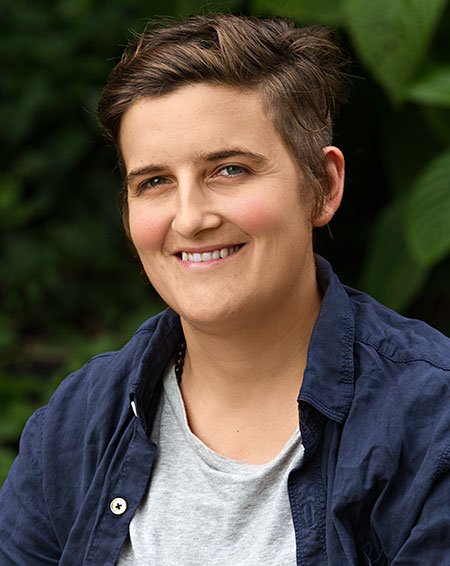 By Clementine Wilson, Field Manager
Anyone who has worked as a wilderness therapy guide has probably struggled to answer the question: “what do you do for a living” or “what’s your job like?” As a former guide, I’ve certainly struggled to find the words to explain the incredibly unique and challenging role of the professional Program Guide in this industry.
As a former Program Guide and now, as a current Field Manager who is directly responsible for training, developing and supporting our Program Guides, I continue to be humbled and amazed at the depth and complexity of responsibilities expected of this role. I hope to use this space to shine a light on the professional guide role, and to give a heartfelt shout out to all the amazing individuals who are showing up every day to help our students find their own identity, strength, motivation and self-worth.
I recently attended a professional workshop titled “Being a Grounded Anchor.” The presentation focused on field guides and dissecting their complex and dynamic role in the wilderness therapy industry. Professional guides and other leaders in the industry discussed what traits, goals and skills makes them successful and effective in the field.
So what does it mean to be an effective guide? As we discussed in this workshop, an impactful guide is patient, knowledgable, empathetic, inspiring and fun. Consistently carrying these diverse traits through the uncertainty of day to day life with our students is no easy task. From dawn until after dark our guides live, breathe, cook, eat, clean, exercise, farm, study and celebrate alongside the students. They teach the students our curriculum and demonstrate healthy mentoring through harnessing teachable moments and passing on important and relevant life skills through role modeling and practical testing. They are there through all the ups and downs, constantly readjusting plans and expectations, while still challenging and encouraging each student toward growth and wellness.
It’s important to note that Program Guides are not responsible for making the students care or to do the work for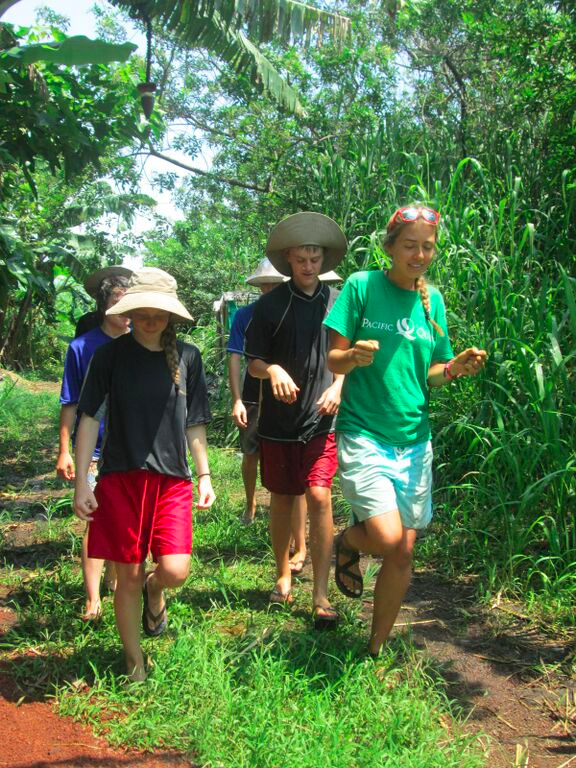 them. They are, however, responsible for showing the students what it means to care – what does it look like to care about something? Why is it important to care? As a mentor of mine once stated “we are there to show the students that adulthood is worth it.” This is achieved through genuine and authentic role modeling and mentoring.
The Program Guides are an integral part of the treatment team out in the field. The therapist/guide relationship is incredibly important to bring about healthy change in the students. This dynamic collaboration has the potential to harness the professional expertise of both clinician and the Program Guide. Program Guides facilitate therapeutic interventions, follow through on treatment goals and are consistently the eyes and ears of day-to-day life in a group focused therapeutic environment.
In our specific horticultural therapy setting here at PQ, the Program Guides show the students that we don’t grow food just for ourselves, we grow for each other. They show them that we rely on the hard work and vision of the past in order to harvest today; we rely on the motivation and vision of the present to plant seeds for the next generation; and we hope for a future that cares enough to water. This isn’t just about farming, it’s about living an authentic life and being a contributing member of a community. It’s also about finding place and identity through connection to ancestry and legacy.
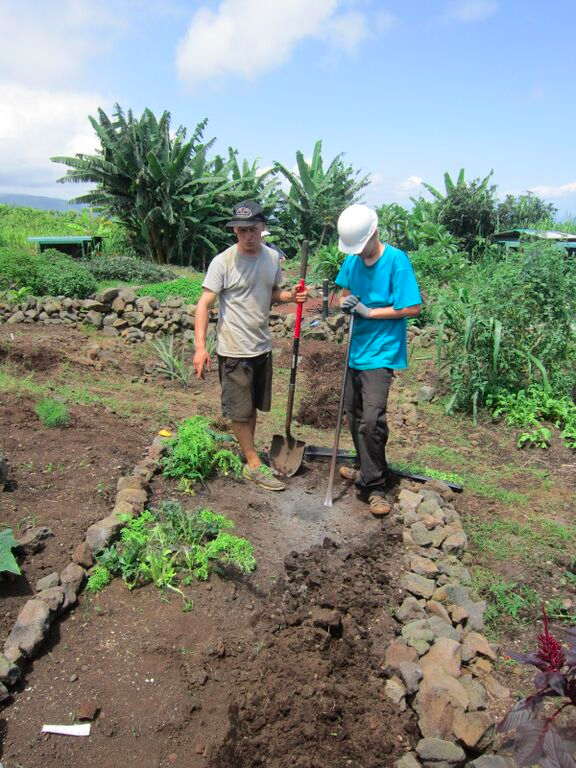 To be a grounded anchor means to stay steady in uncertain waters; to be consistent and trusted. An anchor is a source of security and stability. These traits are essential for maintaining physical and emotional safety in any outdoor therapeutic program. Another metaphor to describe the role of the Program Guide is “captain of the ship.” An effective captain is skilled at listening and reflecting; demonstrates consistency, and is calm, concise and confident. A captain obviously can’t control the weather, but does control how to navigate the weather safely and effectively.
My hope is that this brings some clear awareness and respect to the hard work our Program Guides perform day to day out in the field. If you are a professional Program Guide reading this post, thank you for your ongoing commitment, awareness, responsibility and effort.
Blog Entry #2: Ongoing Revelations of an Ironman in Training
Mike Sullivan, M.A., LMHC
Family & Alumni Services Director
 With the race approaching in less than a month, Ironman training is in full swing! Training has ramped up to 20+ hours per week, including relentless swimming drills, 100+ mile bike rides on the Kona coast, and jungle runs. This has been an epic “El Nino” summer for training, with hurricanes and tropical storms. Needless to say, I’ve experienced the wonders of nature – cycling in hellacious headwinds and running in knee deep water through flash floods. Through it all, I’m still going strong and feeling better than ever about competing in the Kona Ironman World Championships.
While I’ve always been a big fan of getting active, Ironman has catalyzed more reflection on the psychological and physical benefits of exercise. During those 6+ hour bike rides in the sweltering Kona heat, I realized that I wanted to dig into the biochemical changes occurring on a molecular level. The literature suggests that moderation is key (which is tough for an Ironman to stomach), but it’s important that we allow our bodies time to rest and recover, especially when pursuing extreme endurance events. Regardless of the intensity of your exercise, movement is critical and even an hour of exercise a day has incredible benefits.
Neuroscientists are exploring the benefits of exercise in great detail- mapping out the changes which occur in our brains. Scientists are validating much of what people experience on an intuitive level – that exercise makes you feel better. After an hour of aerobic exercise, many people will report feeling happier, less stressed, with increases in attention span, and a more positive sense of self. We can all relate to this on a phenomenological level and it is great that science is providing more insight into the mechanisms responsible for such feelings.
How it works:
- On a neurological level, exercise helps with brain plasticity, ie, the brain’s capacity to regenerate and adapt. Neural pathways are responsible for sending all the signals throughout the nervous system. Healthy, adaptable neural pathways are critical for processing information (memory/cognition) and emotional regulation.
- Our bodies naturally produce cortisol, the main “stress hormone.” Too much cortisol is a bad thing. A little cortisol is a good thing, as it sharpens focus and signals the brain to function more effectively. Aerobic exercise creates a buffer against excessive cortisol, keeping our stress levels more balanced.
- Aerobic exercise is responsible for the production and secretion of endorphins which have an antidepressant effect, thus elevating mood and self esteem.
Despite the science and the intimidating vocabulary associated with the brain, we all have experienced the benefits of exercise on an experiential level. Get out and move your body. You will feel better. I will need to remember this as I persevere through a twelve hour Ironman!
Defining Feature: PQ’s Accredited Academics
Did you know that Pacific Quest has a fully-accredited Academic curriculum? During a typical eight-week stay, Pacific Quest students have the opportunity to take six academic courses for a total of 3.5 academic credits in the following subject areas:
- Career and Technical Education – Horticulture Pathway (0.5 credits)
- Health Education – Health Education (0.5 credits)
- Language Arts – English and Language Arts (0.5 credits)
- Physical Education – Lifetime Fitness (1.0 credit)
- Science – Environmental Literacy (0.5 credits)
- Social Sciences – Hawaiian Culture (0.5 credits)
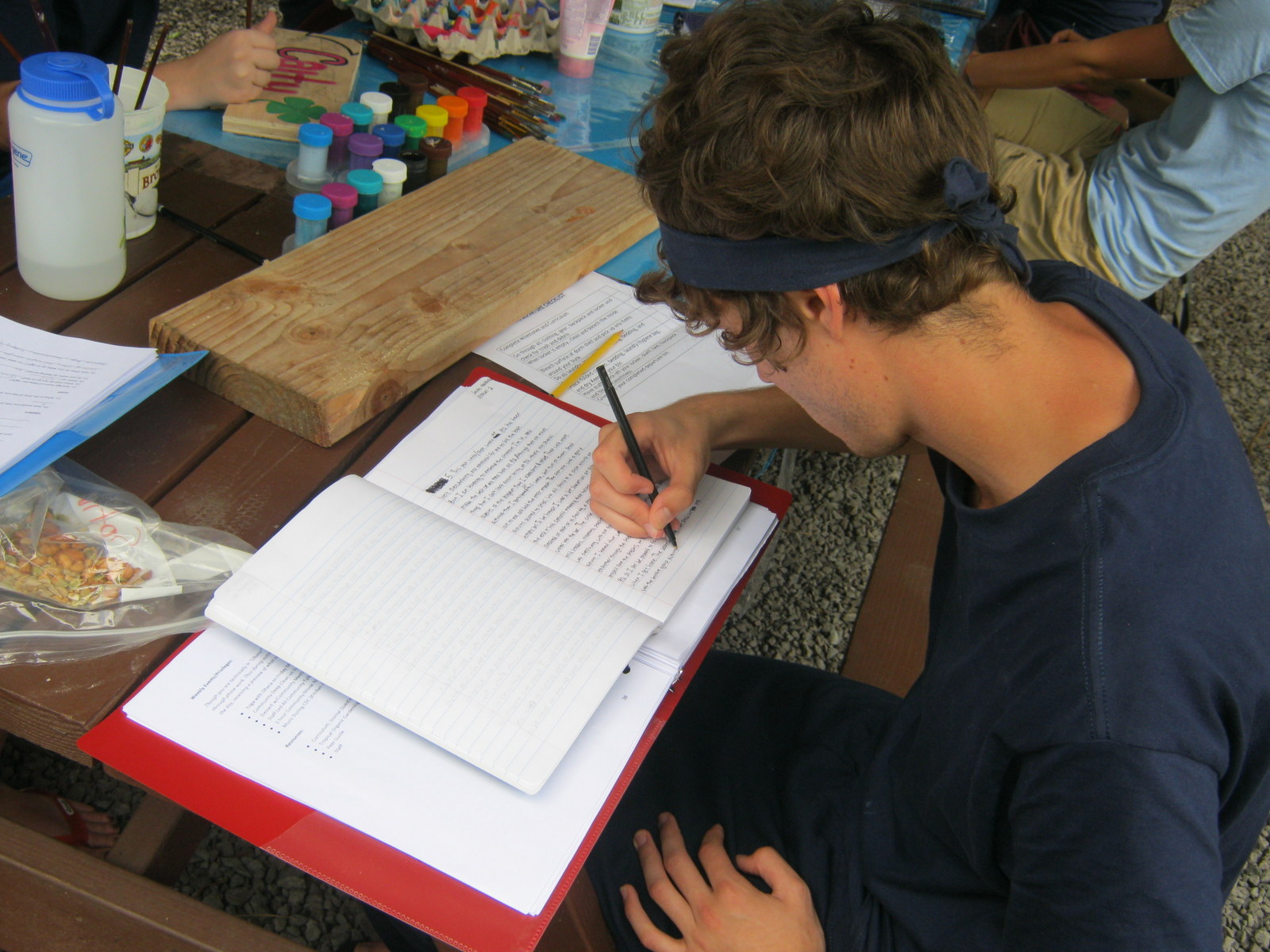 Additionally, students who stay longer than eight weeks have the opportunity to earn additional credits in Language Arts, Physical Education and Career and Technical Education. Pacific Quest also has the ability to tailor a specific class to a student’s individual journey and provide specialized accommodations for learning differences.
These specific courses are aligned with Pacific Quest’s therapeutic curriculum, the Common Core Curriculum and National standards, providing a well-rounded educational experience which incorporates opportunities for both academic learning and therapeutic growth. These transferable credits are issued through Pacific Quest’s accreditation with AdvanceEd and the North Central Association Commission on Accreditation and School Improvement. To review detailed course descriptions, click here.
ACCOMMODATIONS AND INDIVIDUALIZED LEARNING
Pacific Quest integrates Individualized Education Plans (IEPs) and accommodations for students’ learning differences, such as Dyslexia, Dyscalculia, Dysgraphia, Dyspraxia, Dysphasia and Aphasia, Nonverbal Learning Disorders, ADHD, Autism Spectrum, Asperger’s Syndrome, Pervasive Developmental Disorder and others. Access to accommodations assures that our students have equal access to our Student Curriculum and therefore, equal access to success.
LEARNING STYLES AND MULTIPLE INTELLIGENCES
Pacific Quest also integrates learning styles and multiple intelligences into daily activities and assessments. We believe that this integration emphasizes our students’ strengths and fosters greater success. Our team members strive to help students discover their unique learner profiles, and build upon success. Utilizing a student’s learning style and multiple intelligences, we work to form a powerful and integrated model of learning — a model that respects and celebrates diversity and provides our students with the tools to achieve sustainable growth and academic success.
PQ’s Mike Sullivan to compete in the 2015 Kona Ironman World Championship
 I never imagined that I would find myself on the precipice of such an athletic feat. A typical Ironman triathlon is a grueling 140.6 miles of swimming, cycling and running. The Kona Ironman World Championships is the granddaddy of all Ironman triathlon – an international competition amongst the world’s most elite triathletes competing in the intense temperatures and humidity in Kona, Hawaii. The desert environment is one of most inhospitable climates for racing, and thus the platform for the world championship.
A year ago at this time triathlon wasn’t even on my radar. I was an avid surfer, pushing my athletic edge in the Hawaiian surf. I missed my days of running, and sought out physical therapy rehabilitation for persistent knee pain. My physical therapist assigned me to start inching my way back into distance running, with ½ mile easy runs. October 2014 rolled around and I spectated at the 2014 Kona Ironman World Championships for the first time. The energy was palpable. The triathletes were another breed. It seemed so foreign and yet alluring. After watching the awe-inspiring athletes push their physical and mental limits on race day, I immediately registered for the ½ Ironman the following spring. And the training commenced immediately.
I increased my running distances. I bought a bicycle. I learned the etiquette at the pool for lap swimming. While surfing still had my heart (and it was a great winter of surf!!), triathlon training slowly snowballed, garnering more of my attention. The ½ Ironman went very well, landing me in the Hawaii resident lottery for the full 2015 Kona Ironman World Championships. On June 15, 2015 the winners of the lottery were announced, and my name was amongst them. I had 4 months to prepare for the big race.
My life took a drastic turn. I put surfing on the back burner and channeled all free time into race preparation. If I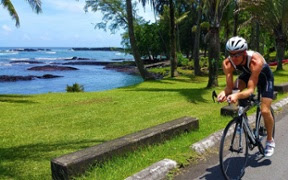 am not completely enveloped in nutrition, recovery, yoga, or planning, I am running through the Hawaiian jungle, swimming in the ocean, or cycling through the arid lava landscape of Kona. Race preparation has taught me more than the expertise of counting calories and calculating training regiments, it has taught me about the depths of my psyche. My mind-body connection is pulsing stronger than ever. Triathlon has snowballed into a spiritual pursuit.
I plan to blog about interesting aspects related to my “road to Kona.” Stay tuned for more installments blending my interests in psychology and fitness. I want to thank Pacific Quest for their support in this process, as PQ has served as an integral part of my personal evolution and awareness. Pacific Quest has brought to life in the garden a similar phenomenon, which I practice in my training – self-efficacy, motivation, metacognition, and identity development.
PQ to Present at Wilderness Therapy Symposium
The “Dirty Work” of Transformation: Horticultural Therapy & Rites of Passage
Presentation to be held Saturday, August 29 in Park City, Utah at the OBH Wilderness Therapy Symposium
 PQ’s Horticultural Therapy Director, Travis Slagle and Adolescent Field Manager, Clementine Wilson invite you to join them as they present: The “Dirty Work” of Transformation: Horticultural Therapy & Rites of Passage. This experiential presentation will be held Saturday morning, August 29 at the Outdoor Behavioral Healthcare Council’s annual Wilderness Symposium in Park City, Utah.
Travis states, “Our goal is to create lasting change for clients in treatment, and we can do this with a nature-informed approach using horticulture and rites of passage as a primary therapeutic activity and life-affirming experience. The ultimate goal isn’t how our clients do in treatment, it’s what they do when they leave. When we plant a seed, we set an intention for the future, and when we care for the seed, we practice a fundamental skill of putting our intentions into action; to identify new ways of caring for ourselves, our families and our communities.”
Clementine adds, “This workshop begs the question of how did the ancient nomad discover sacred agriculture and why does this matter to you?” At PQ, rites of passage are broadly defined as an intentional transition from one stage of life to another. This model of youth initiation has been practiced in nearly every culture across human history. However, before the advent of self-development, the purpose of rites of passage was to go beyond the self, to improve society and cultivate authenticity for the sake of our families and communities.”
During this workshop, participants will be asked to imagine the future of wilderness therapy, to look beyond the celebration of a peak experience and discover ways in which horticulture and rites of passage share a common goal. Participants will leave with practical skills that can be applied from rooftop to mountaintop, family backyard to residential treatment; inspiring effective approaches to transformative change.
Internet Addiction: Our Son’s Journey of Healing
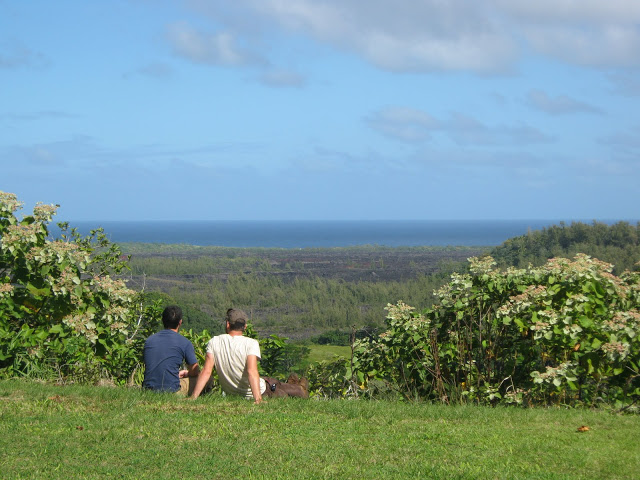 As parents, we were really at a point (like many families) where we had exhausted what few resources we had available to us. Our son has learning differences but had never been diagnosed on the spectrum. We had always thought wilderness programs were for kids who were out of control, bad behavior, drugs and alcohol. This was not our problem. Our son’s addiction to the internet (inappropriate content in particular) and how it was affecting him was really our problem. This is really difficult to deal with since it isn’t something you talk to people about every day and we found very few specialists that were able to really address it correctly. What he learned on the Internet affected the way he socialized over texting. Then you add in the social problems associated with ASD and it was a mess. We felt so alone and so did he.
At the beginning, PQ was really hard for our son. We felt so fortunate to have such awesome therapists. We were very thankful that our therapist was added on to our son’s team since it was a complex case. The therapist really talked us through so many levels. We really appreciated the healthy living choices and care of the support staff around our son. We appreciated the levels of transition that the kids go through. It was so helpful to receive the pictures and updates weekly, very important, when we are so far away.
PQ assessed our son’s medication and helped with further assessment in a very timely manner. They responded to our questions quickly. The outdoor work and environment was very good for our son. He is happy to be working on things to keep him busy and felt a sense of accomplishment finishing projects. He also learned a lot about the plants, etc., which he enjoyed sharing with us. Our son felt close and safe with his therapist. His therapist’s straightforward attitude worked well with our son. Of course it wasn’t roses all the time, it was excruciating for us at times when our son was struggling. We all questioned at times if this was the right choice. We are all sure now that it was the right choice.
One of the hardest decisions for us was to put our son in a residential therapeutic school following PQ. We wanted him in a certain geographic area and at the least restrictive environment. We hoped for more of a school that goes back to working just with his LD. We credit our son’s therapist for really getting us through this block. The combination of issues that our son had with ASD made it very challenging to find the right placement after PQ. The school we chose has been very good.
Our son has done very well in his therapeutic boarding school. The good news is that our son is going to college. Prior to Pacific Quest, he had lost interest in pursuing education further since learning was so hard. At this point, he has decided to pursue his interest in Hotel Management School again. We are thankful for PQ and look back on it as a very good experience.
Connection, Understanding and Knowledge: One Family’s Pacific Quest Journey
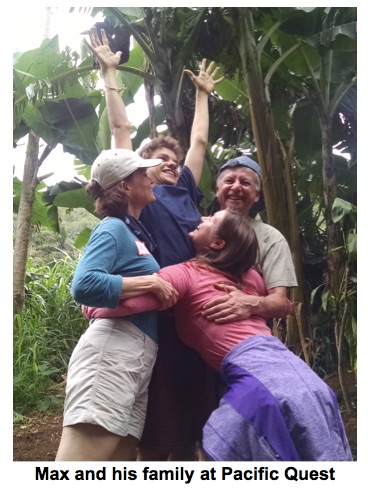 PQ was a life-changing experience for our family. As a family unit and as individuals we all grew through the program. One of the most important things we learned was that this wasn’t just about our son/stepson; it was about every single member of our family and how we fit together. The work we did together as a family with the therapy team at PQ started before we’d even decided to place our son at PQ. I really felt that the team understood what a huge decision this was for us, and that translated into our being able to ask as many questions as we needed to help us feel secure in our choice.
Once we were in the program, the support and information we received was invaluable. I never felt like I was part of a machine, and I always knew that our son was safe and in the right hands. The feedback we got about all our progress was timely and honest. For me, one of the most important feelings I got from PQ was connection. I felt connected to the program, connected to the process we were following and connected to the people who were helping us through the process. One of the strongest connections was that I felt with the other parents we met along the way. I will never forget the relief, the warmth and the comfort I felt from everyone in the room on the day we shared our family stories. From talking with our son, he felt the same connection with the other young people too, and this helped him cope with the things he is dealing with. As a family, we were transformed. As individuals we are stronger. Our future path is one of understanding and knowledge.
Our son left PQ a few weeks ago now, transferring to a therapeutic boarding school environment where he has happily settled and is making great progress. He looks back at his PQ experience with pride and humility, knowing that it set us all on the right path and understanding that the work we did at PQ has helped us all grow.
Quieting the Chaos: Encouraging Mindfulness in Adolescents
Tom Jameson, MS, NCC
PQ Therapist
Many of the students who come to PQ present with anxiety, depression, impulsivity, emotional regulation issues, and may have difficulty distinguishing between thoughts and emotions. Mindfulness practices teach students to begin to slow down their busy minds, see the difference between thoughts and emotions, and pause before reacting impulsively to those thoughts and emotions. The concept of mindfulness originated in Eastern thought and has been translated into Western Psychology as a way to focus one’s attention on the present moment, observe unhealthy habitual patterns, and respond in new, healthy ways. The specific goals are to decrease unhealthy behaviors such as interpersonal chaos and confusion about the self and to increase behaviors related to interpersonal effectiveness, emotional regulation, and distress tolerance. Mindfulness and awareness of one’s own process, patterns, and habits is a key foundation for making these positive behavioral changes.
Often students are caught in worrying and/or fantasizing about the future; anger and/or shame about the past; and are so unaware of their thoughts and feelings in the moment that they act habitually and continue to act out old, unhealthy patterns. At PQ, we teach students new and useful mindfulness skills to self-regulate attention on the immediate thoughts and feelings that they experience, which promotes increased awareness of how the mind works in the present moment. Examples of mindfulness activities incorporated into the PQ milieu include working in the gardens, weeding, watering, cooking, engaging in whole person wellness with focus on sleep, diet, exercise and breathing, yoga, and meditation.
When we talk about this with students we often frame it as working on auto-pilot without really slowing down to make a choice about how to handle a particular situation. Students are encouraged to try to view their present moment experience with curiosity, non-judgmental stance, openness, and acceptance. The idea is that by promoting curiosity and non-judgment, one is able to slow down and recognize habitual patterns without shutting down or acting out. In turn, one is then able to think about possible outcomes and respond to situations in new, rather than habitual ways.
Pacific Quest Awarded 5 Year Accreditation from AdvancED
After the completion of a rigorous accreditation process and site visit, Pacific Quest earned accreditation from the North Central Association Commission on Accreditation and School Improvement (NCA CASI), an accreditation division of AdvancED.
NCA CASI provides nationally-recognized accreditation, the purpose of which is continuous school improvement focused on increasing student performance. To earn accreditation, schools must meet NCA CASI’s high standards, be evaluated by a team of professionals from outside the school and implement a continuous process of school improvement.
The external review team commented—
“The knowledge of the Pacific Quest leadership team combined with the vision and mission of the program is poised to provide industry-changing research and practice. The addition of high quality instruction along with therapy is groundbreaking.”
AdvancED provides nationally-recognized accreditation, allowing students to receive academic credit for their work and obtain transcripts directly from Pacific Quest. This accreditation honors the work that students at Pacific Quest have already been completing and does not change programming. Guides, Primary Therapists and Curriculum Specialists serve as teachers and mentors for each of the “courses” of study which are already fully integrated into the Pacific Quest daily milieu.
AdvancED is the world leader in providing improvement and accreditation services to education providers of all types in their pursuit of excellence in serving students. AdvancED serves as a trusted partner to more than 32,000 public and private schools and school systems – enrolling more than 20 million students across the United States and 70 countries. For more information about accreditation, please visit www.advanc-ed.org.
Mike Sullivan Promoted to Alumni and Family Services Director
Pacific Quest is pleased to announce therapist, Mike Sullivan’s promotion to Alumni and Family Services Director. In this new capacity, Mike’s skill set will be leveraged to bring a layer of support to all PQ families, while at Pacific Quest and beyond. Mike will draw on years of clinical experience to help families maximize the incredible potential that the PQ Sustainable Growth™ model offers.
“Mike knows the program inside and out. This new role will provide greater opportunity for all PQ families to benefit from Mike’s experience and supportive approach.” says PQ Founder, Mike McKinney.
Mike’s role will be dynamic, in that he will be supporting families during the transition into PQ, facilitating the on-site, three day PQ Family Program, and maintaining relationships with families following their PQ experience. Many PQ alumni report that the relationships cultivated at PQ are the most genuine and meaningful relationships they have ever experienced. Students often graduate with a desire to stay in touch and maintain the sense of community that emerged in the program. Through their participation in the PQ Family Program, parents seek to continue that sense of community as well.
“We have an amazing pool of PQ graduates who want to stay connected. The number of graduates is growing each year, and with so much positive energy, we are working to channel it into supporting one another and giving back. That is ultimately what community is about— supporting and giving back,” says Mike Sullivan.
Mike started his work with Pacific Quest as a therapist in 2009 and is excited about his transition into this new role. Mike will attend the upcoming 2015 NATSAP conference in Nashville, Tennessee. He looks forward to talking about his new role at the conference!
Dr. Britta Zimmer and Dr. Brian Konik to Present at 2015 NATSAP Conference In Nashville
On Friday, February 6, 2015 from 1:45 p.m.-3:15 p.m., Pacific Quest’s Medical Director, Dr. Britta Zimmer and Primary Therapist, Dr. Brian Konik will present “Quirky Kids In the Great Outdoors: An Integrative Approach to Assessments and Interventions for Students Diagnosed with Autism Spectrum Disorder” at the 2015 NATSAP Conference in Nashville, Tennessee.
Pacific Quest is proud to be part of the 2015 NATSAP conference. This presentation will highlight how a specialized outdoor therapeutic environment coupled with naturopathic medicine modalities can specialize care and improve outcomes for the ASD population. Participants will receive a comprehensive overview exploring evidence-based techniques and strategies utilized for ASD students in a base camp model setting. This presentation will examine case studies that demonstrate how the use of naturopathic interventions along with comprehensive psychiatric evaluations elucidates the best course of treatment for an ASD student.
Dr. Britta Zimmer is the Medical Director at Pacific Quest and a board certified, licensed Naturopathic Physician. Naturopathic Physicians (N.D.) are trained to serve as primary care practitioners who are experts in the prevention, diagnosis, management and treatment of both acute and chronic health conditions. Her goal is for the students at Pacific Quest to be empowered and inspired to take control of their own health by learning about nutrition, the healing arts, and how their bodies work.
Dr. Brian Konik earned his Ph.D. in Clinical Psychology from The University of Vermont, and completed his pre-doctoral internship at the Outpatient/Inpatient Neurobehavioral Unit with the Kennedy Krieger Institute at the Johns Hopkins University School of Medicine. Dr. Konik has extensive training in and experience with parent/child interaction therapy, parent training, and family group counseling, as well as specialized training in suicide/crisis intervention. His education, training, and experience allow him to provide a variety of specialized clinical services to his students at Pacific Quest.
Will Twombly Joins PQ’s Clinical Team for Peak Winter Season
Pacific Quest is excited to announce the addition of longtime wilderness therapist, Will Twombly to its clinical department. Will Twombly will join PQ for a three-month period (to run an adolescent group) during our peak, winter enrollment season! Will will begin accepting students January 19.
Will earned a B.A. in Anthropology from the University of Texas, and a M.Ed. in Marriage and Family Therapy from the University of Oregon. His counseling style integrates a variety of therapeutic approaches, including structural family therapy, motivational interviewing, narrative therapy, and cognitive-behavioral and emotionally focused therapy. Will is compassionate, direct and strength-based in his approach. He has extensive experience working with adolescents and young adults, groups, couples, families, and multi-family groups of varying sizes. Will draws a great deal from more than 14 years of wilderness therapy expedition experience to enhance the process of change, facilitate healing and growth, and set the stage for powerful rites of passage.
Will grew up in Austin, Texas and spent his summers working on a farm and enjoying the mountains and lakes of New Hampshire. Will understands the importance of developing a strong connection to the natural environment, and has spent more than 25 years working with adolescents and young adults in outdoor and backcountry settings. Will has led countless therapeutic expeditions, worked in some of the most beautiful wilderness areas in the country, and is adept at facilitating powerful group journeys and personal transformations.
In addition to leading backcountry expeditions, Will spent five years managing the operations of the New Hampshire Conservation Corps, and helped start and supervise three residential AmeriCorps programs. He has participated in multi-generational indigenous camps and gatherings in the Pacific Northwest and Alaska, and organized and led several three-week tall ship voyages on which young adults circumnavigated Vancouver Island on the Lady Washington.
Will’s passion for the outdoors is more recently reflected in his successful thru-hikes of the Appalachian Trail (‘10), the John Muir Trail (‘11), the Pacific Crest Trail (’14), and a successful private raft trip down the Grand Canyon (’13). He strongly believes that expeditions can help us connect to the natural world, strengthen our sense of identity and capability, improve our relationships, and enhance our overall well-being.
Welcome Dr. Ryan Shelton
Pacific Quest is excited to welcome Dr. Ryan Shelton to the Wellness Team! Dr. Shelton received his Doctorate of Naturopathic Medicine from Bastyr University in Seattle, Washington. Prior to that, he received a Master’s degree in Philosophy and obtained his BA in Biochemistry from the University of Kansas.
Pacific Quest Medical Director, Dr. Britta Zimmer comments, “Dr. Shelton will be the Wellness Director for both programs working directly with the students and staff. Dr. Shelton and I will be collaborating in the care of our students, training of staff and overall leadership of the Wellness Department. We are excited to add such a strong member to our team!”
For the past decade, Dr. Shelton has focused strongly on investigative and clinical research to educate physicians and patients across the country on the safest and most efficacious diagnostic and treatment methodologies in medicine. He was the creator and developer of Whole Body Health, a multidisciplinary family practice in Kansas City for many years and left in 2009 to become the co-founder and Chief Medical Advisor of Innovative Telemedicine Outreach Programs to service patients around the world. During this time, Dr. Shelton was hired by The University Compounding Pharmacy in San Diego, California as the head Physician and Pharmacist Consultant. Dr. Shelton is currently a licensed primary care physician in the state of Hawaii.
Dr. Shelton comes to the Big Island most recently from Kansas and is joined by his wife and 7 month old son. In his free time, he enjoys exploring the island with his family as well as surfing the beautiful coasts of Hawaii.
Mahalo For Your Support!
BIG THANKS to all who offered support for Program Guide Miriam Gleckman’s efforts in running in the 42nd annual Honolulu Marathon this past Sunday. Miriam’s goal was to raise $4,000 in grant money for the Sky’s The Limit Fund organization to provide more students the opportunity to attend Pacific Quest. Sky’s The Limit Fund is a non-profit organization that transforms the lives of at-risk youth by providing grants, support, and hope, through wilderness therapy programs and beyond.
We are excited to announce that Miriam was able to achieve her goal! Miriam raised $1,960 and with PQ’s matching funds plus an additional $80 she reached $4,000!! What an accomplishment!
The Honolulu Marathon is the third largest marathon in the US, attracting about 30,000 participants each December. Miriam was thrilled to be part of this exciting event and comments, “As someone who works directly with PQ students, and witnesses some of their victories, large and small, I had ample inspiration to run the Honolulu Marathon. Thank you to the whole PQ Ohana for working together to bring more victories to more students.”
Way to go Miriam!
PQ Welcomes Kellyn Smythe
Pacific Quest is excited to welcome Kellyn Smythe to the Admissions and Outreach Team! Kellyn comes to Pacific Quest with extensive experience working with families and professionals in the field of special needs education.
Kellyn earned his Masters of Science in Applied Mathematics from the University of Washington in 2006. His passion for helping people began in the classroom where he taught college mathematics for nine years. Feeling a pull toward supporting students outside the classroom, Kellyn earned his certification as a Behavioral Coach. He spent eight years coaching under performing students who struggled with anxiety, depression and waning motivation—many of whom successfully started their road to recovery at PQ.
For the last 5 years, Kellyn was the Director of Admissions at a nationally acclaimed residential young adult program. Kellyn’s experience in education, admissions and coaching has earned him an exceptional reputation in the treatment community, and his thorough and warm approach is a natural fit at Pacific Quest.
Kellyn is an accomplished outdoorsman and avid martial artist. He and his wife, Lindsey live in Oregon where they explore the outdoor magic of the Pacific Northwest with their dogs Benny and Zoë.
Tom Jameson Joins Pacific Quest’s Clinical Team
Tom received his Bachelor of Science in English Literature from Radford University in 2003 and his Masters of Science in Clinical Mental Health Counseling from Western Carolina University in 2012. Tom is a National Board Certified Counselor. Prior to joining the Pacific Quest clinical team, Tom was a Primary Therapist at Chrysalis School Montana. From 2006-2010, Tom honed his clinical skills working as a Senior Field Instructor at a renowned and well-respected wilderness therapy program on the mainland. Tom was also secretary of the NATSAP Rocky Mountain Regional Conference Committee. Tom is a respected mental health clinician who comes to Pacific Quest with a great deal of direct experience in the industry.
Tom has a strong belief in wilderness therapy as a highly effective treatment setting, and has cultivated his clinical approach around building a positive therapeutic alliance using the Earth and its seasonal cycles as both a teacher and metaphor. Tom is interested in how natural change is linked to internal transcendence and emotional growth, and how this informs the unique growth experience that occurs at Pacific Quest.
Tom’s clinical interests and areas of expertise include clinical depressive disorders, grief and loss, oppositional behavior, anxiety, family systems, ADHD, adoption issues, as well as helping students develop healthy coping strategies necessary to master change and navigate transitions. Professionally, Tom practices dialectical behavioral, cognitive behavioral, reality and client-centered therapies.
Personally, Tom enjoys hiking, diving and generally spending time in nature, and connecting with the incredible natural environment Hawaii offers.
COMING HOME: A Conversation with Dr. John Souza, Primary Therapist
Please take a moment to share a bit about yourself…and what brought you to Pacific Quest?
Having been born on O’ahu and coming from several generations of Hawai’i-born Portuguese and Spanish, I’ve always had a connection to the islands. And while I was raised on the Mainland, including spending my formative years in California, Nevada, and Colorado, and the last 20 years enduring the harsh winters in Minnesota, I knew one day I would return to Hawai’i.
During one of the harshest Minnesota winters in 35 years, I recall sitting in my office, in a suit and tie thinking, “I don’t want to do this anymore.” Coming from a background in marriage and family therapy, I had considered ecological systems to be an excellent metaphor for how family systems function. I began to imagine that working with natural systems, such as those found in a garden, would be complementary to my family systems training; PQ was the missing link between my systems background and working with families ecologically. I knew it was what I was meant to do. Plus, not only did I get the benefit of returning to my birthplace, I never have to endure another Minnesota winter!
Can you share a bit about your clinical strengths and specific areas of expertise?
I would say my clinical strengths include being able to highlight other people’s strengths, including being able to view their perceived “weaknesses” as positives; I can draw a positive connotation on just about any way of being, partly because of my underlying philosophical worldview that we as humans are naturally driven to attempt to be loved, to love, and to be good at something. However, through the confluence of genetics and environment these predilections become obscured and come out “sideways” through what the mental health field might refer to as “maladaptive” or “dysfunctional” ways of being. I would offer that these ways of being are actually quite the opposite: They are very much about adaptation and attempting to function as best one can within a given set of circumstances. The question is more about how these adaptations fit within a larger social milieu. If the answer is “not well”, then the challenge becomes dichotomous: Change the person or change the environment. At PQ we have the opportunity to do both, while also being able to work with students’ families, who are also comprised of individuals attempting to do the best they can with what they have. This is not to say that dysfunction doesn’t exist-it does; but I am more interested in learning how something dysfunctional may at one point have been functional.
Placing a child outside of the home can be an emotionally daunting process for a parent. How do you assist parents with this transition?
As a parent I have such a deep sense of respect and empathy for the families who make the decision to place their child in a treatment environment, far from home. What I generally offer to these families is 1) whatever you’re feeling is okay, including a sense of relief that your child is out of the house; this is such an appropriate response to the situation, especially when you consider that most families have been living in a state of hyper-vigilance and anxiety for months, sometimes years; and 2) you now have a chance to press the “reset” button in order to redefine how your family functions and its “new normal”. To begin this reset process, I start with the Five Pillars of Health, including taking stock of your nutrition, your sleep, your exercise, your mental health, and your awareness of the mind-body connection. This not only parallels what your child is doing at PQ, it also gives parents something healthy on which to focus the emotionality of the situation.
Can you talk about your therapeutic approach in terms of integrating the family into the treatment process?
The first thought that comes to mind is “How could the family not be integrated?!” That would be like trying to bake a cake without flour. It just couldn’t happen; it wouldn’t be a cake. Similarly, you cannot affect the individual without the entire system being affected. To illustrate this I often use the analogy of a hanging mobile (the kind you might place above an infant’s crib). When you touch one part of the mobile, all the other pieces necessarily respond. Similarly, our students and their respective families are inextricably intertwined, sometimes too much and sometimes not enough. Part of my job is to help them find a sustainable balance between the mutual influence they have on each other by looking at the way they manage separateness and togetherness, two equally important and necessary elements in all relationships. I do this by encouraging each family member to take stock of his/her Five Pillars of Health and by beginning to separate their thoughts/feelings from their son or daughter’s thoughts/feelings. In this way individual family members move from being reactive to being “response-able”.
How do you define success as it relates to your work with students and families?
So often students and their families have been stuck in family patterns that limit their ability to be anything outside of the roles they play in those patterns. Therefore, I would define success with students and families as the development of a broader and more balanced awareness of themselves and each other; awareness that each family member is a whole person, not just the role they have been playing for the last umpteenth years. I also consider success to be a lifestyle change that includes the Five Pillars of Health. The more each family member lives well and develops congruence between their insides and their outsides, the more response-able they become, and the more likely they are to be successful in achieving their treatment goals.
How do you integrate referring professionals into the process?
A similar response to question #4 comes to mind “How could referring professionals not be integrated?!” Referring professionals not only help sustain our ability to provide our services through the actual referrals they make, they are a direct part of the treatment team. I cannot think of a single referring professional relationship that has not provided invaluable insight or support toward a family’s success at PQ. Therefore, I’m usually disappointed if a family does not have an Educational Consultant or similar referring professional because it means I may provide a less complete clinical assessment than I might have had there been a referring professional to use as a sounding board; someone to bounce ideas off of regarding various hypotheses or interventions and the best post-PQ options for students and their families.
PQ Alumni Student to Speak at Upcoming Sky’s The Limit Fund’s 5th Anniversary Breakfast
Pacific Quest is pleased to announce alumni student, Daniel Wallock will be a featured speaker at Sky’s The Limit Fund’s 5th Anniversary Breakfast, Thursday, October 30 in Palo Alto, California. Daniel will share his story and how his experience at Pacific Quest changed his life.
Daniel is an award-winning, published author, presently attending college in Vermont. His nonfiction piece, “Breathe“, written about his childhood, won an honorable mention in Marlboro College’s Beautiful Minds Challenge. In December 2013, his creative nonfiction short story, “This Very Breath“, was published in The Bolt Magazine. San Jose State University’s, The Bolt Magazine also awarded Daniel First Place in its International Nonfiction Contest. In January, 2014 Daniel received a Gold Key Award, the highest regional honor, in the Scholastic Arts and Writing Awards. Daniel’s latest book, “Right-Hearted: Finding What’s Right With a Wrong-Sided Heart” is currently available on Amazon. Since May, 2014 his Kindle books have been downloaded over 6,500 times.
“I am very excited to be apart of this event! I am very much in support of kids getting the help they need – especially through therapeutic wilderness, which I believe, was an invaluable experience,” Daniel shares.
Pacific Quest is proud to support Sky’s The Limit Fund, a non-profit organization that transforms the lives of at-risk youth by providing grants, support, and hope, through wilderness therapy programs and beyond. To donate, please visit https://www.skysthelimitfund.org.
Ka’u Coffee Trail Run A Success
By Yvette Slagle, Communications Coordinator
On Saturday, September 20th, 28 Pacific Quest employees participated in the Ka’u Coffee Trail Run–The Southernmost Coffee Trail Run in the USA! The goal of this event was to help raise money for the economically depressed community, via the non-profit organization O Ka’u Kakou. O Ka’u Kakou’s mission is to “support and promote a healthy community through educational, cultural, and economic development opportunities that improve the quality of life in rural Ka‘ū.” All funds raised went to O Ka’u Kakou to help them better serve the community and become more self-sustaining as well as to promote Ka’u coffee and to promote Ka’u as an international tourist destination.
Staff members registered for either the 5K, 10K or half marathon. Students and staff also offered their support by assisting at water stations along the way. Pacific Quest’s Operations Director, Martha Bouchard, who ran the 10K, comments, “What a great day and what a great run! So much fun to participate together, and what a challenging course. It was a joy to see the camaraderie and show our support for the community. We donated $1000 to an important Ka’u organization via our active efforts and had a great time while we were at it.”
Pacific Quest Therapist, Mike Sullivan, who ran the half marathon adds,”The Kau Trail Run was a fantastic event! It was great to be in the presence of so many amazing co-workers and the Kau community at large…I look forward to next years race (even if the course is brutally difficult again!).”
Thank you to everyone who made this event a success! Go Team PQ!
SITE CERTIFICATION PROCESS
On September 1, the clinical team at Pacific Quest began a year-long training process to achieve site certification in the Neurosequential Model of Therapeutics™ (NMT), an evidence-based practice developed by Dr. Bruce Perry. NMT is a developmentally sensitive, neurobiology-informed approach to clinical problem solving (www.childtrauma.org). NMT training will develop capacity for clinicians to assess students using the NMT brain mapping matrix. From there, treatment interventions can be designed and tailored for each student to enhance brain functioning and relational health.
Why target the brain and relational health? More and more of our young people find themselves distressed, dysregulated, and overwhelmed by the demands of everyday life. They shut out people that care about them. They turn to alcohol, drugs, or a screen for fast relief from their emotional pain. Their search for belonging and excitement often leaves them alone and arrested in development. A better understanding of neurodevelopment and the teen brain can help us address these problems more effectively.
The teen brain undergoes developmental changes in stressor-sensitive brain regions at a time when the prefrontal cortex is not fully developed. Hence, their stress response system is on high throttle at a time in development when the part of their brain that helps them to “think first” is not fully on line. Although most young people weather this stormy time in life, those who enter adolescence with preexisting challenges do not fare so well. Young people with conditions such as anxiety, trauma, loss, chronic stress, or sensory integration disorders are highly vulnerable during this critical stage of development.
“I am thrilled to work with my team at Pacific Quest and the Child Trauma Academy on NMT site certification,” says Dr. Lorraine Freedle, Clinical Director and Pediatric Neuropsychologist. “Our Sustainable Growth™ model and mind-body techniques fit nicely into the NMT paradigm.”
Many students come to Pacific Quest because traditional therapy methods have not been successful. NMT recognizes that students with heightened stress response systems often need “lower brain” therapeutic techniques such as patterned, repetitive, rhythmic sensory experiences to help them develop the capacity for self-regulation. They cannot benefit from “higher brain” methods such as talk therapies until this fundamental work is done.
At Pacific Quest students are immersed in a sensory-soothing environment. With a foundation of optimal nutrition and exercise, students practice mindfulness and interact with the garden in restorative ways. They are progressively challenged through our camp system and work in therapy. Site certification in NMT will help our team use our enriched environment and clinical expertise more precisely, to create lasting changes in the brain.
Dr. Freedle is a certified NMT provider and trainer. Dr. Freedle shares, “Parents gain a deeper understanding of their child’s behaviors when they see the brain maps. By designing and pacing the right type of intervention at the right time, our clinical team elevates treatment effectiveness. Everyone wins, especially our students.”
As part of the NMT site certification process, clinicians at Pacific Quest will participate in case consultations with Dr. Perry and other trainees from across the globe. They will learn to use the clinical practice tools with fidelity, and complete over 100 hours of training in core principles of neurodevelopment and traumatology.
Dr. Freedle Presents at Neurosequential Model Inaugural Symposium
Pacific Quest’s Clinical Director, Dr. Lorraine Freedle recently presented at the 2014 Neurosequential Model Inaugural Symposium in Banff, Alberta – Canada. The conference entitled “Brain Development and Trauma: Implications for Interventions and Policy” took place at The Banff Centre on June 10-12th, 2014. The conference included workshops which highlighted emerging concepts and practices in the areas of trauma-informed care and brain development with a specific focus on the Neurosequential Model. (https://childtrauma.org/)
Dr. Freedle’s presentation “The Neurosequential Model of Therapeutics™, Sandplay® and Traumatic Grief: A Case Presentation Illustrating Somatosensory Pathways to Transformative Healing” highlighted a case study of 13-year-old Olivia. Olivia’s sandplay therapy process illustrated how repetitive, somatosensory engagement facilitates self-regulation, neural integration, and transformative healing in the wake of traumatic grief.
Sandplay is a non-verbal method of psychotherapy with roots in play therapy, Jungian depth psychology and eastern traditions. Sandplay is one of many mind-body therapies offered at Pacific Quest. Others include horticultural therapy, art therapy, and yoga. These methods activate somatosensory pathways essential to healing from trauma.
Pacific Quest is commencing the site certification process in Dr. Perry’s Neurosequential Model of Therapeutics (NMT) in the coming months. NMT certification is part of Pacific Quest’s commitment to trauma-informed, evidenced-based practices. The certification team will be lead by Dr. Freedle, who is a board-certified pediatric neuropsychologist and NMT trainer.
Ka’u Coffee Trail Run
Are you up for a challenge? Join us for the Ka’u Coffee Trail Run–The Southernmost Coffee Trail Run in the USA!
Pacific Quest is proud to sponsor the first 25 employees to complete the early bird registration by July 19, 2014. Students and staff will also be assisting at water stations along the way!
This is a great opportunity to support the Ka’u community! The goal of this event is to help raise money for the economically depressed community, via the non-profit organization O Ka’u Kakou. O Ka’u Kakou’s mission is to “support and promote a healthy community through educational, cultural, and economic development opportunities that improve the quality of life in rural Ka‘ū.” All funds raised will go to O Ka’u Kakou to help them better serve the community and become more self-sustaining as well as to promote Ka’u coffee and to promote Ka’u as an international tourist destination. Along with the race, there will be various tournaments, games for kids, live auction, silent auction, food, informational booths and entertainment throughout the day.
For more information or to make a donation, please visit okaukakou.org
An Integrated Approach to Sleep Disturbances
By Dr. Britta Zimmer, Medical Director
Thirty percent of children and adolescents experience some sort of sleep disturbances. Sleep disorders include insufficient sleep, insomnia, sleep apnea, circadian rhythm disorder, bedwetting, sleepwalking, restless legs and narcolepsy. Insomnia is defined as the prolonged inability to get the amount of sleep you as an individual, need to wake feeling rested. We often use this term (insomnia) loosely when describing a poor night’s rest.
Teenagers need an average of 9.25 hours of sleep every night. The fact is, you can do everything right for your health in terms of eating well and exercising, but if your sleep is dysregulated then you cannot achieve optimal health. With proper sleep, our memory is well consolidated, our immune systems are strong and our neuroendocrine systems are balanced.
Sleep is one of the Pillars of Health at Pacific Quest. We evaluate sleep quality for all adolescents and young adults in our care as part of our integrated approach to wellness. Though sleep disturbances are common for incoming Pacific Quest students, many do not consider sleep when making a connection to their overall health and well-being. At Pacific Quest, we help young people to gain a greater sense of awareness around the importance of quality sleep. This awareness, coupled with the structure of the program help to restore quality sleep for many of our students.
Poor sleep can cause a variety of symptoms including: Mood swings, irritability, fatigue, inattention, hyperactivity, depression, impulse control problems, low tolerance for frustration, learning problems, behavioral problems, cardiovascular issues, adverse metabolic effects, hormonal imbalance, headaches, hypoglycemia, and anxiety. Many of these symptoms mimic or are a symptom of other disorders and can be addressed with sleep restoration.
Many people experience sleep disturbance related to “cognitive popcorn”. This refers to when you wake up in the middle of the night and cannot go back to sleep because your mind is racing. This is a common complaint I hear from the Pacific Quest students.
How to address sleep issues:
1. Practice proper sleep hygiene
-
Sleep in a dark environment. Even the light from your cell phone can disturb melatonin secretion. Melatonin is a hormone needed for adequate sleep and an important antioxidant. It gets secreted most efficiently in the complete dark.
-
Avoid stimulants such as caffeine, chocolate, nicotine and alcohol within 4 hours of bedtime. I have had some patients who need to give up coffee completely (to their dismay) in order to fully correct their sleep disturbances. It can take up to 2 weeks of strict caffeine avoidance to correct a sleep disturbance.
-
Designate your bed and bedroom for sleep only. Watching TV or working on your computer in bed will disrupt your sleep.
-
Avoid napping during the day. This can disturb your circadian rhythm.
-
Exercise. Leave the vigorous exercise for the morning hours and more restorative types of exercise for the afternoon.
-
Establish a regular bedtime and “wind down” routine. Going to sleep and waking up at the same time every day (including the weekends) will restore your natural sleep rhythms.
-
Do not eat a big meal right before bed. Having said that, I have used a protein snack to help sleep disturbances as this can balance the blood sugar levels throughout the night.
-
Expose yourself to natural light daily. This helps maintain a healthy sleep-wake cycle
-
Establish a nighttime ritual that does not include electronics. Sip tea, do some light stretching, or journaling.
2. Ditch the sleeping pills
- NIH produced a meta-analysis finding that most sleeping pills create amnesia for awakenings and poor sleep. So you think you are sleeping well but really you are not experiencing restorative rest.
- Sleeping pills can disrupt your memory formation and cause daytime sedation.
-
Consult your doctor before discontinuing any medications.
-
There are natural alternatives that can be used in place of sleeping pills.
3. Learn mind-body techniques to induce sleep
-
Progressive Muscle Relaxation
-
Breathing Exercises
-
Visualization Techniques
4. Treat the underlying causes
-
Uncover underlying issues such as hormone imbalance, anemia, hypoglycemia or thyroid disorders.
-
Evaluate medication side effects. Medications for the following medical issues have insomnia as a common side effect: pain medications, thyroid, asthma, depression, high blood pressure, and cold/allergy medications.
-
Treat your sleep disturbance with non-toxic substances like melatonin, magnesium, chamomile, L-theanine, passion flower, GABA, and 5-HTP.
If you dread the night time because you consider yourself a “bad sleeper” or have labeled your child as a bad sleeper, create a new story with the above plan. Too often people accept poor sleep habits as part of their normal routine.
The integrative team at Pacific Quest recognizes the essential importance of restful sleep for optimal health. We take a proactive integrative approach to sleep issues and with knowledge and insight, you can too. Sweet Dreams…
Dr. Freedle to Present at the Sandplay Therapists of America Conference in Seattle
Pacific Quest’s Clinical Director, Lorraine Freedle, PhD, CST-T will be presenting “La Llorona Weeps: Neural Integration, Sandplay and Traumatic Grief” at the 2014 Sandplay Therapists of America Conference in Seattle, Washington. The conference entitled “The Spirit of Story in Sandplay” will take place at the Red Lion Hotel on Thursday June 5th-Sunday June 8, 2014. The conference will include workshops with presenters from the US, Canada, England, Israel and Italy.
Dr. Freedle’s presentation “La Llorona Weeps: Neural Integration, Sandplay and Traumatic Grief” will utilize didactic and experiential learning with compelling case material and explore clinical concepts in trauma and grief, the Hispanic legend of La Llorona (the Weeping Woman), and the process of neural integration in sandplay.
Sandplay Therapists of America is a non-profit organization established to promote education, training and research in sandplay therapy. STA is an affiliate member of the International Society of Sandplay Therapy, which promotes professional development in sandplay in the tradition of Dora Kalff based on the theories of C.G. Jung.
Changing the World One Life at a Time
By Travis Slagle, Horticultural Therapy Director
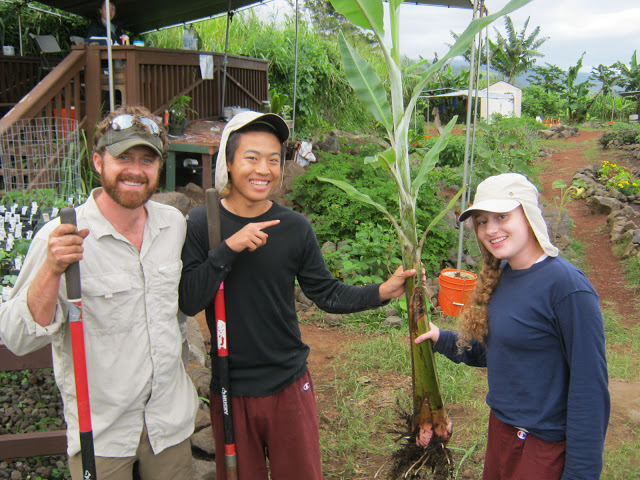 Changing the world is not an easy business, and for mental health providers, changing a life can be just as complicated. Many people enter the field of outdoor therapy because they want to change lives. For students at Pacific Quest, the most basic therapeutic task is to literally practice new ways of caring about life. We are digging, planting, composting, harvesting, and sharing abundance in a rhythmic pattern not just because it’s cool to grow your own food, but also because it fits within a sequential model of neuropsychology. We believe learning to grow food is a relevant and transferable therapeutic activity for a generation of young people that are faced with a daunting need to create a more sustainable future not just for themselves but for their families and communities.
A young person who recently graduated from the adolescent program wrote the following note (below) in a group journal. This note offers an example of what Horticultural Therapy at Pacific Quest is all about. It serves as a reminder that while we continue to remain in the business of changing lives, our clients are the ones that might just change the world, and perhaps there is no better outcome than that.
Pacific Quest to Support Upcoming Sky’s the Limit Fundraiser
By Yvette Slagle, Communications Coordinator
Pacific Quest is proud to be a Gold Sponsor at the upcoming 3rd annual Nightlights! An Evening of Comedy Benefit Event on May 10th in Menlo Park, California.
Sky’s the Limit Fund is an organization that was founded to provide grant money for at-risk youth and their families who would otherwise be unable to afford wilderness therapy. Sky’s the Limit Fund was founded in 2010 by Rochelle Bochner and Lani Dorff. Rochelle and Lani are strong advocates for the benefits of outdoor therapeutic programs and their foundation is dedicated to assisting as many students as possible in receiving the opportunity to experience what wilderness therapy programs have to offer.
Pacific Quest is extremely proud to support the Sky’s the Limit Fund mission to: “Transform the lives of at-risk youth by providing grants, support, and hope through wilderness therapy programs and beyond.” Breaking financial barriers for troubled youth and their families to have access to innovative treatment programs such as Pacific Quest is a noble endeavor that will inevitably lead to new opportunities for families and youth in crisis.
GET TO KNOW: DR. LORRAINE FREEDLE, CLINICAL DIRECTOR
Dr. Lorraine R. Freedle is a board certified Pediatric and School Neuropsychologist with over 25 years experience in clinical practice and administration in children’s behavioral health. She has extensive experience treating young people and their families impacted by trauma, loss, substance abuse, ADHD, mood disturbances, TBI, and a variety of neurodevelopmental and learning disorders through evidence-based practices. She is also a gifted clinical administrator and staff development specialist committed to developing high performing teams.
Lorraine received her BA in Social Work from Pennsylvania State University and her Master of Social Work from the University of Hawai’i in Honolulu. She also holds an Educational Specialist graduate degree in School Psychology from the University of Northern Colorado, and a Doctor of Philosophy in Clinical Psychology, with a specialization in neuropsychology from Fielding Graduate University. In addition to earning board certifications in social work, school psychology and neuropsychology, Lorraine completed advanced training and certification in the Neurosequential Model of Therapeutics (NMT) through the Child Trauma Academy. She is also an internationally certified Sandplay ® therapist and teacher who has conducted award winning research in this modality. Lorraine is the founder of Black Sand Neuropsychological Services, PC where she conducts neuropsychological evaluations, consultation services, and sandplay therapy.
Students Have Opportunity to Earn Additional Academic Credits
During a typical eight-week stay, Pacific Quest adolescent students have the opportunity to take six academic courses for a total of four academic credits.
The courses include:
-
Career and Technical Education – Horticulture Pathway (0.5 credit)
-
Health Education – Health Education I & II (0.5 credits each = 1 credit)
-
Language Arts – English and Language Arts (0.5 credit)
-
Physical Education – Lifetime Fitness (1.0 credit)
-
Science – Environmental Science (0.5 credit)
-
Social Sciences – Hawaiian Culture (0.5 credit)
Students who stay longer than eight weeks will have the opportunity to earn additional credits in Language Arts, Physical Education and Career and Technical Education. We may also be able to tailor a specific class to a student’s individual journey and provide specialized accommodations for learning differences.
The courses are aligned with Pacific Quest’s therapeutic curriculum, the Common Core Curriculum and National standards, providing a rounded educational experience that incorporates both academic learning and therapeutic growth. The courses will be transferable credits issued through Alta Independent, an institution accredited through the Western Association of Schools and Colleges.
ACCOMMODATIONS AND INDIVIDUALIZED LEARNING
Pacific Quest integrates Individualized Education Plans (IEPs) and accommodations for students’ learning differences, such as Dyslexia, Dyscalculia, Dysgraphia, Dyspraxia, Dysphasia and Aphasia, Nonverbal Learning Disorders, ADHD, Autism Spectrum, Asperger’s Syndrome, Pervasive Developmental Disorder and others.
Access to accommodations assures that our students have equal access to our Student Curriculum and therefore, equal access to success.
LEARNING STYLES AND MULTIPLE INTELLIGENCES
Pacific Quest also integrates learning styles and multiple intelligences into daily activities and assessments. We believe that this integration emphasizes our students’ strengths and fosters their success. Our team members strive to help students discover their unique learner profiles, and build upon their success.
Our team members use both learning styles and multiple intelligences work to form a powerful and integrated model of learning — a model that respects and celebrates diversity and provides our students with the tools to achieve sustainable growth.
OVER 70 ALUMNI TURNED OUT FOR GREAT CAUSE
|
By: Mike Sullivan, Primary Therapist & Lori Armbruster, Communications Director PQ staff members were honored and humbled by the overwhelming turnout of alumni, students and families who gathered at the San Francisco Children’s Garden in Golden Gate Park for an inspiring day of service to the community! PQ alumni spent the day working side by side with PQ staff to build sustainable garden beds, revamp neglected pathways, and artfully paint various stumps and signs with inspirational quotes and educational facts to support this beautiful landmark garden. Though the theme of the day was service, the undertone was that of connection. The garden is a powerful classroom and catalyst to support change, which has been proven during each student’s stay at Pacific Quest. Families attending the event sought to give to their local community and were also excited to reconnect with the PQ Ohana that helped to create meaningful and life-changing experiences during their Pacific Quest journeys. Upon arriving at the park, all projects were carefully outlined and explained. Moms, dads, alumni, students, and siblings quickly volunteered for various tasks and out came the gardening gloves, shovels, paintbrushes, and hand picks. The families dove into the tasks, utilizing communication skills, teamwork, and plenty of good humor to complete each task. The families worked throughout the morning, enjoying the camaraderie, sunshine, and people around them. In a pre-lunch debrief circle facilitated by PQ’s Horticultural Therapy Director, Travis Slagle, many commented on how good it was to reconnect with the garden, nature, and community. Young siblings shared the simple happiness they felt being with their families and doing something together. The park interns commented repeatedly that our volunteer alumni were enthusiastic, polite, exceptionally hard working, and clearly dedicated to the tasks at hand. The Children’s Garden serves as a venue for educating young children in San Francisco about the wonders of the natural world, where their food comes from, and health and nutrition. The garden is maintained by wonderfully enthusiastic interns, who are dedicated to the well-being of youth in their community. The PQ alumni families continuously expressed gratitude that they were able to contribute to such an important and worthy cause. As the day concluded, the Children’s Garden Community Coordinator and her small team of interns expressed sincere heartfelt appreciation, sharing that in one day our “army of angel volunteers” were able to accomplish several projects that would’ve taken their small crew, weeks and — in some cases– months to complete. As the day came to a close, bittersweet goodbyes ensued. The community gardening project was a huge success! PQ alumni families rekindled a deeper connection with each other and within themselves by working in the garden and giving back to their local community. It is our hope that families will continue to seek out opportunities to practice and put to use many of the concepts learned at Pacific Quest, and that Ohana Days serves to spark that desire. As I reflect back on this weekend’s event, I am inspired by the ripple effect of the work that we do. Seeing the smiling faces and families working together is a powerful and tangible reminder of that work. It is our goal to foster growth and connection that ripples outward into communities, where families and children will find a deeper sense of connection to themselves and the world. |
Pacific Quest Welcomes Johnny Tock
Pacific Quest is pleased to welcome Johnny Tock, LPC as a Primary Clinician. Johnny is a licensed Professional Counselor and holds a Master’s Degree in Clinical Counseling from Eastern Illinois University. He completed his undergraduate studies at Hanover College in Illinois. Johnny brings over twelve years of experience in a variety of therapeutic settings including a well-respected children’s group home, county mental health facilities, a wilderness therapy program in North Carolina and a residential boarding school in Idaho.
Johnny is passionate about his work, and is respected for his ability to affect change by creating emotional safety, and by teaching and role modeling healthy relationship skills. He is experienced in using Cognitive Behavioral Therapy to help alter negative thinking patterns in clients who have struggled with issues primarily related to anxiety, depression, ADHD, and oppositional defiance. Johnny also assists his families in learning healthier and more effective ways to communicate and strengthen relationships.
He is dedicated to helping young adults who are struggling to “launch” and assisting them in recognizing their unique potential, their specific passions and talents and their ability to carve out a healthier path for themselves. Johnny promotes personal accountability through solid communication and follow-through with his families and clients. He is skilled at creating and implementing comprehensive and innovative treatment plans. He utilizes CBT and other evidence-based techniques in his work and brings insight and experience to each individual’s therapeutic journey. Johnny also enjoys building rapport through music, humor and his never- ending passion for the great outdoors.
Welcome to the team Johnny!
On the Mainland: Pacific Quest Hosts “Ohana Days” & Alumni Reunion Events
By Lori Armbruster, Communications Director
In the Hawaiian culture, the word “Ohana” means family, which can be blood-related, adoptive or intentional. The concept emphasizes that families are bound together and members must cooperate and remember one another.
When a young person enters Pacific Quest, they become part of a larger Ohana. As they discover the best in themselves, they forge new and meaningful relationships with family members, peers, their community and the natural world. These experiences leave an indelible mark on their lives and in the lives of their families.
Week after week, our staff receives letters from alumni students who reach out simply to say, “thank you” or “you made a difference in my life”. Sometimes these letters come years later as the “seeds” planted have taken time to mature and come to fruition. Some are from students who may have struggled during their stay – but have come to realize the value of their experience. While each alumni letter is unique, all share a common theme. Alumni students and their families consistently express a desire to reconnect with one another and with the staff members who were instrumental in helping them during this step of their journey.
As our alumni venture into the world, we challenge ourselves to further support the incorporation of healthy skills and community-building concepts gathered while in our care. Pacific Quest’s mission is rooted in true sustainable growth and it is when our students learn to engage in their communities and be of service to others, that new levels of growth may be realized. To that end, we are very excited to announce several innovative alumni events for 2014.
Pacific Quest’s Ohana Days will provide a series of experiential activities for alumni families to re-imagine the work of “incorporation” and the next step of sustainable growth in their own communities. These community-building events focus on service, an action-oriented approach to giving back, and leaving a legacy that goes beyond self. Ohana Days will incorporate a variety of volunteer opportunities, such as building gardens in the heart of a city, harvesting food for local food banks, or building a garden for a local school or charity, and other healthy lifestyle events. Ohana Days will also provide an opportunity for students, families and staff to reconnect and get re-inspired! This experience will broaden the support network for our alumni, encouraging community involvement, and reawakening parents and students to what it really looks like “to be the change you want to see in the world.”
Stay tuned for a formal announcement on our first Ohana Days and Alumni Reunion event, which will be held in the Bay Area, Saturday, March 22! Future dates and locations will be updated periodically on our website and Facebook page. For more information, please contact: lori@pacificquest.org.
Pacific Quest Presenting At NATSAP
Pacific Quest’s Dr. Lorraine Freedle and Travis Slagle will present at the 2014 NATSAP Conference in Henderson, NV.
Title: “Ready, Set…Grow! A Horticultural Perspective of Integrative Health, Rites of Passage & Future Therapeutic Programs”
Date: Thursday, February 6, 2014
Time: Session B4 11:00 a.m. -12:30 p.m.
Location: La Luna Room at Green Valley Resort and Spa
As an innovative outdoor therapeutic program for struggling adolescents and young adults, Pacific Quest is proud to be part of the 2014 NATSAP conference. This presentation will highlight the benefits and implications of Horticultural Therapy as a growth-focused treatment model. Research studies suggest gardening provides cognitive, emotional, and physiological benefits that can lead to increased overall life satisfaction. Horticultural therapy offers experiential techniques that place the client in a care-giving role. By engaging individuals and families in the restorative process of cultivating beauty and health in one’s environment, it becomes increasingly possible to internalize beauty and health in one’s self. This presentation asks the question, how would the world be different if growing a garden were a universal therapeutic task?
Dr. Lorraine Freedle is the Clinical Director at Pacific Quest and a board certified Pediatric and School Neuropsychologist with over 25 years experience in clinical practice and administration in children’s behavioral health. Travis Slagle is the Horticultural Therapy Director at Pacific Quest. He has over ten years experience working with youth in outdoor and experiential therapy programs.
A Parallel Journey
By Jody St. Joseph, Adolescent Program Director
It wasn’t two very large strangers who woke me in the middle of the night, but it was close enough. My alarm screamed me awake at about 4 am and before long I was at the airport about to leave behind my doggie, my home, and my family. I boarded the plane tired and very afraid. What was happening to me!? What had I done?!
Many hours and three flights later I landed on the strange rock in the middle of the Pacific Ocean. The Big Island of Hawaii. Woa, this was real. I began the long journey down to Ka’u to my new “home” for the foreseeable future. I was alone in a very strange place with no one I knew and nothing familiar.
I arrived an hour and a half later to my new reality. A small cabin in the woods. The kindest woman welcomed me there with a simple “welcome home.” This, of course, would be my new landlady. She showed me around my new place, taught me a few of the basics of my new life living off the grid with solar power for my electric and a huge water catchment tank for my running water. It was simple and there wasn’t much expected of me yet. Just like the students in our Nalu camp, I started to try to settle into the new surroundings and reflect on the experiences of my life that lead me to this place. I had to trust so much that was strange and out of my control. Talk about wilderness therapy!
The next day was my first official day on the job. What would this strange new experience teach me? Who were these strange new people that would become a part of my new life? Would they be nice, would I figure things out… would I be OK!?!? Luckily I was met with the warmest welcome and more kindness and support than I could ask for.
It was easiest at first to focus on the day to day tasks at work. I started to piece together my schedule, participate in meetings, do my part to keep the office clean, and started to learn the new language of Pacific Quest. Much like our Kuleana students, I was starting to get the hang of what would be expected of me daily, and had work tasks to fuel conversations with new people. I began to identify my personal responsibility in this new community… this new Ohana.
Weeks turned into months and I moved on from “task talk only” and started to participate more fully in my new community. Work relationships quickly became more personal and I began to get to know the other members of my Ohana. Some days were stressful and exhausting and I longed for my home and my family. Other days I learned something new or made a breakthrough on a project and felt the confidence and pride in a job well done. My scary new surroundings started to become truly beautiful and comforting. I started to settle in.
It has been over four months now that I’ve been in this new place and on this new journey. I had no intention of creating an experience for myself that was quite similar to that of our students; however, as I reflect on my time here so far I realize it’s the same in so many ways and I am humbled and in awe of the awesome demonstration of resilience and trust and courage that it takes to survive (and thrive!) through an experience like this. Pacific Quest students do this day in and day out and my greatest hope for them is that they know how amazing they are for being here, for waking up each day and making the decision to carry-on, trusting that they will be okay. Of course, by doing that, we are able to guide them a little bit on their amazing journeys and they will grow in their own personal ways. I hope and believe, and it’s not always easy, that the same will be true for me.
Staying Healthy During the Holiday Season
By Maile Green, Naturopathic Physician
As the holiday season is in full swing, I find myself thinking about my daily routines for creating health. I believe health and a sense of vitality are more than the absence of disease. I believe physical and mental health are the product of daily practices and habits that create an optimal internal environment. Throughout the world, health traditions credit the same things with creating health: proper nutrition and water intake, exercise and breathing, adequate sleep, and a sense of meaning. Each of these practices are easy to understand. None of them are difficult. Incorporating them into our busy lives on a daily basis however, can be challenging!
This week I was reviewing the wellness curriculum we use at Pacific Quest. From the beginning of our program we teach our students about proper nutrition and thinking about food as fuel for their bodies. We introduce them to the idea of daily movement and breathing, creating flexibility and strength. We talk about sleep hygiene- practices around adequate and quality rest, including techniques to help them relax and fall asleep naturally at the end of a day. And, of course, finding meaning in life is a central component of the entire Pacific Quest program.
As I was reading through this material I was reminded of all the things I could be doing for my own health this holiday season. Am I making sure to incorporate the things that are the foundations of my own health? Some of them are old habits, and they are easy, but some of them are still a challenge. One of the things I love about working at Pacific Quest is getting to introduce the concept of creating health to students when they are young. I am hopeful that our influence will help them to create habits for health now, so they become incorporated into their lives and become easy for them to practice for a lifetime. As for me, starting this week, I will take a dose of my own medicine and recommit again to making time to exercise and breathe. I am lucky to live in a place where exercise can be fun, so I will be out on the water on my standup paddleboard. Hopefully my boss won’t mind if I don’t get to work quite as early as usual! Wishing you a happy, healthy holiday season!
Finding Perseverance, Mystery and Gratitude in Pacific Quest’s Gardens
By Tess Barnes Dunn, Academic Coordinator
 Recently, I had an opportunity to spend a day working with my new Pacific Quest colleagues in the area of our garden set aside for our Rites of Passage ceremony, known as Huli Ka’e.
A rite of passage is an important event that serves to mark the passage from one stage of life to another. Rite of passage is an anthropological term for a ceremony performed to facilitate or mark a person’s change of status on highly important occasions. Belgian anthropologist Arnold van Gennep coined the term Rite of Passage in 1908. He examined rites of passage around the world and found that rites of passage involve three important stages:
- Severance in which an individual sheds his or her old identity
-
Threshold in which an individual has no status – they are both “no longer” and “not yet.”
-
Incorporation in which an individual returns and assumes a new role, typically with great celebration.
Our students experience severance, threshold and incorporation, they also explore perseverance, mystery and gratitude.
Throughout my day, I also explored and experienced my fair share of perseverance, mystery and gratitude.
Our first task was to eradicate the weeds and rocks. Let me rephrase that – our assignment was to eradicate the thousands of weeds and rocks. We worked together. Weeding. Laughing. Talking. Persevering. Together.
As we worked, I witnessed the mystery of the gardens – that transcendent quality that takes our students to the edge, creates change and celebrates rebirth. I listened to the Intent Statements of students, who had just completed the Rites of Passage ceremony. As they assumed their new role, they spoke of power, happiness, hope and dogged determination.
It was a day to remember. It was a day filled with joy, laughter and love and support. I was over-whelmed by gratefulness – gratitude for this garden and everyone in it.
Tree Growth: A Metaphor For Our Lives
By Bridger Jensen, Therapist
Each morning, our newly-arrived Nalu and Kuleana adolescent students and staff travel from our sleeping quarters up the mountainside of the great volcano Mauna Kea. The short trip to our day camp is performed in silence to aid in self-reflection. From these historic, rolling hills through which we travel, sugar cane was once harvested, and constituted the majority of Big Island export. It is here, in the shadow of Mauna Loa, that our students spend their first few weeks. They reflect from a 1,200 foot-high vantage point over crashing waves, as the sun rises over Pacific Quest. It is spectacular.
The magnificent hillside itself has therapeutic value for us as well. Majestic trees along the route have been sculpted by the near-constant trade winds blowing through them. Consistent winds push each branch and bud as they grow. Each leaf produced must adapt to the windy environment, or be absconded from the tree and carried away by the wind. The tree trunks grow accordingly to support the burdened branches. Thus, the hillside itself has become an excellent source of natural metaphors. Students often mention these windswept trees as a metaphor for their own growth.
As the students and employees learn about and teach horticulture in our gardens, we learn how plants grow intentionally and sustainably. Each seed planted grows to reach sunlight if needed, or even to face away from the sun if it must shade itself. In dry locations, a seedling may grow roots with the purpose of reaching water, while on a riverbank a plant may grow to stabilize itself as the ground beneath it erodes away. In therapeutic settings, students often talk about “Hehu stories.”
These Hehu stories are the stories of what shaped our lives. Like the windswept trees we pass by every morning, we each have stories about what shaped our lives. Were we depraved of nutrition like a seedling that grows in craggy rocks? Were we forced to struggle for each ray of sunlight like a seedling that grows on a dark forest floor? Perhaps our roots and branches languished, due to less-than-optimal resources? Or maybe we can liken ourselves to a healthy tree that has recently been damaged by a traumatic hurricane? Perhaps excessive pruning from our well-meaning caretaker stunted our growth? As we talk about our Hehu stories, students bring up the trees they pass by each morning. Often relating to the wind-sculpted tree that knows only how to grow with the wind.
There are so many variables that sculpt the beings we become, perhaps too many to account for. Some variables appear environmental, some internal. While we can’t completely control the environment that we grow in, we can choose to grow in our environment. Life events are opportunities to grow uniquely, resiliently and with strength. Like trees, we need the right conditions to grow and we will flourish, even amidst adversity, and sometimes because of adversity. Truly, trials beautify and strengthen us when care is given to our growth.
For some fun and interesting trees and Hehu stories, check out the links below:
https://twentytwowords.com/2012/04/09/house-shaped-tree-created-by-extreme-winds/
https://blog.lyndseyrenee.com/2011/07/eureka-ca/
https://www.bonsaiexperience.com/BonsaiGallery.html
https://www.neatorama.com/2007/03/21/10-most-magnificent-trees-in-the-world/
https://thisisawesome.com/awesome-tree-tunnel/
https://www.vanguardngr.com/2013/11/two-trees-a-forest-and-a-storm/
https://zuzutop.com/2010/01/10-strangest-trees-on-earth/
https://motherboard.vice.com/blog/how-to-accidentally-kill-a-400-year-old-tree
https://en.wikipedia.org/wiki/Dodda_Alada_Mara
https://www.americanforests.org/our-programs/historic-trees/historic-tree-stories/
Students Explore Green Sand Beach
A group of students recently had the opportunity to visit Papakolea Beach, also known as Mahana Beach or Green Sand Beach. This infamous beach is located in the district of Ka’u on the Big Island, not too far from Pacific Quest. Papakolea is one of only four green sand beaches in the world–the others being located in Guam, Norway and the Galapagos Islands. Students were excited as they prepared for the two mile hike to this secluded beach. Before starting on the trail head, they geared up with bandanas, extra water, sunhats and sunscreen. The trail runs parallel to the coastline and every once in while the group paused to look for humpback whales. This trail is known for gusty winds, so students wore bandanas to cover their faces from potential dust while they hiked.
While hiking, students shared with each other how much they were all enjoying themselves and anticipating the beach and swimming in the ocean. As the group approached the bluff, students were amazed at the bright blue water, and peridot sand down below. Everyone hiked down to the ocean and in unison ran and jumped into the water. It was an exceptionally calm day and the temperature of the water was perfect!
Everyone swam for several hours, body surfed in waves and frolicked about, laughing and continuing to sprint back and forth into the water. The group enjoyed a picnic lunch and then decided to hike back. This was the first outing for many of the students and was breathtaking and awe inspiring!
Pacific Quest Welcomes Christine Riley
 Pacific Quest wilderness therapy program is pleased to welcome Christine Riley, LMFT as a Primary Clinician. Christine received her Bachelor of Arts in Psychology from State University of New York in Plattsburgh and her Master of Arts in Marriage and Family Therapy in 2003.
Prior to joining the Pacific Quest clinical team, Christine served as the Clinical Director for a prominent wilderness therapy program in New York. Christine has experience supervising a team of clinicians, providing clinically-based trainings for field instructors, and maintaining quality of care and wilderness program excellence throughout her career. Christine brings many years of experience observing students’ clinical progress and helping to facilitate crisis interventions. Christine is a respected mental health clinician in the wilderness therapy industry and is recognized for her ability to provide effective individual, group, and family therapy. In addition, Christine is the author of several psychoeducational books for siblings of troubled teens. Christine is a member of the International Association of Trauma Professionals (IATP) as well as a member of the National Association of Therapeutic Schools & Programs (NATSAP).
In her spare time, Christine enjoys reading, gardening, yoga, cooking, photography and spending time with her husband and two beautiful boys.
Welcome to the team Christine!
Los Angeles Alumni Event
By Mike Sullivan, Therapist
 “Belay on!” shouts Johnny, whose legs are shaking and hands trembling as he prepares to climb his first route of the day at the Hangar 18 rock climbing gym in Los Angeles. Moments before this, Johnny had pulled me aside and said, “Mike, I wasn’t kidding when I told you and the group that I am afraid of heights.” Johnny was clearly scared, and with empathic coaching, he was able to approach the wall and begin to climb. This marked the start of the first Pacific Quest student alumni group, held on October 19th.
Prior to getting started on the climbing, Johnny and his peers participated in “ground school,” where they learned important climbing commands used to ensure safety between the climber and the belayer (the one in charge of rope). Johnny had let the group know about his fear of heights, a sign that he was practicing a valuable tool from his stay at Pacific Quest– expressing his feelings. Johnny’s expression of fear was met with support from the alumni climbing group, which in this instance were a mishmash of Pacific Quest alumni from the past two years ranging from ages 16-23. Most alumni knew one or two others present in the group, yet many were meeting each other for the first time. While the alumni were new to each other in many ways, these kids had a deeper bond present before even stepping foot into the climbing gym – they had the shared experience of graduating from Pacific Quest, a challenging outdoor therapeutic program in Hawaii. They knew what it meant to step outside your comfort zone and challenge limiting self-beliefs. They knew what it meant to take healthy risks and gain a sense of accomplishment and self efficacy from doing so. They were hungry for more.
“You can do it, Johnny!” the group shouted as Johnny slowly sought out the delicate placement of each foot and the proper hand holds to remain attached to the climbing wall. Johnny shouted back down to the group, “I don’t know you guys……” sharing his reluctance as he ascended the wall, well above the floor of the climbing gym. Johnny was secured by a climbing rope and thus 100% safe, yet when one gets far enough off the ground, even the sense of safety from the rope diminishes. One quickly learns that you can’t rely on the “logic” of the rope system solely. Climbing requires people to draw on an innate sense of confidence, overcome fear, and work through self doubt in the moment. It demands that one build trust with their partner and draw on the support of the group. While Johnny understood from the lessons of the “ground school,” that he was completely safe, he ultimately had to reach deep inside himself and reach out to his peer group to find his way.
Johnny’s group shared encouraging cheers as he continued up the climbing wall. Johnny surmounted the route and slapped his hand on the top of wall signaling victory. “Take!” Johnny shouted, alerting his climbing partner below to draw in any excess slack in the rope and begin lowering him off the route. Johnny was lowered to ground and met with high fives and compliments from his peers. Johnny and his peers proceeded to climb several routes and socialize throughout the climbing gym. All expressed what a fabulous time they had at the event.
The Importance of Nutrition in Mental Health
By Dr. Britta Zimmer, Medical Director
It is time to face a simple fact and reclaim health:
Nutritious Food is Medicine
 It’s easy to get caught up in the complexity of science, research, and the physiology of the human body, therefore I am constantly reminding myself, my patients, and my patients’ parents to get back to the roots because without being rooted, healthy change and growth are difficult to obtain.
The roots of health and healing are simply:
good nutrition, adequate sleep, daily movement, and stress management. These are Pacific Quest’s pillars of health. These roots are simply based in science and research.
I just attended The Integrative Medicine for Mental Health Conference and was reminded (via extensive research and excellent lectures) of the importance of nutritional interventions in the treatment of AD(H)D, Depression, Anxiety Disorder, Obsessive Compulsive Disorder, Eating Disorders, Bipolar Disorders, and Autism Spectrum Disorders.
Question:
Why is proper nutrition critical in the treatment of all mental health disorders?
Answer:
Psychotropic medications, such as Prozac, Abilify, Wellbutrin, Seroquel, Ritalin to name a few, affect levels of neurotransmitters in the brain, however these neurotransmitters are controlled by chemical precursors which are made in the body from nutrients obtained from our diet.
Translation:
Without the proper nutrients the neurotransmitters that psychiatric medications target such as serotonin, norepinephrine, and dopamine cannot be made or balanced in the first place.
Solutions:
Solution #1
Eat adequate protein in every meal, protein is made up of amino acids and which are precursors to neurotransmitters.
How much protein? Recommended daily protein intake is 1 gram per kilogram of body weight. (Example: 115lbs = 52.2 kg = 52 gram protein- If you exercise more than 6 hours weekly = 2 grams per 1 kg of weight)
Be aware that vegetarian diets, antacids, stress, and poor digestive function all inhibit the body’s absorption of protein.
Protein Warning: talk to your doctor if you have kidney disease
Solution #2
Eat foods high in the following vitamins and minerals (or supplement your diet with these nutrients);
B-complex with folate, B6 and B12, Zinc, and Magnesium. These nutrients are essential for neurotransmitter production. You can Google search foods which contain high amounts of these nutrients.
Solution #3
Take Omega 3 Fatty Acids in the form of Fish Oil.
Truthfully, we should be bathing our brains in omega 3 fatty acids. Every aspect of neurotransmission involves the adequate functioning of omega 3 fatty acids in your body. Also research demonstrates the link between depression and inflammation; levels of omega 3 fatty acids in the body directly influence the body’s inflammatory response.
Take reputable brands of Fish Oil such as Nordic Naturals, Carlsons, Pure Encapsulations, or Vital Nutrients as these companies conduct stringent testing for their products. Fish oil sold at Costco and Trader Joe’s has not been adequately tested for potency and purity, I do not recommend those brands
If you take the good brands mentioned above you will NOT burp up fish oil or taste anything “fishy” as these are high quality ingredients.
Vegetarian sources of Omega 3 fatty acids such as flax oil have not been proven to decrease inflammation and support neurotransmitter production like fish sources.
Fish Oil Warning: talk to you doctor if you take blood thinners, do not take fish oil prior to surgery
Solution #4
Test for food IgG allergies and avoid these foods.
Most common IgG food reactions: Gluten (wheat, barley, rye, spelt), Casein (milk products), Eggs, Baking yeast, Citrus, Peanuts, Corn, Sugar, and Soy.
You can test these via eliminations diets or an IgG blood test. The IgE skin prick tests commonly offered by allergist do not give you this information.
Studies show the correlation between gluten consumption and the increase in symptoms related to depression, autism, anxiety, and AD(H)D.
Gluten and casein can increase inflammation in the body, create an autoimmune response, cause gastrointestinal damage, and create an opiate response. This potential opiate response is partly responsible for the addictive quality of certain foods such as pizza, mac n’ cheese, and chicken nuggets. Usually if it is a food you claim that you “absolutely cannot and will not give up” then you most likely have a food sensitivity to that food- sad but true.
Parents are the biggest obstacle to instigating a gluten and casein free diet because it is too much work for them, they do not see the value in it because they don’t wait long enough to keep their child off of gluten/casein, they allow their child cheat “because they feel bad for them” or they succumb to their child’s demands. It takes at least 4 weeks of strict gluten and casein avoidance to see the positive results. Once the patient experiences a reduction of symptoms with a gluten and casein-free diet this motivates them further to avoid these foods. This is the key to adolescent and young adult compliance to restrictive diets, they have to experience first hand the improvement.
Not mentioned in the 4 solutions above is the importance of Vitamin D in the treatment of mental health disorders, more about that in blogs to come.
All neurological conditions are whole body disorders, because the body/brain are connected (literally and biochemically. )One must treat the whole body to treat neurological disorders such as AD(H)D, Depression, Anxiety Disorder, Obsessive Compulsive Disorder, Eating Disorders, Bipolar Disorders, and Autism Spectrum Disorders.
The cornerstone of whole body treatment is Nutrition.
Pacific Quest is the only therapeutic treatment programs which offers a gluten-free, casein-free, anti-inflammatory, nutrient dense, organic, whole foods diet.
References available upon request
drbz@pacificquest.org
Letter of Gratitude
We received this letter from an airline passenger who was seated by a Pacific Quest student who recently completed the program. It’s a good reminder of how even brief encounters can leave lasting impressions.
I was in Hawaii until yesterday and had the profound pleasure of sitting next to one of your recent graduates. Please forgive me for referring to her as a graduate as I am certain you have a more appropriate descriptor for someone who has reclaimed their life by experiencing Pacific Quest.
She was on her way home after two amazing soul-nourishing and life-saving months with you. I write to you today as I am back to my own routine and am realizing that the effect of sharing an hour of my life with her is immeasurable. We connected instantly as soon as the doors to the airplane closed and I made a nervous quip about not being sure if the people in the emergency exit rows were paying attention to the two-minute training of how to save all of us in the event of an emergency. To this, she confidently states, “Don’t worry, I just spent two months learning about what I am capable of. I got this.” She had me hooked instantly. She was funny, confident, self-deprecating, attuned to her surroundings and responded appropriately without missing a beat.
We spoke the entire one hour during our shared flight. I felt the universe had conspired to bring this young girl to me at the moment it had. She shared how much the experience at Pacific Quest taught her and prepared her for the rest of her life. I said to her that the universe works in inexplicable ways, but for the most part, it conspires to offer us what we need. Whether we take the hand she offers is entirely up to us. I expressed to her how very much her speaking to me has made me the better and how I know it will make me a better mother to my 11-year old son.
I write to you today for two reasons. One to thank you for the impact you have had on this young woman. What her parents and you have done is nothing short of life-saving. As parents, we are naturally in a cycle of self-doubt, whether every choice is the right choice for our children. I told her that I was in my thirties before having my son because I knew that I had to find strength in the ways I was bent and find confidence in the fact that I was not broken before I could do right by my son. Even then, I second guess all things about my parenting because manufacturing perfection is not possible and I find myself in the quest to manufacture a perfection for him. Hearing her taught me that doing right by our children is a daily call to prayer. It brings us to our knees daily. Indeed it should.
People come into our lives for various reasons. She came into mine for a specific reason. She was before me a child who found her voice and confidence, ready to live the life uniquely hers surrounded by the love of family and friends that is her birth right. As my son’s mother, I ache at every hurt that comes his way and I ache in advance for all that I imagine may come his way. This young woman taught me that I may not always be there physically for my child, but if I continue to be his valiant mother, providing him unbounded, unconditional, and unqualified love, he will have the strength and confidence to withstand what comes his way every step forward. And, that this is the best I can do for him.
Thank you for changing the course of this young woman’s life and for delivering a confident, young woman back to the universe such that the very first person she spoke to after 56 days with you and your team was me. I am ever better. She worried that she had burdened me for sharing her evolution and journey with me. I am hopeful that she is aware how much meeting her, hearing her and feeling her means to me. If you would kindly forward this to her so that she may know unequivocally that her first step back into the life she is meant to live has made such a profound imprint on my life and vicariously on my son’s. For this, I am grateful and forever bound to her well-being. Her happiness and success will be part of my daily call to prayer going forward. I wish for her to know that I am now part of the universe that is conspiring to provide for her heart and soul.
Thank you, again.
Behind the Mind of the Bullied and Bully
Has your child, someone you know or yourself ever been bullied? Do you ever wonder why bullies do what they do? Do you see a pattern of perpetual bullying in our society or in your own personal life? These are questions many children, adolescents, young adults, parents and professionals are faced with everyday. Bullying has been around for centuries and evidence is being discovered to help identify, prevent and treat bullying. What if your loved one is being bullied or has been a victim of humiliation, intimidation or exclusion? Have you been a bully yourself? The next question to raise is how can we help?
To start, bullying is intentional and there are ways to help. There are many roles that kids and adults can play. They can bully others, be bullied, or they may witness bullying. When they’re involved in bullying, they often play more than one role. It is important to understand the multiple roles people play in order to effectively prevent and respond to bullying. It’s also important to assess a family dynamic. For instance, a parent may have been bullied in childhood and due to the intense shame, humiliation and denial of circumstances, may be unable to show compassion to their own child later in life. Their child may reach out for help to disclose the torment and be dismissed, suspecting dishonesty. Hence, exacerbating the situation with lack of support. Many children do not report bullying to adults due to fears of how they may or may not respond and through research and development it’s been noted “a trend of not disclosing becomes more pronounced with age”.
Bullying has severe consequences which include and are not limited to: alcohol and drug use, skipping school, continued bullying, poor grades, poor work performance, low self-esteem, suicide ideation, suicide attempts and health problems. “Bullying is unwanted, aggressive behavior among school aged children and adults that involves a real or perceived power imbalance. The behavior is repeated, or has the potential to be repeated, over time. Bullying includes actions such as making threats, spreading rumors, attacking someone physically or verbally, and excluding someone from a group on purpose”.
Why do people bully?
There are multiple reasons and risk factors which may include family, community, peers and school. Children who are bullied are more likely to have: depressive symptoms, harm themselves, have high levels of suicidal thoughts or attempted suicide. They’re also more likely to avoid school and have lower academic achievement.
Children who bully others are more likely to have delinquent behaviors, dislike school, drop out of school, bring weapons to school, think of suicide and attempt suicide, drink alcohol and smoke, plus hold beliefs supportive of violence. Some claim that bullying stems from “fear and apathy”. Children involved in bullying are more likely to experience headaches, backaches, stomach pain, sleep problems, poor appetite, and bed-wetting.
There’s also bullying in the workplace and cyberbullying that have severe negative impacts on people. Per the U.S Department of Health and Human Services and a Youth Risk Behavior Surveillance Survey in 2011, 16% of High school students (grades 9-12) were electronically bullied in the past year. Cyberbullying is rising rapidly and to capture the statistics properly is difficult to assess. Cyberbullying is different because it can happen 24 hours a day, 7 days a week, and reach a kid even when he or she is alone. Cyberbullying messages and images can be posted anonymously and distributed quickly to a wide audience. It can be difficult and sometimes impossible to trace the source. Deleting inappropriate or harassing messages, texts, and pictures is extremely difficult after they have been posted or sent.
What can you do to help prevent or stop bullying?
-Be more than a bystander! Speak up, advocate and do not tolerate unacceptable behavior.
-Frequently when people see bullying, they may not know what to do to stop it. People who witness bullying or are being bullied should always tell a trusted adult. Adults need to take action when they learn that bullying is happening.
-Remember to always be aware of the warning signs and if someone you know is in suicidal crisis or emotional distress. Utilize community resources such as local hospital crisis teams, community resources and Suicide prevention hotlines: 1-800-273-talk (8255)
-Teachers and school administrators need to be knowledgeable and observant. Involve students and parents, set positive expectations about behavior for students and adults, and observe your child for signs they might be being bullied.
-Children may not always be vocal about being bullied. Signs include, but are not limited to: ripped clothing, hesitation about going to school, decreased appetite, nightmares, crying, or general depression and anxiety. If you discover your child is being bullied, don’t tell them to “let it go” or “suck it up”. Instead, have open-ended conversations where you can learn what is really going on at school so that you can take the appropriate steps to rectify the situation. Most importantly, let your child know you will help him/her and that they should avoid fighting back.
-Teach your child how to handle being bullied: Practice scenarios at home where your child learns how to ignore a bully and/or develop assertive strategies for coping with bullying. Set boundaries with technology. Report bullying and cyberbullying.
-Don’t bully back: Try not to show anger or tears. Either calmly tell the bully to stop bullying or simply walk away.
-Avoid being alone
-Students who experience bullying may feel overwhelmed, depressed or anxious. If your child or student is having trouble at school or with friends as a result of bullying, a mental health professional, such as a psychologist, can help your child develop resilience and confidence. This will enable your child to be more successful both socially and academically.
How can you help with cyberbullying & workplace bullying?
To prevent workplace bullying, it’s important to foster improved communication skills, teach employees to understand each other, identify root causes and establish a policy of respect.
Resources:
American Psychological Association, 2013
Stopbully.gov 200 Independence Avenue, S.W. – Washington, D.C. 20201
Pacific Quest Welcomes Jody St. Joseph
 Pacific Quest is pleased to welcome Jody St. Joseph as the new Adolescent Program Director. In her new role, Jody is responsible for supervision of the adolescent program, personnel management, and assistance with outreach coordination. Other responsibilities will include co-development and quality assurance of supervisory roles, ensuring follow-through of behavioral treatment plans as well as collaborating with both clinical and wellness departments. Jody’s expertise will be invaluable in overseeing program policies and procedures, curriculum implementation, and providing performance evaluations for the supervisor team.
Jody graduated with a degree in Therapeutic Recreation and a minor in Psychology from Southern Illinois University at Carbondale. Prior to joining the Pacific Quest team, Jody spent ten years at a prominent Wilderness Therapy Program in Utah, where she worked as a Field Instructor and later as Program Director. Jody has extensive experience in experiential education, therapeutic recreation and program management. After hearing about Pacific Quest, she became interested in joining the team and is now happy to be serving as Program Director of the Adolescent program in Ka’u.
Pacific Quest’s wilderness therapy program has established an exceptional team of highly respected professionals to assist families in need. Mike McKinney, Executive Director, comments, “Jody is known for her incredible energy, positive and enthusiastic demeanor, problem-solving skills, team building, extensive management experience and in-depth knowledge of outdoor therapeutic programming. We are delighted to welcome her to our team!”
Huaka’i Ola at Reeds Bay
By Todd Ransdell, Young Adult Program Director
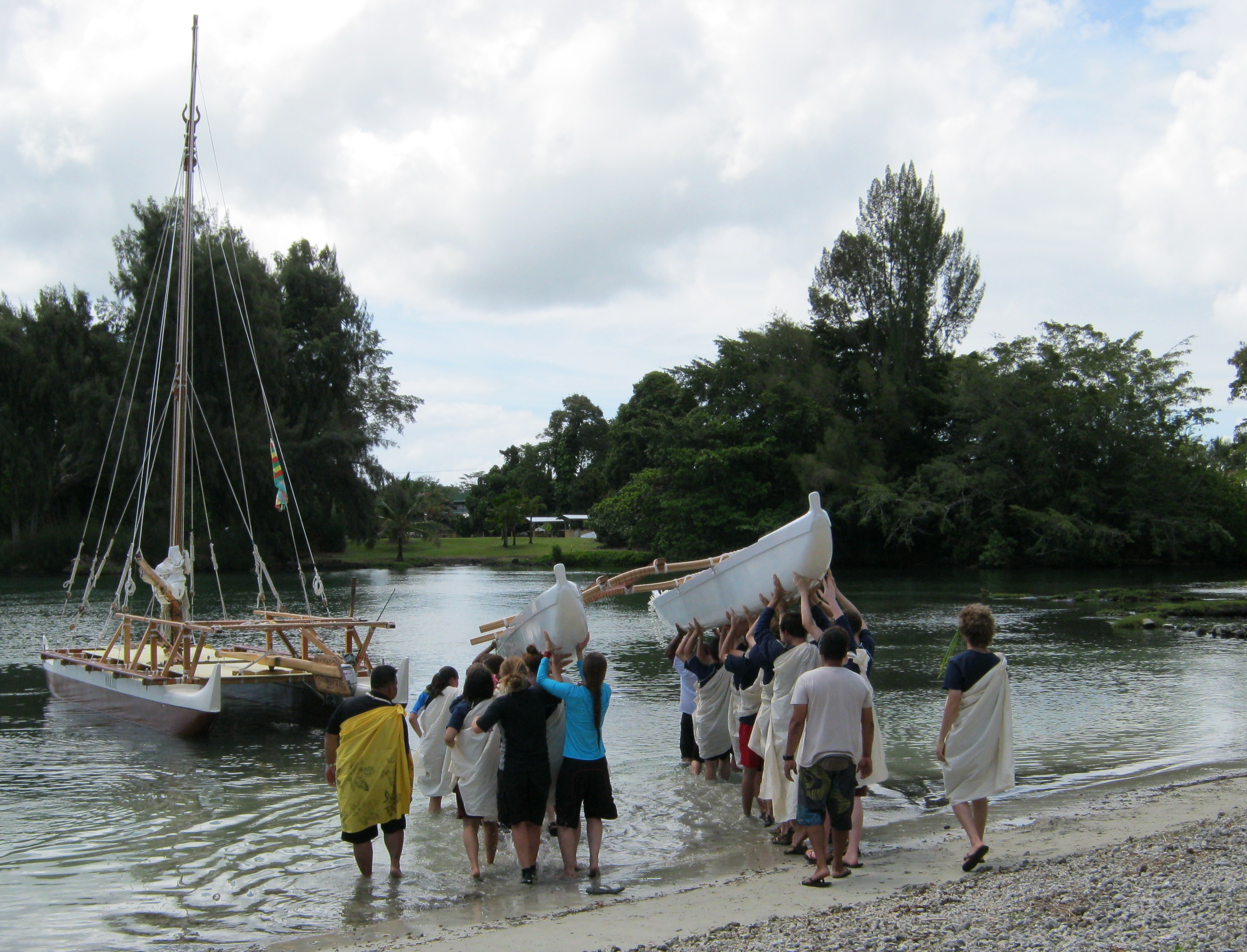 Polynesian people throughout the Pacific Ocean have long used the many types of Wa’a (pronounced vah-ah) to travel, explore, and fish. It is an integral part of Hawaiian history – Polynesian sailors and navigators crossed immense distances to find and colonize the islands of Hawaii without the use of any navigation instruments. Rather, they used only their deep knowledge of the stars, weather, cloud formations and ocean currents to find their way. They brought with them many varieties of plant life to their new home, carrying them in their canoes from islands below the equator. An old Hawaiian proverb says, “the canoe is an island, and the island is a canoe.” I believe this describes the belief of many Polynesian people–that the relationship with the land and the ocean are interlinked and inseparable.
In the early ‘70’s there was a resurgence in Hawaiian culture and language, some believe brought on by the construction and launching of the first Voyaging canoe in centuries – the Hōkūle’a. This Voyaging Canoe was successfully sailed to Tahiti using only ancient navigation techniques. The Hōkūle’a is still sailing today, in fact she recently embarked on a worldwide voyage (with her sister voyaging canoe Hikianalia) launching from Palekai Beach Park – about a mile down the road from our Reeds Bay facility. The Hawaiian Canoe has become very prevalent here in the islands; on any given day you can see quite a few wa’a plying the waters around Reeds Bay.
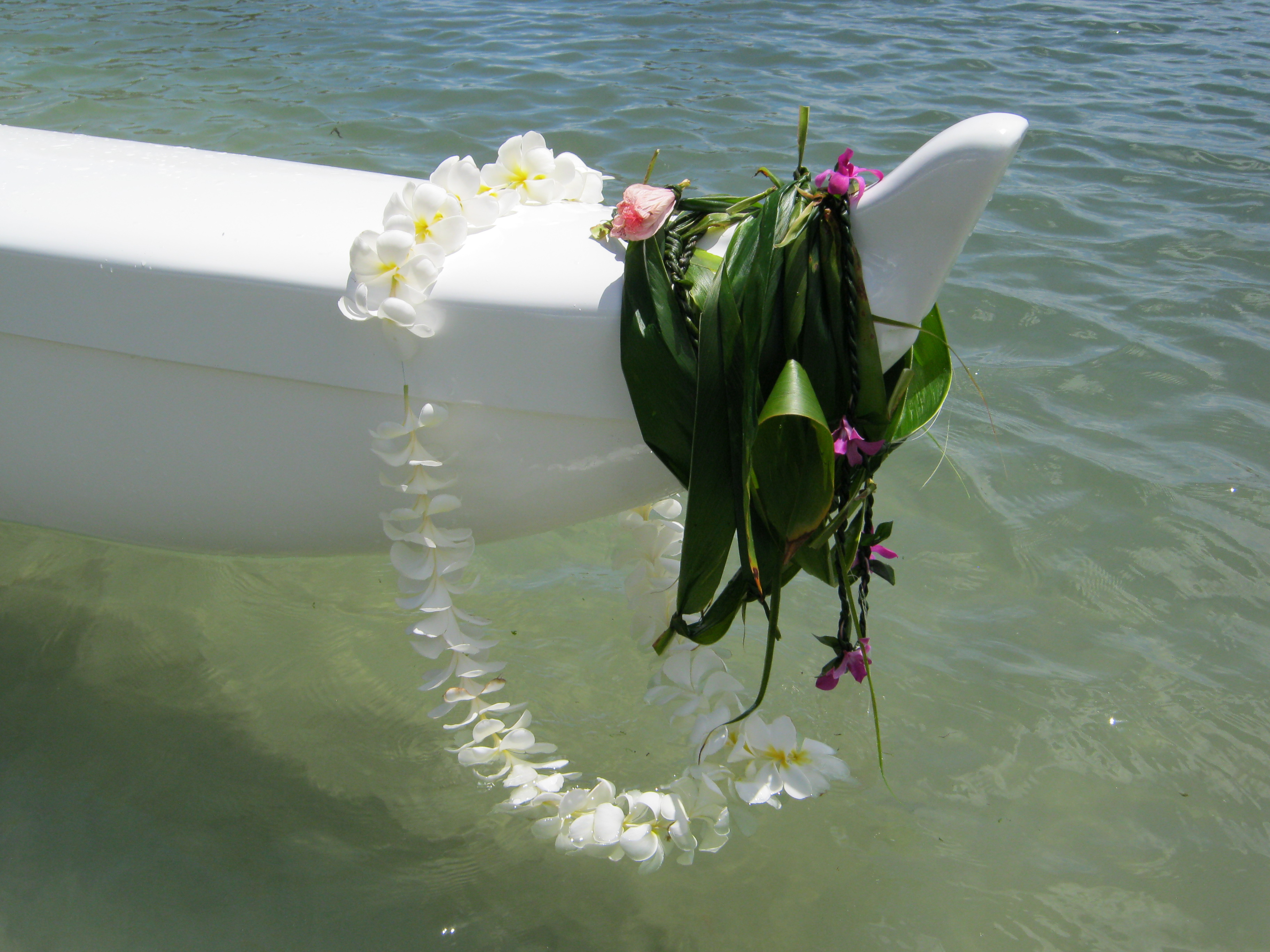 Early on during the development of the Young Adult Program in Reeds Bay, Mike McKinney, our Executive Director decided to have a wa’a built for the program. It was completed earlier this year and we gave it the name Huaka’i Ola, which means “Life’s Journey”. Huaka’i Ola was launched on June 20, 2013. We have since integrated our wa’a into our Young Adult program, taking weekly trips out into Reeds Bay led by the experienced waterman Kalani Kahalioumi and Murphy Fonseca. Our students have been learning how to successfully operate the Hawaiian Canoe, and some staff are working towards becoming a Kapena (Captain) under Kalani and Murphy’s tutelage. We are very excited about this part of our program, and look forward to increasingly integrating Huaka’i Ola into our program structure in the future.
Pacific Quest to Present at Annual Wilderness Therapy Symposium
By Yvette Slagle, Outreach Assistant
On Saturday, September 7, 2013 from 9:00 a.m.-3:00 p.m., Pacific Quest’s Clinical Director, Hilary Moses, LCSW and Horticultural Therapy Director, Travis Slagle will present “Horticultural Therapy: A Growing Edge In Outdoor Treatment” at the annual Wilderness Therapy Symposium in Boulder, Colorado.
As a world renowned therapeutic program for struggling adolescents and young adults, Pacific Quest is proud to be part of the 2013 Wilderness Therapy Symposium. This six-hour experiential workshop will explore the theory and innovative practice of Horticultural Therapy. In a recent interview, Horticultural Therapy Director, Travis Slagle commented, “Horticultural Therapy is an integrative growth-focused treatment model that places the client in a caregiving role, and offers a safe alternative to traditional wilderness therapy.” Participants in this workshop will explore the benefits of outdoor treatment activities that foster a reciprocal relationship with nature that helps clients to cultivate the capacity to care for life and the skills to ensure a sustainable future. Slagle states, “Adolescents and young adults at Pacific Quest learn to actively care for and engage in the growth and mystery of the natural world, which is fundamental to any effective therapeutic garden program.” This workshop will take place at a nationally recognized therapeutic garden in the Boulder area called Growing Gardens.
The annual Wilderness Therapy Symposium is hosted by the Outdoor Behavioral Healthcare Industry Council (OBHIC), which was founded in 1997. The OBHIC is a group of leading outdoor behavioral healthcare programs, whose mission is “to advance the field through best practices, effective treatment, and evidence-based research.”
Exploring Pu’uhonua o Hōnaunau
By Taylor Schultz, Ka’u Program Supervisor
 Students recently had the opportunity to visit Pu’uhonua o Hōnaunau, a National Historical Park that preserves parts of traditional Hawaiian life. The park sits in Hōnaunau Bay which is a popular snorkeling destination today. This bay once provided a sheltered canoe landing and fresh drinking water for the ali’i or royal chiefs and they set up one of their most important residences here. As an extra highlight, this was also the day of the 27th annual Calvin Kelekolio Long Distance Canoe Race starting and finishing in Hōnaunau Bay. In this race the Junior teams raced 2 miles, the Women and Mixed teams 8 miles, and the Mens teams 13 miles. Students joined the crowd in cheering the canoes on as they raced to the finish line.
The students thoroughly enjoyed soaking up the sun and playing in the water before heading back to the park to explore the royal grounds and the place of refuge. The place of refuge is separated from the royal grounds by a 17 ft thick, 10 ft high stone wall that was built around 1550. This was a refuge for defeated warriors, noncombatants in time of war, and for those who violated kapu, the sacred laws. During war, the object of battle was to obliterate the enemy. This included everyone from those too old, too young, or unable to fight to defeated warriors who would seek sanctuary here until the fighting was over. Tradition held that the ali’i possessed mana or spiritual power and their bones would be placed in a heiau, a Hawaiian temple, within pu’uhonua. It was the presence and mana of these bones that protected the sanctuary and gave those seeking it a second chance.
Everyone was tired from the snorkeling and swimming, so after the half mile walk through the royal grounds and pu’uhonua, the group refilled their water bottles and loaded up into the car to head back to camp. Conversation was light and sporadic on the drive as everyone watched the landscape change and reflected on their day.
Pacific Quest’s Innovative Wellness Team
 Pacific Quest outdoor therapy program is setting new standards in quality care and integrative whole-person wellness for struggling teens and young adults. Currently, Pacific Quest is the only behavioral healthcare program of its kind with two full time Naturopathic Doctors on staff. Medical Director and Naturopathic Doctor, Britta Zimmer and Maile Green, ND, LAc, RN work together to develop comprehensive individualized wellness plans for adolescents and young adults. Naturopathic Physicians (N.D.) are trained to serve as primary care practitioners who are experts in the prevention, diagnosis, management and treatment of both acute and chronic health conditions.
Dr. Britta Zimmer is a board certified, licensed Naturopathic Physician, receiving her BA from the University of Virginia and ND from the National College of Naturopathic Medicine in Portland, Oregon. Dr. Zimmer completed a comprehensive Naturopathic Family Practice Residency in Portland Oregon, which included extensive work at Outside In, a community clinic providing health care for at risk youth. Dr. Zimmer is a licensed primary care physician in the state of Hawaii. In a recent interview, Dr. Zimmer stated, “my goal is for the students at Pacific Quest to be empowered and inspired to take control of their own health by learning about nutrition, the healing arts, and how their body works.”
As a Naturopathic Doctor, Acupuncturist and Registered Nurse, Dr. Maile Green works side-by-side with Dr. Britta Zimmer and Psychiatric Doctor Shelly Ham. Dr. Green received her Doctor of Naturopathic Medicine and Master of Science in Acupuncture from Bastyr University. She also holds a Bachelor of Science in Nursing from University of Northern Colorado. She is part of the American Holistic Nurses Association, American Holistic Medical Association and the American Association of Naturopathic Physicians.
Words of Wisdom for Program Guides
By Matt Armstrong, Recruitment Manager
 As the Recruiter at Pacific Quest, I speak to potential Program Guide applicants and current staff on a daily basis. I’m often asked a variety of questions from those interested in applying or currently working in this position. As the recruiter, I can’t help but want to spend extra time to answer the most common question, “Matt, what is it really like being a Program Guide and what are you looking for?” The answer to this can be long winded, and has elements of my own observations and experiences intertwined. I encourage people to first check out our updated website, which is full of information (including videos) of our therapeutic model. The great part is, having been a Program Guide myself at Pacific Quest for over a year, I’m in the unique position to share some specific examples. With this in mind, I’ve decided to use this space to dive a little deeper into the amazing job of Program Guide, including some wisdom from co-workers past and present.
There will always be an unknown:
You could spend an entire day speaking with current staff, observing and meeting people in the field. In the end, you would only have a small glimpse into what the day-to-day tasks and situations a Program Guide would encounter in this position. Because of this, being a Program Guide requires a great sense of adventure, flexibility and adaptability. I will never forget my first day out in a camp–I immediately burnt 5 pounds of oatmeal, had a group of teenagers laugh at me because I thought basil was cilantro and confused the lua (bathroom) with luau (traditional Hawaiian word for party or feast). Despite everything that was happening that first day, I felt comfortable. I can only attribute that comfort to my experience traveling for extended periods of time, being out of my comfort zone and adapting to a variety of situations culturally and logistically. Having experiences where you’re pushed out of your comfort zone, will greatly benefit you for this position. It also allows us to acknowledge what it’s like to be in the student’s shoes when first arriving to this new environment.
Making a 1 year commitment to living on the most isolated landmass in the world:
This too requires adaptability. A one-year commitment can present a deeper challenge than expected. Getting caught up in the magic of Hawaii can often make you overlook what it takes to fulfill an extended commitment in such a distant location. Some may struggle not being able to see family, friends and the sudden parting of a support system. Yes, this is another great opportunity to relate in that “out of comfort zone” experience a student may go through. I found the best way to overcome this change is to start creating bonds with both people and the land. This process is one of those big growth moments for staff and can happen quickly or over time. I hit this phase at 7 months, and looking at pictures of my friends and family on Facebook was not helping the situation. With the advice from a Supervisor, I chose to address this and make a positive change. First thing on the list was to find a hobby. I didn’t realize that I was living my life like a tourist for 7 months–never really creating structure and setting down roots. I tried spear fishing and absolutely loved it. Although I was not great at it at, having island friends join me gave me that true sense of community I was striving for. Second on the list was to stop talking about work on my days off. After every shift, Program Guides have a “de-brief”. This is an important time to hear and give feedback with the staff team, and even more importantly process the week and leave everything at work. I had some rough ones, my boundaries were pushed and my skills were tested. I made it through every shift stronger and more confident in my abilities. During a few off -shifts I made the mistake of continuing my processing outside of work with staff. It felt as though I never left the field, cleared my mind, or hit the “refresh” button. Learning from this was very important, and to be a successful staff, being aware of your own sustainability and what you need to be healthy is essential in providing continuous top-level care for the students.
A BIG heart is the greatest qualification:
Yep, the job is in Hawaii and there is always reason to celebrate such an opportunity if offered. At the same time, our Program Guides have so much more driving them than  a change in location or better weather. It is a requirement that staff have a passion for helping “at risk” teens or young adults. This passion directly reflects to the experience and positive growth of our students and cannot be faked. Staff’s deep investment and selflessness allows them to work long days, spend extra time checking in with a struggling teen or young adult and setting up daily therapeutic goals with students. Furthermore, this passion drives them to continuously hold healthy boundaries, maintain safety, empower students, think creatively, and share in the success of the individual and community. As a staff working with a student who would arrive in our first stage Nalu (reflection) and later working with the same student in the final stage of Ohana (family), witnessing a student’s growth was inspiring. Because of the heart and dedication of all program staff, this progress in students is continuous and seamless. I still get that warm fuzzy feeling reflecting on those I directly impacted. Having a hand with a group of cheering teenagers as they celebrate the sight of a single red tomato, running to plant more for themselves and future students only further validated my hard work, and made the heart grow bigger.
Great advice from co-workers:
“Dude, get dirty”
So simple, but not always the first instinct. Putting your hands through a mound of freshly sifted soil, and having others join you is a genuine therapeutic moment. It often resulted in a great silence. A connection with the land that just can’t be explained.
“Stressed?, try this”
Grab a bunch of mint and breathe. I never thought that “putting things into perspective” had a smell, it does, and it’s mint. This quick action made me realize how something so simple as bush mint can provide such a jolt to the senses. Different reactions come from doing this depending on the individual; almost all result in focus switching to what is happening in that moment of bliss.
“We are all equal”
Pacific Quest staff work hard to not have a perception of being intimidating or above anyone else. If not presented warmly, our body language and tone can often result in defensive reactions by those around us. Being mindful of this, means taking those extra steps to meet every person respectfully and fully ready to listen to him or her. If someone is sitting, take a seat next to them. It may be bright outside, but removing your sunglasses and making eye contact with someone can mean the difference in that individual opening up or closing off. Go beyond helping with the land, volunteer to do a student’s task, put your own name on the chore board. This will only help with preconceived notions of what a Program Guide might be.
“Take ownership”
No staff is perfect, learning and growing together is part of the process. Taking ownership for even the smallest things in the field says a lot to those around you. Not immediately realizing I over-harvested the pepper plant the shift before, I once had to announce to all the students that I was responsible for not having the much-anticipated salsa for the week. Expecting the worst in making the announcement, I was surprised when students thanked me for owning up to it. What resulted, was a group led by the students on “accountability”. It was of course then, I also realized I’d forgotten to grab avocados to make guacamole for the night.
“Laugh”
It really is the best medicine. Laughing alone is okay, laughing as a group, even better. Create space to laugh or giggle everyday. Starting the morning with a smile and laugh can really set the mood.
Dr. Maile Green Joins Wellness Team
Pacific Quest outdoor therapy program is pleased to announce the hiring of Maile Green, ND, LAc, RN to our innovative wellness team . Dr. Green’s role will allow her to collaborate on a team of mental health and wellness professionals providing life-changing experiences for troubled youth from around the world. Providing the assessment and treatment of a wide range of health and wellness issues is no easy task, and Dr. Green will have an integral role offering top-notch care and services for Pacific Quest students and their families. As a Naturopathic Doctor, Acupuncturist and Registered Nurse, Maile will work side-by-side with our Medical Director, Naturopathic Doctor Britta Zimmer and Psychiatric Doctor Shelly Ham, working full-time to provide comprehensive “whole person” care for youth enrolled at Pacific Quest.
Maile received her Doctor of Naturopathic Medicine and Master of Science in Acupuncture from Bastyr University. She also holds a Bachelor of Science in Nursing from University of Northern Colorado. She is part of the American Holistic Nurses Association, American Holistic Medical Association and the American Association of Naturopathic Physicians.
Prior to joining the Pacific Quest team, Maile was a Naturopathic Doctor and Acupuncturist at Boulder Natural Health. In this private practice setting, Dr. Green provided naturopathic health care and acupuncture treatments for patients of all ages. Frequently used treatment modalities included dietary counseling, nutritional supplements, herbal and homeopathic remedies, biotherapeutic drainage, acupuncture and tuning forks applied to acupuncture points, and auricular medicine. Dr. Green has also worked as an emergency room Registered Nurse at the University of Colorado Health North, and HospiceCare of Boulder and Broomfield Counties, where her duties included triage, patient assessment and education, monitoring for a wide variety of emergent and non-emergent conditions, and coordinating with community physicians.
Welcome to the team Maile!
Fruits of a Different Color
By Julie Hofferbert, Ka’u Office Manager
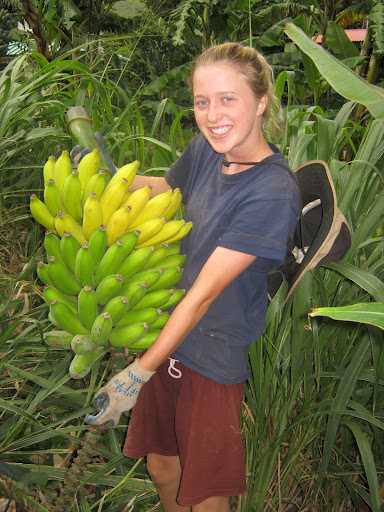 I take my break under the mango tree and realize there are little green mangoes above. This starts me thinking about the tangerine tree near my office that provided me with warm juicy snacks throughout the day when I first started working at Pacific Quest. I realize that those treats should be appearing soon! There are a few other things that have excited and amazed me in the last year. Avocados! Living most of my life in Washington State, it was a treat to buy (at a very high price) under ripe avocados, then wait for days to make guacamole. Now, it seems to rain avocados! Big ones, little ones, green ones and purple ones–and they are always amazingly ready to eat. I never imagined just spreading avocado on a piece of toast or adding a couple of slices to a sandwich. Bananas! I’ve actually been able to watch a banana tree flower, fruit and be harvested. Who knew that a rack of bananas started with a beautiful red flower that, to me looks like a heart. Apple bananas, ice cream bananas and Cuban reds, to name a few, this plant is amazing, beautiful and delicious! The bananas in the grocery store in Washington were nothing like I get to enjoy now. I can drink my fruit now! Lemons and limes the size of apples! People give them away, just like we used to give away our “gone wild” zucchinis at the end of the season. Fresh squeezed lemon-aide and lime-aide are on the happy hour list, and something I can feel good about giving my 2 year old grandson. A Ka’u orange is a delicacy, wrinkled and brown on the outside and sweet and juicy on the inside. They say the uglier the better and THEY are right. Apparently these oranges are only found in the district of Ka’u where Pacific Quest is located. The first time I saw them I thought “they must be rotten”. But, they are the best oranges I’ve ever had. Papaya, mango, passion fruit, oranges, limes, lemons, bananas, avocados and dragon fruit too! These are just a few of my favorite things. I do miss crispy apples, juicy peaches, Rainier cherries and picking blackberries in late summer…those are just fruits of a different color!
Dr. Brian Konik Joins Clinical Team
Pacific Quest is pl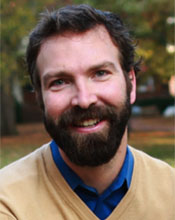 eased to welcome Dr. Brian Konik as a Primary Clinician. Brian received his B.A. in Psychology from The University of Florida, his Ph.D. in Clinical Psychology from The University of Vermont, and completed his predoctoral internship at the Outpatient/Inpatient Neurobehavioral Unit with the Kennedy Krieger Institute at the Johns Hopkins University School of Medicine. Dr. Konik’s research background focused on the relationship between anxiety and pain in children. He uses an eclectic CBT- and ABA-focused approach with his clients, which culminated at UVM and Johns Hopkins but which developed over many years in a variety of settings
Most recently Dr. Konik worked as a Clinical Psychologist in private practice in Annapolis, Maryland. For 10 years at Spectrum Behavioral Health, he treated adolescents and young adults with issues ranging from anxiety, depression, trauma, and substance use/abuse, to learning differences, significant behavioral problems, and developmental disabilities. Dr. Konik also has extensive training in and experience with parent/child interaction therapy, parent training, and family group counseling, as well as specialized training in suicide/crisis intervention. While in Annapolis, he served regularly as a contracted behavioral specialist with the local public school system and as a consultant with private, independent day schools, conferring with teachers and administrators on issues experienced by his clients, their families, and educators.
Brian has had enriching experiences at outdoor/experiential educational positions in the past and is enthusiastic about transitioning back to this type of lifestyle with his young family. His education, training, and experience allow him to provide a variety of new and complementary services to Pacific Quest’s dynamic wilderness therapy program.
Mālama Honua World Wide Voyage
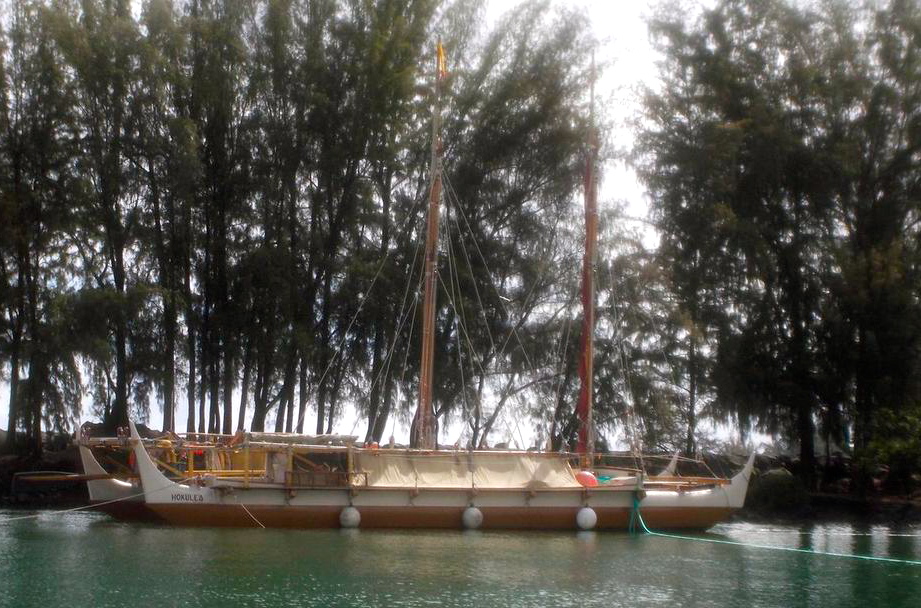 Pacific Quest outdoor therapy program, recently celebrated the launching of the “Hōkūleʻa” and “Hikianalia” voyaging canoes on their Mālama Honua World Wide Voyage (WWV). Pacific Quest’s very own Kalani Kahalioumi will be one of the voyaging crew for the Capetown to Panama leg of the worldwide voyage.
The mission of the WWV is to “navigate toward a healthy and sustainable future for ourselves, our home – the Hawaiian Islands – and our Island Earth through voyaging and new ways of learning. Our core message is to mālama (care for) Island Earth – our natural environment, children and all humankind.”
Pacific Quest students harvested and offered 25 pounds of taro leaf for the voyager’s first meal. Students also attended the celebration, which took place at Palekai beach park in Hilo and participated in various activities, including a tour of the sailing vessels, ocean activities– such as stand up paddle boarding, outrigger canoe paddling, sailing and swimming. Pacific Quest staff and students were eager to show their support for this historic event!
10 Things I Wish Every American Knew About Health
“Time spent in nature is not a luxury, it’s a medical necessity”…this is just one of the many insightful tips found in the article “10 Things I Wish Every American Knew About Health” by Dr. Lawrence Rosen, which was recently posted on the MindBodyGreen Newsletter. Take a moment to read this interesting article and see what you can do to make healthy changes in your life. As Dr Rosen writes, “Real change is hard work…but it’s worth it.”
Lessons From the Field
Ben joined the Pacific Quest team in November of 2011. His experience, skill, and genuine enthusiasm for working with young adults made him a trusted leader when Pacific Quest opened our new young adult program at Reeds Bay. Ben is currently earning his Masters Degree in Counseling Psychology from Pacifica Graduate Institute, and will be leaving Pacific Quest this summer to begin his training as a Counselor with an innovative young adult transition program in Boulder, Colorado.
Before leaving the Island, Ben asked to share some of the lessons he learned from his students, and friends, in the gardens of Pacific Quest.
- “But” negates: whatever you hear before someone says “but” ISN’T true, so ignore it. “I love you but…” means I don’t love you. “I did it already but…” means I didn’t. “I will but…” means I won’t.
- Validate effort: pay more attention to people’s effort than their results. It’s easy to succeed at what you’re already good at. It’s harder to succeed when you’re trying something new. The student who is struggling the most is often the one who is growing the most. Save your validation for students who are growing rather than succeeding.
- Focus on your growth: When you feel insecure, practice! Focus on your growth rather than on your success. You can succeed at learning on the first try…and the hundredth.
- Frustration is blocked goal achievement: if you’re feeling frustrated reassess your goals. If you find yourself frustrated that a student disagrees with you, imagine that same disagreement if your goal was to express yourself rather than be agreed with.
- Power struggling: If you’re locked in a power struggle, don’t tell the student what to do. Just tell them what you are going to do.
- Non-solution based resentments vs non-resentment based solutions: you only get two choices brah.
- Tell on yourself: find out what you do when you’re uncomfortable. If you don’t know, ask someone who loves you because they do. When you recognize yourself doing it, tell on yourself and ask for help before you hurt someone.
- Fear vs excitement: The same neurotransmitter responsible for fear is responsible for excitement. The brain distinguishes between the two based on our expectations. If I’m challenged to a game of basketball and I think I’m gonna win, I feel excitement. If I think I’m gonna lose, I feel anxiety. What we expect doesn’t control what happens to us. It does control how we feel about what happens to us.
- Feeling my feelings (fmf): Sometimes students don’t know how they feel. Sometimes students know how they feel but don’t know how to describe how they feel. Sometimes students know exactly how they feel, and how to describe it, and don’t want to do either. Each one of these students needs something different from you.
- What if this was my kid?: Ask yourself this question often. Sometimes it will keep you from doing something selfish. Other times it will inspire you to do something selfless.
- Have fun: On your best days, your students have probably never met anyone like you and they want to grow up to be just like you. Life cannot only be about growth…there needs to be room for fun. When we have fun, we are showing our students that responsibility doesn’t have to feel overwhelming. When you are having fun, you are showing your students that adulthood is worth it.
By Ben Digati
“I am an independent capable man worthy of love and respect”
Pacific Quest Launches Two New Sites, One Great Address!
Pacific Quest is so pleased to officially announce the launch of it’s brand new website which integrates the two program specific sites- the Adolescent Program and the Young Adult Program– into one complete web address.
 The focus for Pacific Quest is to create innovative treatments for adolescents and young adults by providing sustainable living skills through outdoor programming and by offering a holistic yet highly clinical approach to treatment that is individualized for both adolescents and young adults. Unlike any other outdoor therapy programs, Pacific Quest incorporates non-traditional aspects of wilderness therapy, like gardening & farming and rites of passage with an integrated medical and wellness team to address the whole person. Pacific Quest really represents the future of wilderness and outdoor curriculum for youth in trouble.
Although the same components and nuances work in both programs, the journey for each age group is different. While adolescents have a yearning for heightened experiences and pressing the boundaries of who they are as individuals, for young adults it is necessary to create more translatable living skills for long-term change. Thus, with the newly created program specific content on each site, it is easier to illustrate the subtle and significant differences between the two programs, while reminding readers of the integrated approach and collaborated care of Pacific Quest.
The newly enhanced website boasts a fresh new look and some exciting new features for both sites!
- Two new updated designs and a new splash entry page with vibrant and attractive images.
- New navigation making it easier to find and access information.
- New content reflecting program expansion.
- All new dynamic photos for both sites, depicting a program that really resonates with the students.
- All new engaging and educational videos that help to explain and exemplify the relationships, rapport and roles of the many staff members and efficacy of the truly unique programming- and now with the ability to share the videos with others!
- New and very moving testimonials of gratitude and encouragement.
Checking out the new website and all the improved features will lead you to watching some of the videos. You will see that while talking about gardening the students seem to feel a deep connection to nature and the stages of growth, mirroring their own, which gets the students talking about themselves in a safe and nurturing way. The words are then put into action, and the students embody moving from one stage to the next. The beauty of nature and nurture couldn’t have a better example.
Pacific Quest therapist Erik Jul says that what he enjoys most about working with these students is “seeing them take hold of their own growth and actualize that… to see that they have a way they can make change happen for themselves and just support them in doing that. I think there’s magic in that”.
Check out the magic!
www.pacificquest.org. 808.937.5806
Yvette Hinojosa Joins the Clinical Team
Pacific Quest is pleased to welcome Yvette Hinojosa as a Primary Clinician! Yvette has extensive experience serving children, adolescents, young adults and families. Her experience has provided her with a unique perspective on health and wellness that has evolved into a holistic approach acknowledging the whole person.
Yvette graduated from the University of California at Berkeley with a BA in Ethnic Studies and earned her Master’s degree in Psychology & Art Therapy from Phillips Graduate Institute (PGI), in Encino, CA. Prior to joining the Pacific Quest clinical team, Yvette served as the Clinical Supervisor for Hawaii Behavioral Health in Hilo, where she supervised 22 adult paraprofessionals working with ASD and SED students. As a clinical therapist, she addressed a broad spectrum of psychological and behavioral issues. Yvette has extensive experience facilitating art therapy groups and managing crises, as well as a strong background assisting clients with stress, self-esteem, peer pressure, identity issues, anger management and suicidal ideation. Her treatment modalities include Humanistic approach, CBT, Solution-Focused and Narrative Therapy modalities. Yvette comments, “By teaching meditation, using mindfulness psychology, I teach observing the nature of the mind, breath work and stress reduction with my clients. I look forward to sharing my experience and unique perspective to enrich the Pacific Quest participants and professional team!”
The Land Dance: Farming as Initiation
By Travis Slagle, Horticultural Therapy Director
The following article was published in ‘Circles on the Mountain’ Rites of Passage in a Rapidly Changing World, Issue #17, 2013. This is an annual publication of the Wilderness Guides Council.
Imagine what the world would be like if wilderness guides of the future became organic farmers. What if the people entrusted to witness life’s most significant transitions traded in the more esoteric theories of rites-of-passage for a simple shovel and pitch fork? For many people, the lure of the underworld and the solace of the wilderness is a palpable force. Yet, despite the best efforts of shamans, mystics, and visionaries of the modern era, the practice of wilderness initiation has become increasingly inaccessible to many of the estimated ten billion people alive today, all of whom face diminishing resources and the intrinsic need to feed themselves and their families. Here is the crossroads where farming and rites-of-passage meet, raising the question what if rites-of-passage guides were responsible for restoring the nature-centered rituals of planting, harvesting, and cultivating the soil? Could this be the key to overcome the struggle of integration and the inherent loneliness of a return from a wilderness experience?
As we all know, the purpose of going to the backcountry for ceremony and initiation has never been to stay there. In fact, going beyond wilderness, the growing edge of rites-of-passage isn’t to delve deeper into social isolation, but instead to relearn the skills and collective wisdom of incorporation. The future needs “incorporation guides” to lead us from the mountaintops and deserts of the wilderness to the urban gardens, biodynamic farms, and permaculture communities that are thriving in cities, country-sides, and backyards all over the world. Here, we can really put into practice the work and struggle of incorporation. Farming is a fundamental skill that allows individuals to provide tangible and universal gifts for a growing population and increasingly diverse society. Thus, there is no better time to bring back the enduring and once sacred pursuit of nurturing the food that sustains our communities and heals the Earth.
When we do this, the seeds we plant in council will no longer be symbolic. Rather than sitting and observing nature from a distance, the time has come to lean into the sun each morning with a watering can, to kneel on the earth while pulling out weeds and thinning beets, to feel the life teeming beneath the surface as we sift through the soil to make space for new roots. The life of a farmer is a reminder of the importance of  working with nature as opposed to conquering, traversing, or simply getting through it. A farmer’s work is a humble and thankless job that gives our society the luxury of idle time. Yet, with all the comforts of modern society, have we not spent enough time over-processing the anxiety and uncertainty of change in our lives, and still come back to the same questions? The farmer knows the work that’s needed to integrate the wisdom of nature through consistent and meditative action; leading society on a path of integration that measures the gravity of our ideals with the heroic task of feeding our neighbor.
The process of growing healthy food and building a more sustainable community was once the central activity of human civilization, and the foundation of a reciprocal relationship with nature that has sustained people on Earth for thousands of years. Nurturing the food we eat offers the most basic life lesson and cornerstone of sustainability, teaching us that what we give directly impacts what we can take. The wisdom of sustainable farming provides a powerful example of incorporation, revealing the magnitude of one’s intentions through the practical and tangible results of their actions. With this in mind, it’s time for wilderness guides to begin offering medicine walks in urban gardens, and re-introduce the concepts of severance, threshold, and incorporation through the simple life cycle of a plant.
Going back in time, almost ten thousand years ago, nomadic people decided to put their energy towards cultivating the land versus traversing it, and in the process initiated the dawn of human civilization. What caused people to make such a dramatic shift in their relationship with the Earth is debatable, but likely attributed to a combination of both internal and external conflicts. The questions our ancient ancestors asked themselves thousands of years ago could be strikingly similar to the most pressing questions being asked today. Questions like, how can we spend more time with our family and less time hunting (the modern hunt being for a paycheck)? Are we tired of wandering around and feel the need for community? How will we ensure our children will have a better life than our own, and how can we live sustainably with the glaring reality of more people and increasingly scarce resources? These are the questions that have come full circle, leading wilderness guides and agriculturalists to an important moment in human history. Like all indigenous ways of knowing, the role of the land and a farmer’s relationship to it were inseparable from spiritual practices leading to powerful ceremonies that honored growing seasons and the relationship between plants and the phases of the moon. Just as the nomad evolved into an agriculturalist, the questions that led to a new era of human experience have now returned to the forefront of modern society. Thus, wilderness guides and farmers alike must recognize the need to answer these questions in a way that restores balance and integrity between people and their relationship with themselves and the mysteries of the Earth.
The world has always been rapidly changing, like the rise and fall of the ocean, or the shifting of the constellations that only recently became mottled by the automated turn of satellites. In an information age that has spun out into an era of crippling anxiety and distraction, what matters more than an isolated wilderness experience is an initiatory process with the potential to transform society; an activity that universally connects us to our most primal need and ancient practice of providing not just for  ourselves but for the needs of others. It’s said that change is the only constant in the world, and life and death walk side by side. With cities that are now exceeding twenty million people living within a few square miles, we are confronting the possibility that some of the changes we face are no longer a part of nature, but instead are manifested by a loss of relationship with it, and perhaps a desperate attempt to hold onto nature as it slips away. Herein lies a great moment of transition, requiring more than “threshold guides” and farmers doing their work in separate places where their paths often never meet. It’s time to let go of rugged individualism and renegade attitudes that no longer serve our community, and acknowledge that the nomadic lifestyle and fervor of wilderness survival is not the model for a sustainable future. The purpose of rites-of-passage has always been to serve a community not the ego, and what better way to humble ourselves and restore our communities than working side by side creating ritual and ceremony through the timeless action of planting seeds and honoring the struggle of growth in a garden.
To be a wilderness guide and a farmer at this time in history is to know what it feels like to beat a drum in the darkness, and to bare witness to a sacred wound that seems to never stop bleeding. Farming is a good reminder that learning from nature is not a one-way street; it requires giving back, a return to community with something to offer, integrating through action a sense of purpose and necessity within society. For wilderness guides and sustainable farmers willing to share the responsibility of initiation, and help usher the world into a more hopeful future, a primordial land dance awaits us!
Raising the Bar
By JD Daubs, Admissions Director
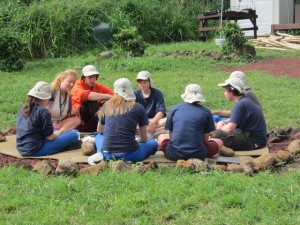 I’ve had the opportunity to work in our industry for 10 years and have seen wilderness programs adapt, change and respond to the growing therapeutic and clinical needs of students and families. In my opinion, there’s not a better treatment option for families that have exhausted most or even at times all resources to find help for loved ones. I commonly say that we “unstick the stuck”; meaning we offer solutions to students and families when they are in a pattern of unhealthy and at times very damaging, harmful behaviors that have not been changed with all types of intervention and treatment.
Pacific Quest has responded the best in the industry to the growing need of students and families by creating an environment that cultivates and promotes sustainable treatment for our students and families. I want to take a moment to let you know how Pacific Quest’s services are bar none to the rest of the industry! Please take a moment to read what we have to offer below.
Wellness and Medical Support
- Pacific Quest is the only outdoor therapeutic program with a full-time ND (Naturopathic Doctor), staff Psychiatrist and a consulting MD who sees adolescents and young adults on-site, two full-time Registered Nurses, a full-time Paramedic, and three wellness assistants.
- Pacific Quest is the only outdoor therapy program with a truly integrated Medical and Wellness Team, working in tandem with the Primary Therapist, support professionals (as applicable) and parents to address and manage wellness for each adolescent/ young adult.
- Upon admission, Pacific Quest provides comprehensive, individualized Wellness Plans for each adolescent and young adult. Wellness Plans are fully transferable to the next setting (aftercare or home), further supporting sustainability.
- Pacific Quest’s Psychiatrist, ND, RN and Primary Therapist meet with each adolescent/young adult (and communicate extensively with his/her family and other support professionals, if/when medication review is warranted).
- Pacific Quest’s Medical Director, Clinical Director, Program Director and Admissions Director collaboratively review all potential admissions prior to placement.
- Pacific Quest is the only outdoor therapy program with a full-service hospital just 15 minutes from each location.
- Pacific Quest is the only outdoor therapy program offering a 90% organic and whole-foods diet.
- Adolescents and young adults grow, tend to, and harvest all fruits and vegetables and engage in farm-to-table meal preparation. All meats are organic and secured locally. A wide variety of diets can be accommodated, including but not limited to: allergen-free, gluten-free/Celiac, dairy-free, vegetarian or vegan and/or kosher.
- Pacific Quest is the only outdoor therapy program with full-time, awake Night Staff 365 days per year. Pacific Quest is committed to this feature for added safety and security.
Clinical and Therapeutic Support
- Each adolescent or young adult receives two individual therapy sessions per-week. (Note: standard practice for most wilderness therapy programs is one therapy session per week.)
- Each adolescent/young adult is engaged in multiple therapist-facilitated groups weekly. Masters/licensed and/or Doctoral level clinicians lead all groups. (Note: other wilderness programs typically offer groups led by field staff or other non-clinical staff.)
- Pacific Quest’s clinical team is comprised of (8) full-time Masters level clinicians plus (3) full-time Clinical Psychologists and (1) full-time Doctoral candidate.
- Pacific Quest has a 2:1 staff to student ratio.
- All of Pacific Quest Field Instructors hold college degrees and/or a minimum of three years of related therapeutic experience.
- Pacific Quest offers a full menu of on-site Psychological Testing services.
- Pacific Quest offers unparalleled family support, which includes but is not limited to:
-
weekly update calls with a Masters or Doctoral level clinician.
-
a dedicated Family Therapist for parents/siblings (as appropriate).
-
a dedicated Parent Coordinator who is “on call” to parents and serves as an immediate one-stop, liaison to all departments at any time.
-
an interactive Parent Curriculum Manual providing parents with guidance, tangible tools and education.
-
a mid-stay (on-site) Parent Workshop (adolescent program) with adolescent participation.
-
mainland Parent Workshops and events for current and alumni families.
-
a professional Outreach and Admissions team located in the mainland and always accessible. Additional family therapy and sibling support (as applicable) is included in tuition. Coming Soon! Pacific Quest will offer weekly, open-forum group chats (online and via telephone) facilitated by highly experienced, Masters level clinicians for parents of enrolled adolescents and young adults. Calls will provide a supportive forum for parents to ask questions and receive guidance on a wide variety of common parenting challenges. These sessions will assist parents in supporting their adolescent or young adult child while at Pacific Quest and after he/she transitions.
Additional Defining Features
- Pacific Quest is the only outdoor therapy program, which uses Horticultural Therapy to support increased emotional health and well being for adolescents and young adults. Horticultural therapy utilizes organic gardening in conjunction with proven therapeutic modalities to meet specific therapeutic treatment goals.
- Pacific Quest is the only outdoor therapy program to utilize this cutting- edge, client-centered, treatment model to enhance social, cognitive, and physiological functioning with the primary goal of improving health and inspiring motivation for change.
- Organic gardening provides a living community where a variety of vital life skills may be practiced, mastered and generalized long after a young person’s Pacific Quest journey.
- Pacific Quest is not corporately or remotely owned. Owners/operators live near the program and work side-by-side with staff on-site.
- Pacific Quest operates in a mild and temperate climate year-round in calm, lush and peaceful surroundings.
- Pacific Quest operates on privately controlled land (not public land).
- At Pacific Quest, all adolescents and young adults sleep indoors in simple, yet modern bunkhouses.
- Sustainable, practical life skills (vs. rarely used survival skills) are taught, practiced and mastered. (These skills include but are not limited to: time management, goal setting, organizational, planning, community living, meal planning and cooking, self care and grooming.)
- Pacific Quest participants engage in true community service by preparing vegetables/fruits for harvest and sale at local farmers markets and then donating proceeds to local children’s charities, or by participation in land and service projects designed to protect Hawaii’s natural heritage. Young adults and adolescents learn to be stewards of their communities and to give of themselves to others
The Healing Power of Water
By Chris McConnell, Program Supervisor Reeds Bay
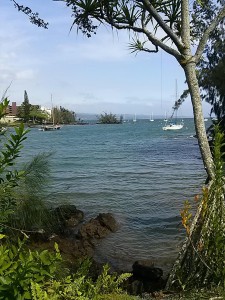 Aloha, my name is Chris and I have worked with Pacific Quest for a little over two years. During this time, I have seen this company go through enormous transformation, and have watched it grow into one of the most progressive therapy programs in the country. I am deeply grateful for the knowledge and personal growth I have gained. Because of my experience at Pacific Quest, I will be moving on to an MSW program in the fall. Reflecting back on my experience in Hawaii, I can honestly say that each year of my life has been better than the last and that Pacific Quest has been a big part of that growth and self-awareness.
Working at the Reeds Bay Young Adult program, it is hard not to have a sense of calmness due to our blessed location among cold ponds along Hilo Bay. In the melee of chaos that sometimes consumes our day, one may find peace by taking a few breaths and gazing into the streams and ocean. This can have very calming effects for students who respond to visual stimuli. While writing this I asked some students and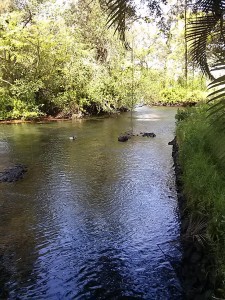 staff their thoughts on our location and what they think while they are at the waterfront. Here are some responses:
Home, stillness, problems melt away, beauty, peaceful, sit with own mind and be present, serenity, insignificance in the best way, space away from it all, cool with fish, a game-changer and a shift in the mind space
This is just one of the tools we can utilize in our quest to help these students grow. I will end with a quote by Loren Eiseley:
“If there is magic on the planet, it is contained in water.”
A Growing Concern
The following article by Diana Ballon was featured in Cross Currents-The Journal of Addiction and Mental Health Autumn 2012 | Vol 16 No 1.
A Growing Concern
Horticulture therapy offers potent opportunities for healing and growth
By Diana Ballon
Work in the garden “takes priority over interacting with my symptoms,” says Toshio Ushiroguchi-Pigott. “It’s a kind of medicine in a way, to be outside,” caring for plants, harvesting, weeding and seeding in the greenhouse on days it’s too cold outside, says Toshio, who enjoys dropping by CAMH’s Sunshine Garden near his home to garden whenever he can. Run by FoodShare Toronto in partnership with CAMH, the Sunshine Garden uses horticultural principles to teach clients about food security, provide skills training and nurture self-confidence and healthy leisure activity.
“Going outside in a park is what I used to do when I was overwhelmed by symptoms,” says Toshio, an outpatient with CAMH’s Archway Clinic. He has found it’s even healthier to actively work in a garden; his involvement in gardening has since propelled him to enroll in a landscape design certificate program at Ryerson University.
Many people—like Toshio—have discovered the healing powers of horticulture therapy (HT), a formal practice involving the use of plants, the garden and horticultural activities to “promote well-being for its participant,” as defined by the Canadian Horticultural Therapy Association (CHTA). The benefits of horticulture therapy can take many forms, from physical and cognitive, to spiritual and emotional.
Gardening and surrounding yourself in nature have obvious therapeutic benefits that have been recognized for centuries: as far back as ancient Egypt, “mentally disturbed” royalty were advised by court physicians to roam in the palace garden as a means of relaxation and healing. Over the past 60 years, horticulture therapy has increasingly been recognized as an evidence-based practice. Horticulture therapy study has evolved to educational programs that offer assessment procedures, and concrete therapeutic goals for its participants, based on each person’s needs. The therapy is now practised extensively in a range of Canadian settings—in prisons, vocational rehabilitation programs, psychiatric hospitals, consumer-survivor businesses, community gardens, with mental health and addiction programs—and with almost any population group you can think of, from children and troubled teens to older adults with dementia and people with physical disabilities.
When I was first assigned this story, I thought, can I actually write 2,500 words on this topic? Aren’t the calming benefits of gardening and being in green space obvious, and the meditative, soothing effects of weeding and planting relatively predictable? What I found was a much more researched and sophisticated practice than I had imagined.
Countless studies attest to the success of horticulture therapy in everything from reducing recidivism in at-risk youth, to reducing aggression in adolescents who have been institutionalized, to reducing cortisol levels, improving self-esteem, helping people to feel less stressed and anxious, reducing the severity of depression and improving perceived attentional capacity and ability to concentrate in people who are depressed—the latter from an article published in a 2010 issue of the Journal of Advanced Nursing.
“In the past 25 years, horticulture therapy has really been given a whole lot of attention and research,” says Travis Slagle, a land supervisor for Pacific Quest’s Sustainable Life Skills program in Hawaii, speaking on LA Talk Radio about his program.
“You are in a restorative environment. As I tell the students, the garden will never judge you…. It places the client or student in a caregiving role, and gives them a sense of efficacy and purpose in being able to provide the care, rather than their being the ones that need the care,” he says.
The first registered horticultural therapist in Canada, Mitchell Hewson introduced horticulture therapy into psychiatry in Canada in 1974, with the opening of the horticulture therapy program at Homewood Health Centre, a mental health and addiction facility in Guelph, Ontario. It’s a program that he still manages almost 40 years later.
In this time, the program has burgeoned: about 230 patients participate in the program each week, with HT being used as an adjunct to other forms of treatment they will receive while they’re at Homewood. The program has three full-time horticulture therapists on staff, and about 40 volunteers and interns that come from as far away as Korea, Japan and China to train in how to use HT as a specialized tool in mental health/psychiatry. With a 47-acre property as backdrop, landscaped gardens, a state-of-the-art conservatory and teaching classrooms, it is an ideal setting for learning—and finding sanctuary in the process.
Hewson explains the seductiveness of the teachings, and the universal appeal of being in green space. “Most people can relate to nature in some way. You walk on it. You eat it. You breathe it. It’s all around you.” Whether you appreciate the smell of a rose, or the taste of mint, somehow we can all find a connection to nature.
“Where do you find a sense of peace? A sense of sanctuary?” he asks rhetorically.
Rather than having a preset program for patients, Hewson tailors the program differently depending on the person’s diagnosis—whether it’s anorexia, posttraumatic stress, a drinking problem or a combination of these or other mental health or addiction issues.
In 2005, Homewood began using horticulture therapy to treat patients with concurrent substance abuse and posttraumatic stress disorders. “The premise of this program is to provide sanctuary, bereavement and reconnection through community,” says Hewson. The seven-week program may include what he describes as “psychological burials,” in which patients bury, burn or plant an object such as a letter or audiotape—something that physically connects them to the moment of trauma— as a ritual to help them move from being a victim to being a survivor.
In illustrating the power of this exercise, Hewson gives the example of a woman who expunged the trauma of an abusive father by crushing and smashing roses from her father’s coffin and putting them in Homewood’s memorial garden on the last day of her stay. She later describes her experience: “Since then I still have had painful memories of my father’s abuse, but I now feel surrounded by my higher power and I feel safe and comforted.”
In Homewood’s horticultural program for people with eating disorders, the focus is slightly different. With eating disorders, “they seek perfection” and control, says Hewson. Through the program, “we bring patients into a safe environment, and then work to help them replace their preoccupation with food with a healthier, creative focus,” he says. We offer activities where they can have fun, and feel joy, Hewson says, letting go of the intense focus they’ve had toward food issues. This may involve designing a miniature Japanese garden in a glass container, making botanical prints, going on nature walks or experimenting with herbology. They also use psycho- aromatherapy, in which they make or apply creams and essential oils with plant derivatives for massage, and as a way of self-nurturing. “Most people need to be nurtured,” says Hewson. Smells can also be strong triggers for trauma and other memories that can be replaced by more calming aromas created from these plant-based creams, explains Hewson, who is also a certified aromatherapist.
A horticulture therapy practice for dementia involves using the same client-centred Rogerian approach as is used for other populations, but adapting the pace of the program, so that clients are still challenged and stimulated by the work, without becoming overwhelmed. Hewson, who lost both his mother and mother-in-law to Alzheimer’s, says he finds this work particularly rewarding. Patients benefit from the social aspect of gardening, the physical work involved, and the “memory enhancer,” effect—recalling past skills they had in gardening, and gardens they’ve enjoyed. Therapists can assess patients’ cognitive functioning and build a rapport with them without the direct confrontation required in a more clinical setting. Working with plants also builds their self-confidence and improves their mood: activities range from group projects to dry herbs and make wreaths, to smashing pots and hoeing as a way to let out anger and aggression.
With patients with addictions, Hewson describes using various therapeutic plants—such as the dwarf orange tree, whose orange blossoms have antidepressant properties. Certain plants can be used to make creams, which can be self-soothing and nurturing to clients, and an alternative way of calming themselves, instead of using addictive substances. Clients who are in the program for 35 days will take a cutting from a plant, learn to nurture it, and bring it home with them.
Transplant yourself to the other side of the world, and you’ll find a program that draws on healing powers of the garden and rich metaphors of growth in its work with teens. Although not a registered horticulture therapy program, Pacific Quest is an intriguing outdoor therapeutic program where teens and young adults live for two to three months to learn what they refer to as a “sustainable life skill,” which includes elements of horticulture therapy as well as a wellness curriculum and rites of passage work. Students sleep in bunkhouses, and spend the bulk of their days in organic gardens where they tend plants, weed, harvest and then use the produce they’ve cultivated to cook for each other, and sell to a local farmer’s market, says Kathryn Kasenchak, one of the program’s psychologists.
“Growth of the plant can reflect growth of the self,” and transplanting can be a rich metaphor for the process students go through, says Kasenchak. “Like plants, the students’ roots can outgrow the environment they grew up in. They may need to temporarily leave home, as a way to recognize and then abandon maladaptive patterns that they’ve become familiar with. When they do, they—like plants—usually go through some shock. But they come to recognize that change doesn’t happen when you’re comfortable. They may not do so well at first, but it [leaving home] is necessary to achieve their full potential,” she explains. Students go through their own process of transplanting.
“I like to use the analogy of the soil,” says Kasenchak. “Soil is dirty, but it also nourishes.… Sometimes the work is dirty, because it involves dredging up difficult issues to then move forward.”
In the program, therapists give different roles to students based on therapeutic goals; for instance, they may assign a resident who has had a hard time addressing difficult things in his or her own life to work in composting. “Compost becomes analogous to these unaddressed issues. The longer it is unattended, the grosser and stinkier it can become,” says Kasenchak. Someone else who needs nurturing, and has family of origin issues, may be assigned to work in the nursery tending to baby plants, she says.
Gardening work is also used to teach students skills that can be directly applied to their own lives, such as executive functioning, Kasenchak says. “A lot of students who have gone through the mental health system have trouble with planning, task initiation and completion,” Kasenchak says. “The garden helps them to break down different tasks in life into more manageable pieces.” They learn math skills involved in portioning out food, and gain information on nutrition, diet, cooking and time management. “We also encourage and teach mindfulness practices and suggest certain activities, such as weeding, be done silently, so they can see what arises for them.”
Weeding is another interesting metaphor, she muses. “With weeds, you have to keep tending the garden. You get the weeds out, but then they come back next week…. Some weeds are deceiving because they can look really pretty.”
The program has a community focus, in that each resident’s role is interdependent, and proceeds from sales of their produce at the farmer’s market goes to community organizations. As Slagle comments in the radio interview, their approach reflects a whole new paradigm, a shift from the “rugged individualism of our culture to a more collective approach of what we give versus what we take.”
In offices overtop PARC—Toronto’s Parkdale-Activity Recreation Centre—HT is an activity that people can make a living off. Here at Parkdale Green Thumb Enterprises, employees are hired to plant, water, prune, fertilize, mulch, weed or do other landscaping services to beautify Toronto streets and businesses. Employees at this consumer-survivor business all have mental health issues, and struggle with poverty—plights that are common in Parkdale where substandard rooming houses, boarding homes and a psychiatric hospital have been home for many people trying to rise out of difficult conditions.
“A lot of people have been isolated, and told they can’t work or shouldn’t work, or when they tried to work, there was no accommodation, so they’re afraid to work,” says Green Thumb’s business manager Maggie Griffin. “You have to understand the culture of people with mental health and addiction issues,” she says. Many have experienced extended abuse, some have come from small communities, are recent immigrants or refugees, or may have lived on the street or couch surfed.
At Green Thumb, employees are given a chance to succeed, rather than being further stigmatized and alienated for the problems they are trying to cope with. And they can do this work within the often meditative and nurturing environment of plant life.
“We’re here to support, but we’re not social workers,” says Griffin. If someone needs accommodation, to take time off, they can do that without getting fired or being asked for a reason why they can’t work. Staff are paid to participate in staff meetings, paid for their training and can take part in different staff outings. They work three hours per day for as many days a week as they can manage, and are paid between $10.50 and $15 per hour for their work.
One employee has been at Green Thumbs for almost 11 years. “I feel a lot better about myself,” she says of her work there. “I can keep a job.” After leaving an abusive marriage, coming to Green Thumb meant that she could get back on her feet, and even afford a shared apartment near the program.
Of course, the seductiveness of green space and the power of not just observing, but participating in the plant world around us keep many of us sane. I rely on daily walks with my dog in High Park to bring stillness to an often overengaged mind. Thoughts slow down. I feel the same breeze that brushes against the leaves, that nudges the bushes, that sweeps past the trees.
On Hewson’s homepage, he quotes Thich Nhat Hanh, who writes, “Walk as if you are kissing the Earth with your feet.”
Hewson himself comments on the “magical and curative powers of nature… Nature is forgiving; if a plant dies, another can be grown in its place.” While gardening may be dirty, the effects can be restorative. And the experience of caring for an other, rather than being cared for, has potent benefits.
Diana Ballon is an editor at CAMH, and a freelance writer specializing in mental health issues.
Horticultural Therapy and Its Benefits
Lea Tran is the horticultural therapist at the Guelph Enabling Garden in Guelph, Ontario. In addition to running inclusive, imaginative and lively programs and the garden, she blogs about all the events and takes photos too. She and Trina Alix, a fellow registered HT, put together this list to show just how many benefits can be found in HT. Read more at https://guelphenablinggarden.blogspot.ca
- Cognitive benefits
- Promote memories
- Learn and share skills
- Communicate ideas
- Make choices and plan
- Use the imagination
- Maintain/improve attention span
- Emotional benefits
- Increase self-esteem
- Relax in a beautiful setting
- Discover interesting new hobbies
- Feel like an important part of the community
- Feel empowered and independent
- Express oneself creatively
- Physical benefits
- Hands-on work
- Sensory awareness
- Nutritious organic herbs and vegetables
- Fine/gross motor skills
- Eye/hand co-ordination
- Strength and balance
- Exercise, fresh air and sunshine
- Spiritual benefits
- Sense of purpose and meaning
- Life review
- Motivate and inspire
- Acceptance
- Sense of interconnection with wildlife
- Presence
- Heal with energetic properties of plants
- Social benefits
- Get outside, meet new people and network
- Teamwork-building skills
- Make a difference in the community
- Improve supportive relationships
An Integrated Approach
By Mike Sullivan, Therapist
As a major figure in 17th century continental rationalism, Rene Descarte’s perspectives fueled western philosophy, allowing him to become dubbed “the father of modern philosophy.” While Descarte offered valuable insights, his emphasis on the mind- body split (later to be coined Cartesian dualism), has catalyzed a perspective that continues to dominate western culture, having important implications in western medicine and psychology.
Western culture has developed a destructive distinction between the mind and the body, leading to an emphasis on thought and rationale, while forgetting that the body is part of the whole, and critical to overall wellbeing and functioning. It is fascinating that school districts budget significant funds for curriculum, yet give kids relatively minimal exercise and feed them highly processed foods with hardly any nutritional value. Further, our child obesity rates are sky rocketing, and with that, hospital treatments, with little emphasis being placed on prevention. What is the value of nurturing the minds of our youth without teaching them how to take care of their bodies? Why isn’t education more comprehensive? What if our mind and bodies are in fact one, and nurturing the mind-body is critical for health and wellbeing?
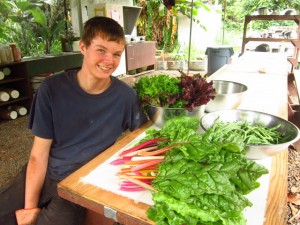 I am on my way to Chicago next week for the bi-annual IECA conference. This conference focuses on educational issues and varied approaches to helping kids. Dr. Britta Zimmer, ND and I will be presenting on the integrated approach of health and education at Pacific Quest. We will introduce aspects of mind-body health, including the five pillars of health, extensive clinical supports, and the collaborative approach of our team. We will draw on a recent case study to show how a recent student really EMBODIES his education! If you would like to know more about this presentation specifically please don’t hesitate to contact me at mikesullivan@pacificquest.org
It is time that we start educating our youth holistically and give them the tools to live healthy and sustainable lives. Our mental health and physical health are related. Let’s help our youth understand the connection and empower them to live happy lives.
A Year on the Path of Growth
By Rob Jarrett, Admissions & Parent Communication Director
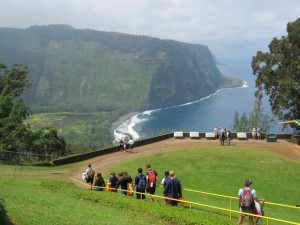 It’s a Thursday afternoon at 2PM PST and my blog article is due tomorrow. I know I’m taking it all way too seriously, but I just reread and deleted the rough draft that I have been working on for the last couple of weeks. As tempted as I am to pull it out of the trash and just be done with it, I’m supposed to be writing about MY experiences at Pacific Quest and what I’ve written so far has nothing personal in it. Last year I wrote about my work in admissions and the conversations that I have had with potential families, but there is so much more to it than that… I need to review and reflect on this last year, on my position change, and on any significant experiences in my new role as Parent Coordinator while I try to find a connecting theme…
It’s a Friday at 7AM HST and I’m at the adolescent camp in the Ka’u region of the Big Island of Hawaii. The students in camp are all “Ohana” members, meaning that they have been in the program long enough to be invested in their own treatment and for the most part, they have forgiven their parents by now. I have already confessed to them that I am probably one of the people who talked their parents into enrolling them, and it is not clear whether they have forgiven me yet.
They know that it’s my job to explain to parents what the program is really like and that I intend to experience it like they did. They are delighting in explaining hygiene procedures to me as I prepare to take a camp shower. I know that they usually wait until the afternoon sun has warmed the catchment water tanks before showering, but I play along when they say “morning showers are the best; so refreshing…” .
The previous day, I had learned that the hardest part of the program for me is “Nalu time”. Nalu is the Hawaiian word for “reflection” and it involves quite a bit of sitting with your own thoughts. I followed all the procedures during my “outfitting” and gave up my personal belongings including my smart phone. I didn’t realize how dependent I was on this little device for “self comfort” until I spent several hours in my “hale” (a personal shade structure and the Hawaiian word for home) with nothing but those thoughts. I couldn’t even distract myself with writing or drawing because I had not earned my journal yet. I quickly caught myself going a little stir crazy, eventually singing and reminiscing about my own childhood. By hour 4, I was reliving childhood traumas and second-guessing parenting decisions that I made 5 years ago. Today, it is such a relief to finally be socializing with a group of people again. As much as I totally buy into the concept and power of Nalu time, I still don’t like it.
That previous day was certainly a contrast to the outing I would be going on the next day. With my honorary Ohana I would take an idyllic walk down a very private coastline past the ancient fishing village of Miloli’i which would culminate at the “salt and pepper” sand of Honomolino beach. The community service based beach cleanup would be a great precursor to the swimming, body surfing, and picnicking that was to follow, and would make me feel that I had done my “malama” (Hawaiian for stewardship) to the land and should feel as welcome as any native Hawaiian.
It’s a Wednesday at 1PM HST and I’m in in Hilo, swimming in Reeds Bay with a young adult student and his therapist, Toby Mautz. This student is really struggling with the idea of getting invested in the program and has yet to open up in a genuine way. All the students have individual and group sessions each week and I have been allowed to listen in and even participate in his individual session during my visit this week. I have always known that Toby has a unique approach but its not until we are swimming out past the sailboats and talking about our fears of sharks that it occurs to me that we are actually having the session right now, not just getting to know each other first. We end up swimming under an underwater arch and sit in a unique rock formation called the “hot tub” when the student really opens up, talking about his father, their relationship, his problems at school and by the end he is agreeing to really give “PQ” a try. By this time we are fighting back up the channel against the freshwater current into the much colder “ice ponds” that grace the center of the campus at the young adult program. I’m sure that I’ve witnessed a significant breakthrough and that we have finally gotten the student to crack open and share the real him, but in a later discussion Toby disabuses me of this notion, telling me that “he’s still just trying to tell us what we want to hear… we’ve got a long way to go”.
It’s a Sunday morning at 8AM Eastern Time and I’m talking to a dad in Connecticut. I’m still in my bed in San Jose California where its 5AM but I’m grateful its not the 3AM that it is in Hawaii. This dad is facing one of the biggest struggles he has faced as a father. He has a little girl that has been adored and taken care of in every way for 15 years. He has protected her and fed her and comforted her… and rescued her from every hardship that she has ever faced until he just recently recognized that this was not enough, and sent her to our program in Hawaii.
Now she is begging him to rescue her again, and using the only techniques that she has learned; how to push her parent’s buttons. She has written a “rescue letter” from an organic garden in Hawaii. Of all the challenges she has faced in her life, this is the hardest. The truth is that she is surrounded by nurturing people who’s entire job is to help her take care of herself, help her make connections with her inner self, the earth, her family, and her peers. She exercises and practices yoga every morning, works in the garden, reads, journals, cooks, and cleans and talks about her life story with people who care every day. But she misses the freedom to make unhealthy decisions…
“I don’t see how this program can help me”, she writes. “If you just get me out of this place, I will do whatever you want. I know I said I hate you, but I don’t. I love you, but if you don’t get me out of here, I will hate you”.
The man is crying and asking if she will always blame him for this decision, has he betrayed her trust forever? I explain that until she stops blaming her parents for everything, she hasn’t even really started the work that she has to do at Pacific Quest and that I have every confidence that she will indeed turn the corner soon.
I am talking to the father about the value of resiliency in this life and how the only way that can be gained is by the perception of overcoming hardship; of facing adversity. I point out that if the retreat-like atmosphere of our program is perceived as a great hardship to her, then that is both a good sign that she will have an opportunity to gain this resiliency and an indication that this personal growth work is desperately overdue.
It’s 8AM Pacific Time and I am talking to a mother in Oregon. She is crying too, but these are tears of relief for a change. Up to this point, the hardest part of my job has been working with a family that can’t afford the level of care that Pacific Quest provides. We have always offered partial scholarships for families who needed a little help but recently we partnered with Sky’s the Limit Fund and are now able to provide even more assistance making Pacific Quest an option for some families that never could have afforded it before.
This mother is the first family that has qualified and I am letting her know that not only does she get the grant from Sky’s the Limit, but that we are going to more than match that amount. I can tell that the brave face she was putting on before was really resignation that this wasn’t possible and that right now is the moment that she is first realizing that it is really going to happen. She doesn’t know it yet, but her son is going to do really well in the program and eventually return home where he will turn around his grades, his health, and his attitude.
I don’t know it yet, but I am going to find myself eating breakfast next to my childhood football hero, Ronnie Lott, in the near future when he comes to support a fundraiser for the Sky’s the Limit fund. As powerful as his speech and presence are going to be, it is the stories from the actual students who went to wilderness as a result of these scholarships that make the event so significant. Unbeknownst to me, I can look forward to the donations pouring in, and over the next months, I will work with more grateful parents who are now able to give their children this amazing opportunity.
It’s a Friday night at 10PM Pacific Time and I’m in Northern California facing the fire-lit faces of potential employees. Fifteen men and women sit in a circle around a fire with drums in their hands looking at me. They have flown or driven from around the country to this Girl Scout camp for a three-day “hiring seminar”. They want to be field staff at Pacific Quest and are getting a realistic sample of what that will entail from both the student’s and the instructor’s point of view.
For the last two days, they have been learning about de-escalation techniques, horticultural therapy, observation/ “perching” methods, “The Hero’s Journey”, and the sustainable growth philosophy among other “offerings”. They have been cooking from the Pacific Quest menu and cleaning up or “doing pau” afterwards. Tonight they have participated in a Rights of Passage ceremony marking their transition from trainees to candidates for tomorrow they shall be tested during the “simulation” portion of the retreat. That’s when I will play a student who is “not invested” and even “confrontational”. I will try to break them. Last time we did this I made a candidate cry. But for right now I am still their friend and mentor…
… and I’m talking about art and music. I’m about to pass along some of the Trinidadian hand drumming techniques and rhythms that I have been fortunate enough to retain, but at this point I’m just sharing how important I think that art and music are to health and the human experience. I talk about my beliefs that all subjects from math to personal growth can be taught through artistic expression and how connection to the earth and your own creativity are some of the most powerful medicines that we have ever come up with. I’m about to teach some math, teamwork, and communication skills using the drums and before I know it, the firelight will be accompanied by the ancient rhythms that I love and illuminated by smiles.
It’s 11AM on a Friday, the day after I started this rewrite. As I read back over the significant moments I chose, the connecting theme that I’m really noticing is that this work is more than work, this job is so much more than a job. The people on the path of growth, whether they are helping others or themselves, are the people that really matter to me on this planet. This is exactly what I want to be doing with my life and these are the people I want to be doing it with. I’m excited to see what the next year will bring.
Wilderness Programs Less Risky Than Daily Life
Check out this interesting article!
https://www.omglobe.com/2013/03/28/wilderness-therapy-programs-less-risky-than-daily-life/
Pacific Quest Celebrates Nine Year Anniversary
Pacific Quest is celebrating its nine year anniversary as one of the premier Outdoor Therapy programs for adolescents and young adults in the world. We are forging a new direction for mental health services by integrating naturopathic medicine, horticultural therapy, rites-of-passage, and best practices in clinical psychology and family therapy.
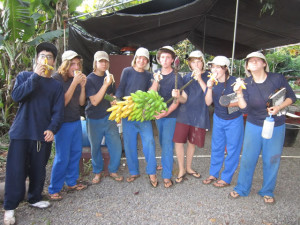 Pacific Quest was founded in 2004 by Mike and Suzanne McKinney and Chris Kaiser in an effort to provide a different approach to traditional wilderness therapy programs for troubled teens. The founders had a vision to create a controlled and safe outdoor environment where students could experience, practice and develop new ideas and skills to improve their quality of life. After building a rural campus on seven acres of pristine farmland, they quickly discovered how organic gardening and traditional Hawaiian sustainable agriculture provided the focus, metaphors and congruency to support the foundation for the Pacific Quest program. We are a powerful team of professionals with a unique sense of place that inspires struggling teens and young adults to realize their full potential, offering young people and their families hope, unconditional support, and a chance for a new life.
In 2011, Pacific Quest was named the Big Island’s top small business by the Small Business Administration and was recognized for job creation, growth in annual revenue, innovation, staying power and contributions to the community. Noted for our respectful approach, creative programming, clinical expertise and inspiring setting, Pacific Quest outdoor therapy program provides a perfect fit for adolescents and young adults in need of mental health services and independent living skills.
Hawaii Ranks #1 Fifth Year in a Row
 Recent results of the Gallup-Healthways Well-Being Index ranked Hawaii as the number one state for overall well-being.
The categories that were considered in the index include emotional health, life evaluation, work environment, physical health, healthy behaviors, and basic access to necessities. The Aloha State has ranked number one for five consecutive years!
Staff Vision Fast
By Darcy Ottey, Rite of Passage Supervisor
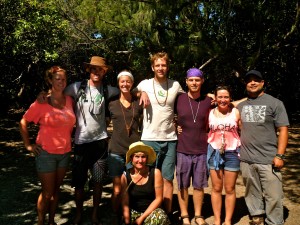 We sit in a circle long into the darkening night, not far from South Point, Hawaii, the southernmost tip of the United States. One by one, each person shares the story of what brought them here, and with this story, the intent that they have been meditating on, preparing for just this moment. As they share their intent, they are pushed, challenged, encouraged to explore even further into their hearts to find the words to express what the world is asking them to step into in this moment. When they find just the right words, they stand and proclaim them loudly to the rest of us as witnesses, and to the stars above us.
I am a whole and worthy man who listens to his soul and follows through.
I am a graceful, vulnerable woman who seeks connection and community.
I am a grateful and forgiving man, consciously connected to all people, and living for spirit.
These are a few of the intents of our Program Guides, Supervisors, Therapists—staff of Pacific Quest that have answered their own personal call to sit and listen, fasting on the land, deepening into their unique place in the world. Their intents represent the distilled essence of what they feel called to step into, in their work and in their lives. Two weeks ago, six courageous Pacific Quest staff gathered to take part in a vision fast, an age-old rite of passage ceremony.
Since Pacific Quest’s original inception, rites of passage (the intentional, meaningful marking of transition from one place in life to another) have been fundamental to our approach and philosophy. In fact, we’re the only therapeutic program in the country (maybe the world!) with a full-time Rite of Passage Supervisor. We believe that each student’s time with us is a rite of passage on their journey between childhood and into adulthood (with each student in their own unique stage in that passage), and we support them in moving through the universal rite of passage stages: severance, threshold, and incorporation. In addition to supporting students through the transitions that they find themselves in now, this also teaches powerful tools for navigating transitions they will face in the future, building their resiliency moving forward.
This philosophy does not end with our students, however. The founders of Pacific Quest recognized that for us to most effectively serve our students, staff too must have personal experience with the rite of passage process. So four times a year, I have the inspiring and humbling opportunity to facilitate a rite of passage for our staff. This personal and professional development opportunity never ceases to amaze me. The way the staff engage in the process, their honesty and vulnerability, is a gift they give themselves that serves them long into their future. And having had this opportunity, they can serve our students from a place of deep understanding of what the students are being asked to do. While our student’s rite of passage experience looks different than the staff’s—it is tailored to the developmental stages of our students as well as their own unique needs—the foundational process is much the same. Thus, when students begin to develop their intents, staff know from personal experience what tricky work it is—where to push, where to allow students to find it on their own. When students speak of what they want to let go of, staff understand how difficult the work of severance can be. And when students return from their own rite of passage with their story, staff are able to mirror the student’s experience, looking for clues and themes that speak to the essence of the young person in front of them, using the same process they experienced themselves.
One by one, they return, carrying empty water jugs and sleeping bags. They silently stand and watch as the sun rises over the ocean, then turn and enter the threshold circle we created three days before, just as they departed on their individual journeys. They smile as they enter the circle, and we bathe them in the sweet smell of sage, cleansing them for their return, and proclaim their intents once again. As they exit the circle, they are greeted with fresh fruit, avocado, strong warm tea—their first foods in 72 hours. Soon, they share the stories of their time in solitude, their encounters with whales, baby birds, goats, rocks, sun, wind, waves. They share stories of their grief, fear, and joy. They return feeling more deeply connected with themselves, with each other, and with this beautiful island of Hawai’i. They return with new-found gifts and renewed commitment to offering their gifts to their communities, and to the students of Pacific Quest.
Adolescents Visit Manuka State Park
 Recently, a group of the adolescent students had the opportunity to explore the rare and fascinating, two-mile loop trail at Manuka State Park. Manuka is a Natural Area Reserve, and one of the nineteen different reserves within the statewide Natural Area Reserves System. The Big Island of Hawaii island has eight reserves to call its own. Students hiked this secret jewel of Hawaiian mid to low-land native forest, that has had little human impact. The nature trail traverses over 25,550 acres of dense Ohi’a-Lehua forest. A “kipuka” is a tract of land surrounded by recent lava flow. Most forests like this have been converted into coffee farms or cattle grazing grounds, but in this kipuka is the remnants of the forests that once covered leeward Hawaii.
There were plenty of plants for students to identify in this kipuka, which revealed over fifty different species of native plants and many canoe plants. Hiking past the Kukui tree, an important plant brought over by Hawaiians, its branches tangled into almost artistic formations. The students split into two teams, and competed to see which team could identify the most plants on the trail. Afterwards, the group approached a pit crater, which is the aftermath of a lava flow. Some pit craters can be small, like tubes, and others can be hundreds of yards across. These craters have very delicate ecosystems, and can support life that is vastly different from creatures on the surface. Students learned about honey-creeper birds and troglodytes living down below, and the way that they adapt to a new environment. Students played a game called “choosing your own adventure”, talking about other species on the island, such as the Nene, the Hawaiian state bird and how it adapted to island life having been blown off course thousands of years ago. 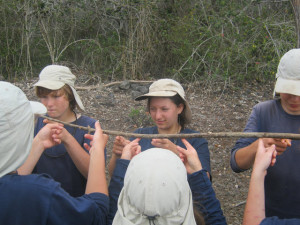
After the lesson, the group ate lunch and trekked back to the rest area, where everyone played an interactive game about bats and moths. Students learned that both the bat, and the moth adapt their behavior to feed, and not get eaten. The students really enjoyed this game, and it was great exercise! Lastly, the students came together to see if they could work as a team to lower a stick (with just two fingers placed on it) to the ground. A seemingly easy task, but hard without solid communication and teamwork. They were successful!
A New Perspective in Wilderness & Horticultural Therapy
This article, written by Travis Slagle, Horticultural Therapy Director, was recently published in the AHTA News Magaizine, a quarterly publication of the American Horticultural Therapy Association.
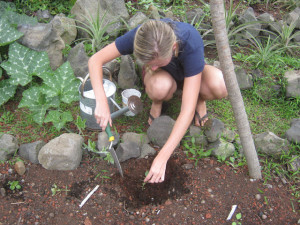 In the classic Hawaiian gardener’s book, Tropical Organic Gardening: Hawaiian Style author Richard Stevens famously wrote, “The art of gardening and the art of living come together in the organic garden.” For parents with a teenager in crisis, the concept of sending a child away to live and work in a therapeutic gardening program with the hope of discovering their own “art of living” might sound like wishful thinking. Indeed, the notion that gardening could save a child’s life is a bold statement and not without critics. However, this is the same skepticism that wilderness and adventure therapy programs have faced for decades, and yet these types of nature-based therapy programs continue to dominate the outdoor behavioral health care industry with estimated revenues of over $200 million per year in the United States (OBHIC Technical Report #26, 2000). Organized in 1997, the Outdoor Behavioral Healthcare Industry Council (OBHIC) describes itself as “a community of leading outdoor behavioral healthcare programs working to advance the field through best practices, effective treatment, and evidence-based research.” OBHIC consists primarily of outdoor wilderness treatment programs with many of the organizations seeking new ways to broaden their approach to nature-based therapy, becoming more clinically sophisticated, and reaching an increasingly diverse client population. This is where horticultural therapy has the potential to be a game changer in the outdoor behavioral healthcare industry.
The evolution of wilderness therapy and horticultural therapy (HT) share a similar story of learning about one’s self from nature. Most wilderness therapy programs rely on indigenous skills, not just for survival but for creating meaning, often through the archetypes of nomadic people. Whereas the nomad and survivalist learn by confronting nature as an adversary, the sustainable farmer learns by working with nature as a teacher.
Digging in the soil and planting seeds that bear fruit for future generations was once a sacred responsibility that brought families and communities together for a common purpose. By utilizing the indigenous knowledge and archetypes of the sustainable gardener and ancient agriculturalist, horticultural therapy practitioners have the potential to play a key role in providing a more holistic and nurturing approach to traditional wilderness therapy. Furthermore, deepening the awareness of the plant- person relationship can lead to more powerful therapeutic benefits. Thus, HT and wilderness therapy practitioners stand to improve the quality of care, increase the crossover of ideas in nature-based therapies, and inevitably reach more clients in need of innovative treatment.
There is growing evidence that suggests outdoor therapy programs that incorporate therapeutic horticulture activities for struggling teens can meet the same treatment outcomes as a traditional hiking program without the risk. Mental health practitioners working with struggling teens often witness the dilemma described by David Whyte, who said, “We are the only species that can refuse our own flowering.” Horticultural therapists are uniquely positioned to impart the skills and insight to understand why young people refuse their own potential. Bringing innovation and fresh perspective to traditional outdoor treatment, horticultural therapy practitioners can make a significant impact on the future of outdoor therapy, allowing clients to experience the wildness of nature and the mysteries of life through the patchwork of relationships and interconnections in a garden.
Resources
Outdoor Behavioral Healthcare Research Cooperative- University of New Hampshire https://www.obhrc.org/index
National Association of Therapeutic Schools and Programs https://natsap.org/
https://www.npr.org/blogs/thesalt/2012/02/17/147050691/can-gardening-help-troubled-minds-heal
Outdoor Behavior Healthcare Industry Council https://obhic.com/about.html
Outdoor Behavioral Healthcare Commission (2000). Technical Report #26. Retrieved November 25, 2012 from https://www.cnr.uidaho.edu/wrc/Pdf/OBHPublication.pdf
Young Adults Visit the Hamakua Coast
By McLean Eames, Experiential Education Supervisor
 The Young Adult students recently explored new parts of the island and helped to clean up their local neighborhood. The group traveled north 40 miles up the Hamakua Coast to Kalopa State Park. The park is a Forest Reserve that protects 615 acres of native Hawaiian forest at 2000’ elevation. Local residents advocated for the land to be set aside as more and more of the Hawaiian landscape was being cleared for Cattle and Sugar Cane operations in the early 1900s. Since then, the Youth Conservation Corps, local school groups, and State Park employees have worked to maintain the Reserve as a rare, mostly native (endemic or indigenous) representation of trees, shrubs, ferns and other forms of life that were already present on the islands before the Polynesians discovered and colonized them. When the group arrived, the first stop was to explore the Polynesian canoe plant garden that was planted and is still maintained by local youth groups. The students recognized many of the plants from the garden back at Reeds Bay. In the garden the students saw creative methods of growing ‘uala (Hawaiian purple potato), large specimens of wauke (paper mulberry) and many other plants that the Hawaiians brought with them for food, medicine, clothing and shelter. One of the students suggested the group take a moment to experience the silence of the forest. With that sentiment in mind, the group set out on a silent hike, where students saw 15’ diameter Ohia trees, nurse logs and many different fern species.
After the hike, the group traveled a couple of miles past the town of Honoka’a to nearby Waipi’o Valley and enjoyed a picnic lunch at the overlook. Some students recognized the valley from the opening helicopter shots in the movie Jurassic Park! As students looked down into the valley, Reeds Bay Land Supervisor, Mac, pointed out the taro fields that residents care for in the old Hawaiian style–diverting the natural water flow into flooded fields called Lo’i Kalo.
Creation, Transformation & Restoration in the Village at Reeds Bay
By Mac MacLaird, Horticultural Supervisor Reeds Bay
When the Young Adult program moved to Reeds Bay, Hilo, the transition was similar to the transition plants go through when they get transplanted. For plants, the first couple days are the hardest, the first couple months at Reeds Bay were the most difficult for us. We had to adjust and redesign the program to fit into a residential facility. Programmatic difficulties aside, the land offered many challenges as well. Since our arrival at Reeds Bay we have been in the process of reclaiming the land from the jungle. It has been a beautiful struggle–a sweaty, creative process.
 Alongside the facility, there is a piece of land with a couple of brackish ponds. The ponds are fed by fresh water springs that flow out into the bay. The overgrown piece of land surrounding the ponds was called the Village, not because it looked like a village, but because one day it would be a Village. It was intense–the cane grass was twelve feet tall, the trees and bushes were over grown and out of control. Students and staff were intimidated by it and it was overwhelming. We had to clear it all before we could even start planting and using the land. The students called it the “malaria area,” because of the excessive mosquitoes and the itchy rashes caused by the cane grass. Every other day we had a work party with all the students working together to clear it. We worked in the blazing sun of the summer, sweating through the long sleeves and pants that we wore protect ourselves from the cane grass. We used hand picks, sickles and shovels to pull, remove and carpet roll the think layer of vines and weeds covering the ground. We all hated it, but loved to see the impact we made with each work party. The sense of hard work and accomplishment the students gained from this process was amazing. Students who started off as protesters became invested, diligent workers as they began to see the tremendous difference they made on the landscape. With the removal of the weeds, the mosquito population went down and the Village became a more hospitable place.
The next step was visualization, planning and designing the landscape with the bigger picture in mind. Using laminated maps and dry erase markers I started sketching and brainstorming designs with staff and students. We had environmental factors to consider and accommodate; tides and the salinity of the soil. The occasional super high tide dictated how far we had to plant away from the water and the salinity of the soil determined the types of plants we could cultivate in the area. We decided to make the village a canoe plant garden, a) because they are hardy plants and can tolerate salinity and b) for their educational/ cultural significance. Canoe plants are the 22-28 different plants the original Hawaiian settlers brought with them on their voyage to Hawaii. They were selected for a plethora of culinary, medicinal, utilitarian and cultural purposes; they range from rhizomes like taro and bananas to trees like kukui and hau, all of which are currently growing in the Village. With this in mind, the work we are accomplishing in the Village is historical restoration work. We are creating a miniature, traditional Hawaiian garden. The ponds are a significant part of this historical restoration, they are fishponds. Fish ponds were used to catch and cultivate fish. We are fortunate to have this archaeological feature on our landscape and eventually we hope to utilize it and raise fish in the same way.
We started to create the first beds and paths in alignment with the contours of the pond. Taro was traditionally grown alongside fishponds, so that was the first crop we introduced to the Village when we started making beds. Taro is the most iconic canoe plant, it is a staple of the Hawaiian diet. Fish and poi, a starchy paste made from taro 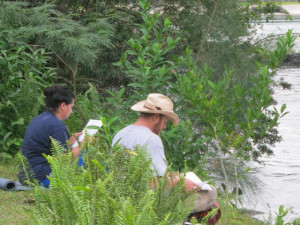 roots formed the core of the Hawaiian diet. Digging in the rocky soil has given me a lot of respect for the original settlers who had to discover how to grow food in a land that lacks soil. As the beds were planted and the paths were placed the Village started to take shape. When the hales were introduced, the Village became a Kuleana camp. Around that time I became the Horticultural Supervisor and was able to fully commit my energy to the development of the land. Progress picked up and every day brought change to the Village. The students and staff participating in this process became more invested as they realized that their contributions would live on in the legacy of the land. We are lucky to have passionate staff contributing and bringing their special talents to the Village. Anyone who spends enough time out there eventually leaves a mark. The feeling of legacy is contagious and we are all a part of it, laying a foundation and growing food to benefit future generations of students. Making a measurable difference on the land is one of the many milestones for Kuleana students. The students who have gone through Kuleana in the Village are coming out of it with improved work ethic and increased investment in the program. I
 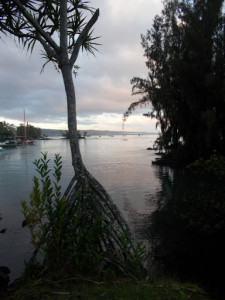 feel fortunate to have the opportunity to be a part of the formation of this camp, the dynamic landscape offers a lot of possibilities that we have never had before at Pacific Quest. We have the opportunity to cultivate fish, to grow wet land taro, and create a traditional Hawaiian garden.
This story, the story of the land, is an important part of the Young Adult program. It’s a story about change and making a difference. The land was over grown and wild until we started cultivating it, caring for it and taking responsibility for it. It has changed and it is growing; this process not only parallels the process of growth the students are going through, but the development of our program as well, the difficulties we faced in the transition from Ka’u to Reeds Bay and the challenge to redefine the program in this new setting. The change in the landscape is visible, measurable evidence of the positive change that the program and the students are going through. Now that the stress and shock of transplant is wearing off, Pacific Quest is truly beginning to grow and thrive in Reeds Bay.
Sustainable Growth At Pacific Quest
Last week I had the opportunity to visit Pacific Quest in lovely Hawaii. Located on the Big Island in Hilo, Pacific Quest (PQ) is not your average wilderness program. Created by Mike and Suzanne McKinney, PQ has 2 programs; one for adolescents and the other, young adults. The model for the programs is “Sustainable Growth“, a focus on the mind, body, and emotions.
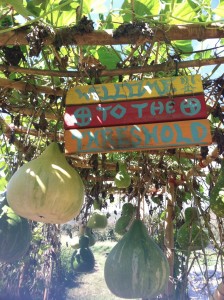 The moment I stepped foot onto the adolescent campus I felt an overwhelming sense of peace and stillness. I traveled with several other consultants and we were welcomed by the students in a ritual like passing. As I stated out loud my desired intent in life, I was welcomed through the passage by a young man who was graduating in a couple of days. As a group, we then were introduced to the beloved “Land Man”, Travis Slagle, Horticultural Therapist. He walked us through the process by which the adolescents and young adults explore their emotions, learn emotional regulation, and grow as a result of planting and harvesting produce. Once we had a general understanding of Horticultural Therapy we were put to work. Along side the adolescents, we shoveled, sifted, and planted beans. The activity gave us an opportunity to connect with the adolescents and gain a better understanding of
 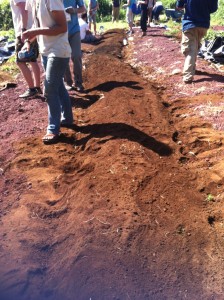 the therapeutic process. Last Thanksgiving PQ donated close to 80 lbs of beans to the local community to be served at thanksgiving dinner. Additionally, they take the weeks harvest and sell at the local farmers market and donate the proceeds to a chosen island organization. It was a wonderful experience that left my arms a bit sore the next day.
We were then treated to lunch made by the kids; fresh avocado and veggie soup, green salad with homemade dressing, fresh fruit, guacamole, and pineapple tea. The food was fantastic! Most of the meals served at PQ come from the garden with protein additions. The adolescents joined us for the meal. Throughout the meal we discussed the phase system, rites of passage concepts, and the overall sense of the program. All of the adolescents commented on their love for the treatment team, the food, and the atmosphere. This was the first placement for some of the adolescents and they appreciated the opportunity to attend PQ. For most of the day (6a-6p) the participants; adolescents and young adults, spend time in their prospective areas, harvesting, participating in therapeutic sessions and groups, cooking meals, learning life skills, and reflecting in their “Hales”. “Hale” pronounced 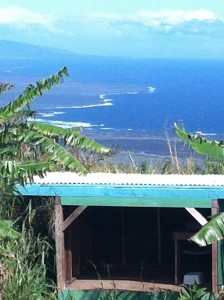 HA-LAY is Hawaiian for simple thatched roof dwelling. Every participant is assigned a Hale and has the opportunity to utilize it for shelter throughout the day. At the end of the day, all of the participants retire to the dormitory area. The dorms are very simple, clean, and have working showers and bathrooms.
The young adult program is located in Reeds Bay, in the town of Hilo and is right on the water. Water activities include but are not limited to canoeing, stand up paddle boarding, swimming, and fishing. All participants, adolescents and young adults, have opportunities for outings including hiking the volcanoes, fishing, swimming, and community service. They also have opportunities to participate in Yoga, Strength Training, and Qi Gong.
The clinical team, spearheaded by Hilary Moses, is an impressive one. The focus on Rights of Passage, Mindfulness, and Horticultural Therapy provides a well rounded treatment approach. Additionally, they have Dr. Britta Zimmer, Naturopathic Physician. She works with the psychiatrist, participant, family, and PQ team members to provide a well rounded nutritional program and integrated medical treatments as necessary including the use of supplements. All of the participants I spoke to love Dr. Britta and commented on how since they arrived at PQ their sleeping, eating, and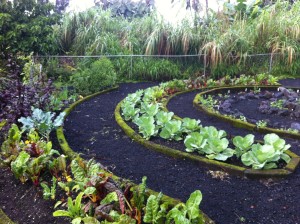 overall health have vastly improved. One participant had lost close to 30 lbs just by living a more mindful and healthier lifestyle.
The pure and true healing power of nature is incredible! You can feel the sense of pride and accomplishment from all of the participants. It was a pleasure visiting the program and I look forward to referring families.
Some References:
Gardening for Children with Autism Spectrum Disorders and Special Educational Needs: Engaging with Nature to Combat Anxiety, Promote Sensory Integration and Build Social Skills. Natasha Etherington (2012).
Green Nature/Human Nature. Charles Lewis (1996)
PQ Featured On East Coast Talk Radio
Pacific Quest Horticultural Therapy Director Travis Slagle was recently a guest speaker on the Progressive Radio Network “iEat Green with Bhavani” radio show discussing success stories from Pacific Quest outdoor therapy program.
During the interview, Travis provided examples of how working in a garden has helped the students referred to Pacific Quest to develop healthier ways of coping with anxiety and depression. Travis discussed the emphasis at Pacific Quest wilderness therapy program to place the client in a care-giving role. The conversation ranged from topics about recent research studies in horticultural therapy, child development, and Pacific Quest’s proprietary Sustainable GrowthTM treatment model that integrates naturopathic medicine, rites-of-passage, and best practices in clinical psychology and family therapy.
As the proclaimed “Garden Guru” at Pacific Quest, Travis Slagle has been working with “at-risk teens” in outdoor therapeutic programs for over a decade. Bhavani stated, “I first heard of Travis from a friend who sent their daughter to Pacific Quest. She kept referring to him as the Garden Guru, which is the endearing name he has been given by the kids that go there.” The positive testimonials from families that enroll their child at Pacific Quest continue to generate national attention.
The Power of Language
By Erin Marcus-Levine, Clinical Admissions Director
Whenever I visit our students in the field, I am surprised and impressed by their attachment to and utilization of Hawaiian words and the meanings behind them.
 They learn to sit with themselves and reflect, “Nalu”. There is a real implication of pride and independence that comes along with the ability to sit in one’s own skin. Reflection time is something many of our students never practiced prior to coming to Pacific Quest outdoor therapy program. They greet it with great fear and reluctance in the beginning, but ultimately come to love their personal/meditation time away from the distractions of the day.
Students learn about and own personal responsibility, “Kuleana”. The concepts of accountability and personal responsibility are quite foreign and often maligned in the beginning. Those with fragile egos often need to blame others for their disappointments and fear that accepting personal responsibility will alienate others. The actual process of empowerment and strengthening of relationships that springs from embracing Kuleana is a pivotal moment in our program, the beginning of the real work.
Students at Pacific Quest learn the true meaning of family, “Ohana”. Family is an action, we do not live in a vacuum and our contributions, or lack thereof, effect the whole. Learning to be a vital part of a functional system is a rewarding and sustainable behavior that is useful long after students leave our care.
They learn about Leadership and how to be a strong leader, “Alaka’i”. A great leader has done their own work and comes from a place of calm and trust in the process.
These are just a few examples of Hawaiian words our students learn at Pacific Quest wilderness therapy program. The students embrace the Hawaiian language and the true meaning behind the words with such enthusiasm and a deep level of understanding and pride. The Hawaiians infuse such meaning into their words yet they are not so different from the meanings and lessons parents hope to teach their children all over the world. I’m not sure why our students are able to embrace these concepts here in a way they did not before, but I know that the memory and the meaning of this special language stays with them and guides their choices long after they have left the safe haven of Pacific Quest.
Pacific Quest Welcomes Todd Ransdell
By Yvette Slagle, Outreach Assistant
Pacific Quest outdoor therapy program is pleased to welcome Todd Ransdell as the Young Adult Program Director at the historical Reeds Bay in Hilo. In his new role, Todd is responsible for supervision of the young adult program, personnel management, and assistance with outreach coordination. Other responsibilities will include co-development and quality assurance of
supervisory roles, ensuring follow through of behavioral treatment plans as well as collaborating with both clinical and wellness departments. Todd’s expertise will be invaluable in overseeing program policies and procedures, curriculum implementation, and providing performance evaluations for the supervisor team.
Todd’s background in outdoor therapy began in 2003 where he worked at a nationally respected wilderness therapy program for adolescents. After four years, Todd played a key role in opening a young adult program – Four Circles Recovery Center – where he served as Field Director for six years. After hearing about Pacific Quest, he became interested in joining the team and is now happy to be serving as Program Director of the Young Adult program in Reeds Bay. Todd brings many years of experience working with the young adult population and intends to help facilitate a meaningful, safe program.
In his spare time, Todd enjoys hiking, swimming in the ocean, organic gardening, and reading among many other activities. His favorite activity is spending time with his wife and sons.
Pacific Quest wilderness therapy program has established an exceptional team of highly-respected professionals to assist families in need. Mike McKinney, co-founder, adds, “Todd’s warmth, passion and ability to carefully navigate challenging situations with patience and sensitivity will serve Pacific Quest families well. We are delighted to welcome Todd to our team!”
Young Adults Visit Green Mountain
By McLean Eames, Experiential Education Supervisor
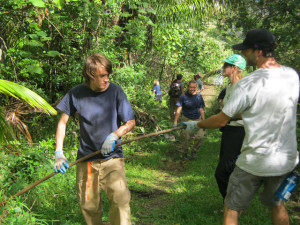 Recently, the Young Adult students drove to the easternmost point of the island, Kumukahi and saw the lighthouse there. The group talked about the Winter Solstice and how it’s a transition point for our planet; a time when the days start to grow longer. The group then ventured to nearby Green Mountain to meet Smiley and her family, who are the stewards of the mountain. On the slopes of the mountain, there are ‘Ulu (breadfruit) and Kukui Nut forests which were planted by the Hawaiians who lived there for centuries. Smiley and her family share a vision of working with members of their community to care for the land, and bring it back as an abundant and enriching resource for the island.
Smiley sang a welcoming chant to the group and everyone had some time to appreciate the view and quietly reflect. Afterwards, Smiley explained the project for the day, which included walking back down the mountain and pulling invasive vines 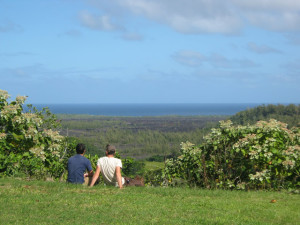 and trees along the way. There is a Hawaiian sacred site on top of Green Mountain called Ha’e Ha’e. As the students pulled more and more vines, they discovered that underneath the invasive growth there were the foundation stones of the ancient temple. The students enjoyed the project, working together in teams to pull the invasive Milokia trees, and then break them down as mulch for the Kukui Nut, ‘Ulu, and Coconut trees. Many of the students described their highlight of the day was pulling trees out of the ground as a team, as well as the beautiful view from the top of Green Mountain.
Staff of the Month: Kellie Garrity
By Kate Eppinger, Field Supervisor Reeds Bay
Reeds Bay’s first Staff of the Quarter award goes to the talented and dedicated Miss Kellie Garrity. Kelly has worked for Pacific Quest since May 2012 and transitioned to our Young Adult Reeds Bay location when it opened this past June. She is our longest standing Reeds Bay employee and brings with her a plethora of outdoor educational experience and an exceptional skill set. When she’s not working 10 day shifts and helping empower young adults, you can find her swimming and learning
how to dance in Hilo. Here are a few questions that highlight Kellie’s Pacific Quest experience.
Interviewed by: Kate Eppinger
Where does your motivation to work in this field come from? “All of my pain finally has a purpose. Everything in my life that I had been through and felt very alone going through, finally had a purpose, a really important purpose.”
Describe the community you’ve been welcomed in at PQ?
“You feel really at home because usually everyone is from some smaller town
where there is the small town pattern of getting married, having a house, doing
what society is pushing you to do. When you come here, you meet people like you,
who take risks and aren’t forming into societal molds. I have been welcomed into a
community of people who are just like me and have similar stories and passions. It’s
really inspiring.”
What’s the most important thing you’ve learned about yourself from a student?
“I think why I do this work is because I was an at risk youth just like they are. I felt
all of these emotions and I’ve been through most of their experiences. But somehow
I’ve trucked through and handled my business. I see myself in a lot of them. And it’s
easy to give your younger self advice. I think we wish we could all do that.”
How will working at PQ prepare you for your next step in life?
The biggest thing I’ve learned from PQ is how to be a strong leader. Among many
things, I’ve been given lots of feedback, I’ve learned different styles of teaching for
different students, and I’ve learned how to stay really calm and effective during
crisis. I’ve learned how to empathize with people, which I always had,
but working at PQ has brought that level of compassion to a whole new level. Being
able to sit down with someone, and commit to their ‘wellness’ (mental, emotional,
physical) is invaluable. And not only one student, but a couple all at once. I have
become a leader because of working at PQ.
What is the most rewarding part of your job?
“A couple months ago, there was this one student who wanted to leave our program
and who was feeling extremely depressed. We had this really long check in one day
and when he left, he was such a stronger person. When he hugged me goodbye,
he whispered to me, “I’ll never forget that day when you talked me off the ledge.”
It’s those little moments of hard work that are worth it: Having someone truly
understand you. To give a student the time and space, where they can say every
thought on their mind, and you can make a place for them- I can’t even describe it.”
Describe your attributes that you bring to the field.
After I got comfortable at PQ, my true self started coming out–and I have this way
of bringing humor to situations that make a lot of people laugh. I’m very charismatic
when I want to be. I can help shape a culture where you’re respected for your work,
but really laugh at the end of your day. I think I bring a strong female presence, with
my rougher edge. I bring my struggles, my successes and I am very open with that.
Motto for life?
“If you think you can or you think you can’t you’re probably right.” This is such a
good principle to live by; it’s so simple. Whatever you choose in your mind, is going
to be the outcome.”
Advice to a new PQ employee?
“You’re going to change here. Just be a silent observer when you first come, soak it
all in. Don’t try to do every activity on the island your first off shift!”
1 sentence to sum up PQ
“PQ is the best decision I’ve ever made.”
Punalu’u Beach Service Project
By McLean Eames, Experiential Education Supervisor
Recently, a group of the young adult students traveled 60 miles South, over the Kilauea volcano, to the district of Ka’u to join the community and help with a big service project at Punalu’u Beach.
Punalu’u means “diving spring” in Hawaiian, and the place gets its name from the large amount of fresh water that comes out of the mountains and flows out of springs above and below sea level. The beach is well known for its black sand (the result of lava flowing directly into the ocean), and the large number of Hawaiian Green 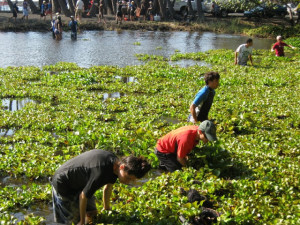 Sea Turtles or “Honu” that gather there. The local legends say that Punalu’u is a safe place for keiki (children) to swim because a magical little girl–Kauwila, who can take the shape of a honu–protects the keiki that swim there, and rescues them if they are in need.
On several occasions throughout the year, the community organization O Ka’u Kakou (OKK) “We are Ka’u”, organize a clearing of the trash and invasive water lilies that take over the pond ecosystem. After the group registered they jumped right into the pond and started working! The group had a fun surprise when they saw the adolescent students from Pacific Quest show up! There were lots of familiar faces and many staff volunteered their time, including the off shift Supervisors and Executive Director Mike McKinney and his family who were up to their waists in water lilies!
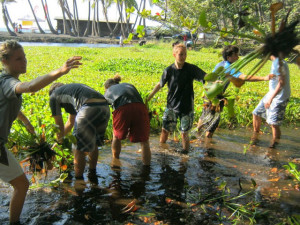 After clearing out almost all of the lilies from the pond (the OKK members said the group set an all-time record!), students stopped work for the day, and were invited to join in the community lunch. The students had their choice of hot dogs, chili, rice, and fresh fruit. The group rested on the beach before a couple of students decided to take a quick dip in the ocean to wash some of the pond muck off. Folks were spotting more honu swimming nearby and the students noticed that the water was a bit colder here because of the fresh water coming out of the springs.
After swimming, the group decided to take a short hike south along the coast. Along the way, students saw salt cracks where ocean spray had sat and evaporated many times, leaving a depression in the rock full of natural sea salt! Everyone stopped under a tree to view an ancient petroglyph–a “konane” board carved directly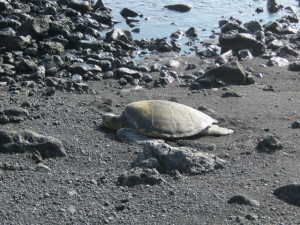 into the rock. The group imagined what it would have been like hundreds of years ago to be sitting under that very tree playing a game of konane (an ancient Hawaiian game much like Chinese checkers).
The final destinations on the hike were two “Heiaus” (ancient sacred sites) situated on top of a hill overlooking the bay. Once there, the group shared their thoughts on spirituality, and the importance of honoring your own beliefs as well as the beliefs of others. The students also learned about how these sacred places are still honored by the fisherman and other members of the community to this day.
After a full day at Punalu’u, the group drove back to Reeds Bay–exhausted but fulfilled at having been able to help out so much. Some of the students were overheard saying that this was their favorite outing yet, and it was because they had the chance to volunteer as part of their local community.
A New Sense of Gratitude
By Haley Brink, Therapist
It’s not easy to be away from the ones you love during the holidays, there’s no way around that. This year marked the first Thanksgiving that I have spent away from my immediate family since my husband and I moved to the Big Island this past Spring. That’s part of being an adult, I suppose, but it’s still tough.
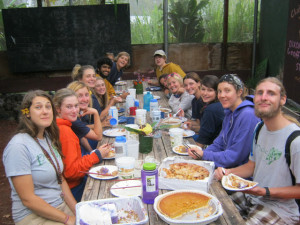 For the students that I work with at Pacific Quest, homesickness is normal and expected. We talk about it often and I help them find ways to cope and feel good about standing on their own two feet. The holidays make this homesickness more poignant, and my work during this time of year involves coaching students and their parents through the experience of being apart. I can certainly empathize with their feelings and longing to be together.
My work as a therapist at Pacific Quest outdoor therapy program has provided me with plenty of evidence that time and distance are often the best medicine for wounded relationships. Parents and children appreciate one another in new ways when they can only communicate by letters. The students I work with often remark that coming to Pacific Quest helped them discover gratitude for their families for the first time. I think that this is because we can’t see things clearly when we are standing right in the thick of them. Perspective only is possible when we step back far enough to see the entire picture.
Spending the Thanksgiving holiday with Pacific Quest students recently was not only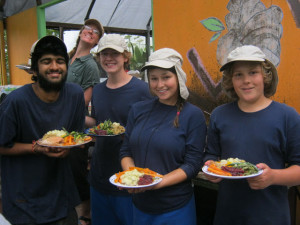 great fun, but also helped me to see my own family with renewed clarity and appreciation. We ate a meal that we all helped prepare and enjoyed a break from the usual routine. We talked about our families back on the mainland and took pleasure in the torrential downpours that made it feel more like fall. We laughed at how ridiculous it is to eat pumpkin pie with chopsticks. I felt a certain sense of camaraderie with my students experiencing their first holiday away from home.
Driving home that evening, I reflected on the things I am grateful for, including my own family, the families I work with, and the opportunity to live on a tropical island and do work that is meaningful and fulfilling. Nonetheless, the holiday was bittersweet for me like I’m sure it was for many Pacific Quest students and their parents. We ask our students to reflect on what they are thankful for rather than thinking about what they are missing out on, and I remind myself to do the same. When I do this, I see my life for what it is and realize that it’s pretty great, even if I do miss my mom’s sweet potato pie.
PQ Welcomes Wendy McKoy, RN
By Yvette Slagle, Outreach Assistant
 Pacific Quest wilderness therapy program is pleased to announce the hiring of Wendy McKoy, RN to the wellness team. Wendy’s role with Pacific Quest will allow her to collaborate on a team of mental health and wellness professionals providing life-changing experiences for troubled youth from around the world. Providing the assessment and treatment of a wide range of health and wellness issues is no easy task, and Wendy will have an integral role offering top-notch care and services for Pacific Quest students and their families. As a registered nurse, Wendy will work side-by-side with Naturopathic Doctor Britta Zimmer and Psychiatric Doctor Shelly Ham, working full-time to provide comprehensive “whole person” care for youth enrolled at Pacific Quest.
Wendy received her Nursing degree from Marymount University in 1992. Since then, Wendy has worked as an ICU nurse in some of the best medical centers in the country including Stanford, Cornell, Beth Israel and NYU. Wendy has also been involved in remote medical missions in the Dominican Republic, and most recently in US Army hospitals in Germany, where she provided care for wounded soldiers from Afghanistan. Wendy has spent much of her life traveling around the world and brings a wealth of experience and perspective to our program. Wendy enjoys traveling, live music, swimming in the ocean with dolphins and sea turtles and reading to her son.
A Sense of Community-Giving Thanks for the Imu
By Martha Bouchard, Operations Director
The holidays are coming upon us. It may seem slightly early, but let’s face it, there have been “winter holiday” decorations in the stores since long before Halloween. Holidays have always been such an interesting and rewarding time in working with adolescents and children for nearly fifteen years. Admittedly, there are times that it has felt like double duty; just this past year I marked the first time I took a holiday to be with my family and not to be at the “office” as well.
This is one of the many things I must share my appreciation for regarding my “work” and my fellow employees. The holidays are a time when we make space for our loved ones as well as for the students and families we have dedicated our careers to. We celebrate two Thanksgivings, a winter extravaganza and many of the individual winter holidays as well; it is one of the most pleasurable times of the year.
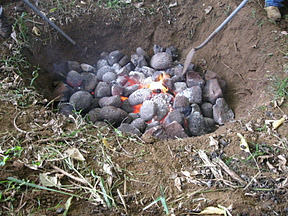 A few weeks ago, a member of the community had the opportunity to begin the preparations for these special times of celebration, of thankfulness, of appreciation for all we have and all of those whom support and love us.
A group of students and staff headed down to the coast to harvest kiawe (prosopis pallida) for the upcoming imu that will be prepared for our Thanksgiving celebrations. This wood has been drying in the gardens and soon will start the fire that will burn throughout the night, heating the stones upon which our food will be placed before the hot oven is covered to steam for many hours. Some of the students who participated in the wood harvest will no longer be at Pacific Quest when it is time to start the fires. This legacy they have left will be appreciated by us all, as we share our feast. For those students who did participate they will be able to tell the story of the adventure with members of our dedicated and committed logistics crew that most students do not have every day occasion to interact with and whom have the inside knowledge of the best trees to harvest from. This all day trip was topped off by a dip in the ocean at a secluded cove we visit only a few times a year.
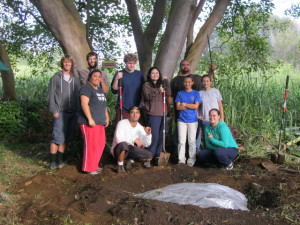 Thus, this season gives us many opportunities to come together as the unique community that we are. As students tell the story of the adventure to gather wood, they will tell the story of a community that put intention behind each activity, a community that does not rush the process and that takes the time to ensure that things are done right and the proper amount of care and attention is given. These students will likewise tell the story of a community that is dedicated to them and to honoring our traditions and their role in creating those traditions as they participate in the community.
Story is such an integral part of the work that we embody at Pacific Quest. We take ownership of our stories, of our roles in the creation of our new stories and in understanding that our actions help to influence the stories of those that will follow in our footsteps; this is the essence of legacy. The legacy of the imu is not just that of a 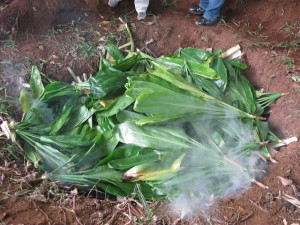 great meal and celebration of thankfulness. Don’t get me wrong, it is undoubtedly all of those things, but it is also the coming together for a common goal and the learning of a different way which helps to strengthen and magnify the sense of community that is created in this time of year.
When I first started working in this field, I would sometimes dread the emotions that I perceived would accompany this season, both for me in my work and for those I was working with in being away from their families. What I have come to realize is that this sense of dread was not warranted. I have found that contrary to these fears, the sense of community and appreciation has always grown as we come together to celebrate, and that student’s ownership in this process not only supports their growth, but mine as well as I head into my second celebration with my ohana outside of Pacific Quest.
The Growing Edge of Wilderness Therapy
By Travis Slagle, Horticulture Therapy Director
Imagine what the world would be like if wilderness therapists of the future became organic farmers. What if the people entrusted to witness life’s most significant transitions traded in the more esoteric theories of eco-psychology and wilderness survival for a simple shovel and pitch fork? For many people, the lure of getting away from your life to find yourself in the solace of the wilderness is a palpable force. Yet, the practice of wilderness therapy and the modern vision quest experience have become increasingly inaccessible to many of the estimated eight billion people living on Earth today, all of whom face diminishing resources and the intrinsic need to provide for themselves and their families. Here is the crossroads where organic farming, rites-of-passage, and wilderness therapy meet, raising the question; what if wilderness therapy guides were responsible for restoring the nature-centered rituals of planting, harvesting, and digging in the soil? Could this be the key to overcome the difficulty of transition and the inherent loneliness of a return from a wilderness experience?
As we all know, the purpose of going to the wilderness for a life changing experience has never been to stay there. In fact, the growing edge of wilderness therapy isn’t to delve deeper into social isolation, but instead to relearn the skills and collective wisdom of helping young people find a meaningful place in society. The future needs outdoor therapy guides to lead struggling teens from the mountaintops and deserts of the wilderness to the urban gardens, farmers markets, biodynamic farms, and permaculture communities that are thriving in cities, country-sides, and backyards all over the world. Growing the food you eat allows individuals to put into practice the work and struggle of applying new skills and insight into action. There is no better time to bring back the enduring and once sacred pursuit of nurturing the food that sustains our communities and heals the Earth, and in the process being reminded of the most fundamental qualities of humanity.
When we do this, the seeds that are planted in wilderness therapy will no longer be symbolic. Rather than observing nature from a distance, or battling through the backcountry, the time has come to lean into the sun each morning with a watering can, to kneel on the earth while pulling out weeds and thinning beets, to feel the life teeming beneath the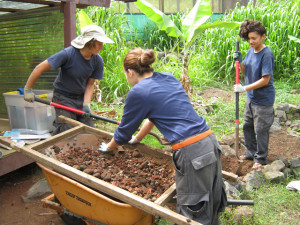 surface as we sift through the soil to make space for new roots. The life of an organic farmer is a reminder of the importance of working with nature as opposed to conquering, traversing, or simply getting through it. A farmer’s work is a humble and thankless job that gives society the luxury of idle time. Yet, with all the comforts of modern living, younger generations are facing an exploding rate of anxiety, depression, and learning disorders. The farmer knows the work that’s needed to integrate the wisdom of nature through hard work and meditative action; leading society on a path that measures the gravity of our ideals with the heroic task of growing the food we eat and sharing abundance with a neighbor.
The process of growing healthy food and building a more sustainable community was once the central activity of human civilization, and the foundation of a reciprocal relationship with nature that has sustained people on Earth for thousands of years. Going back in time, almost ten thousand years ago, nomadic people decided to put their energy towards cultivating the land versus traversing it, and in the process initiated the dawn of human civilization. The questions our ancient ancestors asked themselves thousands of years ago could be strikingly similar to the most pressing questions being asked today. Questions like, how can we spend more time with our family and less time hunting (the modern hunt being for a paycheck)? Are we tired of wandering around in the wilderness and feel the need for a lasting community? How will we ensure our children will have a better life than our own, and how can we live more sustainably with the glaring reality of increasing population and diminishing resources? These are the questions that have come full circle, leading to an important moment in human history, not just in terms of an individual’s mental health, but in health of our families, schools, and communities.
Like all indigenous ways of knowing, the role of the land and a person’s relationship to it provided a powerful lesson, revealing our interconnectedness through the complicated patchwork of natural systems that sustain all of life. Just as the nomad evolved into an agriculturalist, the questions that led to a new era of human experience have now returned to the forefront of modern society. Thus, wilderness therapists and farmers alike must recognize the need to answer these questions in a way that restores balance and integrity between people and their relationship with themselves and the mysteries of the Earth.
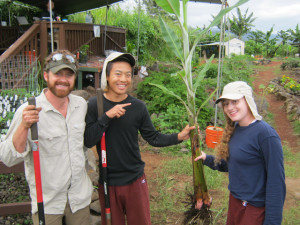 In an information-age that has spun out into an era of crippling anxiety and distraction, what matters more than an isolated wilderness experience is an initiatory process with the potential to not only help struggling teens, but to transform society. Nurturing the food we eat offers the most basic life lesson and cornerstone of sustainability, teaching us that what we give directly impacts what we can take. What better way to humble ourselves and restore our communities than by working side by side planting food for future generations, and honoring the ongoing struggle of growth in a garden? Growing your own food is an activity that universally connects us to our most primal need and ancient practice of providing not just for ourselves but for the needs of others. With cities that are now exceeding twenty million people living within a few square miles, we are confronting the possibility that many of the changes we face are no longer a part of nature, but instead are manifested by a loss of relationship with it, and perhaps a desperate attempt to hold onto nature as it slips away. Herein lies a great moment of transition, requiring more than wilderness therapists and organic farmers doing their work in separate places where their paths often never meet. It’s time to let go of rugged individualism and renegade attitudes that no longer serve our community, and acknowledge that the nomadic lifestyle and fervor of wilderness survival is not the model for a sustainable future. Sustainable farming and organic gardening is a good reminder that learning from nature is not a one-way street; it requires giving back, a return to community with something to offer, integrating through action a sense of purpose and necessity within society. For wilderness therapy guides and organic gardeners willing to share the responsibility of caring for the next generation, and help usher the world into a more hopeful future, a primordial land dance awaits us!
Bay Area Hiring Seminar
By Matt Armstrong, Recruitment Manager
We are pleased to announce the completion of yet another successful hiring seminar, held amidst the beauty of Marin County, California. This three-day event was created for those interested in the Field Instructor position and allowed them to experience various aspects of life at Pacific Quest. Twenty participants from all over the United States joined us for what turned out to be a very memorable occasion.
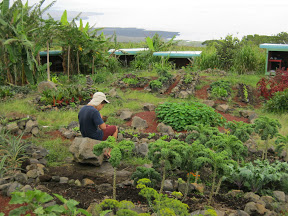 Days included the incorporation of Pacific Quest’s most important philosophies and guiding principles. The participants worked together as they prepared meals, participated in gardening lessons, and practiced group management. Members of the seminar showcased their skill set and knowledge by responding to student scenario simulations and engaging in personal reflection and ceremonies. Participants were also very fortunate to have a former adolescent student and family visit to share about their journey with Pacific Quest wilderness therapy program.
An incredibly powerful experience happened one night as everyone followed a candle lit path to the distant beating of drums and slowly emerged upon a Rites of Passage Ceremony. This ritual, facilitated by Staff Supervisor Amy Higgins and Admissions Director Rob Jarrett, included discussions on severance as well as the learning and sharing of the Four Shields of Human Nature. The ceremony gracefully came to a close with an incredible drumming lesson with Rob.
By the end of the third day, those participating in the seminar were no longer strangers to each other and the depth of this experience formed a genuine bond and a sense of true camaraderie. This seminar and its applicants presented a good understanding of a Field Instructor’s life, the intense passion we bring into our work, and the deep desire to help struggling adolescents and young adults.
We thank all those who made the trip out to California and gave one hundred percent. We look forward to those of you who will be joining us on the Big Island!

The Importance of Giving Thanks
By Katie Kasenchak, Therapist
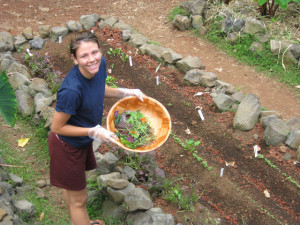 One of my favorite parts of working at Pacific Quest is having the opportunity to share meals with our students. Not only do I enjoy taking a moment to appreciate what our students have cultivated and nurtured in the garden and prepared in the camp kitchen with new found skill and enthusiasm, but I am particularly inspired by the act of giving thanks that marks the beginning of each meal. As we sit down to eat, students and staff alike are invited to take a moment to express gratitude for the things in life, both big and small, for which they are thankful. “I am thankful for my family,” “I am thankful for my friends,” “I am thankful for the hands that made this food,” “I am thankful for my therapist, PQ, and the opportunity to grow,” “I am thankful for the sun and the rain that nourish our garden…”The list goes on and on…
The good news is that gratitude can be cultivated, much like our gardens, and cultivating gratitude can lead to a greater sense of well-being, especially when expressed to others. The act of expressing gratitude to others has been associated with increased levels of optimism, empathy, and energy (Psychology Today, n.d.). Therapeutically, we often ask students to create a “gratitude journal,” to remind themselves of all of the things in life for which they give thanks. While this can seem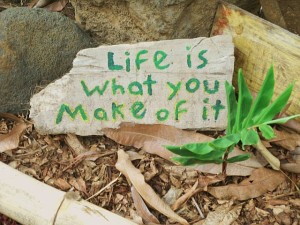 a small and simple task, it is one that is often overlooked in the hustle and bustle of daily life, and it is these things, the things for which we are truly grateful, that make the journey worthwhile. Research shows that the simple act of writing down what we are grateful for can have a number of positive effects, including better sleep, less illness, and increased happiness (Marsh, 2011).
I am grateful for living and working in such a beautiful place, with such amazing people, who remind me every day of what is important in life, in the value of Ohana, or family, and in cultivating the aina, the land, to nurture both the body and soul. I am thankful for opportunity, for new beginnings, and for both fertility and growth. I am thankful for the students and the families who grant me the privilege to accompany them on their journey to a greater sense of wholeness, balance, and health, both physically and mentally.
As the days grow shorter and we round the corner into the busy holiday season, I ask, what are you grateful for and what are you doing to honor that gratitude? And I encourage you to be true to your heart.
The Benefits of Gratitude (n.d.) Retrieved from https://www.psychologytoday.com/basics/gratitude
Marsh, Jason (2011). Tips for Keeping a Gratitude Journal. The Greater Good. Retrieved from https://greatergood.berkeley.edu/article/item/tips_for_keeping_a_gratitude_journal
A Story of Sustainable Growth
By Bridger Jensen, Therapist
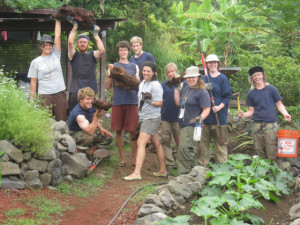 Recently, I met with the staff of Pacific Quest to talk with them about positive psychology and sustainable growth. It was no surprise to find them already aware of how positive psychology facilitates change. They even had personal experiences and examples of how using it daily with the students enhanced the students’ experiences at Pacific Quest. It was wonderful to hear their many examples. I thought I would share one of these examples.
Brian is a recent graduate of Pacific Quest and had been bullied repeatedly throughout his life. As a result, Brian had adopted a negative concept of himself and he would not acknowledge positive things that occurred in his life. This was because positive things challenged his negative self-concept. He dismissed any of his achievements as “luck” or his social strengths as “pointless” when in fact he had a lot of excellent qualities. This negative self-concept continued upon his arrival at Pacific Quest and he was dismissive of staff’s efforts to buoy him up by giving him compliments and positive interactions. It was difficult to navigate a conversation with Brian because positivity actually made him feel worse. It made him feel undeserving of such friendship and support. Furthermore, he realized that he had an ungrateful attitude, and he loathed that about himself.
Brian’s change came as a result of learning that the paradigm of his past was getting in the way of his life even more than actual experiences from his past. Restated, Brian realized that the way he was choosing to see the traumatic experiences in his life was much more influential to him than the actual trauma that he had suffered. As a result of understanding this (and with a considerable amount of time), Brian was able to become more open to seeing the past differently. He began to see his trials and trauma as opportunities for growth, not obstacles to living. His investment in the garden increased, then his participation in groups, and then his relationships with peers. His therapist and the staff were able to assist Brian in positively reinterpreting the negative past and keep positivity in the forefront of his mind. In doing so, Brian began to become more open-minded to his own positive traits. As a result, Brian’s thoughts drifted from his failures to his successes, and from negativity to positivity.
Such stories are common at Pacific Quest wilderness therapy program. Our students’ progress continues to be our greatest testament to the truly sustainable growth that is initiated in our camps. It continues to be a privilege to be a part of the Pacific Quest team and I look forward to witnessing the creation of many more stories like this one.
Why Gardening?
By Travis Slagle, Horticulture Therapy Director
In the past three weeks I had the opportunity to attend the annual conference for the American Horticultural Therapy Association, and co-present with Hilary Moses at the Wilderness Therapy Symposium sponsored by the Outdoor Behavioral Health Care Industry Council. Both organizations are dedicated to developing research and professional development for outdoor therapy practitioners and advocate for the restorative benefits of nature-based therapies. Wilderness therapy maybe more familiar to the general public, but there is far more research available showing the physiological and psychological benefits of horticultural therapy. This is partly due to the fact that horticultural therapy is being utilized in more clinical settings, across a broader population, and with a larger variety of human service programs including veterans’ hospitals, hospice centers, correctional facilities, cancer treatment centers, and psychiatric hospitals.
For those interested in research, one study conducted in 2011 and published in the Journal of Health Psychology suggests that the simple act of gardening can dramatically reduce symptoms of chronic stress and anxiety. Gardens are inherently restorative and community centered, and they provide a hands-on opportunity to explore the nature of growth and adaptation both internally and externally, as well as seeing the tangible results of hard work and responsibility. Another article published in Youth Today, provides evidence that gardening programs in youth correctional 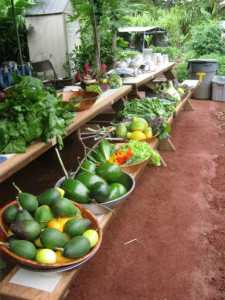 facilities are correlated to drastic reductions in recidivism rates. In some cases, recidivism rates among offenders who participated in horticultural therapy programs were reduced from the national average of 42% to below 10%. Above all, what is most impressive is the versatility and impact a therapeutic garden can have as a model for higher standards of care and innovation within the outdoor therapy industry as a whole. All of this is a sign of a growing trend in wilderness and outdoor therapy programs to promote treatment activities that are not only personally transformative and connected to nature, but are also relevant throughout the ups and downs of modern society.
Horticultural therapy may never match the chest pounding experience of braving a winter storm, building a primitive fire, or spreading out in a forest during a lightning drill in the backcountry. However, there is growing evidence that suggests gardening can achieve the same outcomes without the risk. Just as our distant ancestors gradually evolved from the nomadic lifestyle of hunting and gathering to the dawn of civilization through agriculture, each way of life builds on the wisdom of the past. In many ways, the evolution of horticultural therapy and wilderness therapy share a similar story; providing a mirror that reflects the timeless effort of creating meaning by working with nature to learn about our own nature.
PQ Partners With Jen Murphy
By Yvette Slagle, Outreach Assistant
 Pacific Quest wilderness therapy program is pleased to partner with Jen Murphy, M.Ed., LPC. Jen will offer Parent Coaching Services for families in need of individualized parent support, coaching and counseling. Pacific Quest recognizes the importance of family systems and dynamics in successfully treating adolescent and young adult clients. Parents are provided weekly one-hour phone sessions with an experienced, licensed therapist to help address their goals and needs as parents and within the family system. This process supports their child’s experience in the Pacific Quest program creating a solid comprehensive and collaborative family treatment plan.
Pacific Quest’s team of licensed therapists who will provide this specialty area to families will be led by Jen Murphy, licensed therapist. Jen has spent over 10 years working alongside adolescents and their families in internationally respected outdoor therapeutic settings and has spent the last several years honing her therapeutic skills and developing programs to provide effective coaching and support to parents during the treatment process. Like Jen, the parent coaches bring a significant amount of experience to Pacific Quest. The parent coaches work closely with their child’s Pacific Quest clinician and will consistently provide families with direct, clear and compassionate support while ensuring the highest level of continuity of care for the family.
As a parent coach, Jen will help create a setting where parents can openly discuss their personal anxieties and concerns, as well as identify their own challenges in parenting. Jen will also help develop and create new strategies in parenting, co-parenting, boundary setting and help increase positive and productive communication. Pacific Quest understands the importance of helping parents effectively learn how to empower their children while being clear about their own personal and parental boundaries.
Hilary Moses Promoted to Clinical Director
By Yvette Slagle, Outreach Assistant
 Pacific Quest is pleased to announce the promotion of Hilary Moses as the new Clinical Director. Hilary is an LCSW with over 13 years of experience working with adolescents and families in a variety of settings. She earned her MSW from Bryn Mawr, Graduate School of Social Work and Social Research in Pennsylvania. She spent four years working for a wilderness program in Idaho, initially as a Field Instructor, then as a Therapist and finally as the Clinical Director. Soon after, Hilary moved to the Big Island and began working as the Primary Therapist at Pacific Quest wilderness therapy program and later as the Therapeutic Program Director. Hilary is well known for direct, honest, clear communication and her positive results with family systems and student relationships.
In this new role, Hilary will train and supervise the Pacific Quest Clinical team, help develop the Parent Coaching and Family Services components and contribute to the overall Clinical support of the Field Staff. Hilary is responsible for overseeing clinical appropriateness for new students and serves as a support and added resource to the Admission department and admission process. As Clinical Director, Hilary is also responsible for establishing and maintaining relationships with referring professionals and oversee the hiring of new clinicians.
Congratulations Hilary!
PQ Featured On LA Talk Radio
By Yvette Slagle, Outreach Assistant
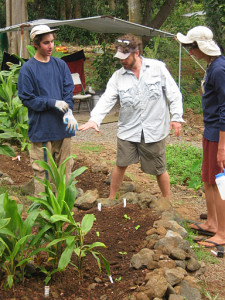 Pacific Quest was recently featured on LA Talk Radio with Lon Woodbury focusing on “Parent Choices for Struggling Teens”. Pacific Quest’s Land Supervisor Travis Slagle and Dr. Katie Kasenchak were guests on the show and highlighted some of the key aspects that set Pacific Quest apart from other wilderness therapy programs and how students benefit from our Sustainable Growth treatment model.
Travis and Dr. Katie emphasized Sustainable GrowthTM as a progressive therapeutic treatment model that sets a gold standard of care for innovate youth programs and clinical sophistication for troubled teens and young adults. Sustainability is deeply rooted in an ecological perspective that is forward thinking; driven by the interconnection of nature, the cycles and season of life, and the intrinsic desire for meaning in our lives. In this model, organic gardening takes the place of backpacking and wilderness survival, which in turn builds self-esteem through growing healthy food and working with nature vs. battling with it. By working and living in an organic garden in Hawaii, students internalize the care they give to the garden as the care needed for themselves, their families, and their future communities. Travis stated, “Sustainable GrowthTM is a direct challenge to the “rugged individual” model of wilderness therapy and our consumer driven society by placing the highest value on what we can give vs. what we take.”
Young Adult Program Moves to Reeds Bay
By Yvette Slagle, Outreach Assistant
Pacific Quest is pleased to announce the movement of the young adult program to a brand new ocean front location at historical Reeds Bay. Several years ago, Pacific Quest was asked by a number of families and referring professionals to consider serving the needs of struggling young adults. Noted for our respectful approach, creative programming, clinical expertise and inspiring setting, Pacific Quest provides a perfect fit for young adults in need of mental health services and independent living skills.
Pacific Quest at Reeds Bay operates on a five-acre ocean front property, with an 8,000 square ft. facility, complete with a large commercial kitchen and modern sleeping quarters. Young adults spend each day outdoors tending to the Reeds Bay Garden and working together in the village camps. Lush shaded areas provide beautiful landscapes for group and individual therapy sessions, personal reflection, and yoga exercise. Young adults can kayak with their therapist, and learn valuable life skills including the opportunity to participate in a Culinary Arts program, preparing healthy, familiar “farm to table” meals in the Reeds Bay commercial kitchen. Days are structured with an emphasis on personal accountability, emotional health, time management, and the five pillars of health (Diet, Breathing, Exercise and the Mind/Body Connection). Modern bunk rooms and bathrooms help students return to a regular schedule of sleep, personal hygiene and self-care, all of which are integral to self-esteem and investment in the therapeutic process. These and other “real world” living skills are practiced and perfected in a community setting, and most importantly, are transferable to life after Pacific Quest.
The Pacific Quest Clinical Department provides comprehensive individual and group therapy offering innovative assessment and intervention for each young adult. Therapists are integrated into the culture of the program, working closely with their young adult clients and facilitating clinical therapy groups several times each week. Going beyond traditional models of behavioral health care, Pacific Quest’s therapeutic wilderness program utilizes evidence-based practices in horticultural therapy and a rites of passage curriculum that allows therapists to integrate clinical goals into a safe and experiential environment.
Therapists not only create extensive treatment plans for each young adult client, but also communicate weekly with families, educators, and health care professionals ensuring that the goals and objectives in the treatment process are sustainable and transferable to the next setting. The Pacific Quest Wellness Department educates young adults on the connection between nutrition, sleep, exercise, and physical, mental and emotional well-being.
Pacific Quest at Reeds Bay combines the safety and structure of a residential setting with the benefits of an outdoor program. The young adult program accepts a maximum enrollment of 30 young adults, ages 18-26.
Pacific Quest Presents at the AANP Conference
By Britta Zimmer, ND, Medical Director
 In front of a standing room only crowd, Dr. Kasenchak and I recently presented at the American Association of Naturopathic Physicians conference in Bellevue, Washington. The audience consisting of MDs, NDs, and PhDs were eager to hear about Pacific Quest’s unique management approach to treating common mental health disorders. The innovative and eye-catching presentation captured the audience’s attention for 90 minutes with graphics and video footage created by Pacific Quest’s own IT expert, Gig Todd. This presentation demonstrated an integrated model of inpatient wilderness therapy for the management of common mental health disorders. The co-management options provided by Naturopathic Physician, Psychiatrist, and Psychologist were discussed. Useful therapeutic interventions as well as psycho-pharmacological therapy were detailed as they create a comprehensive therapeutic program for our patients.
Within this integrated model, Naturopathic Medical interventions have played a critical role in optimizing mental health outcomes. Dr. Kasenchak discussed the diagnostic criteria for common mental health disorders and the role that psychological testing plays in our program. Pacific Quest’s unique wellness program forms the basis of our integrated approach led by doctorate level professionals.
Pacific Quest “Defragments” Health Care Management: Our Whole Person Approach. During the medical clearance phase of the application process, I discuss the applicant’s medical history with the families. The common scenario is a child who has been evaluated by various specialists; psychologists, psychiatrists, pediatricians, neurologists, gastroenterologists and the list goes on. These adolescents and young adults are often on several different medications providing little relief to their behavioral issues or presenting complaints. There has been no cohesive plan for the patient’s mental and physical health. Their health management has been fragmented, in my opinion this is one of the main obstacles to improvement. Through several levels of care and medical professional management we are able to defragment the patient’s health care and improve their overall outcome here at Pacific Quest and beyond.
This is why Pacific Quest is starting to have a presence at integrated medical conferences such as the AANP. Standing in front of hundreds of my colleagues, presenting this integrative model and showing it in action fills me with pride. As I live this model in my own personal and professional life, I declare with passion that this model works. I am elated to continue building on the care for our Pacific Quest patients while reaching out to as many families as we can to improve their understanding of their child’s overall health issues.
JD Daubs Joins Pacific Quest’s Admissions Team
By Yvette Slagle, Outreach Assistant
 Pacific Quest wilderness therapy program is very pleased to welcome JD Daubs as Admissions Director. JD has been helping individuals and families in need for the past 10 years. JD has extensive experience in the field of Admissions, Marketing, Business Development, and Direct Care of individuals with behavioral issues in therapeutic environments. He began his career in the therapeutic industry as a direct care staff member at a boys therapeutic boarding school. He quickly realized that his passion for helping adolescents and families in need was strong, and after a 3 year tenure, JD moved on to working with families at outdoor therapeutic programs. He has been an Admissions Counselor and soon after Admissions Director for a nationally recognized wilderness program. He has also been responsible for marketing, referral relations and business development for a large behavioral healthcare company. Prior to joining Pacific Quest, JD was the Admissions Director of an outdoor therapeutic program located in the Southeast Unites States.
JD studied Business and Finance at Jacksonville State University in Jacksonville, Alabama and currently lives in Asheville, North Carolina with his wife, Carlyn, and his wonderful daughter, Turner. In his spare time he enjoys cycling, running, fly fishing, and anything that involves activity outside the outdoors. He also attempts to sharpen his culinary skills, and most importantly, loves spending time with his family.
Pacific Quest wilderness therapy program has established an exceptional team of highly-respected professionals to assist families in need during the admissions process. Suzanne McKinney, co-founder, adds, “JD’s warmth, passion and ability to carefully navigate challenging situations with patience and sensitivity will serve Pacific Quest families well. We are delighted to welcome JD to our team!”
JD joins Erin Levine, Clinical Admissions Director and Rob Jarrett, Admissions and Parent Communications Director as part of the Pacific Quest Admissions Team.
Horticultural Healing: Processing the Process
By Hilary Moses, Clinical Director
Over the past few months I have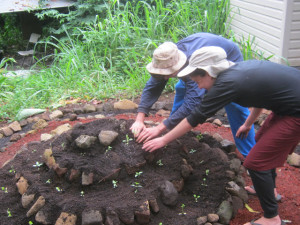 been working with our Land Supervisor, Travis Slagle, to produce what we hope will be a great 3-hour presentation for the upcoming Wilderness Symposium in Boulder. Travis’ energy about horticultural therapy and life in the gardens is infectious. As we sit and banter, at times able to stay focused on putting together our handouts for the presentation and at times not, I realize that I know way more about gardening than I thought I did and that I love it. I love it, seriously. I spoke with Travis about my own process in my own garden. I had planted some beans and “knew” they needed a trellis to grow up, which actually I found out, they do not. Regardless, we had just cut down some invasive guava trees that are thin, strong and quite malleable. I had a vision about the project but the negative self-talk intruded as I pictured the willow table I tried to make with my roommate while living in Idaho. It was quite a conversation piece, though less than usable. I am not that artistically or architecturally inclined. I was not going to make something that really could hold through the weather. I should just go to the local garden shop and buy something.
I found myself, nevertheless, engaged in the project and somewhat determined to create something. The short story is that, I did it. I created a cool and creative structure that twisted and turned, held itself up with the pressure and balance of the twists and turns and I was really impressed. I talked to Travis about how I stared at it with pride, shattered my negative self-talk and assumptions and that now, each time I walk past it, which is at least twice daily, I have a reminder of my unexpected capability. Imagine if I had something new in my life like that daily, even several times a day.
Travis and I are working together to polish up our presentation and figure out how we can bring gardening into the hotel conference room at the Millennium, because we absolutely do not want to facilitate a presentation on horticulture without engaging in a little transplanting activity at the very least. The metaphors and stories and ways to connect to personal growth are endless, from knowing what nutrients need to be in the soil to understanding why a plant needs a larger and less confined setting to grow in, to watching a plant come back to life after appearing dead for two days as it gets used to it’s new setting. We figured out that, next year, we need to sign up for a six hour presentation on Sunday and get everyone to a local farm, garden, nursery, something! I wonder if the landscapers at the hotel will discover the basil, cilantro and rosemary we plan to secretly plant and pull them as weeds?
Planting Seeds of Growth
By Grant Helmus, Field Manager
At Pacific Quest wilderness therapy program, we strive to serve all our students as unique individuals. We understand that they are here for a variety of reasons and we strive to work with them all differently. Pacific Quest is an outdoor therapy program using a Sustainable Growth™ treatment model as a platform for innovative therapy and life skills development.
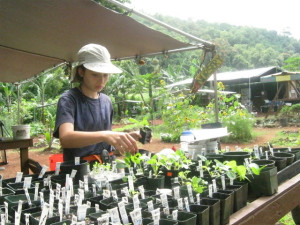 During their stay at Pacific Quest, students practice healthy outlets for their emotions and find comfort in new experiences. Some students enjoy working in the nursery planting seeds, others prefer transplanting, or harvesting. There is also exercising, meditating, writing in their journal, cooking or just spending time outside watering the garden and checking for ripe pineapples. Whatever the activity is, Pacific Quest offers a safe environment that values sustainable living, teamwork, and personal responsibility. This allows students to regain focus, develop skills and start making positive choices in their lives.
Our staff are all unique individuals who bring different passions, skills, knowledge and experience to the program. They are role models, teachers, life coaches and mentors for our students. Every person within our program is unique, but we have all felt the same emotions and had similar experiences throughout life, which allows us to relate to one another. The program focuses on another common bond and that is our connection to the land. When we work together to grow our food, eat and live healthy, it brings us closer to the ultimate bond of being human, needing to take care of our bodies, minds and live in harmony with the environment.
Our ultimate goal is to help everyone help themselves. It is the small seeds that we plant in the gardens and the small ideas we plant in the students that will grow and flourish. This positive inspiration will spread to friends, families, communities and create a better place for us all to share.
PQ Welcomes Dr. Shelly Ham
 Pacific Quest wilderness therapy program welcomes Psychiatrist Dr. Shelly Ham to its clinical and wellness team. Dr. Shelly Ham will have an integral role working with Pacific Quest’s treatment professionals where she will oversee and evaluate the psychiatric needs of all adolescent and young adult students enrolled at Pacific Quest’s wilderness programs. Suzanne McKinney, co-founder of Pacific Quest states, “Pacific Quest continues to take steps to provide the most comprehensive and sustainable care for our students and families. Welcome Dr. Ham to our ohana!”
Dr. Shelly Ham earned her BA from Rutgers University (Cook College), and then went on to receive her MD from St. Louis University School of Medicine. Prior to joining Pacific Quest Wilderness Therapy, Dr. Ham worked as a Psychiatric Care Counselor for St. Joseph’s Medical Center. Dr. Ham moved to Hawaii in 1996 and served as a Community Psychiatrist, and Clinical Director for East Hawaii Community Mental Health Center. Dr. Ham also worked as a Psychiatrist for Helping Hands Hawaii, Children’s Comprehensive Services and Care Hawaii.
Since 2000, Dr. Ham has served as Examiner for the Office of the Public Defender and is currently a Clinical Assistant Professor in the Department of Psychiatry at the John A. Burns School of Medicine, University of Hawaii. Dr. Ham has worked as Chief Resident, Clinical Instructor and Assistant Professor for the University of Hawaii since 1996. Among many accolades, Dr. Ham is the recipient of the Pfizer Resident of the Year Award, the Ginsberg Fellowship at The Group for the Advancement of Psychiatry, and Outstanding Clinical Professor, University of Hawai’i, John A. Burns School of Medicine Department of Psychiatry.
PQ Welcomes Visitors From Australia
Pacific Quest Wilderness Therapy program recently hosted two key leaders from the Horticultural Therapy Association of Victoria, Australia. Karen and Paul Delamotte joined Pacific Quest’s Land Supervisor Travis Slagle for an interactive tour of the 8 acre wilderness program in Hawaii that has provided life changing experiences for hundreds of youth from around the world. The reason for Karen and Paul Delamotte’s visit to Pacific Quest was to learn more about PQ’s focus on gardening and community stewardship as a key component of mental health service for adolescents and young adults. Furthermore, the visitors expressed their intention to feature Pacific Quest in an upcoming presentation at the Horticultural Therapy Association of Victoria Conference in November 2012.
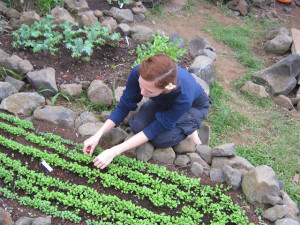 As a member of the Hawaii Organic Farmers Association, and the American Horticultural Therapy Association, Pacific Quest utilizes garden based activities to engage students in new perspectives on personal responsibility, healthy relationships, and sustainable life skills. During their tour of Pacific Quest’s therapeutic gardens, the visitors observed students planting carrots, and preparing a colorful salad of shredded beets and fresh kale harvested from their own organic garden. One student was asked, “what is something that working in a garden has taught you?” The student responded, “I never knew how resilient plants can be, and I guess the same is true about myself.”
After their tour of the garden, the Delamottes sat down with Pacific Quest’s Land Supervisor to discuss how students contribute to the local community. Travis explained that students learn first hand the value of community stewardship by not just planting food for themselves, but by growing food for a weekly farmers market and donating their proceeds to charities that serve children in the local community. In many ways, Pacific Quest is redefining the scope and practice of traditional wilderness therapy by combining the best practices of outdoor therapeutic programming and nature-based therapy with the safety and oversight of residential treatment. Travis stated, “Students at PQ learn to care for a garden as they would care for themselves. One of the greatest joys of a farmer is to grow lots of healthy food, not just for yourself, but to provide for a community. Students at PQ get to experience this way of thinking and doing on a daily basis.” Travis concluded, “I believe this is a therapeutic experience like no other.” Both Karen and Paul shared their gratitude for the opportunity to observe a snapshot of life in the Pacific Quest garden. The visitors offered many praises for the work Pacific Quest is doing to provide innovative mental health services for struggling teens and families from around the world.
PQ Welcomes Lori Armbruster
 Pacific Quest wilderness therapy program is very pleased to welcome Lori Armbruster as Family Services Director. In this role, she will develop and provide a comprehensive range of services that will enhance the Pacific Quest Sustainable Growth experience for each family. Her expertise, creativity and diligence will serve Pacific Quest’s families and referral sources well.
“Lori is a perfect fit for Pacific Quest. She is dedicated and knowledgeable, while also bringing a personal touch to everything she does. As many people already know, she is an expert in customer service, and a great team player,” commented co-founder Suzanne McKinney.
Lori brings over 20 years of experience to her position at Pacific Quest. Lori has served as Executive Director of Consultant Relations, Admissions Director and Director of Alumni and Family Services and Development in several highly regarded therapeutic settings, from residential treatment to wilderness therapy.
Developing educational resources and supportive services for families is Lori’s passion. She understands and embraces the notion that to best serve each child, providing quality service, education and support to the child’s family is essential. From a young age, Lori knew she wanted to work with families largely due to her own personal experience as a teen who attended boarding school. It is her sincere passion for people and her belief that “the magic is in the details”, that drives Lori’s desire to consistently perfect and enhance the services each family receives.
Lori is highly committed to volunteering and presently sits on the Board of STICC (Saving Teens in Crisis Collaborative) where she co-chairs an annual golf event to raise funds for young people who urgently need therapeutic treatment, but whose families cannot afford it.
Lori attended college in northern California where she studied Psychology. She has lived in Sandpoint, Idaho, for the past 25 years. She and her husband Jim have two wonderful children, a 17 year-old daughter, entering her senior year of high school and a 22 year-old son, who attends Boise State University in Idaho. In her spare time, Lori enjoys “dabbling” in art and graphic design. She loves taking trips with her family (especially to sunny places!) and spending time with friends, camping and boating on Lake Pend Oreille.
Gratitude: A Sustainable Life Choice
By Denise Westman, Outreach Director
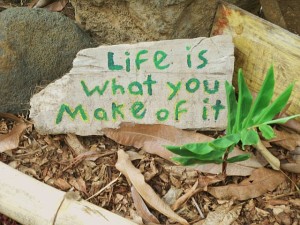 After spending many years working in this industry in a variety of treatment settings, meeting and working with some incredibly talented and gifted people, I am filled with gratitude to be at Pacific Quest. PQ’s approach to embracing change and sustainable growth not only applies to our students and families, but to staff as well. While I appreciate the journey it took for me to get here, I look back on my life choices and think about things I wish I knew earlier. Who among us hasn’t said, ” It would have made my life so much easier if I knew then what I know now”. How wonderful for our students to be able to be immersed in a natural setting and given unconditional support and hope while engaging in life changing experiences sooner rather than later…
Here’s my list of things I wish I could turn back the hands of time to tell my younger self. Many will sound familiar but all worth hearing again.
- You’re stronger than you think you are.
- Mistakes teach you important lessons. Every time you make one, you’re one step closer to your goal.
- There is nothing to hold you back except you.
- You can press forward long after you can’t. It’s a matter of wanting it bad enough.
- No matter how much progress you make there will always be the people who insist that whatever you’re trying to do is impossible.
- You are limited only by your own imagination. Let it fly.
- Perception is reality.
- Your instincts can be trusted.
- There is only one question to ask yourself: “What would you do if you were not afraid?”
- It’s often hard to tell just how close you are to success.
- The only mistake that can truly hurt you is choosing to do nothing simply because you’re too scared to make a mistake.
- Never let success get to your head, and never let failure get to your heart.
- You have to fight through some bad days to earn the best days of your life.
- Life is 10% what happens to you and 90% how you react to it.
- Do what you love, not what you think you’re supposed to do.
- Laughter is the best medicine for stress. Laugh at yourself often.
- If you want to feel rich, just count all the great things you have that money can’t buy.
- Forgiving yourself is far more important than getting others to forgive you.
- If you awake every morning with the thought that something wonderful will happen in your life today, you’ll often find that you’re right.
- Be nice to yourself.
- For the most part, it doesn’t matter what people think. Follow your own truth.
- No education is wasted. Drink in as many new experiences as you can.
- Making one person smile can change the world.
- Don’t forget to enjoy your journey!
- You never know how strong you really are until being strong is the only choice you have.
- Sometimes good things fall apart so better things can fall together.
- You cannot change what you refuse to confront.
- Crying doesn’t indicate that you’re weak. It doesn’t always solve your problems either.
- No matter how many mistakes you make or how slow you progress, you are still way ahead of everyone who isn’t trying.
- Life isn’t about waiting for the storm to pass, it’s about learning to dance in the rain.
- You can learn great things from your mistakes when you aren’t busy denying them.
- Give up worrying about what others think of you.
- When you stop chasing the wrong things you give the right things a chance to catch you.
- You have to accept that some things will never be yours, and learn to appreciate the things that are only yours.
- As Henry Ford put it, “Whether you think you can or you think you can’t, you are right.”
- Don’t be afraid to move out of your comfort zone. Some of your best life experiences and opportunities will transpire only after you dare to lose.
- Giving up doesn’t always mean you’re weak, sometimes it means you are strong enough and smart enough to let go.
- You’ll rarely be 100% sure it will work. But you can always be 100% sure doing nothing won’t work.
- Don’t dwell on the past or worry about the future for too long. Right now is life. Live it.
- No matter how cautiously you choose your words, someone will always twist them around and misinterpret what you say. Just say what you need to say.
- Not getting what you want is sometimes a wonderful stroke of good luck.
- If you are passionate about something, pursue it, no matter what anyone else thinks. That’s how dreams are achieved.
- If you keep doing what you’re doing, you’ll keep getting what you’re getting.
- What lies before us and behind us are tiny matters when compared to what lies within us.
- Don’t pray when it rains if you don’t pray when the sun shines.
- It’s not about getting a chance, it’s about taking a chance.
- If it were easy everyone would do it.
- Be vulnerable.
- A problem is a chance for you to learn.
- Regardless of the situation, life goes on.
Gratitude comes in many forms and offers us many benefits. Living a grateful life means consciously interacting with your life and mindfully (thank you PQ) honoring the truths of your existence. It’s the practice of recognizing what’s good in life and embracing the joy that comes naturally with gratitude.
Problem Teenager–But What’s the REAL Problem?
If you are like many parents you were warned when your darling toddler was starting into some adorable defiance: “Just wait ‘til they’re teenagers!” You may have thought a problem teenager would never happen to you because you’re such an attentive, caring, thoughtful, amazing parent. You made your child good food, drove them to all their practices and lessons, got them into the school you thought was best, made sure they had good clothes and said “please” and “thank you” when appropriate.
Now you have a veritable stranger drinking all the milk and sleeping until 2pm on the weekends. “But,” you’re thinking, “that’s not the worst of it.” It’s true: there are worse things than drinking all the milk or sleeping 14 hours straight. You could be identifying violent, drug-addicted, hateful, hurtful behaviors in your teen. The other truths are you ARE an attentive, caring, thoughtful, amazing parent AND you have a problem teenager. Their poor behaviors or habits are not your fault, but the lack of an effort to find a professional trained in dealing with troubled youth could very well be your fault. It is in your hands to seek out solutions to your troubled young adult and their problems. They will not do it on their own. Your careful action in taking a step to find help is an opportunity to stand beside your troubled teen as they maneuver life into adulthood. There is almost no reason you need to white-knuckle through the teenager years as doing that will hurt you and your teen, if not others, in the process.
Here’s a quick cheat sheet to understanding the real problems behind your problem
teenager:
What is the Problem…Exactly?
Question whether your teen’s behavior is the problem OR if their behavior is a
symptom of a deeper problem or issue. Perhaps you’ve identified that their problem
is the vicious, violent way they speak to you and your spouse, but upon deeper
investigation that behavior is nearly a symptom of a deeper issue—that their group
of friends is rejecting them and they feel lonely and they’re looking for someone
to punish (you). This is, of course, an extremely oversimplified example. The shift
to seeking out the truth can be a telling first step as it can unlock some important
understandings.
So, figure out what the problem is, precisely.
For Whom is it a Problem?
Get real with yourself before you approach your teen with all the answers. In regards to the problem, ask yourself for whom it is a problem.
You: does it disturb your view of your child?
Your Family: does it disrupt the flow of family life you’ve established?
Your Community: is it against the law?
Your Child’s School: is the problem negatively affecting academic work?
Your Child: does it physically damage your child?
When you begin communication around the problem, it is imperative that you are clear about why their behavior is a problem. It cannot just be that it is annoying or bugs you. Every choice affects the world around us, so consider who is touched by this problem behavior and make that abundantly clear to your child.
How is the Love Going?
It is a wonder that you must work on yourself before you work on your child through a troublesome set of behaviors, but you must. Be clear with yourself that you do not accept poor behavior, but you do accept your child. Be point blank about this to your teen. Even if they don’t respond in a way that magically reverses their behavior and turns you two into the best of friends, hearing it is part of the healing. They need to hear and see consistent messages from you. It is a honing technique that allows for very little sway from the point: “I love you.” Say it and show it.
Therapy programs for troubled youth have been developed and refined not because of parents—parents have a unique role with their children. But just like there are driving instructions to teach you how to drive, swim coaches to teach swimming, art teachers to teach drawing…there are coaches and instructors to teach young people about themselves and how to behave. Consider that these qualified professionals are educated in just how to handle your teen.
Music Helps Relieve Stress
By Raylene Moses, HR Manager
 When you enter the HR office, music is probably the first thing you will hear. I love listening to music. For me, music is a great stress reliever. It really doesn’t take time away from my busy schedule. Rather, it provides a backdrop to my own rich and fulfilling life. The following are some of the ways you can use music to enhance your regular activities:
In the Morning:
Try waking up to your favorite tunes, it will start your day feeling great, setting the tone for a lower-stress day.
During the Commute:
For me, music is the panacea to road rage. By playing your favorite music in the car, much of the tension you may feel from the commute and the concerns of the day dissipate, making you feel more prepared for your task once you reach your destination.
While Cooking:
Before you bring out the pots and pans, put on some genre of music that you enjoy. Cooking soon becomes an enjoyable activity rather than a chore, and you’ll likely find yourself relaxed and in a better frame of mind once dinner starts. Continue to enjoy the music while savoring your dinner and your company as you eat. Incidentally, research shows one eats less, digests their food better, and enjoys their food more while listening to soothing music.
While at Work or Working Out:
Energetic music, hip-hop or pop, for example, can raise your energy level.
Before Bed:
Here’s a little known fact, that getting enough sleep can help you handle stress better. Unfortunately, stress can often interfere with sleep. Playing music as you drift off is one way to counteract the effects of stress. It takes your mind off of what may be stressing you, it helps slow down your breathing, and it soothes your mind.
Give it a try, the only thing you can lose, is STRESS!!
Options for a Troubled Teen
If you have struggled with how to manage and raise your troubled teenager, you
may have had the discussion about where to get help outside your family circle and
the community around you.
Fortunately, there are specialized programs targeted at varying degrees of outcomes
depending on the ultimate needs of your particular child. Whether you are dealing
with behavioral issues, drug abuse, alcohol abuse or depression, there is help for
your teenager. Don’t wait. Get educated.
Here are the various options for troubled teen centers of help and care:
Therapeutic Wilderness Programs: These programs use the natural world
to engage with young people utilizing the Earth as a teacher of life lessons.
Encourages youth to discover their strengths, weaknesses and opportunities
for change through interactions with nature. Wilderness therapy for young
people can include vegetable gardening, farming and animal care, camping or
outdoors sporting activities like rock climbing.
Boot Camps: This is a demanding atmosphere that engages teens by way of
serious power struggles, breakdowns achieved through rigorous schedules,
and compliance achieved through demanding tasks. Most often boot camps
are challenging both physically and mentally. They’re often an alternative to
juvenile detention centers.
Military Camps: Similar to boot camps, military camps for youth are
centered on rigorous physical activity and mental degradation of wayward
young people. These camps demand unequivocal respect and immense
amounts of responsibility. They are rigid and unrelenting in their aim at
breaking down a teen with destructive attitudes.
Adolescent Treatment Centers: These centers tend to focus on psychological and substance-abuse issues in young people. They’re situated in places that allow treatment to be ongoing as opposed to day programs or one-hour counseling sessions that lack consistent, concentrated attention.
Boarding Schools: These act as an alternative to your troubled teen’s current school. Boarding schools offer an opportunity to achieve academic credit specifically for poorly behaved students. These types of academies can combine counseling or different therapy models to complement schoolwork so your teen doesn’t fall behind while getting treatment.
Rehab: Teens suffering from chemical dependencies like drugs, alcohol, prescription medication, glue sniffing, chemical snorting or other addictions get direct, clinical care in the rehab setting.
The unique offerings of each type of troubled teen program are as unique as your
beloved child. The same amount of care and concern needs to go into choosing
the right place for your son or daughter as when they were young and you made
decisions about car seats, schools, friends, food, rules, etc. Asking questions is
the best way to start searching for a location or program that will fit the needs of
your child. Is your daughter timid and depressed? Well, a military-type boot
camp might not be the best place for her. Does your son have outbursts of violent
aggression? Well, a rehabilitation center focused on addicts may not be the best
place for him. Consider your whole child; consider the entirety of the programs that
interest you and you’ll be on your way to helping heal your problem teen so they can
be a wonderful teen.
The Flow State
By Mike Sullivan, Therapist
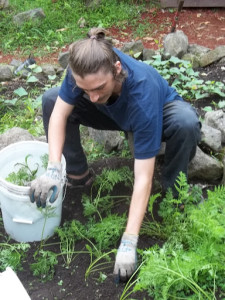 This is fascinating – and you will likely be able to relate to this. Mihály Csíkszentmihályi and colleagues in Italy pondered the mental state of artists while in the act of creating art. Through phenomenological studies, Csíkszentmihályi, maintains that people can basically become absorbed into an activity and reach a particular mental state, flow. Flow is basically a mindful mental state achieved when one is completely present in the task at hand. The phenomenon has implications for all of us, allowing us to find an activity that engages an extreme presence, letting go of anxiety, depressed feelings, or other aspects plaguing our minds.
Wikipedia states: According to Csikszentmihalyi, flow is completely focused motivation. It is a single-minded immersion and represents perhaps the ultimate in harnessing the emotions in the service of performing and learning. In flow, the emotions are not just contained and channeled, but positive, energized, and aligned with the task at hand. To be caught in the ennui of depression or the agitation of anxiety is to be barred from flow. The hallmark of flow is a feeling of spontaneous joy, even rapture, while performing a task[2] although flow is also described as a deep focus on nothing but the activity – not even oneself or one’s emotions.
Flow can vary for each individual and it’s our personal responsibilities to find it for ourselves. For some it may be something extreme like rock climbing or mountain biking. These are activities that seem to require a flow state for survival. They seem to thrust one into a flow state. For others, yoga, art, gardening, or other activities can provoke the same state of mind. One achieves flow through that presence created when you completely commit to the activity. I encourage you to evaluate your daily activities and ask yourself – Am I finding a way to engage the flow state? If not, you may want to find an activity that allows you to. There is likely not much empirical evidence to support this theory, however it speaks to many phenomenologically.
Depression In Teenagers
Do you have a teen that has bouts of irritability, angry outbursts or occasional mood
swings? If yes, then you have a very typical teen moving through the transition
from childhood to adulthood with a healthy dose of emotional growing pains. These
types of benign behaviors are not depression. Depression is a clinical diagnosis
that manifests in troubled teenagers when their regular transitional reactions are
prolonged and debilitating.
The teenage years are both exciting and coarse. Teens are faced with biological
changes in their bodies as well as intellectual stimuli that have them asking, “Who
am I?” and “How do I fit in?” and “What is my purpose?” It is a time where there may
be sadness in departing from what may have been a blissful childhood to looking
ahead at what adulthood means and the responsibilities that role plays. So they are
not quite adults and yet no longer children. They are teens and it is a remarkable
place to be.
Being a teenager can be troubling if there aren’t accessible ways to handle all the
swirling emotions and changes. Without access to these types of tools, depression
can take hold. Here are some obvious warning signs your teenager might have
depression:
• Challenging to concentrate
• Extreme fatigue
• Prolonged hostility
• Withdrawn and anti-social
• Marked changes in eating patterns
• Inability to rest or sleep
• Extended sadness
• Proclamations of suicide
• Obsession with death
• Agitation
• Lack of motivation
Pressures of life are always present, whether for a child, teen, young adult, adult or
elderly. This is life. While children cannot recognize pressures as such and adults
can recognize and handle pressures, teens and young adults can recognize pressures
but cannot always effectively handle them. Why some troubled teens and problem
young adults cannot handle pressures that allow them to live fully and free of
depression remains mysterious. Armed with the ability to understand the warning
signs of teen depression can lead to specialized and necessary care.
As a parent, caregiver, teacher, coach or instructor of teens, it is imperative that
you are aware of the warning signs of teen depression. It is too easy to disregard
behavior as “teens being teens.” Observe your teen, take notes, get help. Neither you
nor your teen needs to suffer through the teenage years in pain and distance.
Here are just some ideas for what you can do if your teenager shows signs or
symptoms of teenager depression:
• Be present: Let your teen know you are available to them. An unconditional
offer is best received. Asking a myriad of suspicious questions will build
walls, not create a safe space for opening up. Allow your teen to open up on
their terms and on their timeline, not yours.
• Stay present: Do not give up. Opening up hurts because vulnerability can be
scary, so a teen may not be so willing to give of himself or herself right away.
Be a gentle, but constant reminder you are there for them.
• Listen. Listen. Listen: Do lots of listening and less talking. Are there
situations or times or days when your teen is more open? Create more space
for them to open up and then refrain from lots of questions and instead listen
and hear what they share.
• Acknowledge: Even if what your troubled teen is sharing seems futile or
ridiculous to you, it is likely worrisome and grating on them. Let them know
you are listening. Reflect what they say so they, too, can hear themselves.
It shows you take their feelings seriously and that you acknowledge and
appreciate their willingness to open up.
Depression isn’t a catch phrase for teens—it is a real illness that, left untreated,
can be damaging. If you see the signs and you’re doing the work of a caring
adult, then take the step, with your teen, and seek professional help to screen for
depression.
Health & Wellness Talk Show Features PQ
 Dr. Kimo Alameda, Director of the Hawaii Department of Health interviewed three key professionals from Pacific Quest wilderness therapy program in a weekly wellness talk show on the Big Island of Hawaii. The television program “Rise Above” invites speakers to share information on issues of importance related to health and wellness. This week’s show focused on the growing rate of mental health disorders in youth, and how Pacific Quest’s Sustainable GrowthTM treatment model provides an effective alternative to traditional wilderness and residential therapy for adolescents and young adults.
The featured guests included Mike McKinney Executive Director, Dr. Britta Zimmer Wellness Director, and Travis Slagle Land Supervisor at Pacific Quest. The speakers described fundamental aspects of the PQ program, blending aspects of nutrition and exercise with Hawaii organic gardening and horticultural therapy. Dr. Zimmer stated, “We take a whole person approach that addresses the five pillars of wellness  emphasizing: nutrition, mind-body connection, sleep, breathing, and exercise.” Dr. Alameda commented on the common challenges to maintaining health in our fast-paced society, and how often the importance of physical health can be overlooked as a precursor to mental health. Travis Slagle stated, “the students at PQ learn to value their own health and nutrition not through lectures, but instead by growing their own food. Students internalize the lessons of caring for a garden with lessons about caring for themselves.” The show concluded with an affirmation on the tenets of positive youth development, and the strong cultural context of Hawaii as a natural destination for individuals from around the world seeking new skills and perspectives in mental health and physical well-being.
Adolescent Troubles–What to do?
If you are at your wits end in regards to a troubled teen in your life do not throw
up your hands in disgust and relinquish the parenting of your teen to the teen
themselves. Some teenagers are experts in manipulation and might attempt to
convince you they can handle their life alone. This is not the case. Here are ways to
cope and manage life with a teen you love (who may not relate to you as though they
are being loved):
Share Your Struggles: Entrust a circle of friends and family and other parents of troubled teens with your story and your continued struggle. Sharing your experience does NOT mean complaining about behaviors, retelling horrible stories or getting in a story loop about how bad your teenager is. Sharing means being honest with your own stories and being open to receiving support. It might look like a group of friends, it might look like a support group of strangers. Whatever group you choose, know that your angry, defiant, hurting teen is not the first in history and there are others who need you to share so they, too, know they’re not alone.
Demarcate Your Boundaries: Create crystal clear boundaries for your teenager. Boundaries include expectations and punishments. Create the list together, if that is possible. If you’ve decided something together accountability and responsibility is never left on one person’s shoulders. If curfew is 11pm, it is always 11pm. No changing. No begging. No “Next time, I promise…”. If your teen returns at 11:01pm, they’re late and you are responsible for following through with the demarcated punishment. If you cannot be responsible for your words and promises, that very behavior will guide your child into their own irresponsibility. Do not make threats you are not prepared to actually do. Do not make promises you are not prepared to
keep.
Maintain Routine: A troubled member of the household can be extremely
disruptive to a well-functioning family. Keep daily routines consistent.
Dinner is always at 6pm. We always have breakfast out on Saturdays. Quiet
reading time in the living room before bed. Or whatever kind of routine or
traditions are understood as a family need to be maintained so a troubled
teen doesn’t get a stronghold on traditions, monopolizing your negative
attention. A consistent routine allows other family members to get a sense of
structure amidst some unexpected behaviors.
Remain Attentive: Don’t lose yourself in your problem teenager. Your
spouse, your other children, your pets, yourself…each family member has
the right to receive loving, attentive care. A troubled teen can dominate your
time and energy degrading the family unit. A problem teen definitely needs
attention but not to the degradation of others. Having an angry, troubled young adult in your home can be terrifying, frustrating, scary, infuriating. It is imperative for you to come to your children from a place of wholeness. While they may not appreciate it now or ever, you will.
Pictures Worth A Thousand Words
By Erin Levine, Clinical Admissions Director
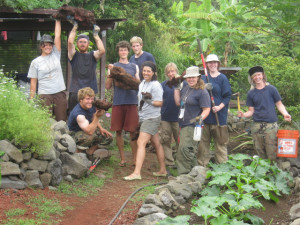 Every Friday evening when I am winding down my week, I take some time to view the slideshow of pictures that catalogs the activities the students participated in that week. I scroll through hundreds of pictures of busy and smiling faces in the different camps, at different phases of treatment and at multiple locations throughout the Big Island. I really enjoy looking at the pictures each week, it’s a great way for me to unwind as well as a reminder of the beautiful stories unfolding at Pacific Quest every day. I often talk about these pictures to the families who are in the process of sending one of their loved ones to Pacific Quest. It is easy for me to be encouraging in the face of fear and doubt because I know that in a couple of weeks they will be viewing pictures of their son or daughter fully engaged in an activity with an ear to ear smile and a look of accomplishment that is unmistakable. I talk to so many families that are
 discouraged and unable to comprehend a time when things will be better and I am always able to see the pictures in my mind’s eye, they enable me to talk about the changes that transform individuals and families everyday at PQ.
Families participate in a number of activities throughout treatment, but in talking to alumni families they often agree that the pictures kept them going. The pictures not only tell a story about day to day life here at Pacific Quest but also the progression each individual experiences throughout their stay.
The smiling faces I see when the students are swimming in blue waters with giant turtles off of black sand beaches are expected. The look of eager anticipation on their 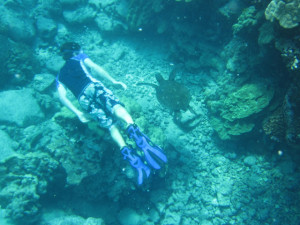 faces when they have a plate full of beautiful food that I know they helped to grow, harvest and prepare is understandable. What really catches me off guard though are the heartwarming pictures of young people with huge smiles and looks of pride carrying a pile of brush or preforming some otherwise basic task. I wonder how they can look so happy and fulfilled doing such a seemingly menial task? But that’s the magic of the gardens. Everything we do has a practical and a therapeutic purpose and outcome. I am just glad it’s captured in photographs, otherwise I may not have believed it myself.
Pacific Quest Welcomes New Clinicians
Pacific Quest Wilderness Therapy is pleased to announce the addition of two new clinicians to our ohana! Haley Robinson and Bridger Jensen joined Pacific Quest in May as Primary Clinicians.
 Haley Robinson joins Pacific Quest from Seattle, where she has worked for the past several years providing mental health and substance abuse counseling to young women in a residential treatment program. Her experience also includes management of a transitional housing program promoting academic and occupational achievement for pregnant and parenting women. Haley earned her Masters of Science in Marriage and Family Therapy from Seattle Pacific University and her BA in Psychology from the University of Washington.
In 2008, Haley spent six months living in Hawaii and has known since then that she would find a way to return for good. She was thrilled to discover the perfect opportunity with Pacific Quest. Haley looks forward to working with students and families in the context of wilderness therapy. Her background in family counseling, case management and substance abuse will provide a unique perspective for this work. Haley is excited to revisit her love of the Hawaii and its art, food, music, people, and land. During her free time, Haley enjoys writing, cooking, running, and spending time with family and friends.
Bridger Jensen is a Certified Therapeutic Recreation Specialist with a Masters in Psychological Counseling. Bridger comes to Pacific Quest with years of experience working in both wilderness therapy, residential and aftercare programs. Most recently, Bridger worked with a residential treatment program in Spanish Fork Utah where he provided both family and individual therapy with an emphasis in therapeutic recreation. Bridger’s past experience also includes teaching over two hundred workshops and seminars to parents and youth in wilderness therapy programs, assisting in the foundation of a prominent adventure therapy program for adolescents and young adults, and performing research to discover the need and demands for aftercare programming. Bridger has published academic research in the field of wilderness therapy, addressing the question of why wilderness therapy is effective. Bridger enjoys a multitude of outdoor adventures and spending time with his family.
“Aloha Aina”- To Love the Land
By Travis Slagle, Horticulture Therapy Director
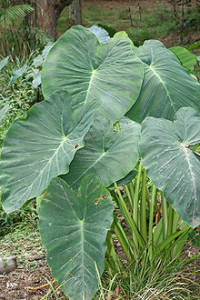 To love the land is the oldest and most essential way of life in Hawaii. The people who care deeply for the land know what it means to be “pono” (to have integrity); they respect the ancestors by continuing their work, by planting the seeds, cultivating the “kalo” (taro), and restoring the rock walls that once supported the most sustainable agricultural society in the history of human civilization. For young people and families who come to Pacific Quest seeking personal growth, learning to love the land and learning to love yourself go hand in hand. In fact, the expression “Aloha Aina” implies that the love for the land and the love for life are one and the same. Students at Pacific Quest are immersed in the land, they learn first hand that love takes consistent work, and love requires “kuleana” (responsibility). For those who love the land, these individuals don’t just wait to be given responsibility, they seek out responsibility as an expression of self-worth and gratitude.
The values that sustain the Hawaiian culture and the story of the “aina” provide an important anchor for the PQ experience. Unlike any other outdoor therapeutic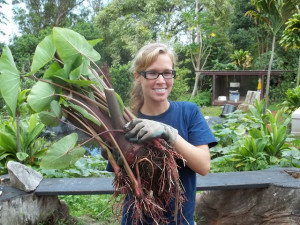 program, Pacific Quest students have an opportunity to create a reciprocal relationship with nature by cultivating the food they eat, and learning first-hand the importance of “Malama Pono” (to care deeply). This kind of care goes beyond self-gratification, and contradicts the rugged individualism that permeates western society. Essentially, anyone who seeks to practice “Aloha Aina” learns the simplest and most critical aspect of sustainability, which is to give before taking.
Rather than hiking and surviving in a traditional wilderness program, students at PQ interact in a community that internalizes the concepts of sustainability by applying them to the process of emotional and psychosocial development. This is the cornerstone of the Sustainable Growth™ treatment model, offering young people the skills and unconditional support to express a profound sense of care in a way that not only builds confidence, but also sustains a healthier more purposeful way of life.
Wilderness Therapy Program Pillars of Health: 4 of 5—Breathing
By Pacific Quest
Decelerate headaches, improve your health, boost your energy—all this and more with a free, powerful tool you have access to each and every day: your breath. Breathing is referred to in clinical terms as an involuntary action of the human body. With all the busyness of the go-go-go modern society, it comes as a relief that amidst jobs, school, friends and family obligations we don’t also have to add breathing to our list of “to-do’s.”
Imagine, though, consciously breathing. Imagine taking what is known as an involuntary action of the human body and garnering it with intention. It would turn an 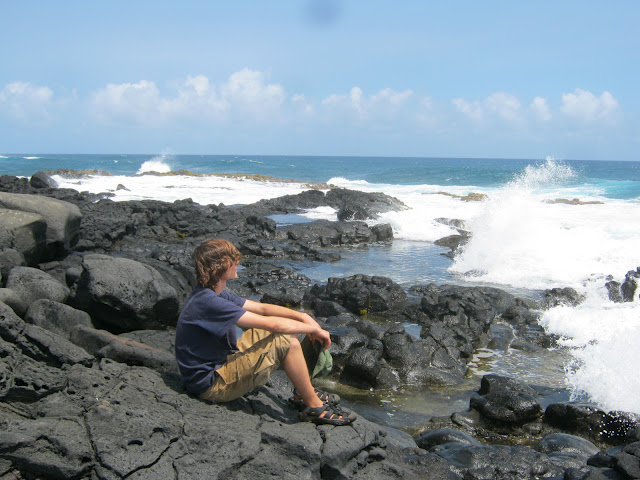 act of survival (involuntary breathing) into an act of powerful living (intentional breathing). At Pacific Quest, our therapeutic wilderness program is committed to helping troubled youth adapt the skills necessary for powerful living. That includes focus on breathing.
Breathing is vital to good health, so it is worthwhile to consider whether you’re breathing correctly or not. Often we lapse into shallow breathing which is increasingly more shallow when anxiety or stress takes over our daily lives.
Shallow breathing has adverse affects on the entire circulatory system of the body. To breathe shallow means you’re not utilizing the full capacity of your lungs and taking in enough breath to reach the bottom of the lungs. It is at the bottom of the lungs where the richest, most purified oxygen is stored.
Deep, controlled breathing utilizing the muscle under your rib cage (the diaphragm) sends a message to your nervous system that all is calm and well. Shallow breathing doesn’t get down deep enough to trigger the diaphragm and thus your body gets the message that things aren’t okay. This leads to more shallow breathing, more anxiety, less sleep, poor skin, malnourishment, poor posture, impaired emotions, and on and on and on. It’s not good.
But you can improve your entire system creating a powerful, awesome body with a crucial element: intentional breathing.
Steps to Improve Your Breathing:
1. Take Note of How You Breathe: Take some time to pay attention to how you are currently breathing in different situations: right before sleep, after exercising, during n test, when you’re sad, when you’re angry, when you’re happy. It seems simple, but it is difficult to remember to take note because breathing is not forefront in our consciousness.
2. Practicing Breathing: It sounds funny, but it really is crucial to practice good technique when you want to transform your life by intentionally breathing. Try setting aside three different times during the day to sit and breathe with intention. For instance, when you awake, before dinner and before bed. Take three counts to breathe in through your nose and three counts to breathe out through your nose. After 10 rounds, you’re finished with your breath practice.
3. Breathe to Live: After you have been practicing breathing in 3-round cycles for a week, you will have a better understanding of what intentional breathing can give you: calm, clear-thinking, relaxation (let alone all the inner benefits you can’t necessarily see: positive nervous system signals, healthy oxygenated blood flow, etc). With your free tool for a healthier life you can tap into the power of your own breath throughout your day: when you’re in conversation, before you make decisions, after eating, in the shower, etc.
Another step to healthy breathing is considering the air you breathe. The Pacific Quest wilderness treatment program is situated in a location overflowing with clean, unpolluted air. Returning to cities or homes with various pollutants (smog, pets, smoke, etc.) can make intentional breathing a challenge. Consider choosing to spend time in areas where the air is clear as well as investing in an air purifier in spaces where you spend a lot of time (ie, a bedroom) but where clean, fresh air is limited.
We consider breathing a pillar of health as it contributes to more than just survival, since deep, slow breathing creates a transformed, healthier person.
Life is What You Make of it
By Kelly Weld, Therapist
Being a counselor at an intervention program is a challenging and rewarding task. When students arrive they are lost and desperate, their families are in crisis, and it is our job to help re-align the system in a relatively short period of time. The process  feels first like a roller-coaster (with intense highs and lows) and then a waltz (three steps forward, one step back). Our program incorporates a beautiful balance of emotional intensity (via impact letters, difficult leadership roles, peer feedback groups) and personal tranquility (via living and working in the gardens, participating in relaxation and meditation groups, taking care of our bodies through yoga and nutrition, etc). And through that balance, a shift occurs…which makes my job gratifying beyond words.
I recently graduated a young woman who came to PQ kicking and screaming. She tried everything to avoid the process, and wanted only to retrieve her too-stuffed suitcase (she arrived with five separate purses!!!) and go back to her comfortable, though unhappy, life. When she realized that she was not leaving, that her parents were not rescuing her, she finally surrendered…and the dance began. A week before she left, she wrote the following letter to future PQ students which beautifully articulates why I keep coming back for more.
“I am writing this to the people struggling at Pacific Quest. I am writing this because I wish that someone would have written this to me. No matter who you are, or where you come from, it’s hard to be out of your comfort zone. Pacific Quest, from my perspective, is way out of any teenager or young adults’ comfort zone. You might have been lied to in order to get here, you might have been told you were going on a short vacation, you may have gotten woken up in the middle of the night by transporters, you may not have gotten any forewarning at all. The truth is hard to hear. You are here now and no matter how badly you freak out, how hard you cry, or how sick you pretend to be, there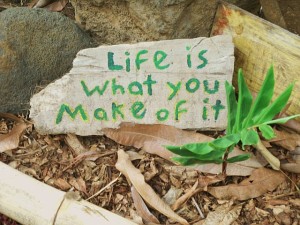 is nothing you can do about it. You also need to realize its okay to freak out and cry. It’s normal. It’s almost expected. Just know your first and hardest job is to get past it! You have to accept it, embrace it, and know from that day forward, your life will be a lot more manageable. What helped me was thinking about the way I had been living my life. I realize now that if I had not come to Pacific Quest I very likely would not be alive right now. One of my favorite quotes from Pacific Quest is that “We are most likely to end up where we are headed, unless we change direction.” That quote applies perfectly to Pacific Quest and why we are here. We were sent here to change direction so we could end up in a better place. We were sent here because someone cared. We are here for ourselves. We are here to learn how to live again. Just know that anything is possible. Your stay here is not about length, or boarding school, or home. Your stay here is what you make of it. And to me, it’s worth it”.
Sincerely,
Past PQ Student
Rites-of-Passage Story Council
By Lindsey Baldwin, Therapist
One of the best parts of my job as a therapist at Pacific Quest wilderness therapy program is being a part of the Rites of Passage story council on Thursday mornings. On these mornings, students return from a two-day ceremony and share their experience with a group of peers. My role in the story council is to “mirror” aspects of a students Rites of Passage story to highlight symbolism, parallel it to the “hero’s journey”, and reflect on a students statement of intent. During these stories, students  share insights into themselves that make me laugh, tear up and reflect on how much they’ve gained from their experience at PQ. They walk away from the stories, carrying a mask, a lei, artwork, and new insight into themselves. This experience signifies severing from their old destructive patterns and behaviors. The culmination of this ceremony happens when students cross over the threshold and return to their community to share the gifts they have learned about themselves with their PQ Ohana. These stories aren’t just powerful experiences for me, as a clinician for an outdoor therapeutic program, but for other students in the Ohana who serve as witnesses to their experience. Below is a student’s reflection on the rites of passage story council she heard for the first time last week:
By Emma, current Ohana student:
“So today is my third day in the Ohana. This morning two students returned and spoke about their experiences in Rights of Passage (ROP). I’m very lucky to have heard these students speak about their experiences so early on in my time in this Ohana. I feel like I witnessed some kind of magic. Listening to one of the students, I could not help but tear up. Seeing a man who has enough strength to open up and allow himself to be vulnerable and cry is not something I have seen many times in my life. And even though I was just meeting him, I felt so proud. It is evident how much work and effort both students have put towards better understanding themselves. The other student who shared his story felt that ROP was a ceremony that reinforced and brought together all that he had already been working on, here at PQ. As he worded it, a “re-relization.” I could relate a lot to these students emotions and attitudes. In my time here I have also come to understand things about myself that have literally changed my life. Mainly that I want to live this life and love and embrace it, which I am on a path of learning to do. Hearing these students, who have come so far, and having come so far myself, gives me an immense amount of hope for the future and what it has to bring. Both theirs and my own.”
Wilderness Therapy Program Pillars of Health: 3 of 5—Sleep
By Pacific Quest
Get some Z’s. Forty winks. Out like a light. Slept like a log. Conked out. Deep sleep. Are you tired, yet? Sleep is an absolute human need. Thank goodness. Thank goodness we were programmed from the start to require a restful period in the day otherwise life can feel like go-go-go all the time. Sound sleep revitalizes our bodies, restores the overworked cells of our systems and refreshes the mind.
So how much sleep, exactly, is required? The answer varies depending on one’s age. For young people, especially for troubled teenagers involved in the deep, good work self-discovery and healing, the recommended amount of sleep each night is at least 7 hours. Seven hours is the minimum, and some experts suggest teenagers would benefit from 9 hours each night.
Reasons Why Sleep is So Good:
- Sleep feeds your brain (and who doesn’t want to eat more while sleeping!), which means to say your brain requires sustenance just like your stomach. When your stomach is hungry, it growls. When you’re brain is hungry it gets headaches or makes it difficult for you to focus. Feed it with sleep.
- Sleep is good for your skin. It keeps your skin healthier, eliminating or reducing stress-induced acne. Giving your skin (the largest organ of the human body) a break from light and sun allows it to rebuild and rejuvenate.
- Sleep encourages healthier eating habits. Whereas lack of sleep can lead to less healthy eating choices, good sleep brings a contentment that leaves you feeling whole and healthy which leads to wanting good food to match that food feeling.
- Sleep helps your ability to concentrate and learn new things. Having enough means you are alert during tests or class.
- Sleep is a natural energy-booster. It gives you the ability to perform all the things you do during the day like work on projects, skateboarding, running, surfing, gardening, chores, etc.
While it seems extreme to have done so, animal studies prove that sleep is essential to survival. In other words, we cannot live without sleep. Sleep is vital to living and lack of it or consistently poor amounts of sleep wreck havoc on the brains and bodies of humans. Some people, however, have trouble falling to sleep. At Pacific Quest, sleep is a pillar of health. Restful sleep is integral in wilderness therapy since it affects all the important work done by troubled teens during the day.
Ways to Get Good Sleep:
- Make sleep a priority: commit to at least one week of a sleep routine that gets you in bed at the same time each night. You might enjoy it so much your commitment might turn into a welcome pattern.
- Nap with care: Naps can boost your energy if you’re lagging during the day, but be certain of two things: don’t nap too long (since naps longer than 30 minutes can make falling asleep at night difficult) and don’t nap too close to your normal bedtime.
- Pay attention to yourself: discover the signs in yourself that point to sleep deprivation and then take care of it with napping or scheduling your sleep. Once you can ascertain when you are lacking sleep, share it with those around you. Sleep deprived drivers, for instance are a menace to everyone on the road.
- Create a cozy nest: make your sleeping space desirable—sheets, comforter, music, lighting, books, whatever you might need to set the stage for a fantastic night sleep, make it happen.
- Wind down & tech down: too much stimuli immediately before sleep simply doesn’t make restful sleep possible. Try to avoid working through homework or projects right before bed. Computers, laptops, video games, texting, TV, iPods…don’t need rest to function at top performance. You do. Turn tech off.
- Brag: Once you have a handle on the benefits of sleep, brag about it. Spread the word to your friends about how delicious sleep is for you.
The National Sleep Foundation suggests a sleep routine helps regulate nightly sleep, “Establish a bed and wake-time and stick to it, coming as close as you can on the weekends. A consistent sleep schedule will help you feel less tired since it allows your body to get in sync with its natural patterns.” Something integral about living at Pacific Quest’s wilderness therapy program is helping guide young people in returning to more natural patterns in their life. A consistent, pleasant sleep routine makes all the work of therapy more effective and profound.
The Magic of Connection
By Kelly Egan, Young Adult Program Director
Aloha! Or in Thai it would be Sawadhee Ka!
It’s so true that Pacific Quest wilderness therapy program is about adventure and journey – both the interior and exterior kind. Every day I’m part of someone’s journey here: our staff, a young adult student, and certainly my own. One of my most recent adventures found me fulfilling a bucket-list dream of visiting Thailand. After being part of an international conference on wellness, I expanded out into all that is amazing about Thailand. Of the many experiences that touched me, this one with the elephant was paramount. The mahout, or elephant caretaker, in the picture was a delight. Although we did not speak each others language, after an hour together we were laughing and signing together! How does this magic language that surpasses words happen? I experience this same kind of “magic” language with the young adults here at PQ and with our staff as well. It’s born of a sense of trust and vulnerability, desire to understand and connect, and also of hope and friendship. I truly believe our young adult outdoor therapeutic program is exquisite in the way we communicate and support the best of each student to surface and blossom. Each student is on their own adventure here at PQ, whether that student signed up for this adventure or maybe came not so willingly at first, our job is to connect with them and then most importantly connect that individual to his or her self. These intentional connections are backed by hours of clinical and therapeutic work, individualized land experiences and assignments for each student. The results almost always surpasses words and signifies a successful adventure and journey for that individual.
One thing remarkable about the mahout – he is 25 yrs. old and “received” his elephant when he was 15. He has spent 10 years living and caring for this incredible animal and he will continue this dedicated relationship as his primary assignment and esteemed role in his community. I, too, feel like I have a primary assignment and role in the community I work with and have dedicated decades to. At PQ, I am surrounded by colleagues who also continue to create successful adventures and journeys daily. Just magic!
Sustainable Community
By Martha Bouchard, Program Director
What feeds a community?
There are the rote answers: food, water, shelter. But let’s assume your basic needs are being met. What comes next?
For me, it is being part of a community that allows space for people to learn, grow and change.
One of my greatest joys in working for Pacific Quest wilderness therapy program is being a part of a community that is not only open to change, but embraces it. As a leader in the Pacific Quest ohana, I often find myself working within teams to evaluate the effectiveness of each of our systems and resources, creating goals to improve each of those systems, and reflecting on our sustainable growth, as individuals and as an organization.
One of our recent undertakings as part of this process has been the visioning of a 3rd addition of our student curriculum. This new version will be organized to best reflect the building blocks of Sustainable Growth, and will thus mirror a student’s journey of exploring their Sustainable Well-Being, the Sustainable Self, a Sustainable Garden, a Sustainable Community and, ultimately, a Sustainable Transition.
At the heart of each of these curricular themes we find the word “sustainable”. What does that really mean? Is it possible to truly create a sustainable system, a sustainable curriculum, a sustainable learning community, or sustainable growth, in such a fast paced world?
 By definition, in order for something to be sustainable it must be able to be “maintained without depletion”. Students, staff, family members and professionals working with the Pacific Quest community understand that the work we do can feel pretty depleting at times. Each of these roles requires a great deal of time and commitment; physical and emotional output. Frankly there are moments in the process where everyone can feel down right exhausted. So what creates the Sustainable Growth? What is the key to not becoming drained by the process?
At Pacific Quest, we create a sustainable community by acknowledging that the skills which we use to maintain our natural world without depletion are the same skills that can help us to maintain ourselves without depletion. While there are many layers to what we do at Pacific Quest, ultimately it’s pretty simple.
We all know, logically, that you can’t keep taking, harvesting, benefiting from a natural environment and expect that it will keep giving, growing, providing. In order to expect the we can continue to harvest food from the garden we understand that we must honor the change that goes on within it. As the plants grow they absorb the nutrients of the soil and when those plants are harvested, that soil is downright tired. If we kept planting and harvesting in that same soil, if we refused to acknowledge how much it had just put out and didn’t give it the time and resources to replenish it would not be fruitful. So we allow it to rest and be fallow, we nourish it with humus; we take time to prepare it for the next step. Finally when we plant the new seeds we give them plenty of attention to ensure they have all they need to grow. At each step of this process we observe what works and what doesn’t and learn to incorporate that knowledge into the next attempt.
It’s the same approach we take with people whatever role they play in the PQ ohana: student, staff, family member or other professional. We understand that we can not expect an “ah-ha” moment, after an attempt at a new achievement, after emotional risk and still maintain the energy needed to incorporate this knowledge, learn and give to a community, without going through a process similar to that of the garden. We understand and teach that this process can take a lot of energy from our physical (body), mental (mind) and emotional (spirit) reserves and if we do not incorporate techniques to refill these reserves we will feel depleted.
This is why we rest, eat well, exercise, garden, play; it’s why we teach a process of mindfulness and continual observation. This allows us to acknowledge what needs attention and what needs to change in order to take on our next challenge, “ah-ha” moment, attempt at a new achievement and emotional risk in a new way. We acknowledge that we are in a continual process of learning and changing and that we can take on each challenge as an opportunity for lessons learned, and ultimately for growth.
By embracing these techniques at an organizational level we not only practice what we teach, we also provide evidence for the effectiveness of the model as we continue to strengthen our reputation as a leader in the wilderness therapy industry. This truly makes us a Sustainable Community.
Bay Area Hiring Seminar
By Rene Fay, HR Recruiter
 Recently, Pacific Quest wilderness therapy program held a four day hiring seminar with fourteen applicants and three facilitators in the Bay Area. The goal of the event was to move beyond basic phone interviews and create a more interactive interview process, offering prospective staff a hands-on experience of what life at Pacific Quest entails.
Facilitators included Chris Kaiser, co-founder, Oren Grimm, former Field Instructor and Field Supervisor, and Rene Fay, former Field Instructor, Solo Supervisor and current HR Recruiter. The seminar started with an overview of the program, and an opportunity for facilitators to share their own unique and personal experiences with Pacific Quest including facilitator presentations- complete with video footage from the PQ gardens. The seminar also allowed applicants to demonstrate their leadership and teaching skills, providing several opportunities for applicants to showcase their creativity and group interactions.
On the third day we were fortunate to have some alumni staff and students from previous years at PQ! Martin Hanson and Gretchen Kryss, both previous Field Instructors, were present and spoke about their stories with Pacific Quest, giving the applicants a better feel for what the Field Instructor lifestyle and community is like.
Most importantly, a student alumnus, who was at Pacific Quest approximately three years ago, spoke candidly about her experience at Pacific Quest. The past student gave a brief background on the struggles that brought her to Pacific Quest, and how PQ helped her identify her strengths and taught her new tools to face challenging moments in the future. Lastly, the student alumnus shared some of the insights that she learned at PQ and how they are relevant to her life today. At the end of the seminar, it was clear that hearing a student’s perspective was the most valuable experience for the future staff.
Our seminar, not only served as a training and evaluation of potential new instructors, but also a reuniting of the extended Pacific Quest ohana. While we are still assessing the benefits of the seminar, initial feedback indicates it was a positive experience for all and another step in the continued goal of hiring and training the best staff to fulfill and model the Pacific Quest vision.
“Pacific Quest, this is Rob…”
By Rob Jarrett, Admissions Director
Every call starts this way, but soon the details come out. It is mostly moms and dads who call, but sometimes its aunts, grandfathers, or friends of the family. They all have a sad story to share about a child that they care deeply about, but can’t seem to help. Many families have lost hope and are calling out of desperation.
They haven’t seen what I’ve seen, though; I know there is plenty of hope. It comes along with a whole lot of work, but I know the chances are good that in the near future they are going to feel like a miracle has taken place.
I know that many parents I have already been through this conversation with are now saying things like, “We feel like we got our daughter back” or ” We can’t believe his transformation.” I’ve seen the student’s tearful reunions during the parent program and I have read their letters to their future selves. I’ve heard our Ohana students speak in their groups with so much emotional intelligence that an observer could easily mistake them for the therapist (as I did on my first visit).
I’ve received so many messages of gratitude that honestly, this miracle has become commonplace. It’s what I expect to happen. Some of the stories that I hear are truly heartbreaking. But in the face of these sad stories it is easy for me to remain supportive and hopeful, because I know all this. I also know that enrolling their children at Pacific Quest is not the answer by itself. They still have the work ahead of them, and it’s my job to prepare them for what is to come. Part of the work that we do involves struggle, and without the support of the family and the treatment team, the miracle won’t happen. But seeing these families rise to the occasion has become commonplace too. I know we can all work together to bring these students the awareness and the coping strategies that they need to succeed and find balance and happiness in their lives.
My part is played during the crisis, but it’s the end results, the success stories, that keep me going. I have no doubt that we are saving lives, and that is what makes it easy to find the time and energy it takes to really be there for them, whenever they call.
“Pacific Quest, this is Rob…”
Educational Consultants Visit PQ
 Pacific Quest wilderness therapy program recently hosted a group of 17 educational consultants from around the nation for a two day visit to allow referring professionals an opportunity to see our program from the inside out. Highlights included student guided garden tours, lots of time for students to share their insights and experiences while at Pacific Quest, and an introduction to the different roles that staff, supervisors and therapists play in the daily function of life in the PQ garden.
Educational consultants provide families an important service, often spending part of the year traveling to different programs, and assessing which school or program is the right fit for a young person and their family. By working with an educational consultant, families are setup for success, and receive lots of support in the difficult decisions that they face regarding where the best place is for their children to learn and grow. One of our visitors commented, “It was an amazing time for me personally and I learned volumes about your program that I never knew before!” Another visitor added, “I congratulate you on putting together a very creative approach to wilderness therapy. I know that everyone who attended the few days walked away with the same feelings: being able to trust all of you with clients who are in need of a new journey in their lives…” What stood out most from the visit was the unanimous recognition of our staff; their passion and professionalism makes the difference in so many ways.
PQ Makes National News!
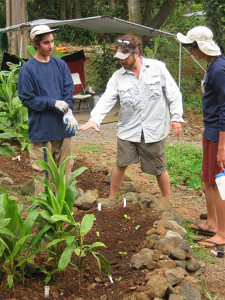 Pacific Quest’s own Land Supervisor, Travis Slagle, was recently featured in the National Public Radio’s food blog The Salt. The story titled Can Gardening Help Troubled Minds Heal focused on the growing evidence that horticultural therapy can be an effective tool in the treatment of individuals with mental health conditions. Troubled minds maybe a broad term, but stormy, unmanageable thinking can range from depression and anxiety to post traumatic stress disorder and depression.
Commonly known as “horticulture therapy,” this field of experiential treatment has been utilized by psychologists in the U.S. from as early as the late 1700s. While scientists continue to conduct research on the efficacy of horticultural therapy, many mental health professionals concur with recent studies suggesting that the simple act of gardening decreases one of the most major stress hormones: cortisol.
If you didn’t know, cortisol is released in the body as a response to stress, and too much stress leads to cortisol levels that can cause damaging physiological and behavioral patterns often described as anxiety and depression. In a recent study published by the Journal of Health Psychology, researchers measured cortisol levels of subjects having been exposed to stress and then left to choose either to garden or read. 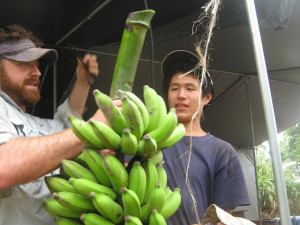 Interestingly, the participants in the study that chose to garden for 30 minutes exhibited a significantly lower level of cortisol than those who chose to read. The findings provide statistical evidence that supports gardening as a valid treatment for stress reduction and a natural way to lower cortisol levels in the body.
As an alternative to traditional wilderness therapy programs, Pacific Quest offers adolescents and young adults the opportunity to actively take control of their emotions and response to stress. Rather than hiking in the desert or sleeping on the snow, Pacific Quest students experience first hand the benefits of caring for a garden as a way to settle anxious nerves, and practice life skills that lead to a greater sense of self-worth.
Hawaii Ranked #1 State for Well-Being
Recent results of the Gallup-Healthways Well-Being Index ranked Hawaii as the number one state for overall well-being.
https://www.huffingtonpost.com/2012/02/28/happiest-state-well-being-united-states-gallup_n_1304448.html
The categories that were considered in the index include emotional health, life evaluation, work environment, physical health, healthy behaviors, and basic access to necessities. The Aloha State ranked highest in emotional health and healthy behaviors, including exercise and a nutritious diet. Living in Hawaii offers a way of life that embodies simplicity, gratitude, and stewardship of the land; in essence this is the meaning of aloha and the well-being of the people on the island. These values translate into a program staff team that practices what they teach. Living in the #1 state for well-being is no surprise, and we are often reminded by the natural beauty that surrounds us that life is a gift to be shared.
A Trademark for the Future
By Travis Slagle, Land Supervisor
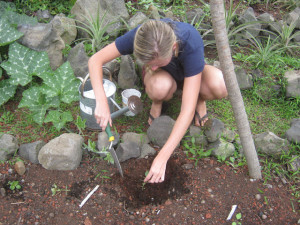 Pacific Quest wilderness therapy program announces it has been awarded a registered trademark for Sustainable GrowthTM from the United States Patent and Trademark Office. Pacific Quest has received international recognition for innovative treatment for youth and families in crisis and the recent trademark only confirms its ongoing leadership in the wilderness therapy industry. Sustainable GrowthTM is a holistic treatment model differentiating Pacific Quest from other outdoor therapy programs. When asked to comment on the recent announcement, Mark Agosto, Pacific Quest’s Business Director stated, “Our trademark shows that Pacific Quest is changing the face of outdoor programming.” Much of the Sustainable GrowthTM model is based on the ability to offer outdoor programming that utilizes the nurturing environment of an organic garden in Hawaii, while incorporating the aspects of safety and structure of residential treatment.
Pacific Quest’s position as an industry leader and its success in acquiring a registered trademark is a result of high standards of care including comprehensive health and wellness standards with a full time Nurse and Naturopathic Doctor (ND) on staff as well as a consulting Medical Physician (MD) and Psychiatrist (MD). All students receive multiple sessions of individual and group therapy every week with primary clinicians with a master or doctorate degree, and daily therapeutic encounters that occur naturally while living and working in a group and cultivating an organic garden. Learning how to grow the food they eat, planting food for future generations, and selling their harvest at a local farmers market, students at Pacific Quest develop sustainable life skills that are transferable to a future beyond wilderness therapy. Congratulations to all the hardworking people that helped create the Sustainable GrowthTM model and for delivering such a powerful force of change for youth and their families.
2012 NATSAP Conference
By Katie Kasenchak, Therapist
The women of Pacific Quest wilderness therapy program made a strong showing at the 2012 NATSAP conference in Orlando, Florida. The National Association of Therapeutic Schools and Programs, known as NATSAP for short, was founded in 1999 and provides annual research in the field of therapeutic programing for youth and a national directory of schools and programs that are licensed and accredited. In attendance were Suzanne McKinney, MA, Co-founder and Owner, Erin Levine, LCSW, LCAS, and Denise Westman, from the Marketing and Admissions Team, Hilary Moses, MSW, LCSW, Therapeutic Program Director, and Lindsey Baldwin, MSW, Kathryn (Katie) Kasenchak, Psy.D., and Kelly Weld, MFTi, from the Therapeutic Team.
The conference proved to be a flurry of activity, as members of the group attended breakout sessions and connected with friends and professionals from the industry, new and old. Seminars attended included topics such as working with students on the spectrum, internet usage in adolescents, anxiety disorders and executive dysfunction, trauma and the female brain, and internet addiction and intimacy disorders. Hilary and Katie also had the chance to connect with a team of professionals and students who are conducting outcomes research on wilderness therapy programs and are very excited to integrate what they learned into proving that the Pacific Quest wilderness therapy model is truly successful and sustainable.
Perhaps most exciting was the “Relaxing Retreat and Hospitality Suite,” co-hosted by PQ and Carlbrook school. We collectively held three blocks of open house hours, during which professionals could stop by to meet the team and/or conduct individual meetings in a less pressured environment, complete with complementary chair massages! This was clearly a big hit, we even had people waiting at the door!
No trip to Orlando is complete without a trip to the Magic Kingdom. Thus, on Saturday, after the conference wrapped up, a few of us headed to the park for a day of magic and fun, which was definitely had by all.
Is Boot Camp Right For My Teen?
You may have heard of boot camps, and if so, there may be a lot of questions swirling around about what boot camp really is.
Is boot camp right for my troubled teen?
Can girls go to boot camp?
Is boot camp the same as wilderness therapy?
We’ll take a closer look at the above questions and more. There are so many circumstances in a young person’s life that a one-size-fits-all category in terms of therapy programs is difficult to ascertain without an actual, formal assessment.
Is boot camp right for my troubled teen?
Boot camps were established as correctional facilities for wayward teenagers. They’re typically seen as a last resort location for parents looking for a quick-fix for their poorly-behaved, out-of-control child. Unfortunately, there is little research to indicate the boot camp approach to troubled teens reverses or sets straight angry, aggressive, temperamental behavior. Boot camps for teens are compared with the system of incarceration in the US whereas freedoms and self-identity are bound or stripped away completely.
Created in the mid-1980s and based off of military training schools, boot camps are rigid atmospheres. They work at putting young people through grueling tasks, difficult physical activities, and severe punishments for not following rules and orders. The method eventually breaks down a person until they’re regressed to weakness so compliance is automatic.
Can girls go to boot camp?
Yes, boot camps for girls exist. There are recorded, however, horrific abuses of children in boot camps and girls are not spared the physical, mental and emotional degradation. In fact, The National Mental Health Association concluded: “employing tactics of intimidation and humiliation is counterproductive for most youth.” They go on to discuss various degrees of abuses.
Is boot camp the same as wilderness therapy?
In a word: No. Boot camps and wilderness therapy programs could not be more different. Perhaps the only similarity is the biological age of participants. Whereas boot camps force change through wearing down an individual, wilderness therapy encourages transformation through awareness of self. The technique in wilderness therapy that leads to troubled teenagers finding self-awareness is directly related to teaching them awareness of the natural world.
The rhythms of the wilderness—the seasons are a constant reminder that untouched beauty is sacred, that nurturing brings bounty, that fresh air and clean water both heals and nourishes. Wilderness therapy camps give young people opportunities they may not have otherwise. They can plant and care for seeds and in learning how to nurture plants, understand how to nurture themselves. Of course wilderness therapy programs are part wilderness interaction and part therapy—a synergy that has been studied to show significant positive changes in troubled and hurting teens.
When thinking through the kind of therapy program you may want for your teen, it is important to get a feel for the kind of influences they’ll be working with. The people around us contribute to our shaping. Interview, discuss, involve yourself with getting the kind of information you need to make an informed decision about the kind of treatment and outcome you’d like to see for your child.
What Is Going On In My Teen’s Life?
Ever wonder what is really going on in the life of your teenager? Especially when it comes to a young adult on the verge of being labeled a troubled teen? While it is advised to go and ask your teen about what’s going on in their life, we have a little sneak peek before you approach them to get a better idea for what life looks like for a young person. It will give you an opportunity to approach them as authentically as possible.
The truth is: there’s a lot going on. Their list of life stressors and events may look very different from yours, but the significance is no less dramatic and important. You may have bills looming or vacations to plan, whereas a troubled teen might have football games looming or parties to attend. You might be thinking, “Gee, life would be great if all I had to worry about were games and parties,” but the truth is, life isn’t always great when there are games and parties coming up—especially when you’re a young person.
School Work and Teenagers
While there are various ways schools are run, most likely your troubled teenager has a rigid schedule of four to seven classes, 5 days each week. That’s a lot for anyone to handle. When they’ve returned from school, however tempting it is, do not ask, “How was school?” because you already know the answer: “Good.” Or the ever-popular: “Fine.” “Okay.” are probably responses you’ve heard. On the flip side, they’ve probably heard, “How was school?” a few too many times themselves. Everyone needs some new material to keep the academic conversation interesting.
- Find out and keep track of their schedule—knowing it will mean you can ask specific questions like: How’s the paper coming for Romeo & Juliet? or What day is the geometry test?
- Ask what teachers they like and what teachers bother them and why.
Extracurricular Activities and Teenagers
You’ll likely already know what extra activities your teen is in since you’re paying for them. So while it is easy to say, “How is lacrosse practice?” you’ll end up with the ever-easy answer of “Fine.” Find out about the players on their teams or the actors in the play or the students on the committee. Start the conversation from a place of some basic information that allows your teen room to fill in the blanks.
Teen Culture
What interests and inspires your teenager? Discover who their favorite musician is, the music they listen to, the books they like to read, the movies they enjoy, where they spend their time online. All of that interest shows deep knowing and caring. Reach out to try and make honest connections with your young person. It will likely not be reciprocated as in: they may not be that interested in the books you read or the movies you watch, but the effort to know will be what makes a caring impression on your young adult.
Socialites
Who do your kids spend the most time with (besides you, of course). Peers can be the bigger influences in a young adult’s life. Get to know their friends. Do not ask attack-like questions such as, “Does Austin do drugs?” or “Are you having sex with Jessie?” Instead, do the inviting your teen may not do. Invite their friends for family events: BBQs, movies, and outings. And when you’re with your teen and their friends, show real respect and do lots of listening when you ask questions about their lives.
Your teen is in a unique place in life, the stage they’ll be in for the shortest part of their life: the teenager years. They have a limited time to work through all that is going on in their minds, in their communities, in their families. You may know they need to connect, but they may not know that, yet. You’ll need to do more reaching out as they search for meaning and belonging.
Wilderness Therapy Program Benefits
To understand the great benefits wilderness therapy programs can offer struggling teens and at-risk young adults, it may be helpful to review the “Stages of Change.” The Stages of Change is a model created to track behavioral refinements in people.
Known in its clinical form as the Transtheoretical Model, there are six stages to track. Keeping these stages in mind while your troubled youth is enrolled in a wilderness camp can be eye opening and offer insight into how they communicate at different points in their transformation. This model isn’t rigid, though your struggling teen may just go through each stage as clearly as they’re laid out below.
Stage 1: Pre-Contemplation: This is the stage your child is when they begin a wilderness rehabilitation program. It is defined as someone not being aware that their behavior is a problem at all and therefore, there is zero intention of making any changes in behavior.
Stage 2: Contemplation: They’re starting to get it—your young person at this stage is beginning to really understand the reality of continuing their behavior or what life would look like if they discontinued or changed their behavior.
Stage 3: Preparation: This is the stage where real intention is made known. The intention to change behavior is clear and obvious to the individual and they share it with others.
Stage 4: Action: At this stage, poor behaviors are clear choices and therefore a teenager at this stage in a wilderness therapy program are taking action by modifying and changing behavior on their own. In other words, no coercion, no bribes, and no threats were made to change unsatisfactory behavior—your young person is autonomous in the particular behavior being modified.
Stage 5: Maintenance: As the stage implies, this is the point at which your teenager or struggling young adult has a pattern of continued behavior modification. This may be experienced more fully after your teen has returned home from a wilderness therapy program.
Stage 6: Termination: This is a full reversal of poor behavior. Termination essentially means the bad behavior is eradicated and it is clear it won’t be used again as an option even when old temptations or triggers arise.
Knowing these stages of change can help explain some of the communication you receive from your young person both while they’re at camp and once they’re home. The benefits of a wilderness therapy program are the accelerated pace at which participants move through the stages of change.
Wilderness therapy programs are not to be confused with boot camps. The structure of a wilderness camp for struggling teenagers offers a crucial balance between working in and with the natural world and engaging in professional therapy. There are no scare-tactics or emotional-wearing measures. Wilderness therapy programs assist in creating the opportunity for hurting young people to have the space to discover themselves.
Getting to the point of understanding oneself or even just one particular facet of oneself is a monumental feat. If a problem teen comes away from a rehabilitation camp having worked through the stages of change in just one behavior that would be wildly deeper than many high-functioning adults have gone into understanding their own behaviors.
If your teen is hurting, struggling, angry, depressed, with behavior that is damaging to themselves and others, a therapeutic wilderness program can be beneficial. It is an approach that centers on equipping a young person with realistic tools for managing themselves in the many situations life can bring.
Young Adults Are Young
Young adults are just that…young. Treating them like children is inappropriate. Treating them like adults is inappropriate. So the question is: how do we appropriately treat them as the young adults they are?
The challenge comes in trying to understand where to place our young adults and children and adults given so many extenuating circumstances. The late Erik Erikson was an American developmental psychologist. He researched and recorded theories on human development and placed these qualifiers on the different stages of human development.
- Ages 13-19: Adolescent
- Ages 20-40: Young Adult
- Ages 40-60: Middle Adulthood
- Ages 60+: Maturity
While these stages are not rigidly defined by the range of ages, it is a good filter within which to view young adulthood.
There are certain biological stages that take place in young adulthood: it is the prime of life, health-wise in regards to muscle tone, fertility, agility and endurance.
There are emotional states that make young adulthood unique among the stages of life: having worked through adolescence and figuring out how to belong, young adults are taking on huge milestone decisions in life: what kind of job to pursue, marriage and partnership, children, life goals. There are risks during this time because this is the stage where huge life choices are made, yet made by people with little experience in actual life.
And this is the crucial factor with which to engage young adults in your life. They are faced with huge life decisions having almost no life experience. Seems almost unfair at times. The challenge at this point in life for the parent of a young adult is to learn how to let them make their own choices. Try as you might, you cannot control their decisions or the outcomes of them. There will be pain and hurt and disappointment. There will also be adventure and beauty and wonder. All of it is wrapped in every choice made—some to a greater degree than others, of course.
The significant perspective to come away with is examining your own life. Recall the events and choices you made as a young adult that brought you to the place you are now with your wonderful young adult—and they are wonderful, whether they’re a troubled young person or a veritable saint. Young adults need to experience the consequences and triumphs of their own decisions free of another’s will or desire which is where you come in.
As a parent of a young adult you can give some of these types of supports:
- Encourage healthy pursuits
- Listen to ideas without judgment
- Ask for permission to comment, question, advise
- Share yourself and experiences with candor and aplomb
- Let their mistakes be their mistakes
- Give them space to handle life circumstances
- Invite them into your perspective
Welcome Alexander Bingham!
Dr. Alexander Bingham joins the Pacific Quest clinical team!
Dr. Bingham graduated from Skidmore College and went on to earn a Master’s Degree in Counseling Psychology from The California Institute of Integral Studies. He continued at CIIS and received a PhD in Psychology. Dr. Bingham is a Rosen Method practitioner and Biodynamic cranio-sacral therapist. He has served as adjunct faculty in the School of Graduate Psychology at John F. Kennedy University.
A licensed psychologist, Dr. Bingham has served children and families in many varied settings. He has worked with children from ages 6-18, and with adults in several counseling and treatment centers. In 2007, His success and expertise led him to a position as start-up consultant for Alta Mira Residential Program in California. Using his education and interest in integrative counseling techniques, Dr. Bingham founded and directed Full Spectrum Psychological Health Center in San Francisco, CA. in 2004.
Dr. Bingham is a perfect addition to our team, bringing his “full spectrum” psychological approach and clinical expertise to our students and families. Dr. Bingham will be available to work with PQ students in June. You can reach Dr. Bingham at dralexander@www.pacificquest.org
Toby Mautz on LA talk radio
In case you missed Toby’s appearance on LA talk radio, you can download it here. Toby shared about the PQ therapeutic model coined “sustainable growth.” It was also the final LA talk radio show hosted by Dore Frances.
Toby emphasizes the importance in nurturing the whole self. He offers a lens of viewing the self as three equal parts, including the mind, body, and emotion. “Sustainable growth” gives people a framework for caring for each domain of the self – taking care of our bodies through diet/nutrition, exercise, consistent sleep cycles, adequate hydration; stimulating our minds through active learning and engagement; and tapping into our emotions through identification/expression, reflection. This model becomes sustainable when people implement action in each domain in a balanced way.
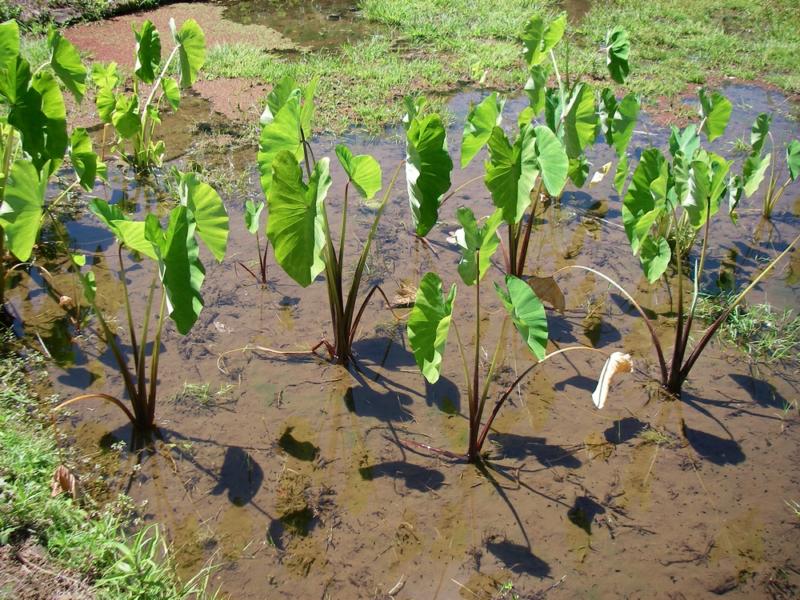
Dr. Zimmer to present at IECA – “Optimizing Mental Health: A Naturopathic Medical Approach in a Therapeutic Base Camp Environment”

PQ’s Naturopathic Doctor Britta Zimmer is presenting at IECA in Philadelphia! This is exciting news for the PQ team as we value the integral role of health and nutrition in the therapeutic process. For those of you attending the conference please make sure to check out Dr. Zimmer’s presentation on May 5 at 2:45 pm.
The session will demonstrate, through clinical examples and current research, how optimal nutrition and positive lifestyle modifications can decrease mood, anxiety, and attention deficit hyperactivity disorders. Optimizing nutritional status, regulating sleep patterns, promoting exercise, and teaching breathing techniques facilitates the therapeutic process. As the physical body becomes more balanced, the mental / emotional body becomes more receptive to therapy. The value of a sustainable model of growth, self-care, and health will be demonstrated within therapeutic environments.
Tune into Interview with Toby Mautz, PQ Clinical Director on April 18th!!
 Dore Frances will host Toby Mautz, MSW, LCSW on her radio show titled “Family Solutions Today” on April 18th at noon pacific time. Toby will talk about Sustainable Growth (The PQ therapeutic model) and how to incorporate the lessons into family daily life. Toby has been working on refining this model for years, drawing on his experience of working with hundreds of teens and families in several therapeutic settings. His theory is simple yet captivating. Listeners will absolutely find it applicable to their daily lives. Tune into LA Talk Radio on the web!!!
Also, stay tuned for a follow up blog posting regarding the radio show and feel free to post comments or questions here on the PQ blog.
Welcome Alicia Goldman!!!!
Hilo, HI – March 30, 2011 -Pacific Quest, a wilderness therapy program on the Big Island of Hawaii, is proud to announce that Alicia Goldman joined our team as Alumni and Family Services Director.
This new position will allow us to reach out to all of our alumni students and families in a more proactive way. We would like to better understand where our past students are now in their lives, obtain feedback about their experience at PQ and beyond, and when appropriate offer assistance and support when needed. This program will also most likely include access to online discussion forums with other alumni parents and students, as well as a quarterly newsletter, and potentially, invitations to alumni events. Additionally, Alicia will be available to consultants as a resource while they have students at PQ, as well as assisting with the planning for the transition home or to a boarding school environment. She will also be holding parent workshops and other events in support of educational consultants.
Most recently, Alicia came to Pacific Quest following 5 years as an Educational Consultant on the West Coast. Alicia received her BA from Syracuse University, and then went on to receive a Masters in Social Work from Yeshiva University’s Wurzweiler School of Social Work in New York City. Since then, she has accumulated over 15 years of clinical experience working in a variety of settings that serve children and families. It was through this work that Alicia developed a strong passion for combining her interests in education and therapeutic services that can assist families.
Suzanne McKinney, co-founder commented, “Alicia’s experience will serve PQ well and allow us to better meet the needs of our past, present and future students and families.”
For more information regarding Pacific Quest, please visit www.www.pacificquest.org or contact Mark Agosto, Business Director, at (949) 940-6068 or via email at mark@www.pacificquest.org.
About Pacific Quest:
Pacific Quest is an outdoor therapeutic program (wilderness therapy) and sustainable treatment program for struggling teens and young adults, located on the Big Island of Hawaii. Pacific Quest provides an environment that allows for a true discovery process for its students, a place that is safe, structured, experiential and natural. Owned and operated by a veteran team of professionals with over 200 years of combined program experience, Pacific Quest offers a unique approach to treatment that is individualized for each student. Through experiential education, clinical services, a dedicated approach to health and wellness, and sustainable gardening, Pacific Quest provides a structured yet flexible outdoor therapy environment that serves the individual needs of each student, cultivating a therapy experience with personal meaning and importance.
Contact:
Pacific Quest
949-940-6068
Big Island, (award winning) Small Business
Pacific Quest was named the Big Island’s top small business in 2011 by the Small Business Administration. Pacific Quest was recognized for job creation, growth in annual revenue, innovation, staying power and contributions to the community. Learn more from the article published in the West Hawaii Today.
“This I Believe”
We love to spread around good news when it comes back to us at PQ. This month a father of an alumni student reached out to share about his experience attending a speech his daughter gave at school. Below is the father’s description of the speech and the alumni PQ student’s speech in written form. Both father and daughter gave permission for us to share this. For confidentiality purposes we have kept the identities of our alumni clients private, changing the wording of the email and speech slightly.
Reading the students speech produced chills in my spine. It is amazing that she is able to share this with the world and serve as an inspiration to her fellow student body. I want to extend a huge thank you to the student and family who chose to share this with us. We are very proud of you!!
Father’s email to PQ:
About a month ago my daughter voluntarily gave a 20 min speech to her entire school (400 students and faculty). She wrote it herself. She told us she was going to tell the school “her story,” but she wouldn’t tell us the details. She said we had to see it if we wanted to hear it. I took the day off work and attended along with my wife and our 15 year old daughter.
To me, it was nothing short of incredible. She delivered her material with remarkable poise and confidence. She said things in front of 400 people that she’d never said to her mother and me. Every parent in the place had tears in their eyes. I was literally speechless.
Kids have come up to her since then telling her that they are having challenges and that she was inspiration to them.
Speech:
Before the summer of 2009, I went through things that I thought would not happen to me until I was older, or even ever. I do not feel the need to go into vast detail about the things I struggled through during the early years of my high school career, but I will say this: they changed my life forever. I will never forget the things that I have been through or the feelings that were attached to them. Still, even now, I can feel those feelings, even though some of these experiences occurred over eight years ago. Looking back on who I was as an eighth grader or freshman and comparing it to who I am now, a senior who has done five years of high school, my personality and point of view on life are vastly different. And that is not simply because I have grown up.
Let me start off by saying I have never seen myself as a mean person. But that was not the case when it came to my family. For some reason, which I never truly understood until the summer of 2009, I was not nice to my parents or my younger sister. I would get angry very easily. I was extremely impatient and would freak out if I didn’t get my way. I took my problems with friends or school out on my family, and would very often say mean and insulting things. My sister and I were not friends by any means, because I was frequently wounding her with verbal abuse and mean names. I was in the mind-frame that because they were my family, they would love me forever no matter what happened. For some reason, I believed that I had the ability to say and do whatever I wanted when it came to my family and that everything would always be alright. But what I never considered was that my family would always love me, but they didn’t have to like me.
Unfortunately, that is exactly what happened. My family started to genuinely dislike me. Now, they still loved me of course, and I know they always will. However, they began to dislike spending any time with me at all, because we were always fighting. My sister was afraid of me. We very, very rarely had a conversation where I was nice to her. She even told her friends about how much she disliked me, and about how she wished I would just be nice for once.
Now don’t get me wrong; I love my family more than anything in this world and would do anything for them now. And I have always loved my family. There is no other way for me to describe my feelings for them. Even while I was yelling and screaming at my parents and my sister, I have never felt any feelings but love for them. Of course, I have been angry or upset with them, and I have said that I hated them, as I’m sure many kids have burst out in a fit of rage. But I have always loved them. With that said, I sadly have not always appreciated how loving and caring they are. I used to be rude, short-tempered, and impatient. I was truly just plain mean.
On top of all of this, I was suffering from depression. This is where my story gets fuzzy, because I do not feel the need or want for all of you to know my personal struggles. However, I will give you a brief overview of what I was going through. When I was in sixth grade, I didn’t have many friends. There was a group at school, created by two students, called the IHA. It stood for the I Hate A___ club. My only friend for three years was my best friend to this day. Could you imagine how it felt? Looking back on this, I can still feel the sense of not belonging to any community. I felt like an outsider and a loser for three whole years.
This is what truly started my depression. I was not severely depressed until I started high school, though. Throughout middle school I surely felt depression, but I never knew how serious it could get until I started at high school.
Although during the middle of eighth grade I began to make friends with people, high school was a whole different story. I went into it with a confidence that maybe this would change things for me, and that I could finally have some friends, some people that truly cared about me. And while I did have friends, and I did meet new people that slowly but surely became my friends, I still felt somewhat alone. Friends came and went, none of them staying for much longer than a few months. For some reason, people really liked to pick on me and spread rumors. I was classified by so many different labels: “bitch”, “slut”, “stuck up”, and so on. I like to think these labels do not accurately describe me.
So, because of the environment at my old public high school, and also because I was failing my classes, I got sent to boarding school. I absolutely LOVED it there. I had amazing friends, I was doing better in school, and I finally felt like I belonged. I thought that maybe, just maybe, this would be a new start for me. A place where no one knew my past and didn’t have to know it if I didn’t want them to. I took full advantage of this opportunity, and quickly made friends with many people. For a short time, my depression subsided. My family and I became close- closer than we had ever been before. My mom and I became very good friends, talking on the phone every day and enjoying each other’s company. My sister and I started to have a good relationship, because I wasn’t insulting her or yelling at her anymore. My father began to be one of my role models, and we shared some fun times that I will never forget. Life seemed to finally be looking up for me.
However, unfortunately, in the winter of my sophomore year, I became involved with some people that were not healthy for me. I met a boy that I quickly started to like, and we soon started dating. After dating a while, I realized that we had fallen in love. I was so unbelievable happy. But, sadly, things started going downhill. He became, at least in my perception, jealous, controlling, manipulative, and just plain mean. He was emotionally and mentally abusive. He got angry very easily and would always blame everything on me. Every time we fought, which was extremely often, it was always my fault. I started to feel terrible about myself and my depression slowly but surely came back. He made me think that I was a terrible, messed up person, and I began to hate myself.
This is when my depression became truly severe. We dated for a year and half, and because of all of the fighting and blame put on me, I fell into a deep slump. Nearly every time we fought, he would claim that he “never wanted to see me again” and would break up with me. Even though we would get back together a few days later, every time he said those words they hurt even more.
When we finally broke up for good, my depression became more serious than I ever expected. I was never happy. I can’t remember one instance during this time period of my life where I genuinely felt happy. I spent every day thinking about how I could get him back and prove to him that I wasn’t as bad as he thought. You might be thinking, “how could she ever stay with someone like that who was so terrible to her?” Well, I’ll tell you what I tell everyone who asks me that—he truly made me feel as if I deserved what I was getting. I was blind to his faults, and instead criticized myself for not being a good enough person to be able to keep him as mine.
My family and friends tried everything they could to make me see how terrible he was. Sadly, the depression I was in made it so that I was not nice to the people who truly cared about me. I went back to my old habits of being impatient, mean, and rude. Even though my parents began to dislike me again, they still tried their hardest to help me get out of this horrible situation. My sister became scared for me and would tell her friends about how much she was against my relationship with this guy. My family wanted so badly to help me solve my problems, but nothing worked. Once again, I was a dreadful person to be around.
December of my junior year (my first junior year) was the final straw. My family was tired of trying to help me see how bad he was for me. The teachers and guidance counselor at my school were worried for my health and well-being. My grades were well below what I needed to get into the colleges I wanted. My parents and the school agreed that something needed to happen to get me away from this awful person.
One day, I got pulled out of English class by the Dean of Students. He told me that he needed to have a conversation with me, and led me to a room in the top of the health center. As soon as I walked in, I knew that I was in deep trouble. My parents, the Assistant Dean of Students, the school nurse, and the school guidance counselor were all sitting around the room looking at me. The Dean of Students asked me to sit down, and slowly began to tell me that I would be leaving school.
As you can probably assume, I was devastated. Like I told you, I absolutely loved it there. Although my ex-boyfriend was making my life a living hell, I still felt at home there, and couldn’t imagine going to school anywhere else. I started bawling, begging them to let me stay and telling them that I would do anything, ANYTHING, to stay. Evidently, nothing worked. They told me to go to my room, pack a duffle bag, and go home. I was told that I could study for exams at home and then come back to take them, and that I would be getting the rest of my stuff then. I cried and screamed the whole way home.
I began school again at my local high school in January of 2009. I made new friends, and started getting out of my depression stage. While I was starting to become happier in general, I was still not a very nice person to my family. We began fighting nearly every day again. My friendship with my mother started to dissolve, I instigated many problems with my sister, and I created a hostile environment in my household. I can still remember a fight with my parents, about something that I had posted on Facebook. Looking back on it now, it really wasn’t a big deal. But because I was stubborn and felt entitled to do whatever I wanted, I was enraged that my parents would even think to tell me what I could and could not post on my Facebook page. I became furious with my father when he asked me to please take it down, and stormed up to my room, away from him and my mother. I refused to speak to them and started packing a duffle bag. I decided that I was going to run away to my best friend’s house for the night. She only lived a few streets away and what could my parents possibly do to punish me? I ran down the stairs, through the kitchen, and out the front door. My father ran after me, screaming at me and asking what the hell I thought I was doing. I stood in the middle of my front yard, barefoot with a duffle bag, in the rain, yelling at him that I was running away to Allie’s and was sleeping there for the night. Of course, he told me that I was not allowed to do this and if I did I would be in serious trouble. But I was defiant and quite frankly just didn’t care, so I stormed off to her house.
As you can probably guess, I got in a whole bunch of trouble. My parents and sister both tried extremely hard to get me to come home, but in my fit of tears I convinced my best friend’s mom to let me stay. She told my parents that she would take care of me and bring me home after school the next day. Even though my parents were enraged with me, they let it happen. They knew that fighting it wouldn’t change anything. I was set on staying there, and because I felt so entitled to whatever I wanted, that wasn’t going to change.
That’s just one of the many stories. I could tell you about endless nights of fighting and tears. I couldn’t see it, but I was spiraling downward. Fast. My parents and my sister noticed how bad my life was becoming, and how quickly our family was starting to fall apart. They were scared for our relationships and were willing to do anything to save it. My parents did a lot of research and talked to a lot of people, and in the summer of 2009, they sent me away to a wilderness therapy camp in Hawaii.
I know what you might be thinking: Hawaii? That doesn’t sound so bad. However, this was not the Hawaii that people see on TV or in magazines. I was living in mountainous woods, far from city centers and very far from Hawaii’s well-known tourist sites. I worked in an organic vegetable garden every day, with some self-reflection and therapy time sprinkled in. No one truly believes me when I insist that it was not, in fact, fun and I did not, in fact, spend my summer “vacationing” in Hawaii.
Living at a wilderness therapy camp, no matter where in the world it is, is not easy. You are not allowed to contact your family in any way other than letters. You cannot see your family until a certain amount of time has passed. You are not allowed to have any contact with the outside world. You get all of your personal belongings taken away from you, and the only things that are yours are your sweatpants, t-shirts, shorts, underwear, towels, sunhat, and journals. You sit in your hale (Hawaiian for hut) day after day, thinking about how in the world you got to where you are now. Some days are work days. This means that you go out into the garden, are given a job, and you work until your task is complete. Sometimes it is as easy as planting some lettuce, other times it is as hard and working with a staff member to cut down banana trees. Other days are therapy days. This means that the therapists come to camp for the day, and your assigned therapist will meet with you for a check in. They will tell you what your family is thinking about your experience, and will help you through your issues. Other days are reflection days. On these days, you sit in your hale for the entire day and think. You literally just sit there and reflect on what you’re going through and how to change your faults. You write in your journal every day as a requirement. However, it soon becomes more of a comfort than a requirement.
When I first arrived in Hawaii, I genuinely believed that I did not “deserve” to be there. I thought I was perfectly fine the way I was—why was I being treated as a suspect? Moreover, I thought that I deserved better. Looking back, I now realize that even my choice of words—“I do not deserve to be here”—suggests that I did deserve to be there. At that point, I believed I was entitled to whatever I wanted, and whatever that “want” was, it was more important than anybody else’s feelings, needs, or concerns.
I spent my two and a half months in Hawaii reflecting on myself, my family, and my life. Was this really who I wanted to be? Did I want to spend nearly every day fighting with my parents and sister? Did I want to be easily angered or upset?
I most certainly did not want any of those things. So I worked. Living in Hawaii at a wilderness therapy camp helped me reveal the imperfections in myself that I never knew I had, and it gave me the chance to change them. Through talking, both formally and informally, I exposed my most volatile emotions to myself as well as to everyone else in the camp. By exposing these feelings, I began to accept them, ultimately learning how to control them far better and be patient in the midst of inner chaos. The structured program of Pacific Quest, from the first stage of isolation and powerlessness, to the next stage of growing community and autonomy, to the arrival of my parents and the news I would soon be leaving Hawaii, allowed me to realize I cannot win every battle, nor can I fight every one. I started to understand that I must work through my struggles, yet accept certain things that I cannot change. I discovered that I have the ability to be patient, calm, and accepting, and I found the strength to validate myself and not always look to others to show me that what I am doing is correct.
My family and I now have the best relationship I could ever imagine. In fact, they’re watching right now. My mother is my best friend, and I talk to her every day about the things going on in my life. My sister and I are closer than ever, and we never fight. She is truly the best sister and friend I could ever ask for. My dad and I are very close, and every time we are together, we have fun. I no longer take advantage of my family’s love and care, but instead try to reciprocate the amount of love they give me every day.
Now, I don’t mean to make this a sob story or dwell on my personal conflicts, or to make this all about my journeys through life. This is supposed to be about what I believe, right? Okay, so here’s what I believe. I believe in simply believing. It might sound stupid, and it might not make sense to you. But let me explain. I believe that if you have the confidence and self-assurance that you can do whatever task you are given, that you will be able to. I believe that if you can believe in yourself, you can do what you put your mind to. I believe that if you can believe in others, they will be able to believe in themselves. I believe that if you simply just believe, everything will become just a little bit easier.
Just try it. Just try believing. In anything. In yourself, in others, in the power of whatever. I don’t know what you all believe in. But here’s something I do know—simply just believing is what helped me get through all of my tough experiences in life. The day before I left for Hawaii, my mother gave me the necklace that I still wear everyday. It says “believe” on it. Every time my father sent me a letter while I was in Hawaii, he would mention something about believing in myself, in others, in anything. I didn’t know then how significant that small word would become to me, but it is what helped me through my journey at Pacific Quest. It is what helped me improve my relationships with my parents and my sister. It is what changed my life.
NPR today – Training Brains
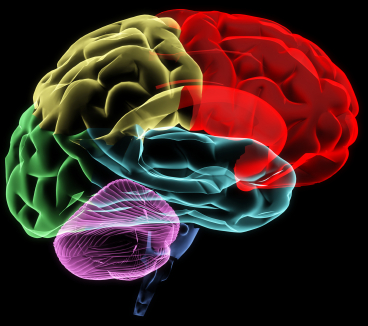
I heard an interesting news segment on NPR today that I thought I would share. Scientists are experimenting with using neurofeedback as a therapy for ADHD- something the speaker referred to as “meditation on steriods.” The feedback is simple, as the aim is condition the brain to remain focused through a reward system.
An individual sits in front of a laptop screen and sensors are connected to the participants brain. The computer software monitors brainwaves. When the brainwaves are calmer and more focused the lap top screen reflects pleasant colors, flowers, and one hears birds singing. This is the positive reward for the calmer and focused brainwaves. When the brain becomes distracted or wanders, the participant will see the flowers wilt and the screen fade to greyish color. I see why the speaker in the NPR segment coined the term “meditation on steroids!”
This form of neurofeedback therapy is a fascinating approach for conditioning the brain. While still early in the development, the development of high-tech software such as this shows that scientists are searching out alternative treatments to ADHD.
Analytic-rumination hypothesis
A client recently brought a very interesting New York time article to my attention, entitled Depression’s Upside. The article considers the evolutionary significance of depression and suggests that depression has positive impacts on people.
A plaguing (but important) element of depression is rumination. While many people’s experience of rumination is negative, Scientists Andrews and Thomson propose that the negative effects of rumination are what allows people to learn from past triggers of sadness. They call this the analytic-rumination hypothesis. Their hypothesis points out that people would learn from situations and events that made them sad if they didn’t ruminate about it. The article states “If depression didn’t exist — if we didn’t react to stress and trauma with endless ruminations — then we would be less likely to solve our predicaments. Wisdom isn’t cheap, and we pay for it with pain.”
I am fascinated by the implications of this hypothesis and the positive angle it takes on pervasive negative thoughts. This hypothesis may be integrated in a CBT fashion in helping clients realize the positive aspects of ruminating and help them move beyond it.
Check out the link to the article above for more information. The article also looks at the effects rumination has on frontal lobe blood flow and attention difficulties. Thank you to my clients who send me news articles!
Tsunami warning in coastal regions of Hawaii is lifted

Photo by Clark Little
While Pacific Quest’s students were nestled in the hills high in Kau and well out of any tsunami danger zones (roughly 1500 feet in elevation), coastal regions in Hawaii today were on high alert. As many followed the news on their computers and televisions many Hawaii residents were forced to evacuate their homes and head for higher ground, relying on radio broadcasts. Luckily the event was not much more than a scare (the above photo is just a cool Hawaii wave). It turned out to be an incredible community building event that actually brought people closer together.
I was awoken to a phone call at 3:15 am this morning from a frantic friend suggesting that I evacuate my house. I live very close to the beach in Hilo, an area particularly prone to tsunami damage. Having visited the Pacific Tsunami Museum on the bay front in Hilo in the past, I new the potential power of the natural phenomenon. Hilo has been struck by tsunamis in 1940’s and 60’s leaving buildings and home completely destroyed. With my adrenaline pumping I threw my valuable belongings in my truck and drove mauka (toward the volcano).
I found a nice view of the bay and backed my truck in next to others who were already parked. We watched the sunrise and talked story as others continued to gather. As the tsunami hour approached more and more people kept coming. The crowd resembled that which one might see at a parade. People were coming down from the volcano to get a better look at the approaching wave. While the wave never really formed, the group enjoyed laughs and stories and it turned out to be a rather nice way to spend a Saturday morning.
For more information on tsunamis visit NOAA Pacific Tsunami warning center. I want to reiterate that the PQ program is well out of harms way of tsunami danger and the students utilized this opportunity to learn more about earth science.
PQ reaching out to Orange County
An article detailing PQ’s “nurturing, supportive, green therapy” approach to helping struggling teens was recently published. The article can be found in the Orange County Register, a local newspaper.
Mark Agosto is leading PQ’s outreach in the area. As a father and active community member, Mark is dedicated to the improving the welfare of the teens in the community. Specialized interventions can help youth navigate tumultuous teenage years.
As the article points out, the model PQ utilizes is not punitive. PQ strives to empower students to take control of their lives by engaging their minds, bodies and emotions.
Visit to Southern France Youth Institute
For many Pacific Quest students, the chance to grow and learn are best continued separate from their home environment. Students enroll in programs and schools around the country and the world. One of these special places is the Southern France Youth Institute in Villeseque sur Corbieres, France. In October, I visited this wonderful school as part of a pleasure trip to France. While SFYI does not consider itself a “therapeutic” school, many students who are exiting therapeutic programs end up here for a transition or “gap” year experience.
My visit was enhanced by the fact that three former Pacific Quest students are currently enrolled at SFYI. Even though it was just the beginning of the semester there (and one student was on a home visit), I sensed that they were in the right place and were going to be successful. With many of the tools that they brought from their Pacific Quest experience, they seemed well-prepared to live in a community atmosphere that requires responsibility, maturity and curiosity. I watched with delight as they rounded up the group for meals, contributed to class discussions and spoke and wrote honestly about their experiences and emtions. When I consider how far these students have come since they first arrived on the PQ land, I am inspired.
Psychology for the Other: Seminar
Announcing the seventh annual Psychology for the Other seminar hosted by the Seattle University psychology department. The seminar focuses on the philosophies of Emmanuel Levinas and the application to psychology, and more specifically psychotherapy. Emmanuel Levinas was a French philosopher who studied under phenomenologists Edmund Husserl and Martin Heidegger. Levinas lived from 1906-1995 and was an important part of the existential-phenomenological movement in France. He inspired great thinkers including Sartre and Merleau-Ponty.
Levinas’ philosophy is unique from that of Husserl and Heidegger, in that he emphasizes the Other as the foundation for ethical responsibility. Husserl, and Heidegger even more dramatically, maintained an egological view on ontology, arguing for Dasein’s concern for his own being. Levinas says I am responsible for the Other without waiting for reciprocity, were I to die for it. Reciprocity is his affair. It is precisely insofar as the relation between the Other and me is not reciprocal that I am subjection to the Other, and I am “subject” essentially in the sense. It is I who support all… The I always has one responsibility more than all the others.” One can see the application of such a unique philosophy to the therapeutic relationship. As clinicians, we are called to responsibility by our clients. Husserl, Heidegger and Levinas all have relevance to the psychology field and their work deserves more attention.
Visit the link above to access further information and abstracts/papers that will be presented on October 24th at the seminar. George Kunz, the founder of the existential-phenomenological psychology program at Seattle University will be moderating, as Levinas has been very infuential in his life.
Another quote I like by Levinas:
“A calling into question of the Same–which annot occur within the egoistic spontaneity of the Same–is brought about by the Other. We name this calling into question of my spontaneity by the presence of the Other ethics. The strangeness of the Other, his irreducibility to the I, to my thoughts and my possessions, is precisely accomplished as a calling into question of my sponteneity as ethics. Metaphysics, transcendence, the welcoming of the Other by the Same, of the Other by Me, is concretely produced as the calling into question of the Same by the Other, that is, as the ethics that accomplishes the critical essence of knowledge.” (Totality and Infinity, 1969, p. 33)
PQ staff vision quest in November
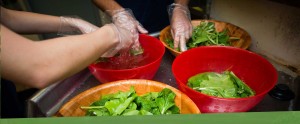
Here is an excerpt from the initial letter we received from guides Joseph LaZenka and Petra Lentz regarding the PQ staff vision quest. We are planning a seven day program that focuses on a three day fast and solo experience.
The letter sent chills up my spine, as I am faced with “the call.” Expect more posts on this topic as there are so many incredible avenues to explore with respect to the solo experience.
Letter 9/09
“We must be willing to let go of the life we have planned so as to have the life that is waiting for us.” Joseph Cambell
For a while now you have been watching the teens you work with prepare and go out for their solos. You have even answered some of their questions and offered your advice. Now the time has come for you to cross over the threshold and enter, empty bellied into the expansive silence of this beautiful island you call home. The time has come for you to move more deeply into the ways you can serve, yourself, the people you love, your work and this mystery we call life. You have heard the call to vision fast! For three days and nights you will find your own way to claim, give voice to and celebrate the gifts that life has instilled within you. We deeply honor how difficult and sometimes frightening it can be to say yes to that which is calling you.
THE GUIDES
Joseph LaZenka; Director, School of Lost Borders
A vision fast guide and trainer since 1986, Joseph joined the Staff of the School in 1993 and co-directed the School with Emerald North from 2001 through 2005. Angelo brings a passionate, dramatic voice to the nurturing of individual character and calling, and a mythic empathy for people, their dreams, and the healing power of nature.
Petra Lentz; Director, Open Sky Journeys
Born and raised in Germany, Petra is a licensed practitioner of naturopathic medicine and shamanic questing in Europe. Her training in the U.S. ranges from the Bear Tribe, founded by Chippewa medicine man, Sun Bear, to the School of Lost Borders and Steven and Meredith Foster. Her work is focused on the Vision Quest, the teaching of the 4 Shields, earth awareness, counseling, healing rituals and nature ceremony. She has led Vision Quests since 1994. What keeps the work most alive for her is the depth of transformation in people that she has witnessed in the years of the work.
Understanding the Milieu
Pacific Quest therapists Mary Beth Coffman, LCSW and Hilary Moses, LCSW presented a “dry run” of the experiential workshop they are offering at the 7th annual Wilderness Symposium in Boulder, CO. The presentation was intriguing. Mary Beth and Hilary addressed the importance of utilizing many sources in weekly treatment planning, including the staff that interact with the students on a daily basis as well as outside sources, including referring professionals, parents, etc. Without giving too much away, the workshop delivered specific tools that are applicable to field instructors’ in-the-moment work with the students. They addressed how the tools enhance the communication between the field staff and therapist, allowing the therapist to gather usable information for planning treatment and collaborating with outside sources. The presentation was creative and interactive, drawing on role plays and audience participation. Well done!
The Wilderness symposium is scheduled for September 11-13, 2009 at Naropa University in Boulder, CO. It is a collaborative event that brings together a diverse range of interested parties including therapists, field instructors, rites of passage guides, referring professionals, students, and professors.
PQ gets good reviews!
Pacific Quest received good reviews from Lon Woodbury, an independent educational consultant. Check out the Visit Report that Lon has published on his website! Lon has visited many therapeutic schools and programs, and is the source of a wealth of information. Visit the Woodbury Reports for more information.
PODCASTS
ScreenStrong Families Podcast: What Happens When You Take Your Teens’s Phone Away?
In this episode, Kellyn Smythe, Admission’s Director for Pacific Quest, unpacks a topic many families are quietly struggling with: screen addiction—and why it’s far more serious than we often assume.
Drawing from his experience working in residential treatment with teens, Kellyn explains how screen use isn’t just a habit—it can become a powerful “process addiction” that impacts the brain in ways similar to substance dependency. Together, they explore how technology is reshaping childhood, replacing real-world connection, and making it harder for kids to develop resilience, identity, and meaningful relationships.
From understanding the difference between normal screen use and true addiction, to what actually happens when you take devices away, this conversation gives parents both clarity and hope. You’ll also hear what withdrawal really looks like, how long it takes for kids to reset, and why boredom might be one of the best things for your child.
Listen to the full conversation:
What Happens When You Take Your Teen’s Phone Away: Understanding Screen Addiction & Withdrawal
The Boost Podcast: Exploring the Depths of Shame with Dr. Rob Gent
In this conversation, Dr. Rob Gent, Chief Clinical Officer at Pacific Quest, discusses the importance of integrating mental health with physical health, emphasizing the role of shame, trauma, and family dynamics in mental well-being.
He shares insights from his work at Pacific Quest, a behavioral health company that focuses on experiential learning and integrative health approaches.
The discussion highlights the need for a shift from traditional treatment models to more holistic family-centered care, aiming to build resilience and a sense of self in young individuals.
Listen to the full conversation:
Exploring the Depths of Shame with Dr. Rob Gent
Defragmenting Mental Health Treatment with Integrative Psychiatry
It’s confusing and sometimes frustrating when you’re dealing with a list of medications for psychiatric conditions and help from various medical and professional resources. What’s working and what’s not?
Dr. Britta Zimmer, a licensed Naturopathic Physician and Chief Medical Officer at Pacific Quest, started the Integrative Treatment Model of blending conventional psychiatry with nature-based interventions and whole person wellness.
In this episode, Dr. Zimmer talks about the benefits of Integrative Psychiatry to optimize an individual’s mental health and treatment plan including the importance of incorporating nutritional supplements, mind-body practices along with a complete diet containing anti-inflammatory foods.
Listen to the full conversation:
Defragmenting Mental Health Treatment with Integrative Psychiatry
Dr. Britta Zimmer on Whole by Design: The Overmedication Crisis in Teen Mental Health
Psychiatric medication can be life-changing, but for some teens, it becomes the only solution offered.
If you or someone you love is on medication but still facing challenges and wondering why, this episode is for you. Discover how a personalized whole-body approach to teen mental health can create more lasting results.
Dr. Britta Zimmer, an expert in integrative psychiatry and Chief Medical Officer at Pacific Quest, shares what happens when mental health care focuses on band-aids instead of the whole person. She explains how trauma, nervous system dysregulation, and environmental factors often go untreated, resulting in cycles of overmedication and frustration.
Listen to the full conversation:
The Over Medication Crisis in Teen Health
PQ Co-Founder on The Wilderness Therapy & Residential Treatment Center Journey Podcast
Pacific Quest Co-Founder Suzanne McKinney shares what wilderness treatment is and why it is important, what is horticultural therapy and why is it effective, what it is like to visit Pacific Quest as a parent, how parents can best prepare their children for transition to residential treatment, and much more.
Listen to the full conversation:
The Wilderness Therapy & Residential Treatment Center Journey PodcastThe Reframe Podcast: The Risk of Playing it Safe
PQ featured on The Reframe Podcast: The Risk of Playing it Safe
Playing it safe is often the go-to move for guardians trying desperately to protect their kids, but this may prove to be a bigger risk than giving them the tools to cope with life’s inevitable challenges.
In this episode of The Reframe Podcast, Dr. Heather Tracy dons the host’s chair and welcomes Kellyn Smythe, the director of admissions at Pacific Quest, to unpack the risks of playing it safe with the emotional well-being of the children we care for. We begin with how the youth landscape has evolved in recent decades, how to cultivate resilience in our kids but in a gentler way, how to rebuild our collective societal trust, and how to improve mental health treatments and protocols for our youth.
Listen to the full conversation:
The Reframe Podcast: The Risk of Playing it Safe
Healing Families in Hawaii with Dr. Britta Zimmer
What does it take to help young people and their families achieve meaningful, lasting healing?
In this thoughtful conversation, Dr. Britta Zimmer, Chief Medical Officer at Pacific Quest, discusses the organization’s integrative approach, combining conventional psychiatry, naturopathic medicine and whole-person wellness within the healing environment of Hawaii.
Tune in to learn how addressing the interconnected physical, emotional and relational aspects of health can help families move forward together.
⠀
Listen to the full conversation:
Healing Families in Hawaii with Dr. Britta Zimmer
Dr. Rob Gent featured on The Trauma Therapist: There’s No Pill for Shame
What if healing begins by confronting the shame we so often try to hide?
In this thought-provoking conversation, Dr. Rob Gent, Chief Clinical Officer at Pacific Quest, joins The Trauma Therapist Podcast to explore why shame cannot be medicated away—and how authentic connection, self-awareness, and compassionate clinical care create the conditions for lasting healing.
Whether you’re a mental health professional or someone on your own healing journey, this is an episode you won’t want to miss.
⠀
Listen to the full conversation:
The Trauma Therapist, There’s No Pill for Shame
PQ featured on Healthy Screen Habits Podcast: Healing Teens Through Connection
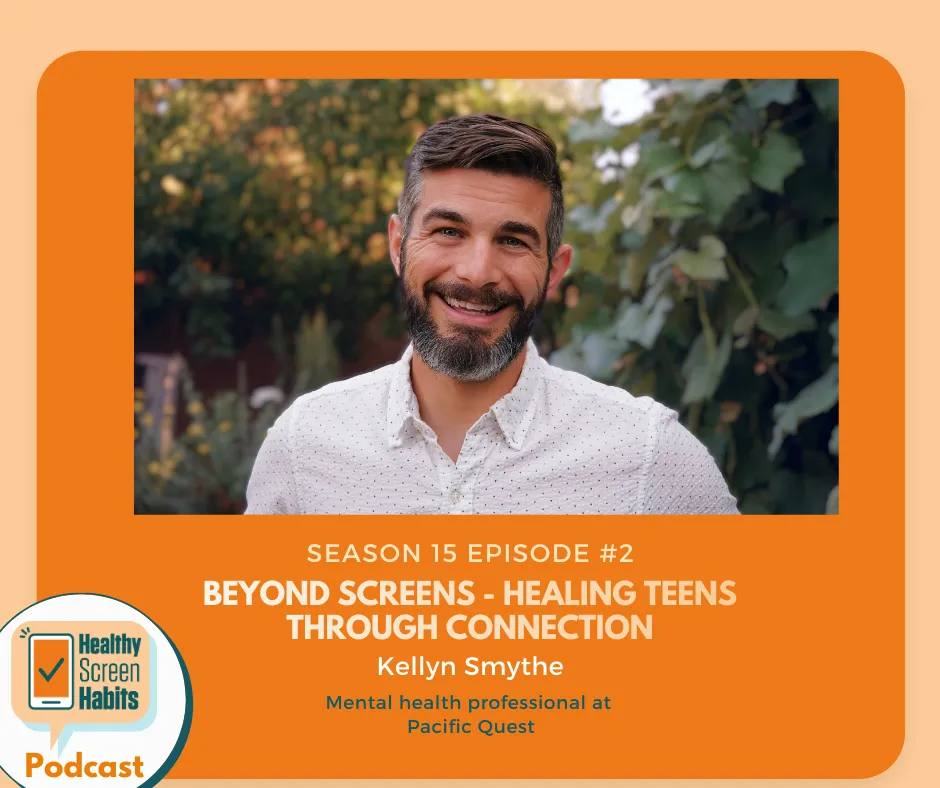
We’re honored to have our very own Kellyn Smythe featured on the Healthy Screen Habits podcast, discussing the power of connection beyond screens.
⠀
“After a few weeks of no technology, we see a huge restoration in sleep, creativity soars, and there’s a deeper sense of feeling connected.” — Kellyn Smythe
⠀
At Pacific Quest, we’ve seen firsthand how stepping away from screens and into real-world experiences — in nature, with peers, and with caring adults — can unlock healing for teens struggling with anxiety, disconnection, and overwhelm.
⠀
This episode digs into ways digital detox + meaningful connection help teens discover themselves and others in more authentic and resilient ways.
⠀
Listen to the full conversation:
https://www.healthyscreenhabits.org/s15-episode-2-beyond-screens-healing-teens-through-connection-kellyn-smythe
VIDEO
New Video Highlights Training
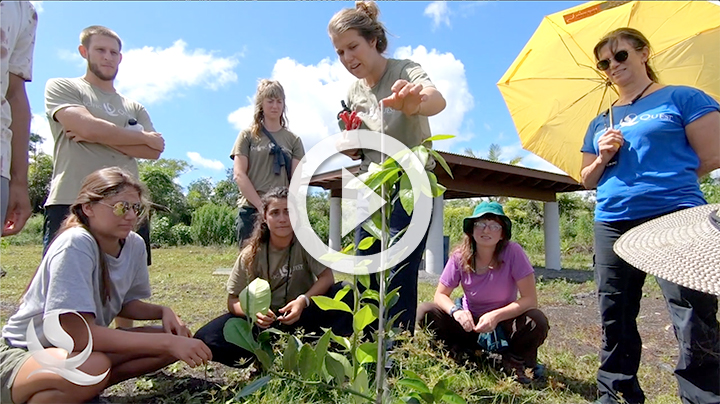
An important aspect of the PQ model is staff development and the opportunity to learn and grow alongside our students.
Staff members recently participated in a company-wide training focused on Horticultural Therapy and Rites of Passage. It was a great opportunity for the team to come together on our new farm property and have time to connect while learning new skills and strategies to work with our students.
One of the main goals was to emphasize the importance of how to incorporate these various lessons and projects into the daily routine with students. PQ Field Therapist Sarah Blechman, MSSW, who helped organize and facilitate the training comments, “The whole day was so engaging! It was abundantly clear the facilitators were authentically passionate about the rich union and incredible effects of the interplay between horticulture, rites of passage and how to facilitate the two using the neurosequential model. My favorite part was when our program guides, managers and therapists all worked together to create our first garden bed in our ethnobotanical garden. Working on such a large project together felt like the whole community was working on a gift for our new farm.”
Many thanks to Nick Vejvoda, Adolescent Field Manager, who made this video!
PQ Announces New Video Library!
By: Sharon Findlay, Admissions & Communication Manager
Pacific Quest is excited to announce our new Video Library for parents, students, and referring professionals! Viewers can easily filter the videos by category and featured staff member. Categories include: Advice for parents, Common Questions, Medical + Wellness Questions, Therapeutic Approach, and Why Pacific Quest. Parents can get to know our team from afar and hear their personal and professional perspectives on what makes Pacific Quest the special and healing place that it is.
With this new video library and new content, we worked hard to anticipate the needs of parents considering Pacific Quest for their child. Videos like “Being so far away, how effective is Pacific Quest at reconnecting the family system?” and “Gardening seems a little soft. How effective can it be?” are just two examples real questions we’ve received. This video library gives parents the opportunity to get candid answers from multiple team members.
 The videos provide new and engaging content, as well as informative visuals for what Pacific Quest looks and feels like. Parents are able to see the many areas of campus from these videos. These resources are accessible to parents and professionals at whatever time of day is most convenient for them to learn more about Pacific Quest and get specific questions answered.
Pacific Quest Video Series: Dr. Robert Voloshin, Integrative Psychiatrist
“Happiness, fulfillment, and joy in everyday life should be the bar we set… instead of taking an extreme view, I strive to take a wise, balanced, and integrative approach.” -Dr. Voloshin
Pacific Quest has an incredible new member of our Clinical and Wellness teams, Dr. Robert Voloshin, Integrative Psychiatrist. Dr. Robert Voloshin is leading the Integrative Psychiatry team at Pacific Quest with the goal of cultivating mental health for our students. The Pacific Quest integrative psychiatric model is unique in its methods of treatment. It combines psychiatric care with naturopathic medicine allowing treatment to be individualized to the needs of each student, achieving a dynamic and comprehensive treatment approach.
Dr. Robert Voloshin: Pacific Quest Integrative Psychiatrist
“Integrative psychiatry is a way of approaching adolescents and young adults from multiple different perspectives. We use the perspectives of modern psychiatry, naturopathic medicine, developmental psychology and family systems to understand the young people and families we work with …”
As a lifelong observer of the human condition, he was innately curious about “what makes us well and what makes us sick.” Through medical school, residency, fellowship and beyond, his training in psychology and psychiatry led him to the conclusion that the origins of our mental health or lack thereof stems from our early years and our family systems, which led to his pursuit of Child and Adolescent Psychiatry. (more…)
Pacific Quest Video Series: Student Testimonial
“Pacific quest changed my life; I realize now that nothing is impossible. With just some water and a seed I can create a whole ecosystem of life. Life at Pacific Quest helped me express my emotions in a positive way. Pacific Quest will change your life, too, if you just let it.” – Pacific Quest student testimonial
Pacific Quest: True To Our Testimonials
Pacific Quest is an internationally-recognized residential wilderness therapy program based in Hawaii that serves struggling teens and young adults from around the world. Our testimonials show just how Pacific Quest goes beyond traditional wilderness therapy programs: by cultivating change through sustainable growth. Our outdoor wilderness therapy and horticulture therapy programs teach sustainable life skills in a clinically innovative and nurturing environment. It helps young people make better choices and live healthier, more productive lives.
The many amazing testimonials from both alumni and their parents point to the pivotal changes made to each and every student who was ready for positive change. The testimonials also speak to the invaluable lessons and experiences students have had that they will take with them for the rest of their lives. Read more incredible testimonials on just how and why Pacific Quest is consistently sought after as the best wilderness therapy program.
The Pacific Quest Program Through Testimonials
“My negative emotions were affecting everyone around me and I was out of control. I didn’t care about life and that was obvious by my behavior. It was a sad and difficult time for me and my family.”
Pacific Quest Video Series: Travis Slagle On Horticulture Therapy
“What I find in horticultural therapy that I couldn’t find when I worked in wilderness therapy, adventure therapy and even ropes courses, was the sense of purpose: A sense of purpose and adventure in creating a more sustainable life.” -Travis Slagle, Horticulture Therapy Director
What is Horticulture Therapy
Horticulture has been used as a therapeutic discipline since ancient times. As far back as 2000 BC in Mesopotamia horticulture was used to calm the senses and around 500 BC, the Persians began creating gardens to “please all of the senses.”
“Horticultural Therapy” is based on an ancient practice and has a relatively new title that combines horticulture and rehabilitation disciplines. It employs plants and gardening activities in therapeutic and rehabilitation activities to improve human wellness, showing tremendous positive results for troubled teens and young adults. However, despite its long use in the fields of physical therapy, psychiatric occupational and recreational rehabilitation, awareness about the efficacy of horticulture therapy is still limited.
Since human beings actually evolved from and in a natural environment, an intrinsic physiologic and psychological positive reaction to nature has developed that is involved in maintaining our homeostasis. As Travis says in his video, “One of the most challenging things in our world today is (more…)
Embrace vulnerability – let ourselves be “deeply” seen! Sounds like Levinas!!
In her presentation (see video link), Dr. Brene Brown shares about her process of coming to understand the role of vulnerability and feeling worthy. Her phenomenological research suggests that shame stems from a place of feeling unworthy, a place of always asking “Am I good enough?” Dr. Brown asserts that feeling worthy grows from courage, compassion, connection, and embracing vulnerability. Vulnerability she maintains is the willingness to do something with no guaranteed outcome, to take emotional risks.
Dr. Brown highlights that our adult population is the most” in-debt, obese, addicted, and medicated cohort in US history.” She points out that we consistently numb ourselves as a means of covering up our vulnerabilities. Her argument asserts that we need to do just the opposite – that we “need to let ourselves be seen, deeply seen.” By this she appears to be referring to our need to become more emotionally vulnerable. We need to let go of who we should be in other peoples eyes and be who we truly are. We need to be honest with ourselves about our emotions and those around us.
Dr. Brown’s message of being “deeply seen” seems very much akin to Emmanuel Levinas’ philosophical stance. Emmanuel Levinas emphasizes the importance of the “face of the other” in relationship. Levinas says “The skin of the face is that which stays most naked, most destitute. It is the most naked, though with a decent nudity. It is the most destitute also: there is an essential poverty in the face; the proof of this is that one tries to mask this poverty by putting on poses, by taking on a countenance.” (Ethics and Infinity 85-86) Levinas suggests that the face is a portal to the true self, that it is precisely the nakedness of the face that allows two people to connect.
Interview with Dr. Viktor Frankl
** This video belongs to logotherapy.univie.ac.at **
Viktor Frankl (1905-1997) has influenced the lives of many through his famous book Man’s Search for Meaning. The book begins with Frankl’s first hand account of surviving several holocaust concentration camps. Frankl’s “logotherapy,” stems from his experience, emphasizing that a person’s ultimate freedom does not lie within others hands or situations at large, but within the individual him/her self. The ultimate choice is one of attitude. On page 104 Frankl says “Everything can be taken from a man but…the last of the human freedoms- to choose one’s attitude in any given set of circumstances, to choose one’s own way.” (Frankl, 104)
Frankl’s work has important implications for psychotherapy. I utilize the book with many of the students I work with. Students are often struck by the sheer power in Frankl’s story. Many are inspired by his existential approach and contemplate their individual ability to stand into life’s challenges. Frankl says “When we are no longer able to change a situation, we are challenged to change ourselves.” I like quote because it highlights that one should first try to change ones “situation.” This could be as simple as changing ones diet or exercise routine. For others, their situation is such that it cannot be changed. Imagine the individual who suffers from paralysis (as Frankl discusses in the interview). This individual can only change himself.
BLOGS
15 Honu Teach Students the Art of Being ‘Chill’
By Anthony Florig
Today we had three young adult students attend a record-breaking outing to the various beach parks of Keaukaha in Hilo. Never before on an outing have we had so many turtle sightings; 15 in all!
The Hawaiian Green Sea Turtle, or honu, is the largest hard-shelled turtle in the world. They grow over 4 feet long and can weigh over 300 lbs. They were hunted close to extinction but have been a protected endangered species since 1973, and the population has been on the rise ever since.
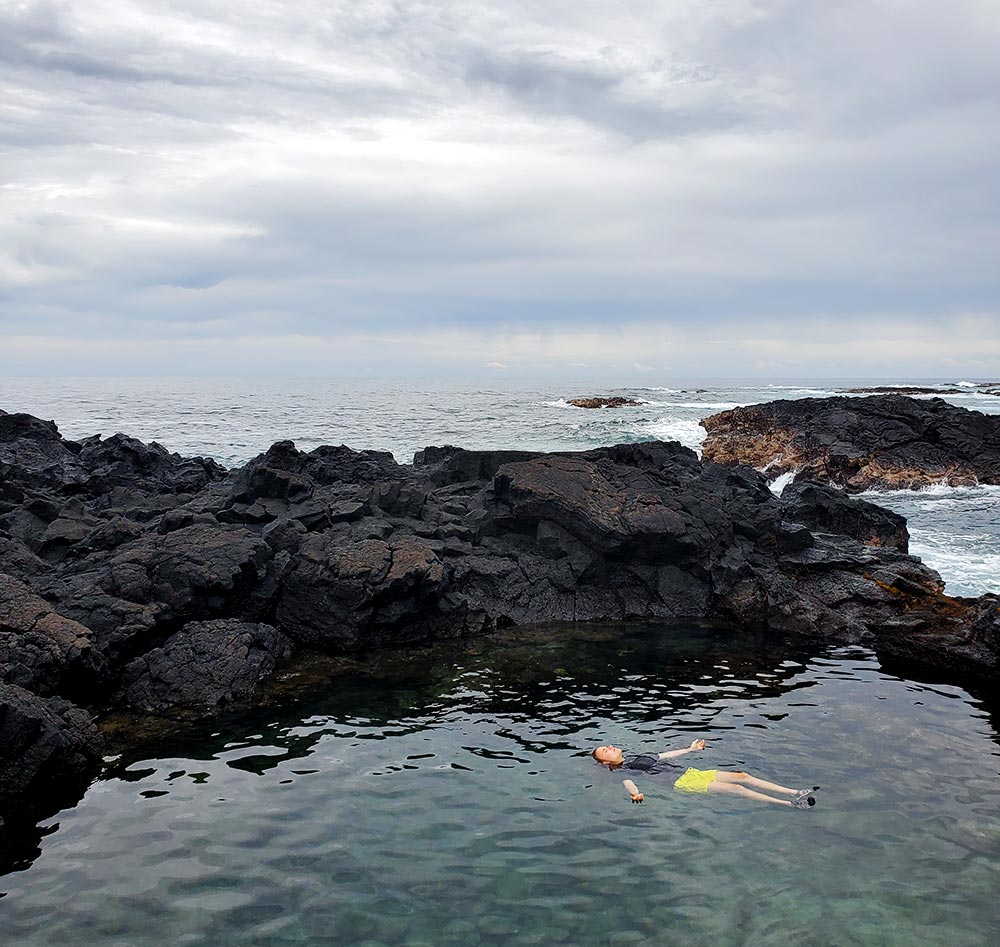
We learned some valuable lessons from these turtles today, most importantly how to relax. There always seems to be so much going on in the world, and we all need to rush around every day from this to that, making sure we are all doing all the things. Well, not the Honu. The students remarked how “chill” they were.
We observed them casually floating around blissfully in the shallows, or better yet sprawled out and basking in the Sun. We tried to copy their behavior and adopt their laissez-faire attitude. After talking about it, we realized we would only want to be a sea turtle for a day or two, then we would probably get bored.
We trekked along an outcropping of lava rocks to a secret remote tide pool known as the mermaid pool. We floated. We embodied the chill vibes of the Honu while we could. We soaked up the Sun and the salt while it lasted, before having to return to our normal responsibilities.
Over lunch we talked about transition. What comes next? What happens after Pacific Quest? What are my responsibilities when I leave? We can’t just all float in tide pools all day like giant turtles. But, it sure does seem like a good idea to embody the honu every once in awhile… I might go so far as to say that it is our responsibility to do so.
Voting Counts at Pacific Quest!
With motivation “to have a voice and participate in our civic duty” Pacific Quest students successfully cast their votes in this year’s election.
With the support of therapist Sarah Blechman, students actively explored what voting means to them and learned how to obtain and properly complete their mail-in ballots.
Using Vote 4-11, students explored the candidates, their position on policies, and also made inquiries about the ballot initiatives. After completing their ballots, they tracked its progress. When ballots successfully arrived, the students celebrated with each other.
“By voting, our students are using their voice and contributing to the power of the electorate—something greater than themselves,” said Blechman, who supported students through the six-week process. She views voting as an important rite of passage.
“Being informed about the steps in the process helped them to take action. It was especially gratifying to see many of our students voting for the first time.”
Highlights from Hawaii Doc Talks
By: Dr. Britta Zimmer
I recently had the opportunity to attend the annual Hawaii Doc Talks conference to immerse myself in the most up to date research and science in primary care integrative health. This Hawaii Doc Talks conference was conceived of in 2014 to address the need for continuing education requirements to be met by physicians in Hawai’i. In an attempt to disrupt the prevailing PowerPoint paradigm, the conference is modeled after TED Talks – 25-minute presentations meant to engage and inspire, beyond simply educating. One of the big perks and draws of this conference, held annually in January, is that this conference attracts some of the best doctors from around the country who want to present and/ or get their continuing education credits in beautiful, warm Hawaii during the winter.
This conference feels like a multi-sensory playground for me, there is a tremendous amount to learn and do with experts in my field. Last year, I was selected to present twice at this conference therefore this year felt more relaxing as I was there solely to learn and reunite with colleagues. Some topics included a discussion on how mental health is imperative to physical health and how they are married and inspiring to one another. This presentation boosted the understanding of current evidence-based care to explore the future of mental health diagnostics and treatment.
Chronic neurological conditions were also the main topic of this conference with extensive presentations on the latest in research pertaining to dementia, Alzheimer’s disease, Parkinson’s disease, Multiple Sclerosis, and general cognitive decline. The protocols and research for these neurological conditions coincide with what we know pertaining to attention deficit disorder. How brain inflammation and particular practices set up a cascade of events to increase the risk for these neurologic diseases as well as impede positive treatment outcomes.
One of the many take-home points which I would like to share with you is dementia (and ADHD) risks of oral diphenhydramine (Benadryl) use. Chronic use of this class of medications and other anticholinergic sleep aids leads to increased progression and risk of diseases associated with cognitive decline. Diphenhydramine is critical in allergy medicine but if this medication is prescribed chronically for anxiety and/or sleep this research needs to be heeded.
Coupland CAC, Moore M, Hippisley-Cox J. Association of Anticholinergic Drug Exposure With Increased Occurrence of Dementia—Reply. JAMA Intern Med. 2019;179(12):1730–1731. DOI:10.1001/jamainternmed.2019.4908
Stella F, Radanovic M, Balthazar ML, Canineu PR, de Souza LC, Forlenza OV. Neuropsychiatric symptoms in the prodromal stages of dementia. Curr Opin Psychiatry. 2014;27(3):230-235.
Big Island Adventures!
Pacific Quest Young Adult students recently visited OK Farms in Hilo, where they assisted in transplanting Mamaki and coffee plants. The historic OK Farms is over 1,000 acres and is home to amazing waterfalls and exotic fruit varieties.
After lending a helping hand on the farm, students enjoyed lunch by a scenic waterfall and then returned to Reeds Bay to enjoy some time playing in the ocean! The group launched kayaks and SUPs from the ice ponds and paddled around Hilo Bay, taking in the beautiful scenery!
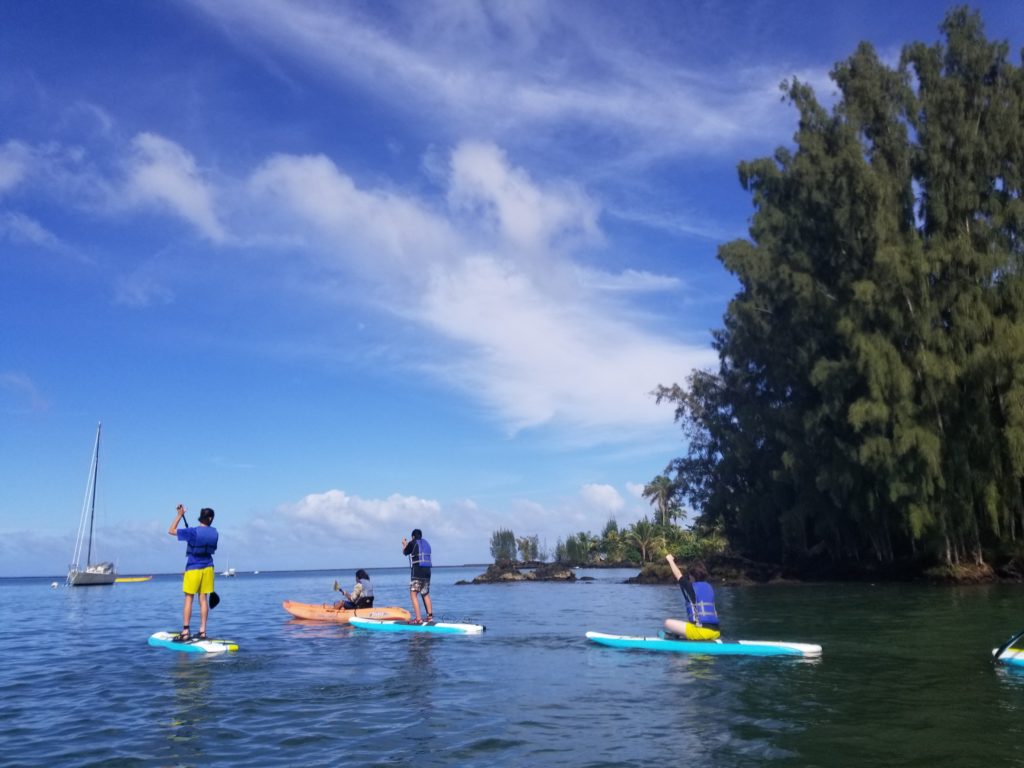
Staff Training at the Farm!
Last week Pacific Quest staff members participated in a company-wide training focused on Horticultural Therapy and Rites of Passage. It was a great opportunity for the team to come together on our new farm property and have time to connect while learning new skills and strategies to work with our students.

The training began with an introduction to the Four Shields and the Neurosequential Model of Therapeutics that’s utilized at Pacific Quest and an integral part of our program. After the intro, the team divided up and spent the morning at various “stations” that focused on different learning objectives. Staff members had the option of picking which workshop they wanted to participate in. Some of the options included: Meditation & Mandala workshop, Cordage and Ti lei making, medicine walk and planting skills, soil & compost, and hard project skills & “imagineering”.
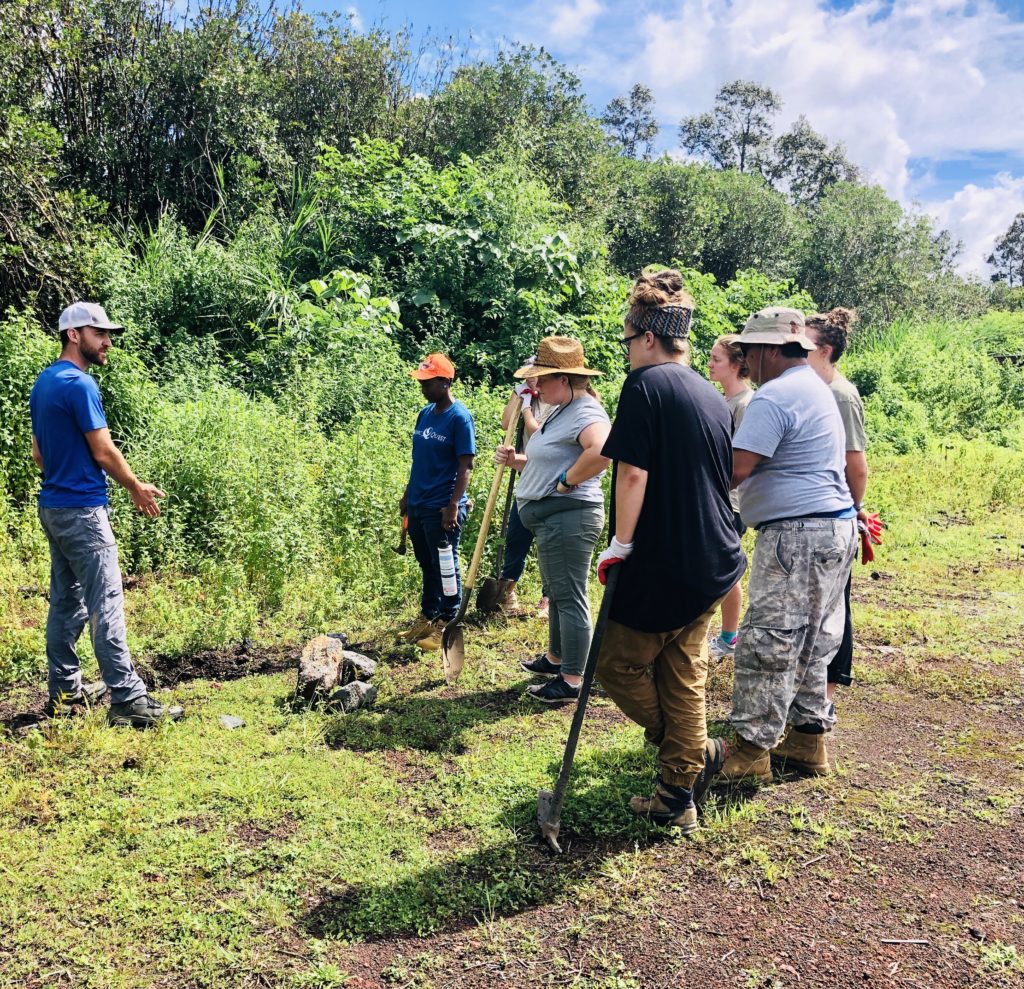
One of the main goals was to emphasize the importance of how to incorporate these various lessons and projects into the daily routine with students. PQ Field Therapist Sarah Blechman, who helped organize and facilitate the training comments, “The whole day was so engaging! It was abundantly clear the facilitators were authentically passionate about the rich union and incredible effects of the interplay between horticulture, rites of passage and how to facilitate the two using the neurosequential model. My favorite part was when our program guides, managers and therapists all worked together to create our first garden bed in our ethnobotanical garden. Working on such a large project together felt like the whole community was working on a gift for our new farm.”
Planting seeds of Horticulture Therapy in the Community
Kumu Carrie’s 6th grade class gathered at 8am for their usual attendance, announcements, and oli to start off their Ho’okele class. However, today there was a change in scenery. The desks were pushed aside and in the middle of the room lay a tray of soil, bunches of mint and oregano cuttings, and an assortment of plants, seeds, and books on therapeutic horticulture. Kumu Carrie invited me to be a guest speaker for her class on the benefits of nature and the topic of therapeutic horticulture, and it was a pleasure to rearrange the classroom.
The students wasted no time noticing, commenting, and examining the plants. The observed some to smell good or bad, some were fuzzy or dry, and some they thought were pretty or ugly. We all started by sharing a little bit about our history with gardening, and shifted into a deeper exploration into our senses by exploring the mint and mexican oregano. I then taught the students the basics of the Neurosequential Model of Therapeutics (NMT Model) and discussed how they could use their senses to help ground themselves and regulate their nervous systems. They were excited to share stories of what the herbs reminded them of, take nibbles of the leaves, and some students even shared their experiences with essential oils in helping to calm their emotions.
Next the students were given a basil seed to hold in their hands. They were told to watch and see what happens as a few drops of water were added to the seed. The student gave voice to their uncertainty by saying, “What’s going to happen?… Is it going to explode?…Is it going to be ok?… It looks like it’s getting fluffy!” Students were able to relate to how sometimes in life it can be hard to sit in uncertainty while other students said they love suspense and mystery.
The students proceeded to plant the basil seeds, digging their hands in the soil. The students all showed each other their dirty fingernails and learned about the microbes that have coevolved with humans and live in the soil. Students learned that when these microbes interact with our hands, they can release endorphins in our brains. One student inquisitively asked, “What are endorphins?” The class was astonished to learn that these chemicals in their brains help them feel good.
Last but not least, the students were given the chance to label their seeds. Giggles were heard across the room as newly planted seeds were being named, and worms were being unearthed in the soil bin. Soon ‘Wormy’ was the talk of the classroom, and everyone was huddled around the soil bin searching for worms to add to their pots of soil and seeds.
After the most extensive worm hunt by 6th graders of 2019, the class circled up and recited a Mahalo oli and the class was dismissed. The energy of the students was palpable as they were buzzing about their new plants, talking about gardening, and discussing how they were going to take care of their new seeds.
Thank you very much to Kumu Carrie for inviting us into your classroom and gifting us with an opportunity to share the joy and healing powers of gardening. Mahalo nui loa.
HIP Agriculture Receives Award from PQ Foundation
Pacific Quest Foundation helps to steward a healthy island community by contributing to existing 501(c)(3) organizations on Hawai’i. Over the years since our founding, Pacific Quest has developed relationships with over 60 local non-profit organizations through donations from our company, employees and clients. The PQ Foundation was created to continue this tradition of stewardship.
The Pacific Quest Foundation has recently awarded a grant to the HIP Agriculture High School Mentorship and Apprenticeship Program. We had the opportunity to interview Dash Kuhr, the Executive Director and Lead Educator at HIP Agriculture to learn more about this incredible program and how they are influencing the Big Island community.
Can you tell me a little about HIP’s background info and how it got started?
We have two locations in Kapaau (northern part of the Big Island) the Halawa Campus which serves as the headquarters of HIP Agriculture and includes staff housing, classroom, office, design studio, and library as well as student kitchen, outdoor showers, community stage and outdoor classroom. We also have the ʻIole Garden, which is the main pacific-style agroforestry garden, where students have the opportunity to study a more traditional indigenous system of agriculture.
HIP was founded in Spring 2011 and has been growing since! We now have a team of eight adults we can financially support and a seasonal 6 week internship program. The foundation of our program is based on the 3 pillars:
Youth education
Farmer training
Community outreach
HIP Agriculture is “Committed to educating and empowering the next generation of young farmers, The Hawai’i Institute of Pacific Agriculture offers a variety of programs designed to engage Hawai’i’s youth in sustainable agriculture, land stewardship, and healthy lifestyles.”
What are some of the projects and programs HIP is currently working on? How many students do you all work with?
We serve about 1,000 students, offering field trips, after school programs and in-class presentations. We work with Kohala elementary school, as well as middle school and high school students from Honokaa, Waimea, and Waikoloa. For the elementary and middle school students, we bring workshops and activities to supplement their science curriculum – compost and micro-organisms, pollinators and beekeeping, nutrition and cooking from the garden, and native Hawaiian plants – identification and their uses.
Middle school students have classes on plant propagation, traditional lashing, seed saving and mycology. High school students have classes in advanced plant propagation, ecosystem dynamics, advanced beekeeping and advanced mycology.
Our high school mentorship and apprenticeship program has 23 students. The students assist in preparing and planting the fields, laying out irrigation, fertilizing and maintenance. They learn a variety of hands on skills – including compost, harvesting protocol, fertilizer management, soil testing, ph testing, soil work, observation, and recording notes and data. We have an apprenticeship program over the summer which provides a paid educational stipend.
Future goals of HIP and how can people help?
Our goal is to create a hui network of farmers to supply food to the local cafeterias. We are also honing our curriculum so this program can be utilized in other locations. In addition, we host volunteer days and always need help! We will have the Kohala Aina Festival in October and special events including Farm to Table and Full Moon gatherings.
Ultramarathon Fundraiser: Helping Hawaii
Mark Agosto and Mike Sullivan
Many of you continue to reach out and share your concern about the people of Hawaii being affected by the Kilauea volcano eruption. While Pacific Quest is far from danger and unaffected by the volcano, our wonderful community in the Puna District have lost their homes and been displaced (the total number of homes consumed by lava exceeds 600!). Relief efforts are in full effect, and we want to help!
Alumni and Family Services Director Mike Sullivan, and Co-Executive Director Mark Agosto are racing a 120 mile ultramarathon in August, and have dedicated their training efforts and racing prowess to help the people of Hawaii. They have created the fundraiser: Helping Hawaii, and can be accessed by clicking the following link: Ultramarathon Fundraiser: Helping Hawaii.
“Racing for a cause” gives meaning to training and racing, and as Mike and Mark have witnessed the devastation happening in Puna, they became passionate about creating a fundraising goal. Please consider visiting their fundraiser page to read more about their ultramarathon endeavor or to donate. And be sure to follow us on Facebook and Instagram from August 14-19, as they will be posting photos and stories from the six day race course (yes, that is six days of running through the Colorado mountains)!
Pacific Quest Foundation Helps With Disaster Relief in Puna
As we are sure you are all now aware, there are many families who have been displaced by the current lava flow in the Puna district of Hawai’i. While this area of the island is well removed from Pacific Quest programs, PQ and The Foundation are committed to stewarding a healthy island community.
Building project in Puna
At Pacific Quest we teach that the foundation of any healthy community or family system is safe shelter and healthy food. We recently held a campaign where 100% of donations made to The Pacific Quest Foundation went to disaster relief for the residents affected by the volcanic activity.
Thanks to many generous donations we have been able to donate $11,000 to the continuing efforts to rehouse families and individuals displaced by lava!
These projects include building longer term shelter options that will house families out of tents and out of the rain while the state and federal governments continue to work on relief and long term housing and community development plans.
Additionally, these funds will help reunite evacuees with family members who can house them, where travel costs have been prohibitive.
Now we are working on the project of getting children back to school.
There are many school children and teachers who have been displaced by the lava and in some cases have lost everything. The loss of houses is now over 700. One school has lost all access to their facilities, while another is looking to address the mental health issues and trauma that is effecting the school population directly and indirectly in the shadow of this event.
Current fundraising will go to rental assistance to ensure the first school is housed for the year, as well as to developing and sustaining additional therapeutic services in the other.
We have already raised over $4000 through a peer to peer campaign and sponsorship for a long distance run our Executive Director and Alumni and Family Service Director will be completing in August.
If you missed our first campaign or would like to make an additional donation to this cause, we thank you!
The Green Will Conservancy Receives Award from Pacific Quest Foundation
Pacific Quest Foundation helps to steward a healthy island community by contributing to existing 501(c)(3) organizations on Hawai’i. Over the years since our founding, Pacific Quest has developed relationships with over 60 local non-profit organizations through donations from our company, employees and clients. The PQ Foundation was created to continue this tradition of stewardship.
 The Pacific Quest Foundation has awarded a grant to the Green Will Conservancy that will help to ensure their summer youth trip is a success.
We recently had the opportunity to interview Laura Dvorak, who is an MSW student and the Outreach & Fundraising Coordinator for the Green Will Conservancy to learn more about this incredible program and how they are influencing the Big Island community.
Can you tell me about the Green Will Conservancy’s background founding?
Green Will is the legacy project of four Hawaii island based social workers and was first envisioned 10 years ago. Frank Capatch, LCSW is the Program Director.
GWC’s Friendship House and Lava Tree Lodge are based upon the Social Work Settlement House traditions.
Friendship House hosts the hands-on Green Will Conservancy Programs for youth and families and meetings to address cross-training, peer review, and “train the trainer” learning community needs.
The Professional Settlement House community has maintained a core of full time residents averaging four to five non-related social work professional members. They share the same community organizational interest along with an ongoing coterie of interns and visiting professionals, small group conference attendees and onsite researchers.
Both Lava Tree Lodge and The Zoar Valley Sanctuary locations have been actively engaged in support of restoration of indigenous peoples rights and culture. We support a wide range of human service/social work activities. We also do work to preserve and enhance the flora and fauna of both locations and implement invasive species management. Special focus has been on aesthetics and preservation of the physical natural environment in both locations. Architecture and construction has been sensitive to ensure least destructive impact on environment.
Lava Tree Lodge Hawaii retreat consists of approximately ten acres located in the Puna rainforest of rural Hawaii. The retreat preserves both a high degree of native plant and animal life. At least 50% of the property has been sustained in a natural rainforest state. The remaining area of the property is planted with a large diversity of native and non-native plants, tropical fruit trees, shrubs and vines and landscaped with vegetable and meditation gardens.
What are some of the projects and programs the Green Will Conservancy is currently working on? How many students do you all work with?
Hui Mana’o is the pre-vocational teen leadership program of The Green Will Conservancy. We meet every Sunday for four hours and have attendance of five to eight teenage students on any given week. The focus is on exercise, gardening, technological skills, expressive arts, culinary skills, cultivation of emotional intelligence, and substance abuse prevention. Youth who qualify are also welcome to support our Saturday keiki program by providing role modeling for the younger children, and gain valuable leadership experience. All programs are supervised by licensed mental health professionals. Teens are offered a nominal stipend to attend the Sunday group and also to support the keiki (children’s) program on Saturdays.
GWC facilitates EMDR (Eye Movement Desensitization and Reprocessing) training of mental health professionals, including therapists from private programs and school-based counselors from the Hawaii Department of Education. This program seeks to target individuals and families of diverse ethnic and cultural backgrounds, focuses a special emphasis on those who are at risk of environmental, economic and social marginalization. We will provide international level continuing education for the community professionals who provide health, educational and mental health services to them.
GWC also manages an online professional institute, which supports global awareness of our program models and resources and seeks to inspire replication and innovation. (https://thegreenwill.org/category/inst/). Our design and implementation reflects a generalizable demonstration program based on onsite/ online learning systems, community organization, ecological system models and neurologically based trauma informed/capable care approaches.
The Green Will Conservancy reflects models for replication and the summer teen program is no exception. Public policy makers will naturally replicate these small-scale models as they demonstrate their utility and as the awareness of the impacts of non-sustainable practices become more evident. Education, mental health and social work systems are adapting new neurologically based, social-ecological treatment models that are addressing the trauma and resiliency needs of the 21st century.
What is the Green Will Conservancy’s 2018 Summer Youth Program and what impact does this program have on the youth?
Our summer program takes up to 5 youth to our summer camp in the Zoar Valley Sanctuary in Western New York state for up to two weeks with program mentors for a rite of passage experience using EMDR and environmental therapy. Selected youth from Polynesia are matched with youth from the Iroquois Nation, inner city Buffalo NY, and NE Ohio. Under LCSW and Qualified Mentors support, our “Kupuna” elders are selected from all those locations and from Hawaii and offer moral leadership, augment programming and provide direct support.
Future goals of Green Will Conservancy and how can people help?
The Puna region of Hawai’i Island is facing unprecedented ecological, social and economic upheaval as continuous eruptions from one of the world’s most active volcanoes (Kīlauea) are forcing thousands of residents to evacuate.
One of the only non-profit mental health agencies in the immediate area is The Green Will Conservancy, Inc. GWC is a 501(c)3 charitable, educational organization based in Nanawale Estates, which is closely neighboring Leilani Estates, Lanipuna Gardens and Kapoho, where to date, several hundred acres of land has been covered by lava (and hundreds more scorched by heat and gases).
The mental health practitioners within GWC specialize in trauma-capable and critical incident care such as EMDR (Eye Movement Desensitization and Reprocessing). GWC is navigating the innumerable changes their agency faces with many clients (most of whom are Medicaid recipients) now dislocated and uncertain of their futures, immediate or otherwise. Psychotherapists from the agency are currently working in shelters treating evacuees, many of whom have lost everything. The agency held strong in the face of previous years’ events, and is continuing to do so in the face of this current eruption.
If you would like to contribute, your donation will grow the capacity of this generous group of trained therapists and interns, to join the network of those providing counseling and other mental health services to affected residents and first responders in these very trying times. There is a wider community of trained EMDR therapists on the island as well, who are available to step in as local resources are exhausted.
Our goal is to be able to provide short and long term psychotherapy to those who need it, free of charge and regardless of insurance status or proof of it (which can be challenging when living moment to moment in a shelter).
$10,000 will provide over 200 people in shelters with critical incident professional psychotherapy, and allow the Green Will Conservancy to operate their weekly keiki and teen programming. youcaring.com/mentalhealth4puna
Mahalo (appreciation) for your kōkua (support)!
Sandalwood Restoration Project on the Slopes of Mauna Kea
A group of Young Adult students recently had the opportunity to assist with a Sandalwood Restoration project on the slopes of Mauna Kea. After departing Reeds Bay, the group took a scenic drive to meet the Hawaii Volcanoes National Park rangers at the restoration site. The rangers explained the importance of this project and the need to plant native Sandalwood to regenerate the forest and help maintain the root system of this region.
Students were given instructions and tools and worked alongside the rangers, digging holes and planting “keiki” sandalwood trees. It was important to find a moist area in the soil, dig a small hole and then plug in the baby plant. Finding a nice, water-fed area was essential to ensure the small plants will grow.
Planting baby Sandalwood trees on slopes of Mauna Kea
A few of the students were a bit apprehensive at first, as this was a new project – but the rangers were patient and compassionate and able to help students to provide extra support to the group. Before long, students were excited to get their hands dirty and help out! It was a beautiful day and from the higher elevation, the group had a an incredible view of Haleakala – the volcano on Maui as well as the Kohala mountains and Mauna Loa. At this higher elevation there were a variety of different flowers, including the Hawaiian Rose, which provided insight into how diverse the Big Island landscape is.
Pacific Quest is committed to community stewardship and the ability to “give back”. We believe empowering young adults to be active participants in community service promotes positive and meaningful engagement in society. This is an ongoing project and Pacific Quest students will continue to offer support on a monthly basis towards rebuilding this ecosystem.
The Pacific Quest Foundation also provides financial support to the Sandalwood Reforestation project. Grants such as these are made possible by the generous donations of Pacific Quest and Pacific Quest Foundation families, friends and supporters.
Horticultural Therapy Training Day
By: Isabel Holmes, Academic Coordinator
This month Pacific Quest will host two company wide Horticultural Therapy trainings. Last week, over 40 staff members gathered at Reed’s Bay for the first training. We were able to utilize the full campus and make the most of our garden experiences for staff and the land. The day included plenty of high-energy horticulture-themed games and scavenger hunts to help people across departments and programs get to know one another and get excited about the land.
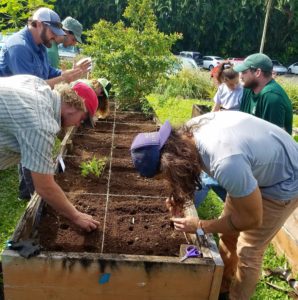
Square foot gardening at Reeds Bay
Expert facilitators who have extensive experience in the field, led lessons on everything from how to care for a tree and how to treat a seed to the science of compost and a practical approach to the square-foot gardening technique. There were also quieter break-out sessions during which Travis Slagle, Horticultural Therapy Director, shared his expertise and experience with everyone and his team of clinicians worked closely with small groups on how to lead horticultural therapy activities and manage student needs. Travis comments, “At PQ, we believe the greatest thing we can grow in a garden is a genuine curiosity about life, and a deeper awareness of ourselves and our relationship with the environment. The beauty of this training is the opportunity for all direct care staff at PQ to come together to learn and practice experiential methods that integrate horticultural activity with the most current evidence based practices and research from the Neurosequential Model of Therapeutics (NMT). By participating in this training, therapists and guides join a growing movement in nature assisted therapies that goes beyond the hiking and survival approach of traditional wilderness therapy.”
New this year were the Learning Passports, a compilation of worksheets containing thoughtful questions about each lesson so that participants could take notes, cement their new knowledge, and begin to plan ways to take that knowledge and experience forward to our students. After a delicious lunch, the group rotated through regulating activity stations, learning to make cordage, practicing their drumming skills while learning about the regulating capabilities of bilateral movement, and learning about the Hawaiian concept of “Ha” meaning breath.
 The experience culminated in a speed-dating style activity where participants prepared a brief pitch to convince a hesitant student to join them and learn something new about the garden. The group rotated round-robin style through two lines, counting how many colleagues they could convince to join their lesson!
The day concluded in handing out completion certificates, which everyone greatly appreciated. There were many thank-yous and positive responses to the organization and thoughtful content of the day, as well as much gratitude for our energetic facilitators! We look forward to the second training this week!
Spreading Aloha to Victims of Hurricane Harvey
By: Kellyn Smythe, Admissions & Outreach Manager
This week Pacific Quest’s Executive Director Mark Agosto and I traveled to Houston to share the aloha spirit with victims of Hurricane Harvey. With support from the team at Academic Answers, needs like diapers, mattresses, food, refrigerators, clothing, bedding, and a full set of new kitchen appliances were identified and fulfilled. However, in a whirlwind of shopping, moving, organizing, and delivering, it became clear that the Aloha Spirit was already there. This community has rallied to support each other in the face of a devastating natural disaster. In the wake of gutted homes, flooded cars, and soggy photo-albums, a sea of smiles and busy hands are wringing out the dampness and putting lives back together. The task ahead is daunting, but the seeds of recovery are being sown in the gulf. PQ is honored to be a part of that effort and plant a few seeds or our own.
PQ Announces New Video Library!
By: Sharon Findlay, Admissions & Communication Manager
Pacific Quest is excited to announce our new Video Library for parents, students, and referring professionals! Viewers can easily filter the videos by category and featured staff member. Categories include: Advice for parents, Common Questions, Medical + Wellness Questions, Therapeutic Approach, and Why Pacific Quest. Parents can get to know our team from afar and hear their personal and professional perspectives on what makes Pacific Quest the special and healing place that it is.
With this new video library and new content, we worked hard to anticipate the needs of parents considering Pacific Quest for their child. Videos like “Being so far away, how effective is Pacific Quest at reconnecting the family system?” and “Gardening seems a little soft. How effective can it be?” are just two examples real questions we’ve received. This video library gives parents the opportunity to get candid answers from multiple team members.
The videos provide new and engaging content, as well as informative visuals for what Pacific Quest looks and feels like. Parents are able to see the many areas of campus from these videos. These resources are accessible to parents and professionals at whatever time of day is most convenient for them to learn more about Pacific Quest and get specific questions answered.
Pacific Quest to Donate a Portion of Profits to PQ Foundation
We are pleased to announce that Pacific Quest will now be donating a minimum of 1% of our profits annually to the Pacific Quest Foundation, a 501(c)(3) public charity whose mission is to support the Hawaii County community and its existing non-profit organizations.
Pacific Quest was founded in 2004 and over the years we have developed relationships with more than 60 different local non-profit organizations through donations from our company, its employees and its clients. With the generous support and donations from alumni, families, community members and businesses, we are excited to continue our tradition of stewardship within the Big Island community.
Martha Bouchard, PQ Foundation Director, reflected on this decision to donate profits to the foundation, “It is essential to our mission to both be sustainable and in right relationship with the community in which we work and in which Pacific Quest has built such life changing programming for students. This has to go beyond the community service that our staff and students do. For us, being able to increase our capacity to give back to the island by helping to fund organizations that are the heart and soul of our local communities is a direct reflection of that commitment.” Donations to the foundation help to fund the organizations that sustain our island’s diverse communities, which benefit both residents and visitors alike.
Pacific Quest Foundation will begin accepting applications in Fall 2017. Requests will be considered from Hawaii Island based non-profit organizations in four general categories, including:
- community or public service
- environmental issues
- health and education
- youth and senior citizens
For more information on how to help support the Pacific Quest Foundation, please visit:
How does living near a volcano fit into Recovery?
By: Mark White, LPC – CDC II
Primary Therapist
Kuleana – Hawaiian for ‘personal responsibility’
Kuleana is also the name of the second phase of the Pacific Quest (PQ) Young Adult Program. This powerful experience challenges students to dig deep and take charge of their individual (and group) process each and every day. The Kuleana Camp is located not far from the slopes of a volcano near the southernmost point in the United States – meaning that there are few external distractions for students access – except the resources within themselves.
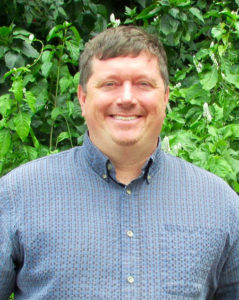
Mark White, Primary Therapist
Having worked in the field of addiction treatment for many years, I understand that internal motivation for change is needed for students to implement and sustain lifestyle change(s) over time. Moreover to really provide the best opportunity for these changes to ‘take root’ is for the student to develop strong ownership and/or personal investment in the change(s) they are committing to.
This is a different dynamic than simply telling the therapist what the student thinks we want to hear, or coming up with a great story to tell mom and dad. Kuleana demands student investment in the form of action. Simply put, if the garden isn’t tended it will die – there’s no running over to Home Depot to grab some more plants. Talking about taking responsibility is simply not enough. Success of the community is 100% dependent on student actions in this phase.
In turn our treatment team has the opportunity to challenge students to contemplate how to take Kuleana for their own Recovery, as this process is also 100% dependent on themselves. For we know that time passes quickly and soon enough students will no longer be living by the sea near a volcano. They will be at school, at work, with family or adventuring alone in life. As a licensed professional counselor and certified chemical dependency counselor who’s worked with hundreds of youth in treatment since 1999, I’ve very aware that I won’t be around to help them with their choices in-the-moment. I also know that mom and dad won’t be able to make choices for them either.
That being said, the good news is that PQ students can have Kuleana and are able to harvest this powerful resource at anytime/anyplace to choose to further their Recovery. Once they’ve found this power within themselves no one can take it away – it is truly the fertile soil for lasting life change.
PQ Partners with All One Ocean Nonprofit
By: Katie Strong, Program Guide
“Aloha ʻĀina, Aloha Kai!” That’s Hawaiʻian for “love the land, love the ocean.” We take these phrases to heart at Pacific Quest. As a horticultural therapy program, we’re well known for caring for the land, but we’re also really into the ocean. PQ students learn about the importance of caring for our ocean during weekly water outings and beach cleanups and frequent swims in Reeds Bay. And we recently upped our marine stewardship game by installing two Beach Clean Up Stations, with two more on the way!
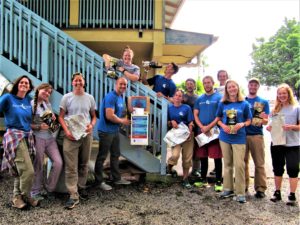
We installed one of the Stations at our Reeds Bay campus and another at Richardson Beach. The other two Stations will soon be installed at Carlsmith Beach Park. These Stations will enable both Hilo beachgoers and PQ students to divert 80,000 pieces of trash a year from our ocean and waterways, improving the lives of sea and land creatures, including humans. Beach Clean Up Stations are permanently mounted wooden boxes containing repurposed, reusable bags for collecting beach trash. Each Station features children’s marine-themed art and signage showing how to use the Station, the impact of marine debris and how to reduce trash.
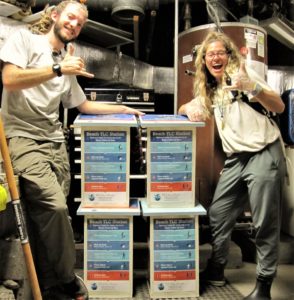 PQ students will use the Richardson Beach and Carlsmith Beach Park Stations during their beach cleanup outings, and the Reeds Bay Station several times a week. Students will use these Stations to pick up 26,000 pieces of trash a year. We expect that the Richardson Beach and Carlsmith Beach Park Stations will educate 3,240 beachgoers a year about the harm human-generated trash causes to sea and land creatures and teach them how to reduce this waste. Each year, these Stations will enable 1,080 beachgoers to remove 54,000 pieces of trash – which is definitely “Aloha ʻĀina, Aloha Kai!”
— — —
Pacific Quest built and installed these Beach Clean Up Stations in partnership with All One Ocean and the County of Hawaii. All One Ocean, a local nonprofit, has installed 37 Beach Clean Up Stations and four School Clean Up Stations, in Hawaii, California, Iowa and Alabama.
Community Service at Punalu’u Pond
By: Nikki Robinson, Adolescent Program Master Guide
A group of Pacific Quest adolescent students recently joined the community at Punalu’u Black Sand Beach to participate in removing invasive plant species. The pond at Punalu’u is a unique and rare ecosystem – an anchialine pool, it is connected to the ocean by an underground fissure, consists of brackish water, and the water level changes with the tides. Of all the anchialine pools on the planet, more than half of them can be found on the island of Hawai’i! These ponds are home to a plethora of endemic plants and animals. Water hyacinth, an introduced and invasive species, thrives in this pond, crowding out native plants and animals, blocks sunlight into the pond, acts as a breeding ground for mosquitoes, and threatens the existence of many species that only exist in this rare ecosystem. Our job, pulling water hyacinth out of the pond, ensures the survival of endemic species to the island.
Removing water hyacinth from pond
Upon our arrival to the beach park, most students were eager to jump into the murky pond and work together with members of the community to eradicate the water hyacinth from an area of the pond. As the rest of the group eased into the pond, students broke into groups. Some students pushed clumps of hyacinth in towards the shore, while others threw the plants onto and away from the shore. The students spent time pausing to investigate the life forms in the pond. They discovered crayfish, tadpoles ducks, and the endangered nene. As they cleared the pond, they shared stories with community members; some of whom have lived in the region all of their lives. After some time working, the students were satisfied with the large area of cleared pond and ready to eat lunch.
Before lunch, we all jumped into the ocean to clean off. The cool water felt great after all the hard work we had done. The group circled up, had a round of thanks, and ate lunch over fun conversation topics. We enjoyed lunch and a view of palm trees, black sand, sea turtles, and beautiful blue waves. The weather was perfect for a day at the beach. After digesting for a while, the group decided to go for a refreshing swim in the ocean. Some choose to swim while others chose to float and chat.
Punalu’u was once a major residence for ancient Hawaiians. Hawaiians used this land for fishing and as a major source of fresh water. Punalu’u means “diving spring”, and sits on top of thousands of tons of fresh water flowing underground. During periods of drought, ancient Hawaiians would dive to the bottom of the ocean and fill “ipu” (gourds) with fresh water. Punalu’u is also home to endangered hawksbill sea turtles known as Honu’ea. Tourists come from far away to admire the fascinating creatures, but are warned: “do not touch or ride the turtles”. Students watched as turtles basked in the sun. They were awed by the turtles’ size and gentle nature, but made sure to give the turtles plenty of space.
After taking a nice swim, the students took some time to relax on the beach. The group played an organized bonding game and shared stories over the experience afterwards while loading up the van. We then headed back to Pacific Quest with about an hour to relax before it was time to hop into the gardens and kitchen to prepare dinner.
PQ Offers First Annual Free CE Workshop for Hilo Community
By: Kristen Sutton, Therapist, & Lauren Meyer, Field Coordinator
Over 80 people attended a recent continuing education (CE) event offered by Pacific Quest (PQ). Community service and the ability to “give back” are essential cornerstones of the program, therefore, PQ offered this CE event free of charge to Big Island mental health professionals. Attendees included psychologists, play/sandplay therapists, school counselors, social workers and other mental health professionals who had the opportunity to earn three continuing education credits through APA and NASW- Hawai`i Chapter.
Dr. Freedle presenting at CE Event in Hilo
Dr. Lorraine Freedle, PQ’s Clinical Director, presented “After the Towers Fell: Healing Trauma with Sandplay Therapy, A Neuropsychological Perspective”. Dr. Freedle shared her expertise and passion for both Sandplay Therapy and the Neurosequential Model of Therapeutics® (NMT). The presentation focused on the case study of Jimmy (pseudonym), who as a young boy lost his father in the 9/11 terrorist attacks on the World Trade Center in New York City. At age 22, Jimmy was overwhelmed with OCD, alcohol abuse, guilt and shame and was unable to meet the demands of college. As a result, he sought treatment at Pacific Quest where he engaged in sandplay therapy as part of a comprehensive, holistic treatment approach.
Workshop participants explored a neuropsychological perspective on how sandplay heals trauma and took a journey through Jimmy’s treatment process. They walked away with an understanding of the Neurosequential Model of Therapeutics and a better awareness of the Sustainable Growth model utilized at Pacific Quest. The attendees were also touched by Jimmy’s story and created artwork to express how his story connected with their own experiences.
Lauren Meyer, PQ Field Coordinator, who was in attendance, comments, “Dr. Freedle took her audience through a journey of images Jimmy created in the sand. There were tears throughout the room, as well as in my own eyes, when we saw an image of ‘that fateful day’ through the eyes of an eight year old child.” An intimate look at how Jimmy, as a young adult, accessed healing resources through meditation, horticultural activities and sandplay therapy followed.
“Multiple attendees spoke about feeling moved and inspired by the presentation and Dr. Freedle’s work,” noted Kristen Sutton, PQ Therapist. “One therapist in private practice shared her gratitude for being able to gather together with other professionals to discuss her passion – Sandplay. I left feeling grateful and privileged to do the work that we do.”
Entering Nalu: Writing My Life Story
By: Janna Pate
To me, one of the best features of the Young Adult Program at Pacific Quest is the three-day period known as Nalu. In Hawaiian culture, nalu refers to ocean waves–specifically the calm spot on the backside of the wave from which you can see everything without getting swept up in it. But nalu can also mean “reflection” or “contemplation.” In this sense, nalu is not just a thing or an activity but a mindset, a mindful way of being in the world.
In the Young Adult Program at Pacific Quest, Nalu refers to the phase of the program where students write their life stories. While facts and events may be the basic “building blocks” of a life story, students are encouraged to focus their reflections on the feelings or “emotional glue” that hold a life story together. Nalu is a time and a space set aside for students to to contemplate their interior landscape and history.
When I became a guide, I decided that I would like to write my life story as well. After months trying and failing to cobble it together one piece at a time, I decided that the only way to finish was to do it the Pacific Quest way: to enter nalu.
In the Young Adult Program at Pacific Quest, Nalu is a time of solitude. Meals are served to students in their hales (Hawaiian for “homes”). Their schedules are their own, and they are exempted from chores. Writing their life story is the only major priority. While students can break up the day by exercising or working on the land, there are otherwise no distractions from the task at hand.
When I set out to write my life story, I didn’t exactly have my own hale at Pacific Quest to retreat to, but I did turn off my phone, pack my camping gear, and walk out into nature with a journal and a pen. Young adults at Pacific Quest spend a bit more time than this preparing for Nalu. They meditate. They create an outline for their life story, share it with guides, and receive suggestions and feedback. And when they are ready, they hold a group where they request and receive advice from their community of peers.
Some of the advice young adults receive before entering Nalu is personalized to the needs of the individual student, and some is more generic. Over time as a guide, I developed quite a laundry list of general recommendations.
First and foremost, I advise students to write their stories from an emotional core. The point of writing your life story is not to recount facts but to unpack the emotional baggage we all inevitably carry. I give students a detailed list of emotional vocabulary words and suggest that they use it to brainstorm, to sift through the waters of memory by using emotion words as a sieve. Pan for “elated” memories and see what comes up. Pan for “bleak” memories. Pan for “contentment.”
My second favorite piece of advice to students is to turn off their internal editor, the voice that criticizes everything they write, the voice of the perfectionist and the voice of the procrastinator. “Is this good?” is no longer a relevant question.
When you are writing your life story, the relevant question is: “Is this true?” So my third piece of advice to students is that they tell the truth–and not just the truth as they already remember it, but the re-examined truth. In Nalu, you must re-interpret your history. You must be willing to see and understand yourself and your world in ways you haven’t before. You must discover your truth.
This is still the best advice I can think of with regard to life story writing–and it goes against pretty much everything I was taught as a graduate student in creative writing. A life story is not the kind of text you manipulate for marketing purposes in the hopes of landing a book deal. It is the kind of text most publishing houses would dismiss as “sentimental.” It is a story told from the heart.
On a theoretical level, I knew very well how to write my life story. Plus, my childhood was relatively untroubled, and my adulthood so far has been largely successful. And I think I know myself well. So figured that writing my life story would be pretty simple.
It was definitely pretty simple to watch. As a Nalu guide, I had the privilege of being a witness, the first person to hear the full version of students’ life stories—hopefully, if possible, while sitting around a campfire on a clear night. The next day, students would read their stories aloud to their whole Ohana, or family, the group of peers and guides who would form their community in the next phase of the program. And there would be a ceremony.
For the reading of my own life story, I wanted a ceremony too. So I planned ahead and scheduled the end of my nalu time to coincide with 30th birthday and invited a group of friends and co-workers to come to the beach to celebrate with me and to listen.
But the day before my birthday, as I continued to sit and stare at my journal, struggling to encapsulate 30 years of life experience in a roughly 8-page document that I would soon read aloud to a group of people whose respect I valued, I began to fully empathize with the struggles of a Pacific Quest student and to wish I had a guide of my own to assist with the process. What I forced myself to do instead was even better: I trusted myself, and I finished.
My ceremony was a powerful moment for me. There were flowers and candles and nalu, the ocean waves rolling in, mixed with the sound of my voice and the attention of my friends. I could not have asked for a better 30th birthday.
Even more powerful, though, have been the moments when I have been able to share this story with others, especially students at Pacific Quest, but also anyone else who wants to ride the wave. Reflect on your life. Reflect on your feelings. Trust your heart and speak your truth. You are all invited to enter nalu.
PQ Success Story: Creating a Path in Life
By: Dr. John Souza & Janna Pate
Linus came to Pacific Quest as a 25-year-old who struggled with four college failures, anxiety, and symptoms of depression. He often referred to himself as “lazy” and believed he could not finish anything.
At Pacific Quest, Linus received a 391-page curriculum consisting of 242 assignments in English, environmental literacy, fitness, health, Hawaiian culture, horticulture, and psychology. One of those assignments was a project called a Discernible Difference (DD) that requires students to spend at least 3 days creating a lasting, positive impact on the land.
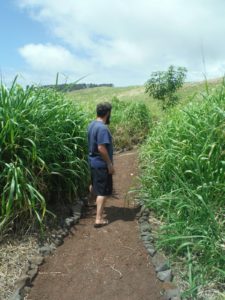
Student with his final project
Per his pattern, Linus took on a project that was far bigger and more anxiety-producing than necessary, opting to cut a long and difficult path through the cane grass (a “noxious weed” that grows in clumps over 10 feet high) to a meditative section of the camp known as Ocean View. At the time, students could not access Ocean View independently because it wasn’t visible to staff over the cane grass.
To start, Linus felt his familiar pattern of anxiety while working in the cane grass and at times suggested quitting. However, as he continued to work and reflect, he began to feel empowered.
Most notable was the day when Linus began to redefine his past failures as not resulting from “laziness,” but rather from a “paralysis of analysis” — anxiety from over-thinking and not “doing” something. By “doing” something every day, Linus learned how to break down large tasks into smaller ones, take breaks, ask for help, and take ownership of his own wants and needs.
When project completion was in sight, Linus began to ask: Wouldn’t the cane grass simply grow back? But finally he said, “It doesn’t matter if the DD gets maintained after I leave, the real work is for me. And if it does get taken care of, all the better.”
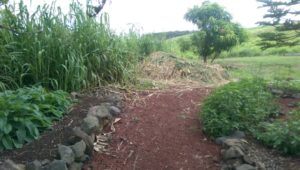
Over a year later – continued progress!
Almost a year and a half later, we are happy to report that Linus’s DD has inspired generations of PQ students not only to maintain the Ocean View path to but to expand it. A vast new area for gardening and other projects now exists: a pumpkin patch, a meditation mandala, a memorial garden, and a secondary path to a space used for graduation ceremonies. And students can access Ocean View independently.
Not only did Linus complete all of his work at PQ, but since leaving, Linus has successfully completed a transitional program, started taking university classes, and is living independently, continuing to create his own path.
Rites of Passage Video: Tying the Threads of the Past to the Future
By: Darcy Ottey
Meaningful, intentional rites of passage have been a critical part of raising healthy adults for tens of thousands of years, and are no less relevant today. At Pacific Quest, rites of passage have been part of our program since our very first client. The speaker in this TEDx Talk, Darcy Ottey, helped design Pacific Quest’s innovative rite of passage programming, and continues to provide support and training for our staff. The talk shares the story of why rites of passage are so important, both for young people and for their communities.
Pacific Quest is part of an Youth Passageways, an international effort to bring rites of passage back into the lives of young people. For more information on Darcy Ottey and her work, please visit: www.darcyottey.com.
Makahiki Celebrations at Pacific Quest
By: Janna Pate, Academic Coordinator
Makahiki is a holiday season that marks the end and new beginning of the yearly farming cycle in Hawaii. It is similar in timing and purpose to Thanksgiving, Oktoberfest, and other harvest celebrations. At Pacific Quest, we celebrate Makahiki throughout the month of November.
Our celebrations culminate in a day of cultural lessons, including storytelling, games, crafts, chants, and dancing. At the end of it all, there is a Makahiki feast that we cook in a traditional Hawaiian imu, or underground oven.
Hand painted garden sign
During the days that lead up to our culminating celebration, students at Pacific Quest turn their attentions to harvesting fresh fruits, vegetables, and herbs from the garden. Some of this bounty goes toward our meal preparations for the Pacific Quest community, and some is donated to the local farmer’s market. During Makahiki season, Pacific Quest students make a special effort to donate to the farmer’s market in abundance. Our donations may include handmade bundles of fresh herbs, greens, or flowers; seedlings and shoots from our nursery; hand-painted gourds and garden signs; hand-picked avocados and citrus fruits from our fruiting trees; a wide-array of organic vegetables; and more.
Traditionally, once tributes like these were collected from around the island, communities gathered to celebrate Makahiki with feasts and games. Both men and women and everyone from chiefs to commoners competed. Pacific Quest students celebrate in a similar way. Throughout the month of November, we teach our students traditional Makahiki games. In ancient Hawaii, the main purpose of these games was to train warriors. As such, Makahiki games tend to focus on building strength, stamina, and agility. We focus on building those skills with our students as well by facilitating traditional Hawaiian games like ikaika (lifting of stones), moa pahe’e (sliding of wooden darts or, at Pacific Quest, lengths of bamboo), and foot races.
In addition to physical challenges, we also teach Makahiki games that challenge the mind. For example, we teach konane, or Hawaiian checkers. Traditionally, konane is played on a board with 64 playing pieces made of black lava stone and white coral. At Pacific Quest, we use black lava stone and red cinder from the paths of our gardens.
Traditional Hawaiian craft-making, Lauhala weaving
We teach traditional Hawaiian craft-making as well. One such practice is lauhala weaving, or weaving with the leaves of the hala tree. Lauhala weaving has been a part of Hawaiian culture for thousands of years. In ancient times, weavers transformed hala leaves into everything from floor mats to pillows and sails. At Pacific Quest, we teach our students how to craft lauhala bracelets and headbands using hala leaves from the trees in our camps.
We are also lucky enough to have staff who are trained in hula dancing and traditional Hawaiian chanting and who graciously bring those lessons to our students with permission and well-wishes from their own kumus, or teachers. Hula and chanting go hand-in-hand, and both were a major part of Makahiki celebrations in ancient Hawaii, especially in the creation of ceremonial spaces. We use them to create ceremonial spaces at Pacific Quest as well.
In ancient Hawaii, it was a processional ceremony that marked the beginning of the Makahiki season. The chief carried a staff topped by a small carved figure and a crossbar supporting a white sheet of kapa, or cloth, around the island in a clockwise direction. Stopping at the boundary of each ahupua’a, or land division, the chief collected gifts and offerings from a stone ahu, or altar.
Hawaiian staff members from across multiple departments at Pacific Quest came together to create a replica of the traditional staff for students in the adolescent program to observe. This replica stood in the dining area where students brought offerings of food from their camps for the community to share. Some camps made organic salads and homemade dressings while others made honey-glazed carrots, stuffing, or mashed potatoes and gravy.
This year, we cooked kalua turkey and pork in the imu at Pacific Quest. For vegetarians, we also prepared a dish called tofu laulau, or tofu wrapped in taro leaf. And of course, there were also desserts: sweet potato haupia pie and kulolo, a sweet taro dish.
Here is a recipe that our logistics team uses for kulolo:
Kulolo (PQ Style)
Ingredients:
4 cups taro
12 oz honey
1 cup coco milk
8 pc ti leaf
Directions:
Grate taro until you have 4 cups.
Put taro in a ziploc bag. Mix in honey and coconut milk.
Line pan with ti leaf, leaving half of the leaf sticking out from the pan.
Add mixture to the pan on top of the ti leaf and flatten out.
Wrap the remainder of the leaf over the flattened kulolo mixture.
Cover with aluminum foil.
Bake in oven at 400 degrees for 1.5 hours.
Remove foil from tray and cook for another 30 minutes.
Yield 1 half pan
Poi pounding
In addition to this taro-based dessert dish, students in the adolescent program had the opportunity to experience poi, a taro paste that was the main staple of the ancient Hawaiian diet. The Hawaiian cultural liaison at Pacific Quest provided the community with traditional stone poi pounders, and students learned to pound the pa’i ‘ai, or freshly cooked taro, with short, quick strokes and little dabs of water to keep the poi paste moist. This can be a bit of a sticky process, but also a satisfying one, even for students who remain a bit skeptical about the flavor of poi. It’s hard not to enjoy this type of “work.”
Once all of the cultural activities conclude and the food is prepared, therapists at Pacific Quest set the tone for the culminating feast by holding a therapeutic group in each camp on gratitude. Gratitude is culturally significant to the Makahiki season, and, as our therapists teach, it is of great personal significance as well. Gratitude has been shown to improve physical and psychological health, promote healthy relationships, enhance empathy, reduce aggression, promote better sleep, improve self-esteem, and increase mental strength. Whatever our struggles in life, a daily dose of gratitude is surely a part of the cure.
And so, after students bring forward their food offerings and chant the Oli Mahalo, a Hawaiian gratitude chant, the feast at Pacific Quest begins, carrying our Makahiki celebrations to a joyful close. Traditionally, Makahiki begins and ends with the timing of the Makali’i, or Pleiades, in the night sky. At Pacific Quest, students can observe the Makali’i during their nightly meditations, though perhaps it is during the afternoon Makahiki feast when they have the brightest constellation of stars in their eyes.
Thanksgiving Blessings: Gratitude and Grace
As I sat in my dining room with my seven guests for our annual Thanksgiving meal, I recounted what I was grateful for in my life. Thanksgiving is actually my favorite holiday, not because of what it represents in terms of American history, but because it is a day that I am able to celebrate my friends and family without the messy pressure of gift giving that comes with the Christmas holiday. As I sat down with my family and we exchanged our thoughts of thankfulness, I realized that I am most thankful for grace. The grace that gives me forgiveness when I have screwed up, that has taught me to be a better person, the grace I was given as I learned table etiquette and proper socialization (though I rarely employ those strategies these days), the grace to stumble as a daughter, wife, and mother, and finally the grace to be a human. I realize the amount of grace I have been given as I have navigated the years of my life and think about the students with whom I work and the amount of grace that they need.
Theresa Hasting, LMHC
I am grateful for the students and families I get to work with and feel honored to have the privilege to help these young people start the process of reworking their lives. It doesn’t always take on the first try, but the courage and bravery that I see when I am working with teens and their parents often amazes me. To allow themselves to be vulnerable about their deepest pains, even if they do in the messiest of ways, earns the right to given the same amount of grace I have been given in my life.
At Pacific Quest, we work hard to provide them with the grace they need to explore their inner experience, their family dynamics, and how they can learn to give themselves graces. Through my own years, I have realized that grace must ultimately come from within. To do this, we have to offer our students a firm but loving hand, working to join with them through creative, fun and meaningful interactions. The work in our gardens offers such a wonderful medium for this relationship to grow in. We are able to destroy and create whatever needs to be for the student to find meaning. At our fingertips is the ultimate metaphor for destruction and creation, death and renewal, loss and rejuvenation; the island itself, formed by the very fertile Pele.
The idea of grace is at the very core of what we do at Pacific Quest. We must give grace to our students having their process and acknowledging that change does not occur because we simply will it or give insight to it. Change happens because someone gave us the grace of their time and energy so that we could then transform our own inner grace into accepting cognitive change.
By: Theresa Hasting, LMHC
Primary Therapist
PQ Students Attend “Embrace” Screening: Documentary on Body Image + Positivity
By: Dr. John Souza, Jr
Primary Therapist
At 7:30 pm on a Monday evening, the movie theater in Hilo, Hawai’i was nearly filled to capacity as over 100 souls gathered to screen the documentary film Embrace: One Women’s Journey to Inspire EveryBODY. Of those souls, nearly 40 were from Pacific Quest and included young adult students, staff, and therapists.
Three months prior my wife (Deepa Ram-Souza, MA) had asked if I would be willing to help her bring a screening of the movie to our local theater. She believed the documentary focusing on what film director Taryn Brumfitt calls the “global epidemic” of poor body image would be well-received on our little Big Island.
At first we struggled to garner interest, selling only a few tickets. Then Pacific Quest’s Clinical Director Dr. Lorraine Freedle, Ph.D., caught wind of the effort, kicking it up to Co-Executive Director Mark Agosto, MBA. Next thing I knew PQ had purchased 40 tickets! This shouldn’t have surprised me, given that the year prior PQ’s leadership had helped champion an effort to take several young adult female students to a showing of The Vagina Monologues at the University of Hilo’s Performing Arts Center.
Indeed, the documentary itself was truly eye opening and inspiring. In lucid and compassionate filmmaking, Brumfitt tastefully shared what were sometimes very ugly realities about how women have been influenced to be hyper-focused on “youthfulness” and an “ideal” image of physical appearance. Through compelling interviews with courageous (and beautiful) women (and men), the film offered an assessment of the origins of poor body image and examples of how people have worked through their own personal struggles with body image; taking the viewer to the edge of some uncomfortable (and often extreme) examples of body image issues, but without exploiting the storytellers or losing focus of the larger issue of women’s body image.
After speaking with my wife, our 12-year old daughter (who with her friends, was also in attendance), and several PQ employees who attended the screening, the take away seemed to be that there are no “flawed” bodies because there is no ideal toward which to aspire. That is to say, the “idealized” images we may have about a woman’s (or a man’s) body are simply not real. And even for those idealized images that might actually exist (i.e., are not altered using Photoshop), the hyper-focus on “youthfulness” privileges only a small part of the larger human experience, obscuring the joy and beauty of the diversity of life, including aging and death. This Body Image Movement invites everyone to “redefine and rewrite the ideals of beauty.”
The message many seemed to take from the film is that in life the “beauty” of the body resides in its manifest diversity. This made me think of the garden, made of many plants which themselves are comprised of non-plant elements (e.g., water, soil, sunlight, etc.). When considered this way, no plant is “more” or “less” beautiful anymore than sunlight is more or less beautiful than water or air. All things are interrelated and therefore all things are uniquely beautiful. And this, I believe, is what I am taking from the film: The real beauty in life is not the thing (e.g., the body, the plant, the element, etc.) but the relationship between things. On a personal level, for me the real beauty of life is knowing that I am married to a woman that would care enough to take on such a project; that together we are raising a daughter who has the kind of friends, and who live in a community that cares enough to show up for such events. On a professional level the real beauty is knowing I work for a company that has the kind of leadership that in the spirit of better serving our students and our employees, is open to seizing such an opportunity and has resources to actualize it.
The next day, while visiting students at Reed’s Bay (PQ’s young adult program), one male student asked, “Hey Dr. John, I loved that movie, but what about one for men?!” I passed the message along to my wife, who said she would look into it. Beautiful.
Pacific Quest Announces Formation of PQ Foundation!
By: Sharon Findlay
Admissions and Communications Manager
Pacific Quest is pleased to announce the formation of the Pacific Quest Foundation, a 501(c)(3) public charity dedicated to supporting the Hawaii County community and its existing non-profit organizations.
“After years of working in and contributing to the Hawai’i Island community, we are excited to formalize our efforts and reach the broader community. We can now include PQ alumni families in our efforts to give back by raising awareness and funding for local community programming,” says Suzanne McKinney, Vice President of the PQ Foundation.
Founded in 2004, Pacific Quest works with adolescents and young adults in an outdoor, residential setting on the Big Island of Hawaii. During their stay, our clients develop an intimate relationship with Hawaii and it’s diverse communities as they work outdoors cultivating the land, exploring the island’s natural wonders, and participating in community service projects or events.
Over the years, Pacific Quest has developed relationships with and supported over 60 different local non-profit organizations through donations from our company, its employees and its clients. We have created the Pacific Quest Foundation to continue our tradition of stewardship within the Big Island community.
The Pacific Quest Foundation’s mission is to contribute to existing 501(c)(3) organizations on Hawaii Island that steward a healthy island community. Alumni and supporters of Pacific Quest are encouraged to give back to the Big Island through the Pacific Quest Foundation. Pacific Quest underwrites the Foundation’s leadership and administrative costs.
Summer Solstice: Celebrating Transitions
By: Genell Howell, MA, CSAC
Primary Therapist
Yesterday was the Summer Solstice, which is the longest day of the year and marks a change of season into the summer months. It is the very moment when, essentially, the sun stands still at its northernmost point as seen from Earth. This year the full moon pairs with the solstice in an event that hasn’t occurred for over 70 years. The summer solstice also represents the transformation of seasons. The shifting seasons are very much connected to the land and the ability to harvest and farm in order to sustain ourselves. At Pacific Quest, we are all farmers and all therefore connected to the land. The seasons are essential to our vitality and dictate how and when we grow specific food and when to harvest.
Genell Howell, MA, CSAC
I spent the day with clients, basking in the sun and in the garden. As a Somatic Experiencing (SE) practitioner, I pay close attention to our natural surroundings. Together we observed feeling the sun on our skin, hearing the rustling of the banana trees and cane grass, and feeling the dirt running through our fingers. I noticed a theme that came out of the sessions that I had yesterday with a unifying theme of transforming self deprecation into self love. What a better day to combat this negative and limiting belief than on a day that is aligned in our planets to call forth deep and lasting change and transformation.
The solstice is such a magnificent, powerful time; engage it with presence and gratitude and reap the rewards, and the theme from the students of cultivating greater self love was aptly timed with this transition period and the power of the day itself. Just as summer is a very important season for farming and farmers, with planting seeds for the future, I think that’s what the clients were doing yesterday too: beginning to cultivate their seeds and plan for their future.
Neurodevelopment and Play: More Fun than it Sounds
By: Mike Sullivan, MA, LMHC
Alumni and Family Services Director
If you have never heard Dr. Lorraine Freedle laugh heartily, you may not know her very well. In a recent presentation at a symposium on neurodevelopment and play, Leveraging Change Agents in the Treatment Process, an audience member commented on the comforting and authentic nature of Dr. Freedle’s “belly laugh.” Many others in the audience nodded their heads and chuckled in agreement. Dr. Freedle has a playful way of engaging an audience, which unsurprisingly, is neurologically informed. I was lucky enough to be invited by Dr. Freedle to co-present on the importance of play, wherein we facilitated play activities aimed at experiential teaching on the many benefits of play entitled The Archetype of Play and the Neuroception of Safety: Primal Change Agent. Needless to say, the presentation was a lot of fun!
Mike Sullivan, MA, LMHC
Play is valuable on many levels, which is evident across species. It is not only humans who play; animals play too. Play has been observed in most animal species, and interestingly, even between animal species. What is evolutionarily significant about play? If it didn’t contribute to natural selection, it would have ultimately detracted from a species ability to survive and would have been wiped out of existence long ago. On a basic level, play is where people and animals learn to socialize and navigate obstacles. It is the playground of practice, allowing us to develop tools, awareness, and resilience for overcoming more complex obstacles later in life. Beyond that it allows us to engage our imagination, which has proven to be an asset even greater than knowledge. After all, one of Einstein’s most famous quotes highlights that “Imagination is more important than knowledge.”
While it doesn’t take much convincing to teach adults that play is valuable in childhood, some remain skeptical when approached with the idea that it is critical in adulthood as well. In a culture that is achievement and performance driven, what room is there for play? If an activity is not aimed at getting me further toward my goals, why would I waste my time? Well, play lies deep in the sub-brain, and still needs to be stimulated in adulthood. It has implications for our mood and wellbeing, as well as affects our social relationships and meaning we make of the world. While there is a complex neural network stimulated through play, look around and observe what you notice from a behavioral perspective. You may not see adults playing on monkey bars (well, sometimes you do!); you often see them participating in adult forms of play – humor, sports, games, and love. Most parents say that having kids is the best thing that ever happened to them, and fondly reflect on the play within their family story.
In her presentation, Dr. Freedle drew heavily on the teachings of Dr. Stuart Brown, the founder of the National Institute for Play. In his book Play: How it Shapes the Brain and Invigorates the Soul, Dr. Brown maintains, “Play is the highest form of love.” Beyond the biochemical firing occurring on a molecular level in the brain, we seek connection and belonging, and play serves as the main conduit. Can you imagine a life without play? No fantasy, no storytelling, no humor, and importantly – no relationships or connection… it is difficult to imagine. We need to continue to nurture play in ourselves and communities. As, Dr. Brown says, “the opposite of play is not work, it is depression.” For more on Dr. Stuart Brown’s research, you can view his TED talk here.
Family Fridays: Walking the parenting path together
By: Alumni Parent
I have stood in your shoes. I still wear them, although I am further up the path. My child was struggling to the point that sending him to Pacific Quest became our best choice. I had been scared, frustrated, sleepless and worried and deciding to send him so far away added a new, and unwelcome, level of fear to me. If this sounds familiar, then I bet it will also ring true that you are also afraid to hope that this will work. Our hope for our children is fragile, and though surprisingly tenacious, we have learned to hide it for fear that one more failure will finally crush it. I sent my child and my hope to Hawaii. Here’s how it turned out.
Before PQ: Our son had struggles on and off during high school. He was uneven in his academics, but passionate about his extracurriculars. During college however, he spiraled down into a serious depression. He had reached out to the mental health services at school at the urging of friends who saw him changing. He was going to therapy and was on medication. Then I had to drive to his school after he stopped responding to calls and texts. I found him in his room with the curtains drawn, piles of dirty clothes and garbage around him as he slept in his bed. He had barely gotten up, showered, eaten, etc. for the past few weeks. Take a picture and put it in a text book – this is full blown depression. We packed him up and took him home.
The next steps: therapy, medication, a day program that seemed to help him get some traction, then working during the summer full time but still exhausted from that effort. He insists that all the work he did over the past 5 months has given him enough knowledge and preparation to return to school for the Fall semester. By Thanksgiving he was struggling. He failed many classes due to absences and didn’t return for the Spring semester. Now what? He stayed home. More intensive therapy and changes in medication as he worked as a laborer. He was growing hopeless that his situation would change. He was embarrassed to fail and it was hard for him to watch his friends move on without him.
We started with a new therapist who said: weekly therapy and medication will help, but what your son really could benefit from is a more intensive experience to really do the hard work and process what is at the root.
What program could be right? Our choices were traditional wilderness programs or Pacific Quest. Traditional wilderness programs focused on physical challenge and isolation to lead to mental strength. Pacific Quest focused on horticultural work, exercise, diet, whole-being wellness and community along with therapy and processing to build the idea that people, like nature, are imperfect, but by adaptation, experience, and using resources we learn to thrive.
We had so many questions about programs: Can a program get someone mentally healthy in 10 weeks? Can a program modify his behaviors in 10 weeks? For us, the goal was wellness – inside and out – and to start to understand what it takes to maintain wellness. Everyone has overarching issues that will be broken into smaller pieces. He will struggle with practical and emotional obstacles with support of peers and professionals. He will begin to identify ways to grow and support the changes he experiences at PQ.
During the time at Pacific Quest: My son set the following goals for himself: accept the past and the future, love himself, think about the future as opposed to worrying about the future and look in the mirror to see — not to criticize.
Your child is not the only one doing work during this time. You and your family will work too. Weekly calls with your child’s therapist and working through the parent manual is an opportunity for growth for all of us. Confession: I wanted to avoid this component. Isn’t this program for him? The reality dawns on me that I want him to work at this hard stuff and I don’t want to work on this hard stuff. My child has to accept and do the work and I have the same choice. I chose to walk with him. I made the time and put forth my best effort.
What did my child learn at Pacific Quest? Increased ability to handle stress because he experienced stress in a healthy, safe place where the focus is learning these skills. Also, how to make healthy choices when stressed, how to reach out to process stress and discomfort and finding a way to move forward in a way that is healthy and sustainable. Another focus was the power of opening up and being vulnerable and how better relationships lead to self-acceptance.
How was this accomplished? There’s a lot to that answer, but here is some of it. First, individual therapy happens twice a week minimum. Therapy groups are also a part and they are staff-led and peer-led at times. Working with staff one-on-one to develop goals and impromptu peer one-on-ones where they reach out to one and other for support. Finally, there is exercise, in depth wellness with nutrition, curriculum and a lot of horticultural therapy and work.
An interesting example for me was that my child struggled with quiet. Therefore, something like meditation was very difficult. A therapist discussed this with him and suggested that he learn about it by teaching it. So, my child was assigned to learn about meditation, practice it, journal about it, refine it and then he taught a class on it to his peers. The thinking was: Learn what you don’t know.
This is a lot of work for your child. It may be located in Hawaii, but it’s no vacation. There were many ups and downs that would be too long to chronicle. Again, it is by design that there is discomfort in this supportive environment so that the person actively learns the skills to handle obstacles in the real world.
Post Pacific Quest: During transition from PQ, our therapist took time to prepare us thoroughly for the road ahead. PQ is a start. It can be a foundation, but life isn’t easy and there will be setbacks and pitfalls ahead. A wise man that we know said: “Success isn’t measured in the day-to-day stuff. Success is measured by what happens when he falls into the same old hole. What is he doing to get out of the hole?” He is saying that by identifying what works and using what works, then the holes gets shallower. You build on those skills and build resiliency. Next, can you see the hole coming and avoid it?
When my son left PQ, he was excited to go back into the world. It took about five weeks for the first hole to appear. Somehow, he hadn’t embraced the idea that the “hole” or that a challenge would happen. It was very hard. He felt like a failure, but the foundation held. He got out of the hole and began again. There have been other holes. He is disappointed when they happen, but from the long view, some have been shallower and, more importantly, he does go back to the skills he learned and practiced at PQ.
Parting thoughts to those who are walking the path
If I could take away this struggle from you and your child, then I would. Just like you would like to spare your child what he or she is facing. However, there is no way around it. The only way is through it. I hope that you find the best fit for your family. The key thing to remember is that there is no magic. Neither Pacific Quest, nor any other program will take away the challenges of life. The real goal is to develop skills and form a foundation in a safe, therapeutic place so that our children are well prepared when their challenges occur.
A letter of appreciation: Our son’s growth and our journey as parents
We are thankful to the entire Pacific Quest team who have chosen to help others in such a meaningful way. Our son graduated the program and has entered a new and healthier chapter in his life. While we know our son’s journey will continue to have ups and downs, it is nice to know he is moving on in a good place.
We enjoyed reconnecting with our son when he transitioned out of Pacific Quest. He was in great spirits, very talkative and open and surprisingly, not very anxious (wow, what a change!). We talked about his experience at PQ and he shared some fine memories, including cooking chili for everyone. He shared some of the growth that he experienced, and importantly, demonstrated it through his mood and demeanor. He continues to be in a good mood and a joy to be around. Wow.
Integral to our son’s experience, and our’s as parents, was his primary therapist, Erin Gustin. We must admit that this has been a journey for us as parents as well.  We feel like we have welcomed Erin into our homes and our family these past three months. We will miss those Wednesday evening pre-dinner phone sessions. It has been so instructive, helpful and insightful, including the ‘ups and downs’ of our son’s journey, sharing hopes and triumphs and frustrations. We want to thank Erin more than she can know for all she has done for our family!
Gardening in LA: Alumni find solace and camaraderie in service project
By: Mike Sullivan, MA, LMHC
Alumni and Family Services Director
Approaching Wattles Farm from Hollywood Boulevard is surreal. A short walk from the iconic walk of fame in the heart of Hollywood, one navigates speeding sports cars, stoplights (which apparently aren’t enforced), and screaming police sirens to find the gate encircling the margins of Wattles Farm. After traversing an ancient avocado grove, one emerges in the 4.2 acre organic garden of eden- a setting that couldn’t be more dichotomous from the immediate surroundings of bustling Hollywood.
The garden was reminiscent of Pacific Quest- meandering paths lined with rocks and downed limbs, tropical fruits draping from tree branches, and luscious garden beds overflowing with lettuce and kale. Travis Slagle and I felt at peace as we toured the garden, taking time to absorb every element of the Wattles oasis. We basked in the familiarity of the natural landscape and reprieve from the urban gridlock surrounding us.
Head Gardenmaster for 23+ years, Toby Leaman, introduced Travis and I to the array of work needed to maintain Wattles garden. She identified specific areas that our Pacific Quest alumni group could complete during our community service garden project the following day. Travis observed closely as Toby showed him where the invasive onion grass was overtaking the roses and geranium, as well as where the rock wall was eroding. While many people may view the immense undertaking Toby outlined as a nuisance, Travis and Toby see potential. Being gardeners in their heart and healers/role models for youth, the garden is a means to connecting with something greater – a deeper sense of self and greater connection with community. Excitement grew as we refined our plans for our project the following day.
Our alumni group dug into our community service project at 10 AM. Smiles, laughs, and reminiscing about funny stories from Hawaii ensued, while the group maintained diligence and attention to eradicating the onion grass. The group overhauled the rose and geranium beds, creating a discernable difference. Apparently that project wasn’t enough, as the group then devoured the opportunity to weed a long pathway through the avocado orchard. Toby exclaimed what an amazing group of volunteers we were, highlighting our attention to detail and positive attitudes.
Over a nutritious lunch and closing circle, the group discussed some observations throughout the day. Many noted “being in the present” and “sharing a common goal,” as being significant aspects of the project. Others shared a sense of fun, camaraderie, peacefulness, and giving back. Each of these observations speaks to the power of gardening and intention- when we set aside computers and phones, carve out a shared gardening project, we find meaning. The group observed that the experience was far from insignificant, but rather served as an amazing conduit for connection and leaving a legacy for others in the future. It was certainly a memorable Sunday!
I want to share a huge THANK YOU to Toby Leaman for being such a warm host and project leader. I also want to thank the Pacific Quest alumni for their dedication to others and desire to continue to deepen their self awareness. And lastly I want to thank the entire community for maintaining Wattles Farm for others to enjoy. Community gardens are a growing movement, and one can see layers of significance far greater than just providing salad greens.
A Story of Hope: My Daughter’s Journey of Healing
By: Alumni Parent
My daughter spent three and a half months on the Big Island in your program and I will be forever grateful for all that she gained from being part of your program. I am writing this review in the hopes that other parents can gain a sense of hope.
My daughter started her life as a happy, dynamic, strong kid. She had plenty of friends and was always engaged in whatever life had to offer her with a smile on her face. Her father and I divorced when she was 13, and she started to lose her ability to cope with life the following year. Her first negative coping mechanism was anorexia. Her weight went from 145 to 95 in a matter of three months. After many eating disorder programs, she turned to self harm by cutting herself. Extensive therapy helped but she still had a need to be numb from her pain of not being able to cope. She then turned to alcohol and lastly drugs. She had five psychiatric hospitalizations when she was 16. Her fifth hospitalization was when her dad and I knew she would not live if we kept her in regular society. We needed help but did not know how to help her or us in finding help. Internet research and an educational consultant, pointed us in the direction of Pacific Quest. I remember the first phone call and hearing the costs and feeling like it was so impossible to come up with that amount of money. We knew we needed to do everything in order to help our daughter.
I asked her father to bring her to PQ because I knew that drop off would be tough. I had no idea just how tough the first part of her PQ journey would be until we were in that first week together. She was stripped of every single negative coping mechanism that had carried her for the past two years. I knew she needed to go through that period but I also knew how hard it would be for her. That week was the first week in two years that I was able to really sleep. I knew we were starting a profound journey.
As the PQ process continued, we were asked to participate in parenting therapy sessions. We thought our divorce had gone so smoothly because we didn’t yell or hire expensive lawyers to fight anything out in court. We were very wrong. All of our anger had been under the surface and needed to be expressed. It was during this process where I started to realize that our way of coping with our divorce of not expressing feelings…had been passed on to our daughter.
Flying to PQ for parents’ weekend was another hurdle for us: we knew it would benefit her, but neither of us really wanted to do it. We did though… and it did help our daughter. The lessons of how to talk to teenagers in a healthier space so that the words can actually be heard, was invaluable to me. Thank you so much PQ! Later, my youngest daughter has benefited greatly from that lesson. We were also faced with the realization that she could not be brought back to mainstream society yet. After attending a longer term therapeutic program, she graduated from high school in December and is now a full time college student living in off campus housing with five other girls in her suite. She has a job and is taking classes to get her Bachelors in Sociology. She now says how grateful she is for going to PQ, and talks about working at PQ someday to give back to kids who have gone off course.
I cannot stress enough how close to leaving this earth my daughter was. The only coping skill that soothed her was to be numb from drugs. Pacific Quest not only saved my daughter but it saved me too. PQ provided a much needed basis of removing all the negative coping mechanisms and beginning to chip away at my daughter’s inability to find healthy coping skills. She was also taught the very important lesson at PQ that there is no such thing as normal. There are many different ways to be a human being and express the feelings that we all experience. My daughter was part of a program that encouraged health for her body and her mind when she was with PQ.
The appreciation for PQ can been seen in her most recent Facebook profile picture. Thank you PQ!
PQ Welcomes Robert Trout to Clinical Team!
Robert Trout, MA, has joined the Pacific Quest Clinical Team as a primary therapist and brings over 17 years of experience in therapy, group facilitation, rites of passage, wilderness therapy, and experiential practices. He utilizes narrative and experiential techniques that influence people’s belief systems while working with metaphors to encourage the exploration of the self. Of working at Pacific Quest, Robert says “In addition to the experiential therapies we employ, my favorite part of being at Pacific Quest is the team-based approach. I work collaboratively with a team of skilled clinicians, talented direct care staff and professional referral sources to create unique and individualized strategies for each student. The ability to take a fresh look at each student and their situation is truly invigorating as a therapist! One of my personal goals is to challenge individuals beyond their own limiting beliefs.”
Robert received his Masters in Counseling from Southwestern College in Santa Fe, New Mexico. He focused on transformational ecopsychology and rites of passage, which is an incredible fit for his work at Pacific Quest. Robert enjoys working with experiential modalities of therapy, including ceremony and psychosomatic activities.
“Robert is a results-driven leader who brings a wealth of industry experience, clinical skills, and pure passion and drive to his work,” says Dr. Lorraine Freedle, Clinical Director. “He is making quite a splash. I could not be happier with his choice to join our team!”
Robert’s unique perspective was shaped largely through his own time in the wilderness, over 1000 days. Robert began to explore the world in a new way, influenced by the many lessons he had learned during his own wilderness experience as a teen. Of this experience, Robert says “The program I attended saved my life, but more importantly pushed me to find purpose and meaning for the rest of my life.” Robert has worked in many outdoor programs since he completed college and has developed into a leader in the field in rites of passage work with youth and adults.
In his free time, Robert likes to backpack, snorkel, scuba dive, swim, fish and generally just play outside. He also loves to garden at home and explore the outdoors with his wife and daughter.
PQ Staff Spotlight: Mike Sullivan on Mindfulness and Marathon Preparation
Pacific Quest is supporting Mike Sullivan on his “2016 Road to Kona.” Yes, you heard correctly, Mike is taking another stab at the World Championship Ironman, assuming he is selected to participate through the Hawaii Resident Lottery on May 5, 2016. Mike will share insights and perspectives throughout his 2016 races and training, and drawing parallels between the mind-body connection and wellness – important themes at Pacific Quest.
Up first, Mike’s reflections as he prepares for the Hilo Marathon this Sunday:
By Mike Sullivan, MA, LMHC
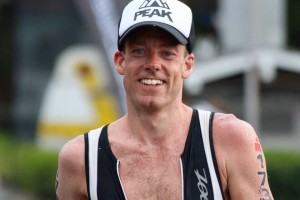 It turns out that I ran 300 miles during the month of February – something that came as somewhat of a surprise to me. I wasn’t entirely aware that I was putting that kind of mileage on my body during the month. I ran the stats on my computer and learned that my total running time was 40.5 hours, a significant commitment to say it lightly. It begs the question, and I hear this all the time, “What do you think about during all those hours?” The truth is, although I have been asked this question many times, I don’t exactly know how to answer, as it isn’t entirely clear to me.
Mindfulness Training and the Brain
This much is clear though- I have observed my personal thought process and studied the neuroscience of exercise to better understand my experience. I seek to find if my experience may be congruent to others. In fact, my Peak Self project analyzes various athlete’s mental experiences by interviewing them and featuring an “Athlete of the Month” on the Peak Self blog. I have learned that many athletes encounter similar mental phenomena in training.
Here are the top three phenomena I’ve noticed in myself and the mental tools I have employed to maximize the experience:
Mindfulness Training and Perseverance
My mind tends to ruminate on unwanted thoughts or uncomfortable emotions. Without distraction, the mind is left to its own devices to latch onto thoughts or feelings that are left unaddressed, and become a point of focus. One naturally assigns judgment and in my case perseverates, allowing unwanted thoughts to persistently gnaw at me.
Similar to advanced meditation practitioners, learning how to deal with the minds tendency to latch onto negative thoughts is critical, and a necessary step in reaching a higher level of calm and feeling of contentment. In fact, this process of allowing thoughts and feelings to emerge and dealing with them, is a healthy process of mindfulness practice, and supported widely within the therapeutic community. I have enjoyed the process of incorporating mindfulness into running:
Mindfulness Training Tool #1
Tool 1: the practice of acknowledging when certain thoughts appear (or reappear), refrain from assigning judgment (just noticing that the thought is there), and letting it go. Developing this practice has allowed me to find larger moments of calm and content, increasing the spans of attaining a presence in the moment. When one asks me what I think about on those long runs, the reality is that it is an ongoing project, where I continually practice this basic mindfulness technique.
I often find that a wandering mind and “mindless” running leads to sloppier running and less effective workouts. It also leads to dissatisfaction with the experience, as running starts to feel more like a hamster wheel, than actually getting anywhere. For many, the process of becoming present requires more than just acknowledging thoughts and letting them go, it requires one to focus attention on one simple thing (Tool 2). I hone focus on the rhythmic nature of my breath, as well as a mental cycle of checking in repetitively on my running form. This is a cycle starting with my head and working my way down to the bottoms of my feet. I first notice the angle I am holding my head, the tension in my shoulders, how I am holding my abs/core, the rotation within my hips, the size of my strides, and the nuances with my feet (foot strike, roll, etc.). This mindfulness technique engages focus in the experience.
Problem Solving & Mindfulness Training
As the miles add up in any particular workout and I find myself in longer stretches of “being present,” which in turn seems to lead to another important aspect of “what I think about” during all those training hours. The combination of endurance exercise and the mindfulness techniques leads to increased problem solving and clarity in my thinking. I find myself regularly encountering “aha” moments, where I will encounter a novel idea or solve a problem I haven’t otherwise been able to solve. With a clear mind my subconscious is able to make connections that it isn’t otherwise able to.
It seems that the unique chemical environment produced in the brain, catalyzed by exercise and mindfulness, fuels problem solving. According to Bruce Perry, MD, Ph.D., and founder of the Neurosequential Model of Therapeutics (NMT), the higher level operations of the brain (i.e., the neocortex and the limbic system) are only functional when the more primitive parts of the brain are regulated (i.e., the brainstem and diencephalon). Patterned, rhythmic behavior stimulates and soothes the lower parts of the brain (responsible for nervous system functioning), establishing a critical foundation for the more complex aspects of the brain to fire. Running is a perfect medium for problem solving! The nervous system is nurtured from the bottom up, allowing the brain to problem-solve in a more effective manner.
While I utilize endurance athletics to access a higher level of mindfulness and problem solving, others seek out a parallel experience through other activities. Gardening, yoga, walking, painting, writing, and other hobbies serve to find presence in the moment and soothe the nervous system. Through working at Pacific Quest, I’ve recognized the powerful role that gardening can play in regulating the nervous system and problem solving. Tending to a garden requires patterned, rhythmic behavior of tilling the soil, weeding, pruning, and planting. There is also significant exercise-like movement in tromping around with tools, building garden beds, hauling wheelbarrow loads, and stirring the compost. Mindfulness and problem solving opportunities abound!
Successful Horticultural Therapy Training at PQ
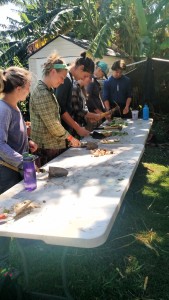 Horticultural Therapy is one of the cornerstones of Pacific Quest’s integrative, holistic approach. Recently, over sixty Pacific Quest employees participated in an all day training in horticultural therapy. Therapists and direct care staff worked side-by-side utilizing creative interventions, combining evidence-based practices with mind-body techniques.
Horticulture Therapy Training
One of the main goals of this training was to have interactive and engaging lessons role-modeled for the program guides and to let them experience the numerous possibilities of teaching in the garden. In addition, this was an ideal opportunity to train program guides in both the hard skills of working on the land and the soft skills of utilizing the garden as a therapeutic tool. Program guides had the opportunity to analyze and brainstorm how to teach our curriculum and to unite the different aspects of the program with the garden.
The first half of the training focused on experiential activities that were based on the Five Pillars of Health (i.e. nutrition, sleep, movement, breathing, and the mind-body connection) and the ways in which these key elements of the program are brought to life in the garden. The second half focused on utilizing narrative education and concepts of rites of passage to teach about soil. Guides learned how research in horticultural therapy indicates that simple garden activities are compatible with evidence-based practices used to treat a myriad of clinical issues ranging from anxiety and depression, to trauma and stress related disorders.
Words from our Horticulture Therapy Director
Pacific Quest’s Horticultural Therapy Director, Travis Slagle M.A., commented, “For the adolescents and young adults that we work with, the simple task of growing a garden becomes a parallel process of the growth in oneself. Whether we are treating the emotional wounds of childhood, or the injured leaves of a common houseplant; the key factors of empathy, relatedness, and unconditional positive regard are still the same. Nature teaches us that everything that lives is biologically designed to grow and adapt. The same is true for the families and young people with whom we work. By actively experimenting with the process of growth and adaptation in nature, we become more aware of who we are and what we want to be.”
Pacific Quest Alumni Join Surfrider Foundation In Beach Cleanup
By Mike Sullivan, Alumni & Family Services Director
Pacific Quest alumni gathered at Torrey Pines State Beach this past Saturday to reconnect and contribute to a larger effort at protecting our ocean ecosystem. Together with volunteers from the Surfrider Foundation, we combed the beach in hunt of marine debris littering the shores and posing environmental threats. We collected everything from tiny shreds of styrofoam to large pieces of plastic. There were over 200 people total and we gathered hundreds of pounds of garbage in the clean up. Go Pacific Quest! Go Surfrider Foundation!
The beach clean up was a fun and relaxing event. Alumni reminisced on stories from their journeys at Pacific Quest and shared about life in Southern California. I was impressed with the continued interest the alumni shared regarding gardening, exercise, and culinary exploration. They have infused elements of these into life outside of Hawaii, sharing photos and discussing future goals. It is absolutely fantastic to see the alumni applying interests cultivated at Pacific Quest in their daily lives at home. We look forward to featuring testimonials and success stories on our “Ohana Fridays” blog updates.
Pacific Quest believes in giving back to the community and maintaining alumni relationships. Horticultural Therapy Director Travis Slagle and I will be traveling to Los Angeles in March to help promote Sky’s the Limit Fund, a non-profit foundation dedicated to raising funds to help families access wilderness therapy who wouldn’t otherwise be able to do so. While in Los Angeles, Travis and I will be hosting an alumni event at Wattles Farm, a 4.2 acre community garden in the heart of Hollywood. We will be leading a gardening workshop and community service project. We encourage any and all alumni who would like to participate to please RSVP to Mike Sullivan at mikesullivan@pacificquest.org.
We look forward to another positive experience of community service, and most of all reconnecting with our alumni families in a fun and meaningful event!
Southern California Alumni Events – Coming Soon!
ALUMNI BEACH CLEAN UP
Date: Saturday, February 13th
Time: 9:00 am- 12:00 pm
Location: Torrey Pines State Beach
Activity: Beach cleanup hosted by Surfrider Foundation
What to bring: Clothes suitable for weather
This is a great opportunity to join forces in promoting healthy oceans and giving back to the community. After all, we all depend on our valued communities and ocean ecosystems, whether living in California or in Hawaii. Let’s work together! After the beach clean up from 9:00-11:00am, we will provide lunch for volunteers and an opportunity to reconnect and visit.
ALUMNI COMMUNITY GARDEN PROJECT
Date: Sunday, March 6th
Time: 10:00 am- 2:00 pm
Location: Wattles Farm, 1714 N Curson Ave, Los Angeles, CA 90046
Activity: Community garden project for all ages – planting, weeding, harvesting, many fun projects!
What to bring: Clothes suitable for weather and gardening projects, sturdy shoes
Join Travis Slagle and Mike Sullivan at Wattles Farm, a 4.2 acre organic community garden in the heart of Hollywood. Join us in giving back through gardening projects and learning more about organic gardening in Southern California. We had a blast at our last gardening event at Golden Gate park in San Francisco – and we plan to make this one even better! We will take a break during our gardening activity to eat a nutritious lunch, provided by Pacific Quest.
Please RSVP! Contact Mike Sullivan, Alumni and Family Services Director at mikesullivan@pacificquest.org
PQ Book Club: A Book That Changes Lives
“Now I realize that I had, in a sense, been sleeping all those years and just dreaming I was awake—until I met Socrates, who came to be my mentor and friend. Before that time, I’d always believed that a life of quality, enjoyment, and wisdom were my human birthright and would be automatically bestowed upon me as time passed. I never suspected that I would have to learn how to live—that there were specific disciplines and ways of seeing the world I had to master before I could awaken to a simple happy, uncomplicated life.”
This best-selling novel by Dan Millman, Way of the Peaceful Warrior: A Book That Changes Lives, is part fiction, part autobiographical and can be touted as a book that reminds us that we deserve to be happy. This classic tale of a spiritual saga offers the reader the possibility to make connections. It speaks to the peaceful warrior in each of us—and that’s why it made the cut for this month’s PQ Book Club.
The story is set in the 1960s and describes the journey toward enlightenment by Dan, a college student and world-class gymnast at the University of California – Berkeley. Despite his many friends and large social circle, his accomplished schoolwork and his world-champion athletic pursuits, Dan is troubled by the sense that something is missing from his life.
Awakened one night by bad dreams, Dan goes out into the night and stumbles upon an old gas station manned by an eccentric, elderly man. Eventually, the two become friends and Dan nicknames him Socrates, partly because the old man refuses to reveal his name and partly because he ends up serving as Dan’s mentor and spiritual guide.
As Socrates works with Dan, he teaches him that the way of the peaceful warrior “is not about invulnerability but absolute vulnerability – to the world, to life… (A) warrior’s life is not about imagined perfection or victory; it is about love. Love is a warrior’s sword; wherever it cuts it gives life, not death.”
As Dan learns to be present and to experience him self as connected to the world and not apart from it, he begins to journey into the realms of light and shadow. And as Socrates presents Dan with a series of challenges, Dan is thrust into self-awareness, whether he is prepared and willing, or not.
The magical aspects of the tale, such as time travel, are told with heart and humor. And the journey itself leads the reader down the path and toward a final confrontation with one’s own spirituality and the timeless quest for finding purpose in life.
Way of the Peaceful Warrior: A Book That Changes Lives should be read for its message, particularly if you are seeking direction in your own life. We all have work to do, and we all need guidance. Discovering (or rediscovering) your purpose in life… changes your life.

Malama I Ka ‘Aina: A Community Service Project
This past Friday, a few of our Malama students took a break from camp to set out into the community of Na’alehu with a purpose. With a trunk full of tools, and smiles on our faces, we took off down the road to a neighbor’s house. In this house lives two, once very active members of our small community here in Ka’u. The wife has been diagnosed with a terminal illness, and the husband, who has been giving his fullest self to take care of her, was recently diagnosed with cancer as well. The students weren’t able to shake the hands of these two, as they were out for the day, but our task was to give them something to smile about when they returned.Second Annual Ka’u Coffee Trail Run
On Saturday, September 19th, approximately 18 Pacific Quest employees participated in the 2nd Annual Ka’u Coffee Trail Run–The Southernmost Coffee Trail Run in the USA! The goal of this event was to help raise money for the economically depressed community, via the non-profit organization O Ka’u Kakou. All funds raised went to O Ka’u Kakou to help them better serve the community and become more self-sustaining as well as to promote Ka’u coffee and to promote Ka’u as an international tourist destination.
Staff members registered for either the 5K, 10K or half marathon. Pacific Quest took Second Place overall in every race!
5k- TJ Kuhn (2nd)
10k- JP Swanson (2nd), Kyle Sullivan (3rd), Meggie Olsen (1st Overall Female)
Half-Marathon- Topher Fast (2nd)
A group of PQ students attended the post-race ceremony and were very excited to cheer on the staff as they received awards for finishing the run. The students were eager to give back to the community and they worked together, taking down several large tents and cleaned up the area where the ceremony and performances took place.
Pacific Quest’s Adolescent Field Coordinator, Mike McGee, who ran the 10K, comments, “As for me, I had a blast! It was great to see community members that we have worked with over the years on community service projects here in Ka’u. The race is the hardest race I have ever done, with 2,800 foot or so climbs in the middle on the course. It was a great atmosphere, with the dancers and great food given to participants. It was nice for the students to see the staff here as real people that “live the life” that we teach about.”
Thank you to everyone who made this event a success! Go Team PQ!
Connection, Understanding and Knowledge: One Family’s Pacific Quest Journey
PQ was a life-changing experience for our family. As a family unit and as individuals we all grew through the program. One of the most important things we learned was that this wasn’t just about our son/stepson; it was about every single member of our family and how we fit together. The work we did together as a family with the therapy team at PQ started before we’d even decided to place our son at PQ. I really felt that the team understood what a huge decision this was for us, and that translated into our being able to ask as many questions as we needed to help us feel secure in our choice.
Once we were in the program, the support and information we received was invaluable. I never felt like I was part of a machine, and I always knew that our son was safe and in the right hands. The feedback we got about all our progress was timely and honest. For me, one of the most important feelings I got from PQ was connection. I felt connected to the program, connected to the process we were following and connected to the people who were helping us through the process. One of the strongest connections was that I felt with the other parents we met along the way. I will never forget the relief, the warmth and the comfort I felt from everyone in the room on the day we shared our family stories. From talking with our son, he felt the same connection with the other young people too, and this helped him cope with the things he is dealing with. As a family, we were transformed. As individuals we are stronger. Our future path is one of understanding and knowledge.
Our son left PQ a few weeks ago now, transferring to a therapeutic boarding school environment where he has happily settled and is making great progress. He looks back at his PQ experience with pride and humility, knowing that it set us all on the right path and understanding that the work we did at PQ has helped us all grow.
Mahalo For Your Support!
BIG THANKS to all who offered support for Program Guide Miriam Gleckman’s efforts in running in the 42nd annual Honolulu Marathon this past Sunday. Miriam’s goal was to raise $4,000 in grant money for the Sky’s The Limit Fund organization to provide more students the opportunity to attend Pacific Quest. Sky’s The Limit Fund is a non-profit organization that transforms the lives of at-risk youth by providing grants, support, and hope, through wilderness therapy programs and beyond.
We are excited to announce that Miriam was able to achieve her goal! Miriam raised $1,960 and with PQ’s matching funds plus an additional $80 she reached $4,000!! What an accomplishment!
The Honolulu Marathon is the third largest marathon in the US, attracting about 30,000 participants each December. Miriam was thrilled to be part of this exciting event and comments, “As someone who works directly with PQ students, and witnesses some of their victories, large and small, I had ample inspiration to run the Honolulu Marathon. Thank you to the whole PQ Ohana for working together to bring more victories to more students.”
Way to go Miriam!
Ka’u Coffee Trail Run A Success
By Yvette Slagle, Communications Coordinator
On Saturday, September 20th, 28 Pacific Quest employees participated in the Ka’u Coffee Trail Run–The Southernmost Coffee Trail Run in the USA! The goal of this event was to help raise money for the economically depressed community, via the non-profit organization O Ka’u Kakou. O Ka’u Kakou’s mission is to “support and promote a healthy community through educational, cultural, and economic development opportunities that improve the quality of life in rural Ka‘ū.” All funds raised went to O Ka’u Kakou to help them better serve the community and become more self-sustaining as well as to promote Ka’u coffee and to promote Ka’u as an international tourist destination.
Staff members registered for either the 5K, 10K or half marathon. Students and staff also offered their support by assisting at water stations along the way. Pacific Quest’s Operations Director, Martha Bouchard, who ran the 10K, comments, “What a great day and what a great run! So much fun to participate together, and what a challenging course. It was a joy to see the camaraderie and show our support for the community. We donated $1000 to an important Ka’u organization via our active efforts and had a great time while we were at it.”
Pacific Quest Therapist, Mike Sullivan, who ran the half marathon adds,”The Kau Trail Run was a fantastic event! It was great to be in the presence of so many amazing co-workers and the Kau community at large…I look forward to next years race (even if the course is brutally difficult again!).”
Thank you to everyone who made this event a success! Go Team PQ!
Ka’u Coffee Trail Run
Are you up for a challenge? Join us for the Ka’u Coffee Trail Run–The Southernmost Coffee Trail Run in the USA!
Pacific Quest is proud to sponsor the first 25 employees to complete the early bird registration by July 19, 2014. Students and staff will also be assisting at water stations along the way!
This is a great opportunity to support the Ka’u community! The goal of this event is to help raise money for the economically depressed community, via the non-profit organization O Ka’u Kakou. O Ka’u Kakou’s mission is to “support and promote a healthy community through educational, cultural, and economic development opportunities that improve the quality of life in rural Ka‘ū.” All funds raised will go to O Ka’u Kakou to help them better serve the community and become more self-sustaining as well as to promote Ka’u coffee and to promote Ka’u as an international tourist destination. Along with the race, there will be various tournaments, games for kids, live auction, silent auction, food, informational booths and entertainment throughout the day.
For more information or to make a donation, please visit okaukakou.org
Changing the World One Life at a Time
By Travis Slagle, Horticultural Therapy Director
Changing the world is not an easy business, and for mental health providers, changing a life can be just as complicated. Many people enter the field of outdoor therapy because they want to change lives. For students at Pacific Quest, the most basic therapeutic task is to literally practice new ways of caring about life. We are digging, planting, composting, harvesting, and sharing abundance in a rhythmic pattern not just because it’s cool to grow your own food, but also because it fits within a sequential model of neuropsychology. We believe learning to grow food is a relevant and transferable therapeutic activity for a generation of young people that are faced with a daunting need to create a more sustainable future not just for themselves but for their families and communities.
A young person who recently graduated from the adolescent program wrote the following note (below) in a group journal. This note offers an example of what Horticultural Therapy at Pacific Quest is all about. It serves as a reminder that while we continue to remain in the business of changing lives, our clients are the ones that might just change the world, and perhaps there is no better outcome than that.
Pacific Quest to Support Upcoming Sky’s the Limit Fundraiser
By Yvette Slagle, Communications Coordinator
Pacific Quest is proud to be a Gold Sponsor at the upcoming 3rd annual Nightlights! An Evening of Comedy Benefit Event on May 10th in Menlo Park, California.
Sky’s the Limit Fund is an organization that was founded to provide grant money for at-risk youth and their families who would otherwise be unable to afford wilderness therapy. Sky’s the Limit Fund was founded in 2010 by Rochelle Bochner and Lani Dorff. Rochelle and Lani are strong advocates for the benefits of outdoor therapeutic programs and their foundation is dedicated to assisting as many students as possible in receiving the opportunity to experience what wilderness therapy programs have to offer.
Pacific Quest is extremely proud to support the Sky’s the Limit Fund mission to: “Transform the lives of at-risk youth by providing grants, support, and hope through wilderness therapy programs and beyond.” Breaking financial barriers for troubled youth and their families to have access to innovative treatment programs such as Pacific Quest is a noble endeavor that will inevitably lead to new opportunities for families and youth in crisis.
OVER 70 ALUMNI TURNED OUT FOR GREAT CAUSE
|
By: Mike Sullivan, Primary Therapist & Lori Armbruster, Communications Director PQ staff members were honored and humbled by the overwhelming turnout of alumni, students and families who gathered at the San Francisco Children’s Garden in Golden Gate Park for an inspiring day of service to the community! PQ alumni spent the day working side by side with PQ staff to build sustainable garden beds, revamp neglected pathways, and artfully paint various stumps and signs with inspirational quotes and educational facts to support this beautiful landmark garden. Though the theme of the day was service, the undertone was that of connection. The garden is a powerful classroom and catalyst to support change, which has been proven during each student’s stay at Pacific Quest. Families attending the event sought to give to their local community and were also excited to reconnect with the PQ Ohana that helped to create meaningful and life-changing experiences during their Pacific Quest journeys. Upon arriving at the park, all projects were carefully outlined and explained. Moms, dads, alumni, students, and siblings quickly volunteered for various tasks and out came the gardening gloves, shovels, paintbrushes, and hand picks. The families dove into the tasks, utilizing communication skills, teamwork, and plenty of good humor to complete each task. The families worked throughout the morning, enjoying the camaraderie, sunshine, and people around them. In a pre-lunch debrief circle facilitated by PQ’s Horticultural Therapy Director, Travis Slagle, many commented on how good it was to reconnect with the garden, nature, and community. Young siblings shared the simple happiness they felt being with their families and doing something together. The park interns commented repeatedly that our volunteer alumni were enthusiastic, polite, exceptionally hard working, and clearly dedicated to the tasks at hand. The Children’s Garden serves as a venue for educating young children in San Francisco about the wonders of the natural world, where their food comes from, and health and nutrition. The garden is maintained by wonderfully enthusiastic interns, who are dedicated to the well-being of youth in their community. The PQ alumni families continuously expressed gratitude that they were able to contribute to such an important and worthy cause. As the day concluded, the Children’s Garden Community Coordinator and her small team of interns expressed sincere heartfelt appreciation, sharing that in one day our “army of angel volunteers” were able to accomplish several projects that would’ve taken their small crew, weeks and — in some cases– months to complete. As the day came to a close, bittersweet goodbyes ensued. The community gardening project was a huge success! PQ alumni families rekindled a deeper connection with each other and within themselves by working in the garden and giving back to their local community. It is our hope that families will continue to seek out opportunities to practice and put to use many of the concepts learned at Pacific Quest, and that Ohana Days serves to spark that desire. As I reflect back on this weekend’s event, I am inspired by the ripple effect of the work that we do. Seeing the smiling faces and families working together is a powerful and tangible reminder of that work. It is our goal to foster growth and connection that ripples outward into communities, where families and children will find a deeper sense of connection to themselves and the world. |
On the Mainland: Pacific Quest Hosts “Ohana Days” & Alumni Reunion Events
By Lori Armbruster, Communications Director
In the Hawaiian culture, the word “Ohana” means family, which can be blood-related, adoptive or intentional. The concept emphasizes that families are bound together and members must cooperate and remember one another.
When a young person enters Pacific Quest, they become part of a larger Ohana. As they discover the best in themselves, they forge new and meaningful relationships with family members, peers, their community and the natural world. These experiences leave an indelible mark on their lives and in the lives of their families.
Week after week, our staff receives letters from alumni students who reach out simply to say, “thank you” or “you made a difference in my life”. Sometimes these letters come years later as the “seeds” planted have taken time to mature and come to fruition. Some are from students who may have struggled during their stay – but have come to realize the value of their experience. While each alumni letter is unique, all share a common theme. Alumni students and their families consistently express a desire to reconnect with one another and with the staff members who were instrumental in helping them during this step of their journey.
As our alumni venture into the world, we challenge ourselves to further support the incorporation of healthy skills and community-building concepts gathered while in our care. Pacific Quest’s mission is rooted in true sustainable growth and it is when our students learn to engage in their communities and be of service to others, that new levels of growth may be realized. To that end, we are very excited to announce several innovative alumni events for 2014.
Pacific Quest’s Ohana Days will provide a series of experiential activities for alumni families to re-imagine the work of “incorporation” and the next step of sustainable growth in their own communities. These community-building events focus on service, an action-oriented approach to giving back, and leaving a legacy that goes beyond self. Ohana Days will incorporate a variety of volunteer opportunities, such as building gardens in the heart of a city, harvesting food for local food banks, or building a garden for a local school or charity, and other healthy lifestyle events. Ohana Days will also provide an opportunity for students, families and staff to reconnect and get re-inspired! This experience will broaden the support network for our alumni, encouraging community involvement, and reawakening parents and students to what it really looks like “to be the change you want to see in the world.”
Stay tuned for a formal announcement on our first Ohana Days and Alumni Reunion event, which will be held in the Bay Area, Saturday, March 22! Future dates and locations will be updated periodically on our website and Facebook page. For more information, please contact: lori@pacificquest.org.
A New Perspective
Written through the voices of incoming Pacific Quest staff and their stories of arrival…
(Through the lens of Kenny)
As we fly into Hawaii the feeling of nostalgia wouldn’t wear off. I have left my family in the midst of winter to join a group of strangers in the field of troubled youth reform. There are only two buses that run from Hilo to Na’alehu, the base city of Pacific Quest. Just sitting there waiting for the bus in my board shorts, tie dye shirt, and fifty pound backpack I stood out as a “PQ’er”. I met Daniel as he strolled up with his two backpacks and flip flops “slippahs.” We knew that we would be traveling to PQ together.
(Through the lens of Daniel)
Aloha from Hilo! I have arrived. I notice two adventurers, you know the ones that sever all ties to step into the unknown following their heart’s current to an island far away. “Are you going to Pacific Quest?” I asked, as if speaking of a destination and journey in the same proper noun. I could tell Brett and Kenny were fresh off the plane, luggage, smiles, and a clear sense of jet lag from just being uprooted and in process of a transplant to new soils. I spent the two weeks prior severing my own ties. I’m speaking of a severance that mimics the falling leaves in autumn. I graduated in December, quit my job, transferred my leadership roles, and mentally prepared for the next stepping stone. I sent the good news to friends and family, spent the holidays with loved ones, and made intentions for the New Year. A year to be filled with mystery, personal growth, and contributions to this good world only imagined in dreams. A dream come true.
(Through the lens of Brett)
As I walked up to Pacific Quest from the bus stop with a few of my new coworkers we are met by Rae, our new Supervisor. She shows us around the grounds and points out the sweetest orange trees and where to find fresh lilikoi (passion fruit). We settled into the dorms as the staff piled in and out at the end of their evening shift. We hear them joking and laughing as they walked up the stairs. Their camaraderie is evident immediately. We are bombarded with names and questions. Their warm welcome calms my nerves and I smile. A feeling of calm washes over me.
(Through the lens of the new staff team)
For the next few days we are guided by multiple staff Leads and Supervisors. This was our chance to meet people and to tour the camps, cook meals in the camps, orientations, and a new staff training. Our training was comprehensive and our needs were taken care of.
As our transition phase comes to an end, we are filled with questions, curiosities, and dreams. We consider our life, our choices, and reflect on how we arrived here. We consider our role at Pacific Quest and responsibility with ourselves and others. We remember the communities we left behind and consider the new community we are now a part of. We dream of the future and our path towards it.
A Parallel Journey
By Jody St. Joseph, Adolescent Program Director
It wasn’t two very large strangers who woke me in the middle of the night, but it was close enough. My alarm screamed me awake at about 4 am and before long I was at the airport about to leave behind my doggie, my home, and my family. I boarded the plane tired and very afraid. What was happening to me!? What had I done?!
Many hours and three flights later I landed on the strange rock in the middle of the Pacific Ocean. The Big Island of Hawaii. Woa, this was real. I began the long journey down to Ka’u to my new “home” for the foreseeable future. I was alone in a very strange place with no one I knew and nothing familiar.
I arrived an hour and a half later to my new reality. A small cabin in the woods. The kindest woman welcomed me there with a simple “welcome home.” This, of course, would be my new landlady. She showed me around my new place, taught me a few of the basics of my new life living off the grid with solar power for my electric and a huge water catchment tank for my running water. It was simple and there wasn’t much expected of me yet. Just like the students in our Nalu camp, I started to try to settle into the new surroundings and reflect on the experiences of my life that lead me to this place. I had to trust so much that was strange and out of my control. Talk about wilderness therapy!
The next day was my first official day on the job. What would this strange new experience teach me? Who were these strange new people that would become a part of my new life? Would they be nice, would I figure things out… would I be OK!?!? Luckily I was met with the warmest welcome and more kindness and support than I could ask for.
It was easiest at first to focus on the day to day tasks at work. I started to piece together my schedule, participate in meetings, do my part to keep the office clean, and started to learn the new language of Pacific Quest. Much like our Kuleana students, I was starting to get the hang of what would be expected of me daily, and had work tasks to fuel conversations with new people. I began to identify my personal responsibility in this new community… this new Ohana.
Weeks turned into months and I moved on from “task talk only” and started to participate more fully in my new community. Work relationships quickly became more personal and I began to get to know the other members of my Ohana. Some days were stressful and exhausting and I longed for my home and my family. Other days I learned something new or made a breakthrough on a project and felt the confidence and pride in a job well done. My scary new surroundings started to become truly beautiful and comforting. I started to settle in.
It has been over four months now that I’ve been in this new place and on this new journey. I had no intention of creating an experience for myself that was quite similar to that of our students; however, as I reflect on my time here so far I realize it’s the same in so many ways and I am humbled and in awe of the awesome demonstration of resilience and trust and courage that it takes to survive (and thrive!) through an experience like this. Pacific Quest students do this day in and day out and my greatest hope for them is that they know how amazing they are for being here, for waking up each day and making the decision to carry-on, trusting that they will be okay. Of course, by doing that, we are able to guide them a little bit on their amazing journeys and they will grow in their own personal ways. I hope and believe, and it’s not always easy, that the same will be true for me.
Staying Healthy During the Holiday Season
By Maile Green, Naturopathic Physician
As the holiday season is in full swing, I find myself thinking about my daily routines for creating health. I believe health and a sense of vitality are more than the absence of disease. I believe physical and mental health are the product of daily practices and habits that create an optimal internal environment. Throughout the world, health traditions credit the same things with creating health: proper nutrition and water intake, exercise and breathing, adequate sleep, and a sense of meaning. Each of these practices are easy to understand. None of them are difficult. Incorporating them into our busy lives on a daily basis however, can be challenging!
This week I was reviewing the wellness curriculum we use at Pacific Quest. From the beginning of our program we teach our students about proper nutrition and thinking about food as fuel for their bodies. We introduce them to the idea of daily movement and breathing, creating flexibility and strength. We talk about sleep hygiene- practices around adequate and quality rest, including techniques to help them relax and fall asleep naturally at the end of a day. And, of course, finding meaning in life is a central component of the entire Pacific Quest program.
As I was reading through this material I was reminded of all the things I could be doing for my own health this holiday season. Am I making sure to incorporate the things that are the foundations of my own health? Some of them are old habits, and they are easy, but some of them are still a challenge. One of the things I love about working at Pacific Quest is getting to introduce the concept of creating health to students when they are young. I am hopeful that our influence will help them to create habits for health now, so they become incorporated into their lives and become easy for them to practice for a lifetime. As for me, starting this week, I will take a dose of my own medicine and recommit again to making time to exercise and breathe. I am lucky to live in a place where exercise can be fun, so I will be out on the water on my standup paddleboard. Hopefully my boss won’t mind if I don’t get to work quite as early as usual! Wishing you a happy, healthy holiday season!
Finding Perseverance, Mystery and Gratitude in Pacific Quest’s Gardens
By Tess Barnes Dunn, Academic Coordinator
Recently, I had an opportunity to spend a day working with my new Pacific Quest colleagues in the area of our garden set aside for our Rites of Passage ceremony, known as Huli Ka’e.
A rite of passage is an important event that serves to mark the passage from one stage of life to another. Rite of passage is an anthropological term for a ceremony performed to facilitate or mark a person’s change of status on highly important occasions. Belgian anthropologist Arnold van Gennep coined the term Rite of Passage in 1908. He examined rites of passage around the world and found that rites of passage involve three important stages:
- Severance in which an individual sheds his or her old identity
-
Threshold in which an individual has no status – they are both “no longer” and “not yet.”
-
Incorporation in which an individual returns and assumes a new role, typically with great celebration.
Our students experience severance, threshold and incorporation, they also explore perseverance, mystery and gratitude.
Throughout my day, I also explored and experienced my fair share of perseverance, mystery and gratitude.
Our first task was to eradicate the weeds and rocks. Let me rephrase that – our assignment was to eradicate the thousands of weeds and rocks. We worked together. Weeding. Laughing. Talking. Persevering. Together.
As we worked, I witnessed the mystery of the gardens – that transcendent quality that takes our students to the edge, creates change and celebrates rebirth. I listened to the Intent Statements of students, who had just completed the Rites of Passage ceremony. As they assumed their new role, they spoke of power, happiness, hope and dogged determination.
It was a day to remember. It was a day filled with joy, laughter and love and support. I was over-whelmed by gratefulness – gratitude for this garden and everyone in it.
Los Angeles Alumni Event
By Mike Sullivan, Therapist
“Belay on!” shouts Johnny, whose legs are shaking and hands trembling as he prepares to climb his first route of the day at the Hangar 18 rock climbing gym in Los Angeles. Moments before this, Johnny had pulled me aside and said, “Mike, I wasn’t kidding when I told you and the group that I am afraid of heights.” Johnny was clearly scared, and with empathic coaching, he was able to approach the wall and begin to climb. This marked the start of the first Pacific Quest student alumni group, held on October 19th.
Prior to getting started on the climbing, Johnny and his peers participated in “ground school,” where they learned important climbing commands used to ensure safety between the climber and the belayer (the one in charge of rope). Johnny had let the group know about his fear of heights, a sign that he was practicing a valuable tool from his stay at Pacific Quest– expressing his feelings. Johnny’s expression of fear was met with support from the alumni climbing group, which in this instance were a mishmash of Pacific Quest alumni from the past two years ranging from ages 16-23. Most alumni knew one or two others present in the group, yet many were meeting each other for the first time. While the alumni were new to each other in many ways, these kids had a deeper bond present before even stepping foot into the climbing gym – they had the shared experience of graduating from Pacific Quest, a challenging outdoor therapeutic program in Hawaii. They knew what it meant to step outside your comfort zone and challenge limiting self-beliefs. They knew what it meant to take healthy risks and gain a sense of accomplishment and self efficacy from doing so. They were hungry for more.
“You can do it, Johnny!” the group shouted as Johnny slowly sought out the delicate placement of each foot and the proper hand holds to remain attached to the climbing wall. Johnny shouted back down to the group, “I don’t know you guys……” sharing his reluctance as he ascended the wall, well above the floor of the climbing gym. Johnny was secured by a climbing rope and thus 100% safe, yet when one gets far enough off the ground, even the sense of safety from the rope diminishes. One quickly learns that you can’t rely on the “logic” of the rope system solely. Climbing requires people to draw on an innate sense of confidence, overcome fear, and work through self doubt in the moment. It demands that one build trust with their partner and draw on the support of the group. While Johnny understood from the lessons of the “ground school,” that he was completely safe, he ultimately had to reach deep inside himself and reach out to his peer group to find his way.
Johnny’s group shared encouraging cheers as he continued up the climbing wall. Johnny surmounted the route and slapped his hand on the top of wall signaling victory. “Take!” Johnny shouted, alerting his climbing partner below to draw in any excess slack in the rope and begin lowering him off the route. Johnny was lowered to ground and met with high fives and compliments from his peers. Johnny and his peers proceeded to climb several routes and socialize throughout the climbing gym. All expressed what a fabulous time they had at the event.
The Importance of Nutrition in Mental Health
By Dr. Britta Zimmer, Medical Director
It is time to face a simple fact and reclaim health:
Nutritious Food is Medicine
It’s easy to get caught up in the complexity of science, research, and the physiology of the human body, therefore I am constantly reminding myself, my patients, and my patients’ parents to get back to the roots because without being rooted, healthy change and growth are difficult to obtain.
The roots of health and healing are simply:
good nutrition, adequate sleep, daily movement, and stress management. These are Pacific Quest’s pillars of health. These roots are simply based in science and research.
I just attended The Integrative Medicine for Mental Health Conference and was reminded (via extensive research and excellent lectures) of the importance of nutritional interventions in the treatment of AD(H)D, Depression, Anxiety Disorder, Obsessive Compulsive Disorder, Eating Disorders, Bipolar Disorders, and Autism Spectrum Disorders.
Question:
Why is proper nutrition critical in the treatment of all mental health disorders?
Answer:
Psychotropic medications, such as Prozac, Abilify, Wellbutrin, Seroquel, Ritalin to name a few, affect levels of neurotransmitters in the brain, however these neurotransmitters are controlled by chemical precursors which are made in the body from nutrients obtained from our diet.
Translation:
Without the proper nutrients the neurotransmitters that psychiatric medications target such as serotonin, norepinephrine, and dopamine cannot be made or balanced in the first place.
Solutions:
Solution #1
Eat adequate protein in every meal, protein is made up of amino acids and which are precursors to neurotransmitters.
How much protein? Recommended daily protein intake is 1 gram per kilogram of body weight. (Example: 115lbs = 52.2 kg = 52 gram protein- If you exercise more than 6 hours weekly = 2 grams per 1 kg of weight)
Be aware that vegetarian diets, antacids, stress, and poor digestive function all inhibit the body’s absorption of protein.
Protein Warning: talk to your doctor if you have kidney disease
Solution #2
Eat foods high in the following vitamins and minerals (or supplement your diet with these nutrients);
B-complex with folate, B6 and B12, Zinc, and Magnesium. These nutrients are essential for neurotransmitter production. You can Google search foods which contain high amounts of these nutrients.
Solution #3
Take Omega 3 Fatty Acids in the form of Fish Oil.
Truthfully, we should be bathing our brains in omega 3 fatty acids. Every aspect of neurotransmission involves the adequate functioning of omega 3 fatty acids in your body. Also research demonstrates the link between depression and inflammation; levels of omega 3 fatty acids in the body directly influence the body’s inflammatory response.
Take reputable brands of Fish Oil such as Nordic Naturals, Carlsons, Pure Encapsulations, or Vital Nutrients as these companies conduct stringent testing for their products. Fish oil sold at Costco and Trader Joe’s has not been adequately tested for potency and purity, I do not recommend those brands
If you take the good brands mentioned above you will NOT burp up fish oil or taste anything “fishy” as these are high quality ingredients.
Vegetarian sources of Omega 3 fatty acids such as flax oil have not been proven to decrease inflammation and support neurotransmitter production like fish sources.
Fish Oil Warning: talk to you doctor if you take blood thinners, do not take fish oil prior to surgery
Solution #4
Test for food IgG allergies and avoid these foods.
Most common IgG food reactions: Gluten (wheat, barley, rye, spelt), Casein (milk products), Eggs, Baking yeast, Citrus, Peanuts, Corn, Sugar, and Soy.
You can test these via eliminations diets or an IgG blood test. The IgE skin prick tests commonly offered by allergist do not give you this information.
Studies show the correlation between gluten consumption and the increase in symptoms related to depression, autism, anxiety, and AD(H)D.
Gluten and casein can increase inflammation in the body, create an autoimmune response, cause gastrointestinal damage, and create an opiate response. This potential opiate response is partly responsible for the addictive quality of certain foods such as pizza, mac n’ cheese, and chicken nuggets. Usually if it is a food you claim that you “absolutely cannot and will not give up” then you most likely have a food sensitivity to that food- sad but true.
Parents are the biggest obstacle to instigating a gluten and casein free diet because it is too much work for them, they do not see the value in it because they don’t wait long enough to keep their child off of gluten/casein, they allow their child cheat “because they feel bad for them” or they succumb to their child’s demands. It takes at least 4 weeks of strict gluten and casein avoidance to see the positive results. Once the patient experiences a reduction of symptoms with a gluten and casein-free diet this motivates them further to avoid these foods. This is the key to adolescent and young adult compliance to restrictive diets, they have to experience first hand the improvement.
Not mentioned in the 4 solutions above is the importance of Vitamin D in the treatment of mental health disorders, more about that in blogs to come.
All neurological conditions are whole body disorders, because the body/brain are connected (literally and biochemically. )One must treat the whole body to treat neurological disorders such as AD(H)D, Depression, Anxiety Disorder, Obsessive Compulsive Disorder, Eating Disorders, Bipolar Disorders, and Autism Spectrum Disorders.
The cornerstone of whole body treatment is Nutrition.
Pacific Quest is the only therapeutic treatment programs which offers a gluten-free, casein-free, anti-inflammatory, nutrient dense, organic, whole foods diet.
References available upon request
drbz@pacificquest.org
Letter of Gratitude
We received this letter from an airline passenger who was seated by a Pacific Quest student who recently completed the program. It’s a good reminder of how even brief encounters can leave lasting impressions.
I was in Hawaii until yesterday and had the profound pleasure of sitting next to one of your recent graduates. Please forgive me for referring to her as a graduate as I am certain you have a more appropriate descriptor for someone who has reclaimed their life by experiencing Pacific Quest.
She was on her way home after two amazing soul-nourishing and life-saving months with you. I write to you today as I am back to my own routine and am realizing that the effect of sharing an hour of my life with her is immeasurable. We connected instantly as soon as the doors to the airplane closed and I made a nervous quip about not being sure if the people in the emergency exit rows were paying attention to the two-minute training of how to save all of us in the event of an emergency. To this, she confidently states, “Don’t worry, I just spent two months learning about what I am capable of. I got this.” She had me hooked instantly. She was funny, confident, self-deprecating, attuned to her surroundings and responded appropriately without missing a beat.
We spoke the entire one hour during our shared flight. I felt the universe had conspired to bring this young girl to me at the moment it had. She shared how much the experience at Pacific Quest taught her and prepared her for the rest of her life. I said to her that the universe works in inexplicable ways, but for the most part, it conspires to offer us what we need. Whether we take the hand she offers is entirely up to us. I expressed to her how very much her speaking to me has made me the better and how I know it will make me a better mother to my 11-year old son.
I write to you today for two reasons. One to thank you for the impact you have had on this young woman. What her parents and you have done is nothing short of life-saving. As parents, we are naturally in a cycle of self-doubt, whether every choice is the right choice for our children. I told her that I was in my thirties before having my son because I knew that I had to find strength in the ways I was bent and find confidence in the fact that I was not broken before I could do right by my son. Even then, I second guess all things about my parenting because manufacturing perfection is not possible and I find myself in the quest to manufacture a perfection for him. Hearing her taught me that doing right by our children is a daily call to prayer. It brings us to our knees daily. Indeed it should.
People come into our lives for various reasons. She came into mine for a specific reason. She was before me a child who found her voice and confidence, ready to live the life uniquely hers surrounded by the love of family and friends that is her birth right. As my son’s mother, I ache at every hurt that comes his way and I ache in advance for all that I imagine may come his way. This young woman taught me that I may not always be there physically for my child, but if I continue to be his valiant mother, providing him unbounded, unconditional, and unqualified love, he will have the strength and confidence to withstand what comes his way every step forward. And, that this is the best I can do for him.
Thank you for changing the course of this young woman’s life and for delivering a confident, young woman back to the universe such that the very first person she spoke to after 56 days with you and your team was me. I am ever better. She worried that she had burdened me for sharing her evolution and journey with me. I am hopeful that she is aware how much meeting her, hearing her and feeling her means to me. If you would kindly forward this to her so that she may know unequivocally that her first step back into the life she is meant to live has made such a profound imprint on my life and vicariously on my son’s. For this, I am grateful and forever bound to her well-being. Her happiness and success will be part of my daily call to prayer going forward. I wish for her to know that I am now part of the universe that is conspiring to provide for her heart and soul.
Thank you, again.
Growing Food In Ka’u
By Yvette Slagle, Outreach Assistant
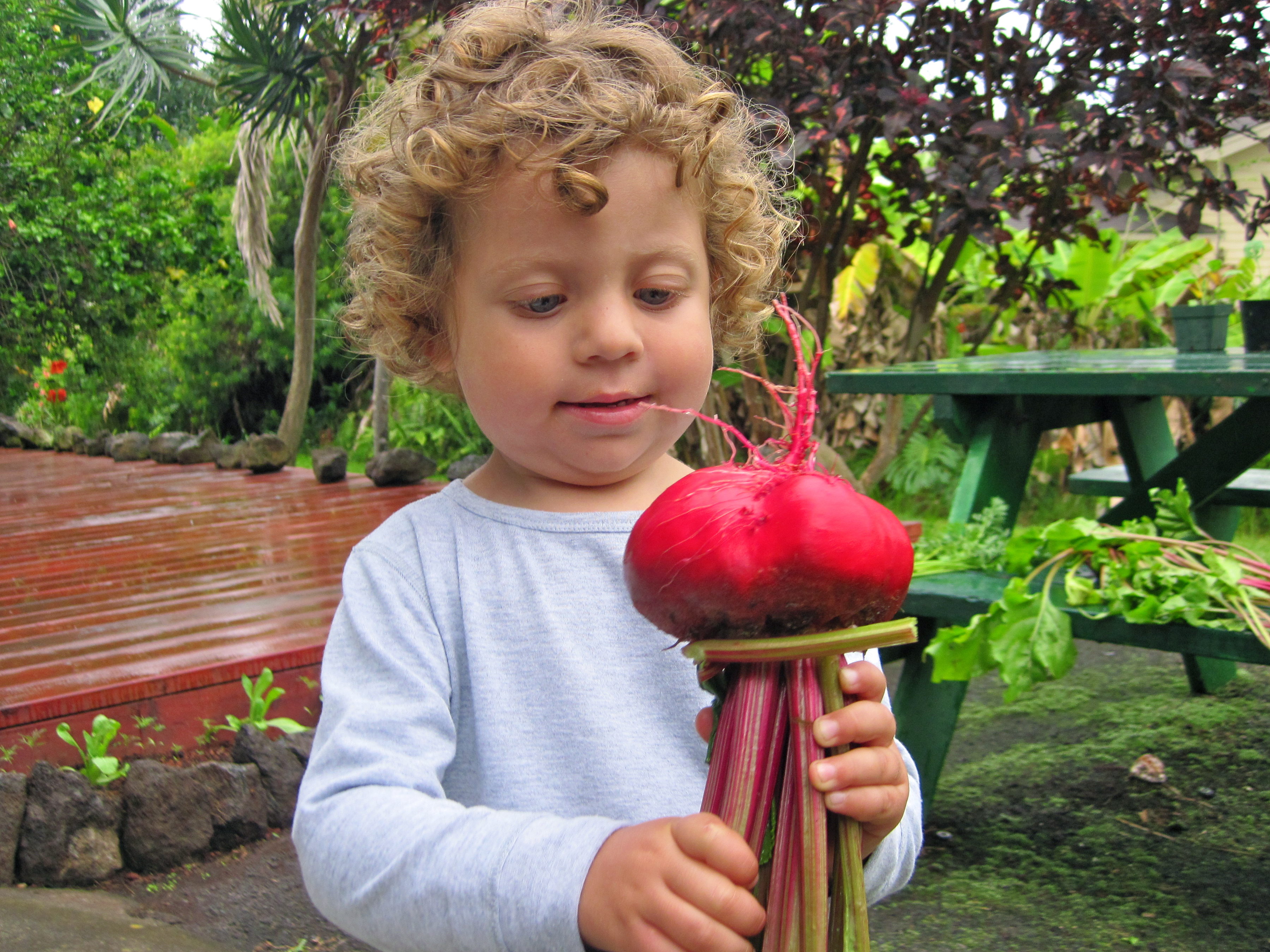 I stand quietly and look at the garden…the jalapenos and basil, cilantro and parsley, a gourmet salad mix that boasts an array of greens, purples and reds. There are marigolds, sunflowers, calendula– and of course, nasturtiums. We decided this time around we should do a succession of Provider Beans, a variety of bush bean that is true to its name! Spinach, kale, rainbow chard, pumpkins and plenty of tomatoes. My two year old son smiles with pride as he holds up a bright red beet. He enjoys helping in the garden–planting seeds, digging in the soil and most of all finding earthworms! Over the last year, I have truly come to appreciate and greatly cherish my time in the garden with my family.
We live in Waiohinu, in the district of Ka’u on the Big Island of Hawaii. Our home is perched among an orchard of avocados, citrus, coffee and macadamia nuts. The Pacific Quest adolescent program is about 3 miles away. At this elevation, approximately 1200 ft, we are able to grow a variety of food. We enjoy cooler nights, which allows us to grow more Mediterranean plants such as lavender, kale and heirloom tomatoes. There is a perfect balance of rain and sunshine, along with deep, nutrient rich soil.
Feeling the satisfaction of the daily harvest in the garden, I’m inspired and curious to see who else is growing food in Ka’u. While searching online, I found specific information pertaining to Ka’u. Michelle Galimba of Kuahiwi Ranch in Naalehu writes, “Ka’u: Rural, Resilient Relevant”. This article provides an overview of life in this remote region of the Big Island and the shift that is taking place in our community after the sugar plantations shut down in 1996. I also found She Grows Food, a website that provides stories, projects, recipes and even a Hawaii food map. Founders Lisa Asagi and Dan Nakasone describe their commitment “to developing and supporting solution-based projects that move us toward more resilient and local food systems in Hawaii and everywhere.” As I watch my two year old son digging in the soil and plucking Sun gold cherry tomatoes from the vine, I realize what it means to be a part of a solution, and that the concept of “nature as healer” can be as simple as creating a garden in your backyard.
Pacific Quest Welcomes Jody St. Joseph
Pacific Quest is pleased to welcome Jody St. Joseph as the new Adolescent Program Director. In her new role, Jody is responsible for supervision of the adolescent program, personnel management, and assistance with outreach coordination. Other responsibilities will include co-development and quality assurance of supervisory roles, ensuring follow-through of behavioral treatment plans as well as collaborating with both clinical and wellness departments. Jody’s expertise will be invaluable in overseeing program policies and procedures, curriculum implementation, and providing performance evaluations for the supervisor team.
Jody graduated with a degree in Therapeutic Recreation and a minor in Psychology from Southern Illinois University at Carbondale. Prior to joining the Pacific Quest team, Jody spent ten years at a prominent Wilderness Therapy Program in Utah, where she worked as a Field Instructor and later as Program Director. Jody has extensive experience in experiential education, therapeutic recreation and program management. After hearing about Pacific Quest, she became interested in joining the team and is now happy to be serving as Program Director of the Adolescent program in Ka’u.
Pacific Quest’s wilderness therapy program has established an exceptional team of highly respected professionals to assist families in need. Mike McKinney, Executive Director, comments, “Jody is known for her incredible energy, positive and enthusiastic demeanor, problem-solving skills, team building, extensive management experience and in-depth knowledge of outdoor therapeutic programming. We are delighted to welcome her to our team!”
Huaka’i Ola at Reeds Bay
By Todd Ransdell, Young Adult Program Director
Polynesian people throughout the Pacific Ocean have long used the many types of Wa’a (pronounced vah-ah) to travel, explore, and fish. It is an integral part of Hawaiian history – Polynesian sailors and navigators crossed immense distances to find and colonize the islands of Hawaii without the use of any navigation instruments. Rather, they used only their deep knowledge of the stars, weather, cloud formations and ocean currents to find their way. They brought with them many varieties of plant life to their new home, carrying them in their canoes from islands below the equator. An old Hawaiian proverb says, “the canoe is an island, and the island is a canoe.” I believe this describes the belief of many Polynesian people–that the relationship with the land and the ocean are interlinked and inseparable.
In the early ‘70’s there was a resurgence in Hawaiian culture and language, some believe brought on by the construction and launching of the first Voyaging canoe in centuries – the Hōkūle’a. This Voyaging Canoe was successfully sailed to Tahiti using only ancient navigation techniques. The Hōkūle’a is still sailing today, in fact she recently embarked on a worldwide voyage (with her sister voyaging canoe Hikianalia) launching from Palekai Beach Park – about a mile down the road from our Reeds Bay facility. The Hawaiian Canoe has become very prevalent here in the islands; on any given day you can see quite a few wa’a plying the waters around Reeds Bay.
Early on during the development of the Young Adult Program in Reeds Bay, Mike McKinney, our Executive Director decided to have a wa’a built for the program. It was completed earlier this year and we gave it the name Huaka’i Ola, which means “Life’s Journey”. Huaka’i Ola was launched on June 20, 2013. We have since integrated our wa’a into our Young Adult program, taking weekly trips out into Reeds Bay led by the experienced waterman Kalani Kahalioumi and Murphy Fonseca. Our students have been learning how to successfully operate the Hawaiian Canoe, and some staff are working towards becoming a Kapena (Captain) under Kalani and Murphy’s tutelage. We are very excited about this part of our program, and look forward to increasingly integrating Huaka’i Ola into our program structure in the future.
Pacific Quest to Present at Annual Wilderness Therapy Symposium
By Yvette Slagle, Outreach Assistant
On Saturday, September 7, 2013 from 9:00 a.m.-3:00 p.m., Pacific Quest’s Clinical Director, Hilary Moses, LCSW and Horticultural Therapy Director, Travis Slagle will present “Horticultural Therapy: A Growing Edge In Outdoor Treatment” at the annual Wilderness Therapy Symposium in Boulder, Colorado.
As a world renowned therapeutic program for struggling adolescents and young adults, Pacific Quest is proud to be part of the 2013 Wilderness Therapy Symposium. This six-hour experiential workshop will explore the theory and innovative practice of Horticultural Therapy. In a recent interview, Horticultural Therapy Director, Travis Slagle commented, “Horticultural Therapy is an integrative growth-focused treatment model that places the client in a caregiving role, and offers a safe alternative to traditional wilderness therapy.” Participants in this workshop will explore the benefits of outdoor treatment activities that foster a reciprocal relationship with nature that helps clients to cultivate the capacity to care for life and the skills to ensure a sustainable future. Slagle states, “Adolescents and young adults at Pacific Quest learn to actively care for and engage in the growth and mystery of the natural world, which is fundamental to any effective therapeutic garden program.” This workshop will take place at a nationally recognized therapeutic garden in the Boulder area called Growing Gardens.
The annual Wilderness Therapy Symposium is hosted by the Outdoor Behavioral Healthcare Industry Council (OBHIC), which was founded in 1997. The OBHIC is a group of leading outdoor behavioral healthcare programs, whose mission is “to advance the field through best practices, effective treatment, and evidence-based research.”
Students Visit Kahuku Ranch
By Mike McGee, Program Supervisor
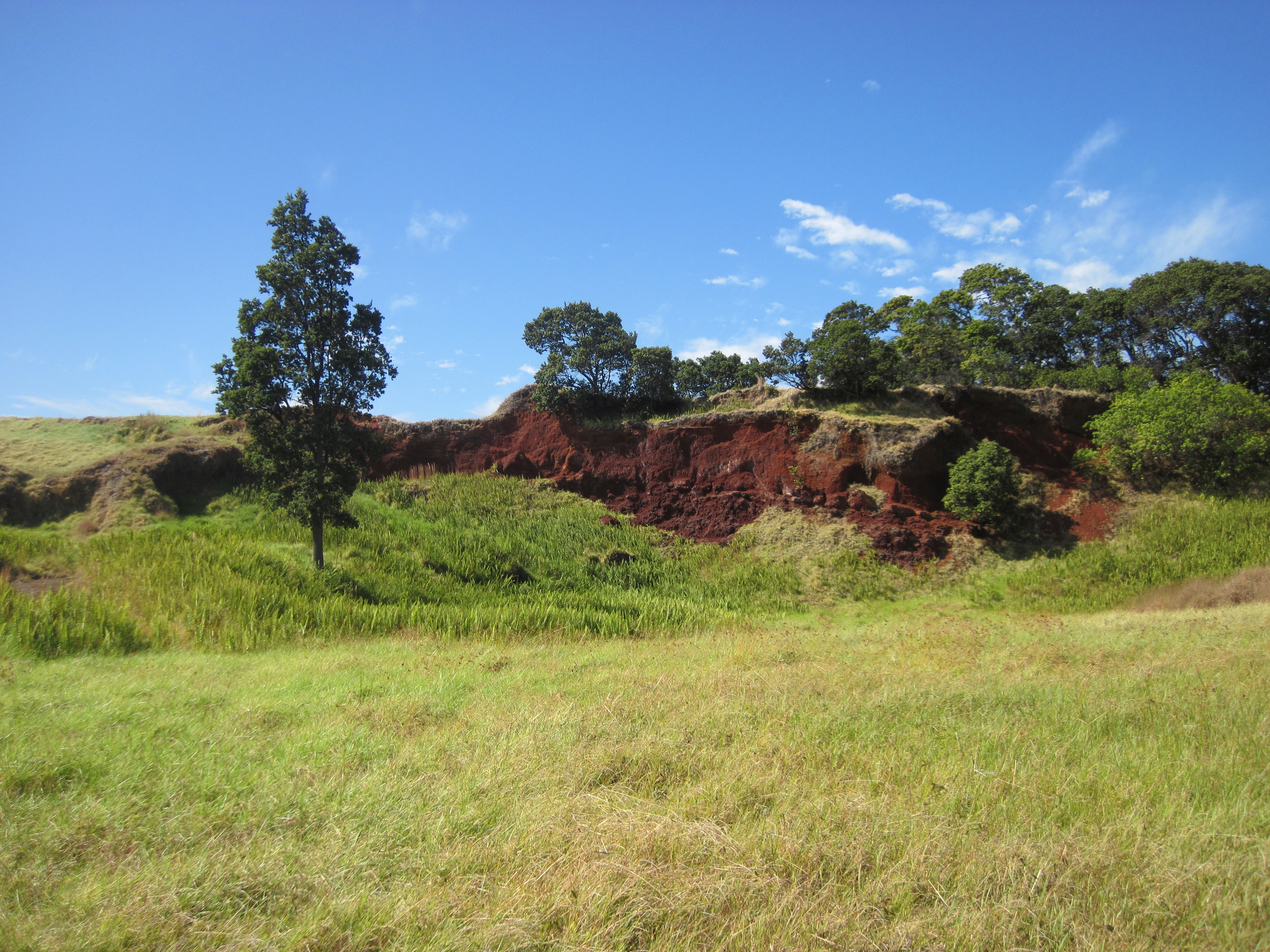 Students recently had the opportunity to visit Kuhuku Ranch, a special area of Hawaii Volcanoes National Park. Kuhuku Ranch was one of the largest ranches in Hawaii and sprawled out over almost 200,000 acres on the western slopes of Mauna Loa. The ranch was purchased by the National Park Service due to the unique ecosystems found within the ranch. The ranch includes several large pit craters, visible reminders of Mauna Loa’s violent past. The largest of the pit craters is about 500 feet across and almost 300 feet deep. The crater contains species that are found nowhere else in the world and only a handful of humans have ever been to the bottom, preserving the ecosystem as it had originally developed.
The students were excited to explore the area! The ranch has the appearance of a mystical movie set. Ancient Ohia Le’hua and Koa trees dot the landscape of deep flowing grass. Collapsed lava tubes give the landscape a rolling feel of mounds and valleys. After unloading the vehicles, the group began the short 1.5 mile hike to the crater while discussing the geological history of the land.
When the group arrived at the crater the students were amazed! The group spotted an I’o, or Hawaiian Hawk, swoop across the crater as well as an Apapane, one of the last remaining species of the endemic honey-creepers. These rare birds are found nowhere else on the planet and are currently listed as endangered species.
During lunch break, the group did an activity where students were given vague instructions on how to draw an animal. Everyone shared their drawings and spoke to how animals will adapt to fill niches in a ecosystem and how sometimes that can look a little weird (Hawaii originally had a duck fulfill the niche of grazing herbivore). That lead us to a conversation about our roles in social groups and how people adapt depending on the situations they find themselves in. We may find ourselves the leader on a sports team, a class clown in school, and a peacemaker in the family all in one day!
Words of Wisdom for Program Guides
By Matt Armstrong, Recruitment Manager
As the Recruiter at Pacific Quest, I speak to potential Program Guide applicants and current staff on a daily basis. I’m often asked a variety of questions from those interested in applying or currently working in this position. As the recruiter, I can’t help but want to spend extra time to answer the most common question, “Matt, what is it really like being a Program Guide and what are you looking for?” The answer to this can be long winded, and has elements of my own observations and experiences intertwined. I encourage people to first check out our updated website, which is full of information (including videos) of our therapeutic model. The great part is, having been a Program Guide myself at Pacific Quest for over a year, I’m in the unique position to share some specific examples. With this in mind, I’ve decided to use this space to dive a little deeper into the amazing job of Program Guide, including some wisdom from co-workers past and present.
There will always be an unknown:
You could spend an entire day speaking with current staff, observing and meeting people in the field. In the end, you would only have a small glimpse into what the day-to-day tasks and situations a Program Guide would encounter in this position. Because of this, being a Program Guide requires a great sense of adventure, flexibility and adaptability. I will never forget my first day out in a camp–I immediately burnt 5 pounds of oatmeal, had a group of teenagers laugh at me because I thought basil was cilantro and confused the lua (bathroom) with luau (traditional Hawaiian word for party or feast). Despite everything that was happening that first day, I felt comfortable. I can only attribute that comfort to my experience traveling for extended periods of time, being out of my comfort zone and adapting to a variety of situations culturally and logistically. Having experiences where you’re pushed out of your comfort zone, will greatly benefit you for this position. It also allows us to acknowledge what it’s like to be in the student’s shoes when first arriving to this new environment.
Making a 1 year commitment to living on the most isolated landmass in the world:
This too requires adaptability. A one-year commitment can present a deeper challenge than expected. Getting caught up in the magic of Hawaii can often make you overlook what it takes to fulfill an extended commitment in such a distant location. Some may struggle not being able to see family, friends and the sudden parting of a support system. Yes, this is another great opportunity to relate in that “out of comfort zone” experience a student may go through. I found the best way to overcome this change is to start creating bonds with both people and the land. This process is one of those big growth moments for staff and can happen quickly or over time. I hit this phase at 7 months, and looking at pictures of my friends and family on Facebook was not helping the situation. With the advice from a Supervisor, I chose to address this and make a positive change. First thing on the list was to find a hobby. I didn’t realize that I was living my life like a tourist for 7 months–never really creating structure and setting down roots. I tried spear fishing and absolutely loved it. Although I was not great at it at, having island friends join me gave me that true sense of community I was striving for. Second on the list was to stop talking about work on my days off. After every shift, Program Guides have a “de-brief”. This is an important time to hear and give feedback with the staff team, and even more importantly process the week and leave everything at work. I had some rough ones, my boundaries were pushed and my skills were tested. I made it through every shift stronger and more confident in my abilities. During a few off -shifts I made the mistake of continuing my processing outside of work with staff. It felt as though I never left the field, cleared my mind, or hit the “refresh” button. Learning from this was very important, and to be a successful staff, being aware of your own sustainability and what you need to be healthy is essential in providing continuous top-level care for the students.
A BIG heart is the greatest qualification:
Yep, the job is in Hawaii and there is always reason to celebrate such an opportunity if offered. At the same time, our Program Guides have so much more driving them than a change in location or better weather. It is a requirement that staff have a passion for helping “at risk” teens or young adults. This passion directly reflects to the experience and positive growth of our students and cannot be faked. Staff’s deep investment and selflessness allows them to work long days, spend extra time checking in with a struggling teen or young adult and setting up daily therapeutic goals with students. Furthermore, this passion drives them to continuously hold healthy boundaries, maintain safety, empower students, think creatively, and share in the success of the individual and community. As a staff working with a student who would arrive in our first stage Nalu (reflection) and later working with the same student in the final stage of Ohana (family), witnessing a student’s growth was inspiring. Because of the heart and dedication of all program staff, this progress in students is continuous and seamless. I still get that warm fuzzy feeling reflecting on those I directly impacted. Having a hand with a group of cheering teenagers as they celebrate the sight of a single red tomato, running to plant more for themselves and future students only further validated my hard work, and made the heart grow bigger.
Great advice from co-workers:
“Dude, get dirty”
So simple, but not always the first instinct. Putting your hands through a mound of freshly sifted soil, and having others join you is a genuine therapeutic moment. It often resulted in a great silence. A connection with the land that just can’t be explained.
“Stressed?, try this”
Grab a bunch of mint and breathe. I never thought that “putting things into perspective” had a smell, it does, and it’s mint. This quick action made me realize how something so simple as bush mint can provide such a jolt to the senses. Different reactions come from doing this depending on the individual; almost all result in focus switching to what is happening in that moment of bliss.
“We are all equal”
Pacific Quest staff work hard to not have a perception of being intimidating or above anyone else. If not presented warmly, our body language and tone can often result in defensive reactions by those around us. Being mindful of this, means taking those extra steps to meet every person respectfully and fully ready to listen to him or her. If someone is sitting, take a seat next to them. It may be bright outside, but removing your sunglasses and making eye contact with someone can mean the difference in that individual opening up or closing off. Go beyond helping with the land, volunteer to do a student’s task, put your own name on the chore board. This will only help with preconceived notions of what a Program Guide might be.
“Take ownership”
No staff is perfect, learning and growing together is part of the process. Taking ownership for even the smallest things in the field says a lot to those around you. Not immediately realizing I over-harvested the pepper plant the shift before, I once had to announce to all the students that I was responsible for not having the much-anticipated salsa for the week. Expecting the worst in making the announcement, I was surprised when students thanked me for owning up to it. What resulted, was a group led by the students on “accountability”. It was of course then, I also realized I’d forgotten to grab avocados to make guacamole for the night.
“Laugh”
It really is the best medicine. Laughing alone is okay, laughing as a group, even better. Create space to laugh or giggle everyday. Starting the morning with a smile and laugh can really set the mood.
Dr. Maile Green Joins Wellness Team
Pacific Quest outdoor therapy program is pleased to announce the hiring of Maile Green, ND, LAc, RN to our innovative wellness team . Dr. Green’s role will allow her to collaborate on a team of mental health and wellness professionals providing life-changing experiences for troubled youth from around the world. Providing the assessment and treatment of a wide range of health and wellness issues is no easy task, and Dr. Green will have an integral role offering top-notch care and services for Pacific Quest students and their families. As a Naturopathic Doctor, Acupuncturist and Registered Nurse, Maile will work side-by-side with our Medical Director, Naturopathic Doctor Britta Zimmer and Psychiatric Doctor Shelly Ham, working full-time to provide comprehensive “whole person” care for youth enrolled at Pacific Quest.
Maile received her Doctor of Naturopathic Medicine and Master of Science in Acupuncture from Bastyr University. She also holds a Bachelor of Science in Nursing from University of Northern Colorado. She is part of the American Holistic Nurses Association, American Holistic Medical Association and the American Association of Naturopathic Physicians.
Prior to joining the Pacific Quest team, Maile was a Naturopathic Doctor and Acupuncturist at Boulder Natural Health. In this private practice setting, Dr. Green provided naturopathic health care and acupuncture treatments for patients of all ages. Frequently used treatment modalities included dietary counseling, nutritional supplements, herbal and homeopathic remedies, biotherapeutic drainage, acupuncture and tuning forks applied to acupuncture points, and auricular medicine. Dr. Green has also worked as an emergency room Registered Nurse at the University of Colorado Health North, and HospiceCare of Boulder and Broomfield Counties, where her duties included triage, patient assessment and education, monitoring for a wide variety of emergent and non-emergent conditions, and coordinating with community physicians.
Welcome to the team Maile!
Fruits of a Different Color
By Julie Hofferbert, Ka’u Office Manager
I take my break under the mango tree and realize there are little green mangoes above. This starts me thinking about the tangerine tree near my office that provided me with warm juicy snacks throughout the day when I first started working at Pacific Quest. I realize that those treats should be appearing soon! There are a few other things that have excited and amazed me in the last year. Avocados! Living most of my life in Washington State, it was a treat to buy (at a very high price) under ripe avocados, then wait for days to make guacamole. Now, it seems to rain avocados! Big ones, little ones, green ones and purple ones–and they are always amazingly ready to eat. I never imagined just spreading avocado on a piece of toast or adding a couple of slices to a sandwich. Bananas! I’ve actually been able to watch a banana tree flower, fruit and be harvested. Who knew that a rack of bananas started with a beautiful red flower that, to me looks like a heart. Apple bananas, ice cream bananas and Cuban reds, to name a few, this plant is amazing, beautiful and delicious! The bananas in the grocery store in Washington were nothing like I get to enjoy now. I can drink my fruit now! Lemons and limes the size of apples! People give them away, just like we used to give away our “gone wild” zucchinis at the end of the season. Fresh squeezed lemon-aide and lime-aide are on the happy hour list, and something I can feel good about giving my 2 year old grandson. A Ka’u orange is a delicacy, wrinkled and brown on the outside and sweet and juicy on the inside. They say the uglier the better and THEY are right. Apparently these oranges are only found in the district of Ka’u where Pacific Quest is located. The first time I saw them I thought “they must be rotten”. But, they are the best oranges I’ve ever had. Papaya, mango, passion fruit, oranges, limes, lemons, bananas, avocados and dragon fruit too! These are just a few of my favorite things. I do miss crispy apples, juicy peaches, Rainier cherries and picking blackberries in late summer…those are just fruits of a different color!
Dr. Brian Konik Joins Clinical Team
Pacific Quest is pleased to welcome Dr. Brian Konik as a Primary Clinician. Brian received his B.A. in Psychology from The University of Florida, his Ph.D. in Clinical Psychology from The University of Vermont, and completed his predoctoral internship at the Outpatient/Inpatient Neurobehavioral Unit with the Kennedy Krieger Institute at the Johns Hopkins University School of Medicine. Dr. Konik’s research background focused on the relationship between anxiety and pain in children. He uses an eclectic CBT- and ABA-focused approach with his clients, which culminated at UVM and Johns Hopkins but which developed over many years in a variety of settings
Most recently Dr. Konik worked as a Clinical Psychologist in private practice in Annapolis, Maryland. For 10 years at Spectrum Behavioral Health, he treated adolescents and young adults with issues ranging from anxiety, depression, trauma, and substance use/abuse, to learning differences, significant behavioral problems, and developmental disabilities. Dr. Konik also has extensive training in and experience with parent/child interaction therapy, parent training, and family group counseling, as well as specialized training in suicide/crisis intervention. While in Annapolis, he served regularly as a contracted behavioral specialist with the local public school system and as a consultant with private, independent day schools, conferring with teachers and administrators on issues experienced by his clients, their families, and educators.
Brian has had enriching experiences at outdoor/experiential educational positions in the past and is enthusiastic about transitioning back to this type of lifestyle with his young family. His education, training, and experience allow him to provide a variety of new and complementary services to Pacific Quest’s dynamic wilderness therapy program.
Mālama Honua World Wide Voyage
Pacific Quest outdoor therapy program, recently celebrated the launching of the “Hōkūleʻa” and “Hikianalia” voyaging canoes on their Mālama Honua World Wide Voyage (WWV). Pacific Quest’s very own Kalani Kahalioumi will be one of the voyaging crew for the Capetown to Panama leg of the worldwide voyage.
The mission of the WWV is to “navigate toward a healthy and sustainable future for ourselves, our home – the Hawaiian Islands – and our Island Earth through voyaging and new ways of learning. Our core message is to mālama (care for) Island Earth – our natural environment, children and all humankind.”
Pacific Quest students harvested and offered 25 pounds of taro leaf for the voyager’s first meal. Students also attended the celebration, which took place at Palekai beach park in Hilo and participated in various activities, including a tour of the sailing vessels, ocean activities– such as stand up paddle boarding, outrigger canoe paddling, sailing and swimming. Pacific Quest staff and students were eager to show their support for this historic event!
Pacific Quest Welcomes Mark Dunn
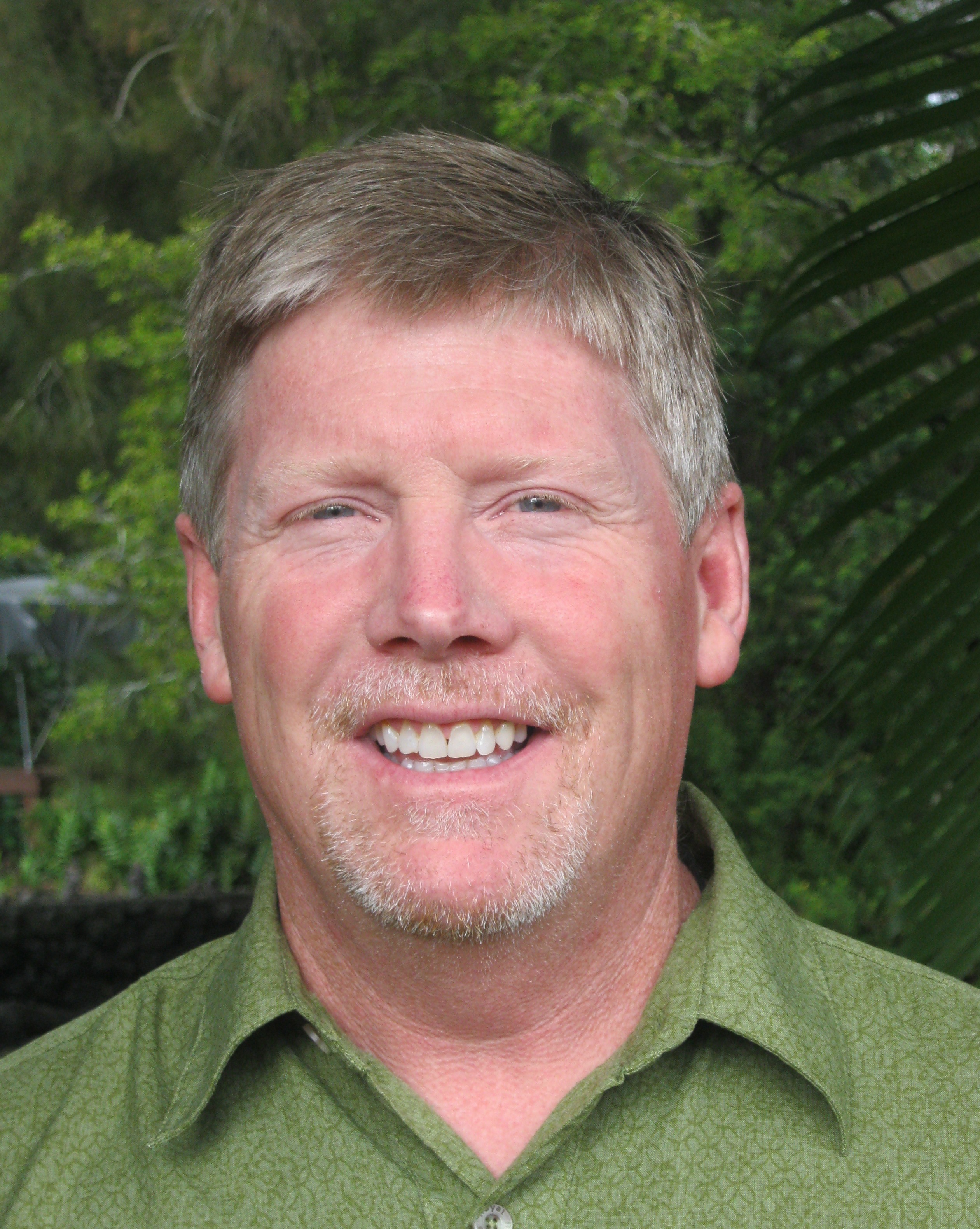 Pacific Quest wilderness therapy program is pleased to welcome Mark Dunn as a Primary Clinician! Mark has been helping individuals and their families in therapeutic settings for over twenty five years. In 1997, he became a Licensed Substance Abuse Counselor and joined a specialized team that developed specific clinical services for individuals with substance abuse issues. In 2002, Mark completed his Master’s Degree in Mental Health Counseling and soon earned his credential as a Licensed Professional Counselor (changed this year to Licensed Clinical Mental Health Counselor). In addition, Mark is a member of the Utah Mental Health Counselors Association and a seasoned clinician who brings insight and experience to each individual’s therapeutic journey.
Throughout his career, Mark has been involved in all aspects of the treatment and recovery process. He chose to specialize in the treatment and care of adolescents, young adults and their families because of the unique developmental challenges. Mark believes change is most successful when passion for living replaces destructive behaviors. His experience allows him to create research-based, innovative methods to assist each individual reach clear, attainable goals and remove the barriers to success in life. Mark states, “I believe therapy is a partnership that begins with a commitment to a process of learning and healing. One of my greatest strengths is that I combine directness, compassion and humor to create a relationship that inspires genuine change.”
Lessons From the Field
Ben joined the Pacific Quest team in November of 2011. His experience, skill, and genuine enthusiasm for working with young adults made him a trusted leader when Pacific Quest opened our new young adult program at Reeds Bay. Ben is currently earning his Masters Degree in Counseling Psychology from Pacifica Graduate Institute, and will be leaving Pacific Quest this summer to begin his training as a Counselor with an innovative young adult transition program in Boulder, Colorado.
Before leaving the Island, Ben asked to share some of the lessons he learned from his students, and friends, in the gardens of Pacific Quest.
- “But” negates: whatever you hear before someone says “but” ISN’T true, so ignore it. “I love you but…” means I don’t love you. “I did it already but…” means I didn’t. “I will but…” means I won’t.
- Validate effort: pay more attention to people’s effort than their results. It’s easy to succeed at what you’re already good at. It’s harder to succeed when you’re trying something new. The student who is struggling the most is often the one who is growing the most. Save your validation for students who are growing rather than succeeding.
- Focus on your growth: When you feel insecure, practice! Focus on your growth rather than on your success. You can succeed at learning on the first try…and the hundredth.
- Frustration is blocked goal achievement: if you’re feeling frustrated reassess your goals. If you find yourself frustrated that a student disagrees with you, imagine that same disagreement if your goal was to express yourself rather than be agreed with.
- Power struggling: If you’re locked in a power struggle, don’t tell the student what to do. Just tell them what you are going to do.
- Non-solution based resentments vs non-resentment based solutions: you only get two choices brah.
- Tell on yourself: find out what you do when you’re uncomfortable. If you don’t know, ask someone who loves you because they do. When you recognize yourself doing it, tell on yourself and ask for help before you hurt someone.
- Fear vs excitement: The same neurotransmitter responsible for fear is responsible for excitement. The brain distinguishes between the two based on our expectations. If I’m challenged to a game of basketball and I think I’m gonna win, I feel excitement. If I think I’m gonna lose, I feel anxiety. What we expect doesn’t control what happens to us. It does control how we feel about what happens to us.
- Feeling my feelings (fmf): Sometimes students don’t know how they feel. Sometimes students know how they feel but don’t know how to describe how they feel. Sometimes students know exactly how they feel, and how to describe it, and don’t want to do either. Each one of these students needs something different from you.
- What if this was my kid?: Ask yourself this question often. Sometimes it will keep you from doing something selfish. Other times it will inspire you to do something selfless.
- Have fun: On your best days, your students have probably never met anyone like you and they want to grow up to be just like you. Life cannot only be about growth…there needs to be room for fun. When we have fun, we are showing our students that responsibility doesn’t have to feel overwhelming. When you are having fun, you are showing your students that adulthood is worth it.
By Ben Digati
“I am an independent capable man worthy of love and respect”
The Land Dance: Farming as Initiation
By Travis Slagle, Horticultural Therapy Director
The following article was published in ‘Circles on the Mountain’ Rites of Passage in a Rapidly Changing World, Issue #17, 2013. This is an annual publication of the Wilderness Guides Council.
Imagine what the world would be like if wilderness guides of the future became organic farmers. What if the people entrusted to witness life’s most significant transitions traded in the more esoteric theories of rites-of-passage for a simple shovel and pitch fork? For many people, the lure of the underworld and the solace of the wilderness is a palpable force. Yet, despite the best efforts of shamans, mystics, and visionaries of the modern era, the practice of wilderness initiation has become increasingly inaccessible to many of the estimated ten billion people alive today, all of whom face diminishing resources and the intrinsic need to feed themselves and their families. Here is the crossroads where farming and rites-of-passage meet, raising the question what if rites-of-passage guides were responsible for restoring the nature-centered rituals of planting, harvesting, and cultivating the soil? Could this be the key to overcome the struggle of integration and the inherent loneliness of a return from a wilderness experience?
As we all know, the purpose of going to the backcountry for ceremony and initiation has never been to stay there. In fact, going beyond wilderness, the growing edge of rites-of-passage isn’t to delve deeper into social isolation, but instead to relearn the skills and collective wisdom of incorporation. The future needs “incorporation guides” to lead us from the mountaintops and deserts of the wilderness to the urban gardens, biodynamic farms, and permaculture communities that are thriving in cities, country-sides, and backyards all over the world. Here, we can really put into practice the work and struggle of incorporation. Farming is a fundamental skill that allows individuals to provide tangible and universal gifts for a growing population and increasingly diverse society. Thus, there is no better time to bring back the enduring and once sacred pursuit of nurturing the food that sustains our communities and heals the Earth.
When we do this, the seeds we plant in council will no longer be symbolic. Rather than sitting and observing nature from a distance, the time has come to lean into the sun each morning with a watering can, to kneel on the earth while pulling out weeds and thinning beets, to feel the life teeming beneath the surface as we sift through the soil to make space for new roots. The life of a farmer is a reminder of the importance of working with nature as opposed to conquering, traversing, or simply getting through it. A farmer’s work is a humble and thankless job that gives our society the luxury of idle time. Yet, with all the comforts of modern society, have we not spent enough time over-processing the anxiety and uncertainty of change in our lives, and still come back to the same questions? The farmer knows the work that’s needed to integrate the wisdom of nature through consistent and meditative action; leading society on a path of integration that measures the gravity of our ideals with the heroic task of feeding our neighbor.
The process of growing healthy food and building a more sustainable community was once the central activity of human civilization, and the foundation of a reciprocal relationship with nature that has sustained people on Earth for thousands of years. Nurturing the food we eat offers the most basic life lesson and cornerstone of sustainability, teaching us that what we give directly impacts what we can take. The wisdom of sustainable farming provides a powerful example of incorporation, revealing the magnitude of one’s intentions through the practical and tangible results of their actions. With this in mind, it’s time for wilderness guides to begin offering medicine walks in urban gardens, and re-introduce the concepts of severance, threshold, and incorporation through the simple life cycle of a plant.
Going back in time, almost ten thousand years ago, nomadic people decided to put their energy towards cultivating the land versus traversing it, and in the process initiated the dawn of human civilization. What caused people to make such a dramatic shift in their relationship with the Earth is debatable, but likely attributed to a combination of both internal and external conflicts. The questions our ancient ancestors asked themselves thousands of years ago could be strikingly similar to the most pressing questions being asked today. Questions like, how can we spend more time with our family and less time hunting (the modern hunt being for a paycheck)? Are we tired of wandering around and feel the need for community? How will we ensure our children will have a better life than our own, and how can we live sustainably with the glaring reality of more people and increasingly scarce resources? These are the questions that have come full circle, leading wilderness guides and agriculturalists to an important moment in human history. Like all indigenous ways of knowing, the role of the land and a farmer’s relationship to it were inseparable from spiritual practices leading to powerful ceremonies that honored growing seasons and the relationship between plants and the phases of the moon. Just as the nomad evolved into an agriculturalist, the questions that led to a new era of human experience have now returned to the forefront of modern society. Thus, wilderness guides and farmers alike must recognize the need to answer these questions in a way that restores balance and integrity between people and their relationship with themselves and the mysteries of the Earth.
The world has always been rapidly changing, like the rise and fall of the ocean, or the shifting of the constellations that only recently became mottled by the automated turn of satellites. In an information age that has spun out into an era of crippling anxiety and distraction, what matters more than an isolated wilderness experience is an initiatory process with the potential to transform society; an activity that universally connects us to our most primal need and ancient practice of providing not just for ourselves but for the needs of others. It’s said that change is the only constant in the world, and life and death walk side by side. With cities that are now exceeding twenty million people living within a few square miles, we are confronting the possibility that some of the changes we face are no longer a part of nature, but instead are manifested by a loss of relationship with it, and perhaps a desperate attempt to hold onto nature as it slips away. Herein lies a great moment of transition, requiring more than “threshold guides” and farmers doing their work in separate places where their paths often never meet. It’s time to let go of rugged individualism and renegade attitudes that no longer serve our community, and acknowledge that the nomadic lifestyle and fervor of wilderness survival is not the model for a sustainable future. The purpose of rites-of-passage has always been to serve a community not the ego, and what better way to humble ourselves and restore our communities than working side by side creating ritual and ceremony through the timeless action of planting seeds and honoring the struggle of growth in a garden.
To be a wilderness guide and a farmer at this time in history is to know what it feels like to beat a drum in the darkness, and to bare witness to a sacred wound that seems to never stop bleeding. Farming is a good reminder that learning from nature is not a one-way street; it requires giving back, a return to community with something to offer, integrating through action a sense of purpose and necessity within society. For wilderness guides and sustainable farmers willing to share the responsibility of initiation, and help usher the world into a more hopeful future, a primordial land dance awaits us!
Raising the Bar
By JD Daubs, Admissions Director
I’ve had the opportunity to work in our industry for 10 years and have seen wilderness programs adapt, change and respond to the growing therapeutic and clinical needs of students and families. In my opinion, there’s not a better treatment option for families that have exhausted most or even at times all resources to find help for loved ones. I commonly say that we “unstick the stuck”; meaning we offer solutions to students and families when they are in a pattern of unhealthy and at times very damaging, harmful behaviors that have not been changed with all types of intervention and treatment.
Pacific Quest has responded the best in the industry to the growing need of students and families by creating an environment that cultivates and promotes sustainable treatment for our students and families. I want to take a moment to let you know how Pacific Quest’s services are bar none to the rest of the industry! Please take a moment to read what we have to offer below.
Wellness and Medical Support
- Pacific Quest is the only outdoor therapeutic program with a full-time ND (Naturopathic Doctor), staff Psychiatrist and a consulting MD who sees adolescents and young adults on-site, two full-time Registered Nurses, a full-time Paramedic, and three wellness assistants.
- Pacific Quest is the only outdoor therapy program with a truly integrated Medical and Wellness Team, working in tandem with the Primary Therapist, support professionals (as applicable) and parents to address and manage wellness for each adolescent/ young adult.
- Upon admission, Pacific Quest provides comprehensive, individualized Wellness Plans for each adolescent and young adult. Wellness Plans are fully transferable to the next setting (aftercare or home), further supporting sustainability.
- Pacific Quest’s Psychiatrist, ND, RN and Primary Therapist meet with each adolescent/young adult (and communicate extensively with his/her family and other support professionals, if/when medication review is warranted).
- Pacific Quest’s Medical Director, Clinical Director, Program Director and Admissions Director collaboratively review all potential admissions prior to placement.
- Pacific Quest is the only outdoor therapy program with a full-service hospital just 15 minutes from each location.
- Pacific Quest is the only outdoor therapy program offering a 90% organic and whole-foods diet.
- Adolescents and young adults grow, tend to, and harvest all fruits and vegetables and engage in farm-to-table meal preparation. All meats are organic and secured locally. A wide variety of diets can be accommodated, including but not limited to: allergen-free, gluten-free/Celiac, dairy-free, vegetarian or vegan and/or kosher.
- Pacific Quest is the only outdoor therapy program with full-time, awake Night Staff 365 days per year. Pacific Quest is committed to this feature for added safety and security.
Clinical and Therapeutic Support
- Each adolescent or young adult receives two individual therapy sessions per-week. (Note: standard practice for most wilderness therapy programs is one therapy session per week.)
- Each adolescent/young adult is engaged in multiple therapist-facilitated groups weekly. Masters/licensed and/or Doctoral level clinicians lead all groups. (Note: other wilderness programs typically offer groups led by field staff or other non-clinical staff.)
- Pacific Quest’s clinical team is comprised of (8) full-time Masters level clinicians plus (3) full-time Clinical Psychologists and (1) full-time Doctoral candidate.
- Pacific Quest has a 2:1 staff to student ratio.
- All of Pacific Quest Field Instructors hold college degrees and/or a minimum of three years of related therapeutic experience.
- Pacific Quest offers a full menu of on-site Psychological Testing services.
- Pacific Quest offers unparalleled family support, which includes but is not limited to:
-
weekly update calls with a Masters or Doctoral level clinician.
-
a dedicated Family Therapist for parents/siblings (as appropriate).
-
a dedicated Parent Coordinator who is “on call” to parents and serves as an immediate one-stop, liaison to all departments at any time.
-
an interactive Parent Curriculum Manual providing parents with guidance, tangible tools and education.
-
a mid-stay (on-site) Parent Workshop (adolescent program) with adolescent participation.
-
mainland Parent Workshops and events for current and alumni families.
-
a professional Outreach and Admissions team located in the mainland and always accessible. Additional family therapy and sibling support (as applicable) is included in tuition. Coming Soon! Pacific Quest will offer weekly, open-forum group chats (online and via telephone) facilitated by highly experienced, Masters level clinicians for parents of enrolled adolescents and young adults. Calls will provide a supportive forum for parents to ask questions and receive guidance on a wide variety of common parenting challenges. These sessions will assist parents in supporting their adolescent or young adult child while at Pacific Quest and after he/she transitions.
Additional Defining Features
- Pacific Quest is the only outdoor therapy program, which uses Horticultural Therapy to support increased emotional health and well being for adolescents and young adults. Horticultural therapy utilizes organic gardening in conjunction with proven therapeutic modalities to meet specific therapeutic treatment goals.
- Pacific Quest is the only outdoor therapy program to utilize this cutting- edge, client-centered, treatment model to enhance social, cognitive, and physiological functioning with the primary goal of improving health and inspiring motivation for change.
- Organic gardening provides a living community where a variety of vital life skills may be practiced, mastered and generalized long after a young person’s Pacific Quest journey.
- Pacific Quest is not corporately or remotely owned. Owners/operators live near the program and work side-by-side with staff on-site.
- Pacific Quest operates in a mild and temperate climate year-round in calm, lush and peaceful surroundings.
- Pacific Quest operates on privately controlled land (not public land).
- At Pacific Quest, all adolescents and young adults sleep indoors in simple, yet modern bunkhouses.
- Sustainable, practical life skills (vs. rarely used survival skills) are taught, practiced and mastered. (These skills include but are not limited to: time management, goal setting, organizational, planning, community living, meal planning and cooking, self care and grooming.)
- Pacific Quest participants engage in true community service by preparing vegetables/fruits for harvest and sale at local farmers markets and then donating proceeds to local children’s charities, or by participation in land and service projects designed to protect Hawaii’s natural heritage. Young adults and adolescents learn to be stewards of their communities and to give of themselves to others
The Healing Power of Water
By Chris McConnell, Program Supervisor Reeds Bay
Aloha, my name is Chris and I have worked with Pacific Quest for a little over two years. During this time, I have seen this company go through enormous transformation, and have watched it grow into one of the most progressive therapy programs in the country. I am deeply grateful for the knowledge and personal growth I have gained. Because of my experience at Pacific Quest, I will be moving on to an MSW program in the fall. Reflecting back on my experience in Hawaii, I can honestly say that each year of my life has been better than the last and that Pacific Quest has been a big part of that growth and self-awareness.
Working at the Reeds Bay Young Adult program, it is hard not to have a sense of calmness due to our blessed location among cold ponds along Hilo Bay. In the melee of chaos that sometimes consumes our day, one may find peace by taking a few breaths and gazing into the streams and ocean. This can have very calming effects for students who respond to visual stimuli. While writing this I asked some students and staff their thoughts on our location and what they think while they are at the waterfront. Here are some responses:
Home, stillness, problems melt away, beauty, peaceful, sit with own mind and be present, serenity, insignificance in the best way, space away from it all, cool with fish, a game-changer and a shift in the mind space
This is just one of the tools we can utilize in our quest to help these students grow. I will end with a quote by Loren Eiseley:
“If there is magic on the planet, it is contained in water.”
A Growing Concern
The following article by Diana Ballon was featured in Cross Currents-The Journal of Addiction and Mental Health Autumn 2012 | Vol 16 No 1.
A Growing Concern
Horticulture therapy offers potent opportunities for healing and growth
By Diana Ballon
Work in the garden “takes priority over interacting with my symptoms,” says Toshio Ushiroguchi-Pigott. “It’s a kind of medicine in a way, to be outside,” caring for plants, harvesting, weeding and seeding in the greenhouse on days it’s too cold outside, says Toshio, who enjoys dropping by CAMH’s Sunshine Garden near his home to garden whenever he can. Run by FoodShare Toronto in partnership with CAMH, the Sunshine Garden uses horticultural principles to teach clients about food security, provide skills training and nurture self-confidence and healthy leisure activity.
“Going outside in a park is what I used to do when I was overwhelmed by symptoms,” says Toshio, an outpatient with CAMH’s Archway Clinic. He has found it’s even healthier to actively work in a garden; his involvement in gardening has since propelled him to enroll in a landscape design certificate program at Ryerson University.
Many people—like Toshio—have discovered the healing powers of horticulture therapy (HT), a formal practice involving the use of plants, the garden and horticultural activities to “promote well-being for its participant,” as defined by the Canadian Horticultural Therapy Association (CHTA). The benefits of horticulture therapy can take many forms, from physical and cognitive, to spiritual and emotional.
Gardening and surrounding yourself in nature have obvious therapeutic benefits that have been recognized for centuries: as far back as ancient Egypt, “mentally disturbed” royalty were advised by court physicians to roam in the palace garden as a means of relaxation and healing. Over the past 60 years, horticulture therapy has increasingly been recognized as an evidence-based practice. Horticulture therapy study has evolved to educational programs that offer assessment procedures, and concrete therapeutic goals for its participants, based on each person’s needs. The therapy is now practised extensively in a range of Canadian settings—in prisons, vocational rehabilitation programs, psychiatric hospitals, consumer-survivor businesses, community gardens, with mental health and addiction programs—and with almost any population group you can think of, from children and troubled teens to older adults with dementia and people with physical disabilities.
When I was first assigned this story, I thought, can I actually write 2,500 words on this topic? Aren’t the calming benefits of gardening and being in green space obvious, and the meditative, soothing effects of weeding and planting relatively predictable? What I found was a much more researched and sophisticated practice than I had imagined.
Countless studies attest to the success of horticulture therapy in everything from reducing recidivism in at-risk youth, to reducing aggression in adolescents who have been institutionalized, to reducing cortisol levels, improving self-esteem, helping people to feel less stressed and anxious, reducing the severity of depression and improving perceived attentional capacity and ability to concentrate in people who are depressed—the latter from an article published in a 2010 issue of the Journal of Advanced Nursing.
“In the past 25 years, horticulture therapy has really been given a whole lot of attention and research,” says Travis Slagle, a land supervisor for Pacific Quest’s Sustainable Life Skills program in Hawaii, speaking on LA Talk Radio about his program.
“You are in a restorative environment. As I tell the students, the garden will never judge you…. It places the client or student in a caregiving role, and gives them a sense of efficacy and purpose in being able to provide the care, rather than their being the ones that need the care,” he says.
The first registered horticultural therapist in Canada, Mitchell Hewson introduced horticulture therapy into psychiatry in Canada in 1974, with the opening of the horticulture therapy program at Homewood Health Centre, a mental health and addiction facility in Guelph, Ontario. It’s a program that he still manages almost 40 years later.
In this time, the program has burgeoned: about 230 patients participate in the program each week, with HT being used as an adjunct to other forms of treatment they will receive while they’re at Homewood. The program has three full-time horticulture therapists on staff, and about 40 volunteers and interns that come from as far away as Korea, Japan and China to train in how to use HT as a specialized tool in mental health/psychiatry. With a 47-acre property as backdrop, landscaped gardens, a state-of-the-art conservatory and teaching classrooms, it is an ideal setting for learning—and finding sanctuary in the process.
Hewson explains the seductiveness of the teachings, and the universal appeal of being in green space. “Most people can relate to nature in some way. You walk on it. You eat it. You breathe it. It’s all around you.” Whether you appreciate the smell of a rose, or the taste of mint, somehow we can all find a connection to nature.
“Where do you find a sense of peace? A sense of sanctuary?” he asks rhetorically.
Rather than having a preset program for patients, Hewson tailors the program differently depending on the person’s diagnosis—whether it’s anorexia, posttraumatic stress, a drinking problem or a combination of these or other mental health or addiction issues.
In 2005, Homewood began using horticulture therapy to treat patients with concurrent substance abuse and posttraumatic stress disorders. “The premise of this program is to provide sanctuary, bereavement and reconnection through community,” says Hewson. The seven-week program may include what he describes as “psychological burials,” in which patients bury, burn or plant an object such as a letter or audiotape—something that physically connects them to the moment of trauma— as a ritual to help them move from being a victim to being a survivor.
In illustrating the power of this exercise, Hewson gives the example of a woman who expunged the trauma of an abusive father by crushing and smashing roses from her father’s coffin and putting them in Homewood’s memorial garden on the last day of her stay. She later describes her experience: “Since then I still have had painful memories of my father’s abuse, but I now feel surrounded by my higher power and I feel safe and comforted.”
In Homewood’s horticultural program for people with eating disorders, the focus is slightly different. With eating disorders, “they seek perfection” and control, says Hewson. Through the program, “we bring patients into a safe environment, and then work to help them replace their preoccupation with food with a healthier, creative focus,” he says. We offer activities where they can have fun, and feel joy, Hewson says, letting go of the intense focus they’ve had toward food issues. This may involve designing a miniature Japanese garden in a glass container, making botanical prints, going on nature walks or experimenting with herbology. They also use psycho- aromatherapy, in which they make or apply creams and essential oils with plant derivatives for massage, and as a way of self-nurturing. “Most people need to be nurtured,” says Hewson. Smells can also be strong triggers for trauma and other memories that can be replaced by more calming aromas created from these plant-based creams, explains Hewson, who is also a certified aromatherapist.
A horticulture therapy practice for dementia involves using the same client-centred Rogerian approach as is used for other populations, but adapting the pace of the program, so that clients are still challenged and stimulated by the work, without becoming overwhelmed. Hewson, who lost both his mother and mother-in-law to Alzheimer’s, says he finds this work particularly rewarding. Patients benefit from the social aspect of gardening, the physical work involved, and the “memory enhancer,” effect—recalling past skills they had in gardening, and gardens they’ve enjoyed. Therapists can assess patients’ cognitive functioning and build a rapport with them without the direct confrontation required in a more clinical setting. Working with plants also builds their self-confidence and improves their mood: activities range from group projects to dry herbs and make wreaths, to smashing pots and hoeing as a way to let out anger and aggression.
With patients with addictions, Hewson describes using various therapeutic plants—such as the dwarf orange tree, whose orange blossoms have antidepressant properties. Certain plants can be used to make creams, which can be self-soothing and nurturing to clients, and an alternative way of calming themselves, instead of using addictive substances. Clients who are in the program for 35 days will take a cutting from a plant, learn to nurture it, and bring it home with them.
Transplant yourself to the other side of the world, and you’ll find a program that draws on healing powers of the garden and rich metaphors of growth in its work with teens. Although not a registered horticulture therapy program, Pacific Quest is an intriguing outdoor therapeutic program where teens and young adults live for two to three months to learn what they refer to as a “sustainable life skill,” which includes elements of horticulture therapy as well as a wellness curriculum and rites of passage work. Students sleep in bunkhouses, and spend the bulk of their days in organic gardens where they tend plants, weed, harvest and then use the produce they’ve cultivated to cook for each other, and sell to a local farmer’s market, says Kathryn Kasenchak, one of the program’s psychologists.
“Growth of the plant can reflect growth of the self,” and transplanting can be a rich metaphor for the process students go through, says Kasenchak. “Like plants, the students’ roots can outgrow the environment they grew up in. They may need to temporarily leave home, as a way to recognize and then abandon maladaptive patterns that they’ve become familiar with. When they do, they—like plants—usually go through some shock. But they come to recognize that change doesn’t happen when you’re comfortable. They may not do so well at first, but it [leaving home] is necessary to achieve their full potential,” she explains. Students go through their own process of transplanting.
“I like to use the analogy of the soil,” says Kasenchak. “Soil is dirty, but it also nourishes.… Sometimes the work is dirty, because it involves dredging up difficult issues to then move forward.”
In the program, therapists give different roles to students based on therapeutic goals; for instance, they may assign a resident who has had a hard time addressing difficult things in his or her own life to work in composting. “Compost becomes analogous to these unaddressed issues. The longer it is unattended, the grosser and stinkier it can become,” says Kasenchak. Someone else who needs nurturing, and has family of origin issues, may be assigned to work in the nursery tending to baby plants, she says.
Gardening work is also used to teach students skills that can be directly applied to their own lives, such as executive functioning, Kasenchak says. “A lot of students who have gone through the mental health system have trouble with planning, task initiation and completion,” Kasenchak says. “The garden helps them to break down different tasks in life into more manageable pieces.” They learn math skills involved in portioning out food, and gain information on nutrition, diet, cooking and time management. “We also encourage and teach mindfulness practices and suggest certain activities, such as weeding, be done silently, so they can see what arises for them.”
Weeding is another interesting metaphor, she muses. “With weeds, you have to keep tending the garden. You get the weeds out, but then they come back next week…. Some weeds are deceiving because they can look really pretty.”
The program has a community focus, in that each resident’s role is interdependent, and proceeds from sales of their produce at the farmer’s market goes to community organizations. As Slagle comments in the radio interview, their approach reflects a whole new paradigm, a shift from the “rugged individualism of our culture to a more collective approach of what we give versus what we take.”
In offices overtop PARC—Toronto’s Parkdale-Activity Recreation Centre—HT is an activity that people can make a living off. Here at Parkdale Green Thumb Enterprises, employees are hired to plant, water, prune, fertilize, mulch, weed or do other landscaping services to beautify Toronto streets and businesses. Employees at this consumer-survivor business all have mental health issues, and struggle with poverty—plights that are common in Parkdale where substandard rooming houses, boarding homes and a psychiatric hospital have been home for many people trying to rise out of difficult conditions.
“A lot of people have been isolated, and told they can’t work or shouldn’t work, or when they tried to work, there was no accommodation, so they’re afraid to work,” says Green Thumb’s business manager Maggie Griffin. “You have to understand the culture of people with mental health and addiction issues,” she says. Many have experienced extended abuse, some have come from small communities, are recent immigrants or refugees, or may have lived on the street or couch surfed.
At Green Thumb, employees are given a chance to succeed, rather than being further stigmatized and alienated for the problems they are trying to cope with. And they can do this work within the often meditative and nurturing environment of plant life.
“We’re here to support, but we’re not social workers,” says Griffin. If someone needs accommodation, to take time off, they can do that without getting fired or being asked for a reason why they can’t work. Staff are paid to participate in staff meetings, paid for their training and can take part in different staff outings. They work three hours per day for as many days a week as they can manage, and are paid between $10.50 and $15 per hour for their work.
One employee has been at Green Thumbs for almost 11 years. “I feel a lot better about myself,” she says of her work there. “I can keep a job.” After leaving an abusive marriage, coming to Green Thumb meant that she could get back on her feet, and even afford a shared apartment near the program.
Of course, the seductiveness of green space and the power of not just observing, but participating in the plant world around us keep many of us sane. I rely on daily walks with my dog in High Park to bring stillness to an often overengaged mind. Thoughts slow down. I feel the same breeze that brushes against the leaves, that nudges the bushes, that sweeps past the trees.
On Hewson’s homepage, he quotes Thich Nhat Hanh, who writes, “Walk as if you are kissing the Earth with your feet.”
Hewson himself comments on the “magical and curative powers of nature… Nature is forgiving; if a plant dies, another can be grown in its place.” While gardening may be dirty, the effects can be restorative. And the experience of caring for an other, rather than being cared for, has potent benefits.
Diana Ballon is an editor at CAMH, and a freelance writer specializing in mental health issues.
Horticultural Therapy and Its Benefits
Lea Tran is the horticultural therapist at the Guelph Enabling Garden in Guelph, Ontario. In addition to running inclusive, imaginative and lively programs and the garden, she blogs about all the events and takes photos too. She and Trina Alix, a fellow registered HT, put together this list to show just how many benefits can be found in HT. Read more at https://guelphenablinggarden.blogspot.ca
- Cognitive benefits
- Promote memories
- Learn and share skills
- Communicate ideas
- Make choices and plan
- Use the imagination
- Maintain/improve attention span
- Emotional benefits
- Increase self-esteem
- Relax in a beautiful setting
- Discover interesting new hobbies
- Feel like an important part of the community
- Feel empowered and independent
- Express oneself creatively
- Physical benefits
- Hands-on work
- Sensory awareness
- Nutritious organic herbs and vegetables
- Fine/gross motor skills
- Eye/hand co-ordination
- Strength and balance
- Exercise, fresh air and sunshine
- Spiritual benefits
- Sense of purpose and meaning
- Life review
- Motivate and inspire
- Acceptance
- Sense of interconnection with wildlife
- Presence
- Heal with energetic properties of plants
- Social benefits
- Get outside, meet new people and network
- Teamwork-building skills
- Make a difference in the community
- Improve supportive relationships
A Year on the Path of Growth
By Rob Jarrett, Admissions & Parent Communication Director
It’s a Thursday afternoon at 2PM PST and my blog article is due tomorrow. I know I’m taking it all way too seriously, but I just reread and deleted the rough draft that I have been working on for the last couple of weeks. As tempted as I am to pull it out of the trash and just be done with it, I’m supposed to be writing about MY experiences at Pacific Quest and what I’ve written so far has nothing personal in it. Last year I wrote about my work in admissions and the conversations that I have had with potential families, but there is so much more to it than that… I need to review and reflect on this last year, on my position change, and on any significant experiences in my new role as Parent Coordinator while I try to find a connecting theme…
It’s a Friday at 7AM HST and I’m at the adolescent camp in the Ka’u region of the Big Island of Hawaii. The students in camp are all “Ohana” members, meaning that they have been in the program long enough to be invested in their own treatment and for the most part, they have forgiven their parents by now. I have already confessed to them that I am probably one of the people who talked their parents into enrolling them, and it is not clear whether they have forgiven me yet.
They know that it’s my job to explain to parents what the program is really like and that I intend to experience it like they did. They are delighting in explaining hygiene procedures to me as I prepare to take a camp shower. I know that they usually wait until the afternoon sun has warmed the catchment water tanks before showering, but I play along when they say “morning showers are the best; so refreshing…” .
The previous day, I had learned that the hardest part of the program for me is “Nalu time”. Nalu is the Hawaiian word for “reflection” and it involves quite a bit of sitting with your own thoughts. I followed all the procedures during my “outfitting” and gave up my personal belongings including my smart phone. I didn’t realize how dependent I was on this little device for “self comfort” until I spent several hours in my “hale” (a personal shade structure and the Hawaiian word for home) with nothing but those thoughts. I couldn’t even distract myself with writing or drawing because I had not earned my journal yet. I quickly caught myself going a little stir crazy, eventually singing and reminiscing about my own childhood. By hour 4, I was reliving childhood traumas and second-guessing parenting decisions that I made 5 years ago. Today, it is such a relief to finally be socializing with a group of people again. As much as I totally buy into the concept and power of Nalu time, I still don’t like it.
That previous day was certainly a contrast to the outing I would be going on the next day. With my honorary Ohana I would take an idyllic walk down a very private coastline past the ancient fishing village of Miloli’i which would culminate at the “salt and pepper” sand of Honomolino beach. The community service based beach cleanup would be a great precursor to the swimming, body surfing, and picnicking that was to follow, and would make me feel that I had done my “malama” (Hawaiian for stewardship) to the land and should feel as welcome as any native Hawaiian.
It’s a Wednesday at 1PM HST and I’m in in Hilo, swimming in Reeds Bay with a young adult student and his therapist, Toby Mautz. This student is really struggling with the idea of getting invested in the program and has yet to open up in a genuine way. All the students have individual and group sessions each week and I have been allowed to listen in and even participate in his individual session during my visit this week. I have always known that Toby has a unique approach but its not until we are swimming out past the sailboats and talking about our fears of sharks that it occurs to me that we are actually having the session right now, not just getting to know each other first. We end up swimming under an underwater arch and sit in a unique rock formation called the “hot tub” when the student really opens up, talking about his father, their relationship, his problems at school and by the end he is agreeing to really give “PQ” a try. By this time we are fighting back up the channel against the freshwater current into the much colder “ice ponds” that grace the center of the campus at the young adult program. I’m sure that I’ve witnessed a significant breakthrough and that we have finally gotten the student to crack open and share the real him, but in a later discussion Toby disabuses me of this notion, telling me that “he’s still just trying to tell us what we want to hear… we’ve got a long way to go”.
It’s a Sunday morning at 8AM Eastern Time and I’m talking to a dad in Connecticut. I’m still in my bed in San Jose California where its 5AM but I’m grateful its not the 3AM that it is in Hawaii. This dad is facing one of the biggest struggles he has faced as a father. He has a little girl that has been adored and taken care of in every way for 15 years. He has protected her and fed her and comforted her… and rescued her from every hardship that she has ever faced until he just recently recognized that this was not enough, and sent her to our program in Hawaii.
Now she is begging him to rescue her again, and using the only techniques that she has learned; how to push her parent’s buttons. She has written a “rescue letter” from an organic garden in Hawaii. Of all the challenges she has faced in her life, this is the hardest. The truth is that she is surrounded by nurturing people who’s entire job is to help her take care of herself, help her make connections with her inner self, the earth, her family, and her peers. She exercises and practices yoga every morning, works in the garden, reads, journals, cooks, and cleans and talks about her life story with people who care every day. But she misses the freedom to make unhealthy decisions…
“I don’t see how this program can help me”, she writes. “If you just get me out of this place, I will do whatever you want. I know I said I hate you, but I don’t. I love you, but if you don’t get me out of here, I will hate you”.
The man is crying and asking if she will always blame him for this decision, has he betrayed her trust forever? I explain that until she stops blaming her parents for everything, she hasn’t even really started the work that she has to do at Pacific Quest and that I have every confidence that she will indeed turn the corner soon.
I am talking to the father about the value of resiliency in this life and how the only way that can be gained is by the perception of overcoming hardship; of facing adversity. I point out that if the retreat-like atmosphere of our program is perceived as a great hardship to her, then that is both a good sign that she will have an opportunity to gain this resiliency and an indication that this personal growth work is desperately overdue.
It’s 8AM Pacific Time and I am talking to a mother in Oregon. She is crying too, but these are tears of relief for a change. Up to this point, the hardest part of my job has been working with a family that can’t afford the level of care that Pacific Quest provides. We have always offered partial scholarships for families who needed a little help but recently we partnered with Sky’s the Limit Fund and are now able to provide even more assistance making Pacific Quest an option for some families that never could have afforded it before.
This mother is the first family that has qualified and I am letting her know that not only does she get the grant from Sky’s the Limit, but that we are going to more than match that amount. I can tell that the brave face she was putting on before was really resignation that this wasn’t possible and that right now is the moment that she is first realizing that it is really going to happen. She doesn’t know it yet, but her son is going to do really well in the program and eventually return home where he will turn around his grades, his health, and his attitude.
I don’t know it yet, but I am going to find myself eating breakfast next to my childhood football hero, Ronnie Lott, in the near future when he comes to support a fundraiser for the Sky’s the Limit fund. As powerful as his speech and presence are going to be, it is the stories from the actual students who went to wilderness as a result of these scholarships that make the event so significant. Unbeknownst to me, I can look forward to the donations pouring in, and over the next months, I will work with more grateful parents who are now able to give their children this amazing opportunity.
It’s a Friday night at 10PM Pacific Time and I’m in Northern California facing the fire-lit faces of potential employees. Fifteen men and women sit in a circle around a fire with drums in their hands looking at me. They have flown or driven from around the country to this Girl Scout camp for a three-day “hiring seminar”. They want to be field staff at Pacific Quest and are getting a realistic sample of what that will entail from both the student’s and the instructor’s point of view.
For the last two days, they have been learning about de-escalation techniques, horticultural therapy, observation/ “perching” methods, “The Hero’s Journey”, and the sustainable growth philosophy among other “offerings”. They have been cooking from the Pacific Quest menu and cleaning up or “doing pau” afterwards. Tonight they have participated in a Rights of Passage ceremony marking their transition from trainees to candidates for tomorrow they shall be tested during the “simulation” portion of the retreat. That’s when I will play a student who is “not invested” and even “confrontational”. I will try to break them. Last time we did this I made a candidate cry. But for right now I am still their friend and mentor…
… and I’m talking about art and music. I’m about to pass along some of the Trinidadian hand drumming techniques and rhythms that I have been fortunate enough to retain, but at this point I’m just sharing how important I think that art and music are to health and the human experience. I talk about my beliefs that all subjects from math to personal growth can be taught through artistic expression and how connection to the earth and your own creativity are some of the most powerful medicines that we have ever come up with. I’m about to teach some math, teamwork, and communication skills using the drums and before I know it, the firelight will be accompanied by the ancient rhythms that I love and illuminated by smiles.
It’s 11AM on a Friday, the day after I started this rewrite. As I read back over the significant moments I chose, the connecting theme that I’m really noticing is that this work is more than work, this job is so much more than a job. The people on the path of growth, whether they are helping others or themselves, are the people that really matter to me on this planet. This is exactly what I want to be doing with my life and these are the people I want to be doing it with. I’m excited to see what the next year will bring.
Staff Vision Fast
By Darcy Ottey, Rite of Passage Supervisor
We sit in a circle long into the darkening night, not far from South Point, Hawaii, the southernmost tip of the United States. One by one, each person shares the story of what brought them here, and with this story, the intent that they have been meditating on, preparing for just this moment. As they share their intent, they are pushed, challenged, encouraged to explore even further into their hearts to find the words to express what the world is asking them to step into in this moment. When they find just the right words, they stand and proclaim them loudly to the rest of us as witnesses, and to the stars above us.
I am a whole and worthy man who listens to his soul and follows through.
I am a graceful, vulnerable woman who seeks connection and community.
I am a grateful and forgiving man, consciously connected to all people, and living for spirit.
These are a few of the intents of our Program Guides, Supervisors, Therapists—staff of Pacific Quest that have answered their own personal call to sit and listen, fasting on the land, deepening into their unique place in the world. Their intents represent the distilled essence of what they feel called to step into, in their work and in their lives. Two weeks ago, six courageous Pacific Quest staff gathered to take part in a vision fast, an age-old rite of passage ceremony.
Since Pacific Quest’s original inception, rites of passage (the intentional, meaningful marking of transition from one place in life to another) have been fundamental to our approach and philosophy. In fact, we’re the only therapeutic program in the country (maybe the world!) with a full-time Rite of Passage Supervisor. We believe that each student’s time with us is a rite of passage on their journey between childhood and into adulthood (with each student in their own unique stage in that passage), and we support them in moving through the universal rite of passage stages: severance, threshold, and incorporation. In addition to supporting students through the transitions that they find themselves in now, this also teaches powerful tools for navigating transitions they will face in the future, building their resiliency moving forward.
This philosophy does not end with our students, however. The founders of Pacific Quest recognized that for us to most effectively serve our students, staff too must have personal experience with the rite of passage process. So four times a year, I have the inspiring and humbling opportunity to facilitate a rite of passage for our staff. This personal and professional development opportunity never ceases to amaze me. The way the staff engage in the process, their honesty and vulnerability, is a gift they give themselves that serves them long into their future. And having had this opportunity, they can serve our students from a place of deep understanding of what the students are being asked to do. While our student’s rite of passage experience looks different than the staff’s—it is tailored to the developmental stages of our students as well as their own unique needs—the foundational process is much the same. Thus, when students begin to develop their intents, staff know from personal experience what tricky work it is—where to push, where to allow students to find it on their own. When students speak of what they want to let go of, staff understand how difficult the work of severance can be. And when students return from their own rite of passage with their story, staff are able to mirror the student’s experience, looking for clues and themes that speak to the essence of the young person in front of them, using the same process they experienced themselves.
One by one, they return, carrying empty water jugs and sleeping bags. They silently stand and watch as the sun rises over the ocean, then turn and enter the threshold circle we created three days before, just as they departed on their individual journeys. They smile as they enter the circle, and we bathe them in the sweet smell of sage, cleansing them for their return, and proclaim their intents once again. As they exit the circle, they are greeted with fresh fruit, avocado, strong warm tea—their first foods in 72 hours. Soon, they share the stories of their time in solitude, their encounters with whales, baby birds, goats, rocks, sun, wind, waves. They share stories of their grief, fear, and joy. They return feeling more deeply connected with themselves, with each other, and with this beautiful island of Hawai’i. They return with new-found gifts and renewed commitment to offering their gifts to their communities, and to the students of Pacific Quest.
A New Perspective in Wilderness & Horticultural Therapy
This article, written by Travis Slagle, Horticultural Therapy Director, was recently published in the AHTA News Magaizine, a quarterly publication of the American Horticultural Therapy Association.
In the classic Hawaiian gardener’s book, Tropical Organic Gardening: Hawaiian Style author Richard Stevens famously wrote, “The art of gardening and the art of living come together in the organic garden.” For parents with a teenager in crisis, the concept of sending a child away to live and work in a therapeutic gardening program with the hope of discovering their own “art of living” might sound like wishful thinking. Indeed, the notion that gardening could save a child’s life is a bold statement and not without critics. However, this is the same skepticism that wilderness and adventure therapy programs have faced for decades, and yet these types of nature-based therapy programs continue to dominate the outdoor behavioral health care industry with estimated revenues of over $200 million per year in the United States (OBHIC Technical Report #26, 2000). Organized in 1997, the Outdoor Behavioral Healthcare Industry Council (OBHIC) describes itself as “a community of leading outdoor behavioral healthcare programs working to advance the field through best practices, effective treatment, and evidence-based research.” OBHIC consists primarily of outdoor wilderness treatment programs with many of the organizations seeking new ways to broaden their approach to nature-based therapy, becoming more clinically sophisticated, and reaching an increasingly diverse client population. This is where horticultural therapy has the potential to be a game changer in the outdoor behavioral healthcare industry.
The evolution of wilderness therapy and horticultural therapy (HT) share a similar story of learning about one’s self from nature. Most wilderness therapy programs rely on indigenous skills, not just for survival but for creating meaning, often through the archetypes of nomadic people. Whereas the nomad and survivalist learn by confronting nature as an adversary, the sustainable farmer learns by working with nature as a teacher.
Digging in the soil and planting seeds that bear fruit for future generations was once a sacred responsibility that brought families and communities together for a common purpose. By utilizing the indigenous knowledge and archetypes of the sustainable gardener and ancient agriculturalist, horticultural therapy practitioners have the potential to play a key role in providing a more holistic and nurturing approach to traditional wilderness therapy. Furthermore, deepening the awareness of the plant- person relationship can lead to more powerful therapeutic benefits. Thus, HT and wilderness therapy practitioners stand to improve the quality of care, increase the crossover of ideas in nature-based therapies, and inevitably reach more clients in need of innovative treatment.
There is growing evidence that suggests outdoor therapy programs that incorporate therapeutic horticulture activities for struggling teens can meet the same treatment outcomes as a traditional hiking program without the risk. Mental health practitioners working with struggling teens often witness the dilemma described by David Whyte, who said, “We are the only species that can refuse our own flowering.” Horticultural therapists are uniquely positioned to impart the skills and insight to understand why young people refuse their own potential. Bringing innovation and fresh perspective to traditional outdoor treatment, horticultural therapy practitioners can make a significant impact on the future of outdoor therapy, allowing clients to experience the wildness of nature and the mysteries of life through the patchwork of relationships and interconnections in a garden.
Resources
Outdoor Behavioral Healthcare Research Cooperative- University of New Hampshire https://www.obhrc.org/index
National Association of Therapeutic Schools and Programs https://natsap.org/
https://www.npr.org/blogs/thesalt/2012/02/17/147050691/can-gardening-help-troubled-minds-heal
Outdoor Behavior Healthcare Industry Council https://obhic.com/about.html
Outdoor Behavioral Healthcare Commission (2000). Technical Report #26. Retrieved November 25, 2012 from https://www.cnr.uidaho.edu/wrc/Pdf/OBHPublication.pdf
Young Adults Visit the Hamakua Coast
By McLean Eames, Experiential Education Supervisor
The Young Adult students recently explored new parts of the island and helped to clean up their local neighborhood. The group traveled north 40 miles up the Hamakua Coast to Kalopa State Park. The park is a Forest Reserve that protects 615 acres of native Hawaiian forest at 2000’ elevation. Local residents advocated for the land to be set aside as more and more of the Hawaiian landscape was being cleared for Cattle and Sugar Cane operations in the early 1900s. Since then, the Youth Conservation Corps, local school groups, and State Park employees have worked to maintain the Reserve as a rare, mostly native (endemic or indigenous) representation of trees, shrubs, ferns and other forms of life that were already present on the islands before the Polynesians discovered and colonized them. When the group arrived, the first stop was to explore the Polynesian canoe plant garden that was planted and is still maintained by local youth groups. The students recognized many of the plants from the garden back at Reeds Bay. In the garden the students saw creative methods of growing ‘uala (Hawaiian purple potato), large specimens of wauke (paper mulberry) and many other plants that the Hawaiians brought with them for food, medicine, clothing and shelter. One of the students suggested the group take a moment to experience the silence of the forest. With that sentiment in mind, the group set out on a silent hike, where students saw 15’ diameter Ohia trees, nurse logs and many different fern species.
After the hike, the group traveled a couple of miles past the town of Honoka’a to nearby Waipi’o Valley and enjoyed a picnic lunch at the overlook. Some students recognized the valley from the opening helicopter shots in the movie Jurassic Park! As students looked down into the valley, Reeds Bay Land Supervisor, Mac, pointed out the taro fields that residents care for in the old Hawaiian style–diverting the natural water flow into flooded fields called Lo’i Kalo.
Creation, Transformation & Restoration in the Village at Reeds Bay
By Mac MacLaird, Horticultural Supervisor Reeds Bay
When the Young Adult program moved to Reeds Bay, Hilo, the transition was similar to the transition plants go through when they get transplanted. For plants, the first couple days are the hardest, the first couple months at Reeds Bay were the most difficult for us. We had to adjust and redesign the program to fit into a residential facility. Programmatic difficulties aside, the land offered many challenges as well. Since our arrival at Reeds Bay we have been in the process of reclaiming the land from the jungle. It has been a beautiful struggle–a sweaty, creative process.
Alongside the facility, there is a piece of land with a couple of brackish ponds. The ponds are fed by fresh water springs that flow out into the bay. The overgrown piece of land surrounding the ponds was called the Village, not because it looked like a village, but because one day it would be a Village. It was intense–the cane grass was twelve feet tall, the trees and bushes were over grown and out of control. Students and staff were intimidated by it and it was overwhelming. We had to clear it all before we could even start planting and using the land. The students called it the “malaria area,” because of the excessive mosquitoes and the itchy rashes caused by the cane grass. Every other day we had a work party with all the students working together to clear it. We worked in the blazing sun of the summer, sweating through the long sleeves and pants that we wore protect ourselves from the cane grass. We used hand picks, sickles and shovels to pull, remove and carpet roll the think layer of vines and weeds covering the ground. We all hated it, but loved to see the impact we made with each work party. The sense of hard work and accomplishment the students gained from this process was amazing. Students who started off as protesters became invested, diligent workers as they began to see the tremendous difference they made on the landscape. With the removal of the weeds, the mosquito population went down and the Village became a more hospitable place.
The next step was visualization, planning and designing the landscape with the bigger picture in mind. Using laminated maps and dry erase markers I started sketching and brainstorming designs with staff and students. We had environmental factors to consider and accommodate; tides and the salinity of the soil. The occasional super high tide dictated how far we had to plant away from the water and the salinity of the soil determined the types of plants we could cultivate in the area. We decided to make the village a canoe plant garden, a) because they are hardy plants and can tolerate salinity and b) for their educational/ cultural significance. Canoe plants are the 22-28 different plants the original Hawaiian settlers brought with them on their voyage to Hawaii. They were selected for a plethora of culinary, medicinal, utilitarian and cultural purposes; they range from rhizomes like taro and bananas to trees like kukui and hau, all of which are currently growing in the Village. With this in mind, the work we are accomplishing in the Village is historical restoration work. We are creating a miniature, traditional Hawaiian garden. The ponds are a significant part of this historical restoration, they are fishponds. Fish ponds were used to catch and cultivate fish. We are fortunate to have this archaeological feature on our landscape and eventually we hope to utilize it and raise fish in the same way.
We started to create the first beds and paths in alignment with the contours of the pond. Taro was traditionally grown alongside fishponds, so that was the first crop we introduced to the Village when we started making beds. Taro is the most iconic canoe plant, it is a staple of the Hawaiian diet. Fish and poi, a starchy paste made from taro roots formed the core of the Hawaiian diet. Digging in the rocky soil has given me a lot of respect for the original settlers who had to discover how to grow food in a land that lacks soil. As the beds were planted and the paths were placed the Village started to take shape. When the hales were introduced, the Village became a Kuleana camp. Around that time I became the Horticultural Supervisor and was able to fully commit my energy to the development of the land. Progress picked up and every day brought change to the Village. The students and staff participating in this process became more invested as they realized that their contributions would live on in the legacy of the land. We are lucky to have passionate staff contributing and bringing their special talents to the Village. Anyone who spends enough time out there eventually leaves a mark. The feeling of legacy is contagious and we are all a part of it, laying a foundation and growing food to benefit future generations of students. Making a measurable difference on the land is one of the many milestones for Kuleana students. The students who have gone through Kuleana in the Village are coming out of it with improved work ethic and increased investment in the program. I feel fortunate to have the opportunity to be a part of the formation of this camp, the dynamic landscape offers a lot of possibilities that we have never had before at Pacific Quest. We have the opportunity to cultivate fish, to grow wet land taro, and create a traditional Hawaiian garden.
This story, the story of the land, is an important part of the Young Adult program. It’s a story about change and making a difference. The land was over grown and wild until we started cultivating it, caring for it and taking responsibility for it. It has changed and it is growing; this process not only parallels the process of growth the students are going through, but the development of our program as well, the difficulties we faced in the transition from Ka’u to Reeds Bay and the challenge to redefine the program in this new setting. The change in the landscape is visible, measurable evidence of the positive change that the program and the students are going through. Now that the stress and shock of transplant is wearing off, Pacific Quest is truly beginning to grow and thrive in Reeds Bay.
Sustainable Growth At Pacific Quest
Last week I had the opportunity to visit Pacific Quest in lovely Hawaii. Located on the Big Island in Hilo, Pacific Quest (PQ) is not your average wilderness program. Created by Mike and Suzanne McKinney, PQ has 2 programs; one for adolescents and the other, young adults. The model for the programs is “Sustainable Growth“, a focus on the mind, body, and emotions.
The moment I stepped foot onto the adolescent campus I felt an overwhelming sense of peace and stillness. I traveled with several other consultants and we were welcomed by the students in a ritual like passing. As I stated out loud my desired intent in life, I was welcomed through the passage by a young man who was graduating in a couple of days. As a group, we then were introduced to the beloved “Land Man”, Travis Slagle, Horticultural Therapist. He walked us through the process by which the adolescents and young adults explore their emotions, learn emotional regulation, and grow as a result of planting and harvesting produce. Once we had a general understanding of Horticultural Therapy we were put to work. Along side the adolescents, we shoveled, sifted, and planted beans. The activity gave us an opportunity to connect with the adolescents and gain a better understanding of the therapeutic process. Last Thanksgiving PQ donated close to 80 lbs of beans to the local community to be served at thanksgiving dinner. Additionally, they take the weeks harvest and sell at the local farmers market and donate the proceeds to a chosen island organization. It was a wonderful experience that left my arms a bit sore the next day.
We were then treated to lunch made by the kids; fresh avocado and veggie soup, green salad with homemade dressing, fresh fruit, guacamole, and pineapple tea. The food was fantastic! Most of the meals served at PQ come from the garden with protein additions. The adolescents joined us for the meal. Throughout the meal we discussed the phase system, rites of passage concepts, and the overall sense of the program. All of the adolescents commented on their love for the treatment team, the food, and the atmosphere. This was the first placement for some of the adolescents and they appreciated the opportunity to attend PQ. For most of the day (6a-6p) the participants; adolescents and young adults, spend time in their prospective areas, harvesting, participating in therapeutic sessions and groups, cooking meals, learning life skills, and reflecting in their “Hales”. “Hale” pronounced HA-LAY is Hawaiian for simple thatched roof dwelling. Every participant is assigned a Hale and has the opportunity to utilize it for shelter throughout the day. At the end of the day, all of the participants retire to the dormitory area. The dorms are very simple, clean, and have working showers and bathrooms.
The young adult program is located in Reeds Bay, in the town of Hilo and is right on the water. Water activities include but are not limited to canoeing, stand up paddle boarding, swimming, and fishing. All participants, adolescents and young adults, have opportunities for outings including hiking the volcanoes, fishing, swimming, and community service. They also have opportunities to participate in Yoga, Strength Training, and Qi Gong.
The clinical team, spearheaded by Hilary Moses, is an impressive one. The focus on Rights of Passage, Mindfulness, and Horticultural Therapy provides a well rounded treatment approach. Additionally, they have Dr. Britta Zimmer, Naturopathic Physician. She works with the psychiatrist, participant, family, and PQ team members to provide a well rounded nutritional program and integrated medical treatments as necessary including the use of supplements. All of the participants I spoke to love Dr. Britta and commented on how since they arrived at PQ their sleeping, eating, and overall health have vastly improved. One participant had lost close to 30 lbs just by living a more mindful and healthier lifestyle.
The pure and true healing power of nature is incredible! You can feel the sense of pride and accomplishment from all of the participants. It was a pleasure visiting the program and I look forward to referring families.
Some References:
Gardening for Children with Autism Spectrum Disorders and Special Educational Needs: Engaging with Nature to Combat Anxiety, Promote Sensory Integration and Build Social Skills. Natasha Etherington (2012).
Green Nature/Human Nature. Charles Lewis (1996)
PQ Featured On East Coast Talk Radio
Pacific Quest Horticultural Therapy Director Travis Slagle was recently a guest speaker on the Progressive Radio Network “iEat Green with Bhavani” radio show discussing success stories from Pacific Quest outdoor therapy program.
During the interview, Travis provided examples of how working in a garden has helped the students referred to Pacific Quest to develop healthier ways of coping with anxiety and depression. Travis discussed the emphasis at Pacific Quest wilderness therapy program to place the client in a care-giving role. The conversation ranged from topics about recent research studies in horticultural therapy, child development, and Pacific Quest’s proprietary Sustainable GrowthTM treatment model that integrates naturopathic medicine, rites-of-passage, and best practices in clinical psychology and family therapy.
As the proclaimed “Garden Guru” at Pacific Quest, Travis Slagle has been working with “at-risk teens” in outdoor therapeutic programs for over a decade. Bhavani stated, “I first heard of Travis from a friend who sent their daughter to Pacific Quest. She kept referring to him as the Garden Guru, which is the endearing name he has been given by the kids that go there.” The positive testimonials from families that enroll their child at Pacific Quest continue to generate national attention.
The Power of Language
By Erin Marcus-Levine, Clinical Admissions Director
Whenever I visit our students in the field, I am surprised and impressed by their attachment to and utilization of Hawaiian words and the meanings behind them.
They learn to sit with themselves and reflect, “Nalu”. There is a real implication of pride and independence that comes along with the ability to sit in one’s own skin. Reflection time is something many of our students never practiced prior to coming to Pacific Quest outdoor therapy program. They greet it with great fear and reluctance in the beginning, but ultimately come to love their personal/meditation time away from the distractions of the day.
Students learn about and own personal responsibility, “Kuleana”. The concepts of accountability and personal responsibility are quite foreign and often maligned in the beginning. Those with fragile egos often need to blame others for their disappointments and fear that accepting personal responsibility will alienate others. The actual process of empowerment and strengthening of relationships that springs from embracing Kuleana is a pivotal moment in our program, the beginning of the real work.
Students at Pacific Quest learn the true meaning of family, “Ohana”. Family is an action, we do not live in a vacuum and our contributions, or lack thereof, effect the whole. Learning to be a vital part of a functional system is a rewarding and sustainable behavior that is useful long after students leave our care.
They learn about Leadership and how to be a strong leader, “Alaka’i”. A great leader has done their own work and comes from a place of calm and trust in the process.
These are just a few examples of Hawaiian words our students learn at Pacific Quest wilderness therapy program. The students embrace the Hawaiian language and the true meaning behind the words with such enthusiasm and a deep level of understanding and pride. The Hawaiians infuse such meaning into their words yet they are not so different from the meanings and lessons parents hope to teach their children all over the world. I’m not sure why our students are able to embrace these concepts here in a way they did not before, but I know that the memory and the meaning of this special language stays with them and guides their choices long after they have left the safe haven of Pacific Quest.
Pacific Quest Welcomes Todd Ransdell
By Yvette Slagle, Outreach Assistant
Pacific Quest outdoor therapy program is pleased to welcome Todd Ransdell as the Young Adult Program Director at the historical Reeds Bay in Hilo. In his new role, Todd is responsible for supervision of the young adult program, personnel management, and assistance with outreach coordination. Other responsibilities will include co-development and quality assurance of
supervisory roles, ensuring follow through of behavioral treatment plans as well as collaborating with both clinical and wellness departments. Todd’s expertise will be invaluable in overseeing program policies and procedures, curriculum implementation, and providing performance evaluations for the supervisor team.
Todd’s background in outdoor therapy began in 2003 where he worked at a nationally respected wilderness therapy program for adolescents. After four years, Todd played a key role in opening a young adult program – Four Circles Recovery Center – where he served as Field Director for six years. After hearing about Pacific Quest, he became interested in joining the team and is now happy to be serving as Program Director of the Young Adult program in Reeds Bay. Todd brings many years of experience working with the young adult population and intends to help facilitate a meaningful, safe program.
In his spare time, Todd enjoys hiking, swimming in the ocean, organic gardening, and reading among many other activities. His favorite activity is spending time with his wife and sons.
Pacific Quest wilderness therapy program has established an exceptional team of highly-respected professionals to assist families in need. Mike McKinney, co-founder, adds, “Todd’s warmth, passion and ability to carefully navigate challenging situations with patience and sensitivity will serve Pacific Quest families well. We are delighted to welcome Todd to our team!”
Young Adults Visit Green Mountain
By McLean Eames, Experiential Education Supervisor
Recently, the Young Adult students drove to the easternmost point of the island, Kumukahi and saw the lighthouse there. The group talked about the Winter Solstice and how it’s a transition point for our planet; a time when the days start to grow longer. The group then ventured to nearby Green Mountain to meet Smiley and her family, who are the stewards of the mountain. On the slopes of the mountain, there are ‘Ulu (breadfruit) and Kukui Nut forests which were planted by the Hawaiians who lived there for centuries. Smiley and her family share a vision of working with members of their community to care for the land, and bring it back as an abundant and enriching resource for the island.
Smiley sang a welcoming chant to the group and everyone had some time to appreciate the view and quietly reflect. Afterwards, Smiley explained the project for the day, which included walking back down the mountain and pulling invasive vines and trees along the way. There is a Hawaiian sacred site on top of Green Mountain called Ha’e Ha’e. As the students pulled more and more vines, they discovered that underneath the invasive growth there were the foundation stones of the ancient temple. The students enjoyed the project, working together in teams to pull the invasive Milokia trees, and then break them down as mulch for the Kukui Nut, ‘Ulu, and Coconut trees. Many of the students described their highlight of the day was pulling trees out of the ground as a team, as well as the beautiful view from the top of Green Mountain.
Embracing Change In the New Year
By Kelly Weld, Therapist
The holiday season is a significant time for many of us. It is a time to gather family and send love to those far away. It is a time to appreciate spirit and acknowledge the sacred within and among us. It is a time to consider the year that has past, and create intentions for the year ahead. According to calendars both current and ancient, it is a time of great change and possibility.
 This creative potential is ours to unearth both individually and collectively, and I am grateful to be part of that here at Reeds Bay. Our young adult facility, located on the Hilo shores, has been operating for approximately five months. I work exclusively in this program, and so intimately know its process.
Here, I have seen many students struggle and then learn to connect with their innate resiliency, shining with the confidence that only comes from earned pride. I have seen the results of hard work; our gardens are thriving to support our physical and emotional health. Not only do we harvest much of the food that sustains us in these gardens, we also cultivate a soothing and inspiring environment. Within these grounds lie student-initiated projects (including ceremonial labyrinths and fire circles). It is the students’ ownership of this process- their offering towards the land and their community- which transforms their inner landscapes.
A recent Reeds Bay graduate (who lost 40+ lbs in her stay here) wrote this piece about the personal change that inevitably occurs within our lifetime. Her words articulate her own awakening, and the reasons I am grateful to work as a therapist at Pacific Quest.
“I think it’s safe to say that a good portion of our New Year’s resolutions have to do with change: losing weight, advancement in a job, going after a dream, etc. What I find most interesting is that when it comes down to the wire, change is hard and change is scary. Somewhere within the year(s) we’ve become comfortable with the status quo (regardless if it’s really comfortable). I find people who believe that if they have the latest and greatest (insert object, fad, or appearance) they will finally be happy because of x,y, or z. It’s external reliance, and more people are left wondering why that ‘thing’ isn’t making them truly happy. It’s obvious to me that people are afraid to look inside themselves. What’s funny is that looking at your true self, and dealing with your true self, will lead to more peace, happiness, and wholeness.
If there is a theme that the universe gives us it would be change: the very thing we are afraid of. A tree starts out as a seed, grows rooted and grounded in itself, then grows toward the sky. Even trees endure change over the course of their lifetime. Humans are built to evolve from the moment of conception. Nature as a whole forces change upon us regardless of our feelings about it. Time keeps us moving forward, because even time changes.
Humans have evolved so much as a species with language and mediums of art and technology, yet we are so slow to evolve emotionally. More people avoid and resist their emotions. That’s like trying to resist the coming of the sunrise. Change and emotions come at you regardless if you want it to or not. So why not embrace change and the inevitable future ahead? Work with change, not against it. Work with your emotions, not against them.
Changing your exercise and dietary habits is hard, but in the end, it is worth it; happiness is the exact same way. Looking deep within yourself is scary and hard to face. Yet at the end of the day, people who seek to understand and work on their true self, are worth more than anything money can buy”.
Kimberly W, Age 23
We wish you the courage to seek true insight and happiness in the upcoming year, and may we share that together.
“As we express our gratitude, we must never forget that the highest appreciation is not to utter words, but to live by them”. – JF Kennedy
Staff of the Month: Kellie Garrity
By Kate Eppinger, Field Supervisor Reeds Bay
Reeds Bay’s first Staff of the Quarter award goes to the talented and dedicated Miss Kellie Garrity. Kelly has worked for Pacific Quest since May 2012 and transitioned to our Young Adult Reeds Bay location when it opened this past June. She is our longest standing Reeds Bay employee and brings with her a plethora of outdoor educational experience and an exceptional skill set. When she’s not working 10 day shifts and helping empower young adults, you can find her swimming and learning
how to dance in Hilo. Here are a few questions that highlight Kellie’s Pacific Quest experience.
Interviewed by: Kate Eppinger
Where does your motivation to work in this field come from? “All of my pain finally has a purpose. Everything in my life that I had been through and felt very alone going through, finally had a purpose, a really important purpose.”
Describe the community you’ve been welcomed in at PQ?
“You feel really at home because usually everyone is from some smaller town
where there is the small town pattern of getting married, having a house, doing
what society is pushing you to do. When you come here, you meet people like you,
who take risks and aren’t forming into societal molds. I have been welcomed into a
community of people who are just like me and have similar stories and passions. It’s
really inspiring.”
What’s the most important thing you’ve learned about yourself from a student?
“I think why I do this work is because I was an at risk youth just like they are. I felt
all of these emotions and I’ve been through most of their experiences. But somehow
I’ve trucked through and handled my business. I see myself in a lot of them. And it’s
easy to give your younger self advice. I think we wish we could all do that.”
How will working at PQ prepare you for your next step in life?
The biggest thing I’ve learned from PQ is how to be a strong leader. Among many
things, I’ve been given lots of feedback, I’ve learned different styles of teaching for
different students, and I’ve learned how to stay really calm and effective during
crisis. I’ve learned how to empathize with people, which I always had,
but working at PQ has brought that level of compassion to a whole new level. Being
able to sit down with someone, and commit to their ‘wellness’ (mental, emotional,
physical) is invaluable. And not only one student, but a couple all at once. I have
become a leader because of working at PQ.
What is the most rewarding part of your job?
“A couple months ago, there was this one student who wanted to leave our program
and who was feeling extremely depressed. We had this really long check in one day
and when he left, he was such a stronger person. When he hugged me goodbye,
he whispered to me, “I’ll never forget that day when you talked me off the ledge.”
It’s those little moments of hard work that are worth it: Having someone truly
understand you. To give a student the time and space, where they can say every
thought on their mind, and you can make a place for them- I can’t even describe it.”
Describe your attributes that you bring to the field.
After I got comfortable at PQ, my true self started coming out–and I have this way
of bringing humor to situations that make a lot of people laugh. I’m very charismatic
when I want to be. I can help shape a culture where you’re respected for your work,
but really laugh at the end of your day. I think I bring a strong female presence, with
my rougher edge. I bring my struggles, my successes and I am very open with that.
Motto for life?
“If you think you can or you think you can’t you’re probably right.” This is such a
good principle to live by; it’s so simple. Whatever you choose in your mind, is going
to be the outcome.”
Advice to a new PQ employee?
“You’re going to change here. Just be a silent observer when you first come, soak it
all in. Don’t try to do every activity on the island your first off shift!”
1 sentence to sum up PQ
“PQ is the best decision I’ve ever made.”
Punalu’u Beach Service Project
By McLean Eames, Experiential Education Supervisor
Recently, a group of the young adult students traveled 60 miles South, over the Kilauea volcano, to the district of Ka’u to join the community and help with a big service project at Punalu’u Beach.
Punalu’u means “diving spring” in Hawaiian, and the place gets its name from the large amount of fresh water that comes out of the mountains and flows out of springs above and below sea level. The beach is well known for its black sand (the result of lava flowing directly into the ocean), and the large number of Hawaiian Green Sea Turtles or “Honu” that gather there. The local legends say that Punalu’u is a safe place for keiki (children) to swim because a magical little girl–Kauwila, who can take the shape of a honu–protects the keiki that swim there, and rescues them if they are in need.
On several occasions throughout the year, the community organization O Ka’u Kakou (OKK) “We are Ka’u”, organize a clearing of the trash and invasive water lilies that take over the pond ecosystem. After the group registered they jumped right into the pond and started working! The group had a fun surprise when they saw the adolescent students from Pacific Quest show up! There were lots of familiar faces and many staff volunteered their time, including the off shift Supervisors and Executive Director Mike McKinney and his family who were up to their waists in water lilies!
After clearing out almost all of the lilies from the pond (the OKK members said the group set an all-time record!), students stopped work for the day, and were invited to join in the community lunch. The students had their choice of hot dogs, chili, rice, and fresh fruit. The group rested on the beach before a couple of students decided to take a quick dip in the ocean to wash some of the pond muck off. Folks were spotting more honu swimming nearby and the students noticed that the water was a bit colder here because of the fresh water coming out of the springs.
After swimming, the group decided to take a short hike south along the coast. Along the way, students saw salt cracks where ocean spray had sat and evaporated many times, leaving a depression in the rock full of natural sea salt! Everyone stopped under a tree to view an ancient petroglyph–a “konane” board carved directly into the rock. The group imagined what it would have been like hundreds of years ago to be sitting under that very tree playing a game of konane (an ancient Hawaiian game much like Chinese checkers).
The final destinations on the hike were two “Heiaus” (ancient sacred sites) situated on top of a hill overlooking the bay. Once there, the group shared their thoughts on spirituality, and the importance of honoring your own beliefs as well as the beliefs of others. The students also learned about how these sacred places are still honored by the fisherman and other members of the community to this day.
After a full day at Punalu’u, the group drove back to Reeds Bay–exhausted but fulfilled at having been able to help out so much. Some of the students were overheard saying that this was their favorite outing yet, and it was because they had the chance to volunteer as part of their local community.
A Sense of Community-Giving Thanks for the Imu
By Martha Bouchard, Operations Director
The holidays are coming upon us. It may seem slightly early, but let’s face it, there have been “winter holiday” decorations in the stores since long before Halloween. Holidays have always been such an interesting and rewarding time in working with adolescents and children for nearly fifteen years. Admittedly, there are times that it has felt like double duty; just this past year I marked the first time I took a holiday to be with my family and not to be at the “office” as well.
This is one of the many things I must share my appreciation for regarding my “work” and my fellow employees. The holidays are a time when we make space for our loved ones as well as for the students and families we have dedicated our careers to. We celebrate two Thanksgivings, a winter extravaganza and many of the individual winter holidays as well; it is one of the most pleasurable times of the year.
A few weeks ago, a member of the community had the opportunity to begin the preparations for these special times of celebration, of thankfulness, of appreciation for all we have and all of those whom support and love us.
A group of students and staff headed down to the coast to harvest kiawe (prosopis pallida) for the upcoming imu that will be prepared for our Thanksgiving celebrations. This wood has been drying in the gardens and soon will start the fire that will burn throughout the night, heating the stones upon which our food will be placed before the hot oven is covered to steam for many hours. Some of the students who participated in the wood harvest will no longer be at Pacific Quest when it is time to start the fires. This legacy they have left will be appreciated by us all, as we share our feast. For those students who did participate they will be able to tell the story of the adventure with members of our dedicated and committed logistics crew that most students do not have every day occasion to interact with and whom have the inside knowledge of the best trees to harvest from. This all day trip was topped off by a dip in the ocean at a secluded cove we visit only a few times a year.
Thus, this season gives us many opportunities to come together as the unique community that we are. As students tell the story of the adventure to gather wood, they will tell the story of a community that put intention behind each activity, a community that does not rush the process and that takes the time to ensure that things are done right and the proper amount of care and attention is given. These students will likewise tell the story of a community that is dedicated to them and to honoring our traditions and their role in creating those traditions as they participate in the community.
Story is such an integral part of the work that we embody at Pacific Quest. We take ownership of our stories, of our roles in the creation of our new stories and in understanding that our actions help to influence the stories of those that will follow in our footsteps; this is the essence of legacy. The legacy of the imu is not just that of a great meal and celebration of thankfulness. Don’t get me wrong, it is undoubtedly all of those things, but it is also the coming together for a common goal and the learning of a different way which helps to strengthen and magnify the sense of community that is created in this time of year.
When I first started working in this field, I would sometimes dread the emotions that I perceived would accompany this season, both for me in my work and for those I was working with in being away from their families. What I have come to realize is that this sense of dread was not warranted. I have found that contrary to these fears, the sense of community and appreciation has always grown as we come together to celebrate, and that student’s ownership in this process not only supports their growth, but mine as well as I head into my second celebration with my ohana outside of Pacific Quest.
The Growing Edge of Wilderness Therapy
By Travis Slagle, Horticulture Therapy Director
Imagine what the world would be like if wilderness therapists of the future became organic farmers. What if the people entrusted to witness life’s most significant transitions traded in the more esoteric theories of eco-psychology and wilderness survival for a simple shovel and pitch fork? For many people, the lure of getting away from your life to find yourself in the solace of the wilderness is a palpable force. Yet, the practice of wilderness therapy and the modern vision quest experience have become increasingly inaccessible to many of the estimated eight billion people living on Earth today, all of whom face diminishing resources and the intrinsic need to provide for themselves and their families. Here is the crossroads where organic farming, rites-of-passage, and wilderness therapy meet, raising the question; what if wilderness therapy guides were responsible for restoring the nature-centered rituals of planting, harvesting, and digging in the soil? Could this be the key to overcome the difficulty of transition and the inherent loneliness of a return from a wilderness experience?
As we all know, the purpose of going to the wilderness for a life changing experience has never been to stay there. In fact, the growing edge of wilderness therapy isn’t to delve deeper into social isolation, but instead to relearn the skills and collective wisdom of helping young people find a meaningful place in society. The future needs outdoor therapy guides to lead struggling teens from the mountaintops and deserts of the wilderness to the urban gardens, farmers markets, biodynamic farms, and permaculture communities that are thriving in cities, country-sides, and backyards all over the world. Growing the food you eat allows individuals to put into practice the work and struggle of applying new skills and insight into action. There is no better time to bring back the enduring and once sacred pursuit of nurturing the food that sustains our communities and heals the Earth, and in the process being reminded of the most fundamental qualities of humanity.
When we do this, the seeds that are planted in wilderness therapy will no longer be symbolic. Rather than observing nature from a distance, or battling through the backcountry, the time has come to lean into the sun each morning with a watering can, to kneel on the earth while pulling out weeds and thinning beets, to feel the life teeming beneath the surface as we sift through the soil to make space for new roots. The life of an organic farmer is a reminder of the importance of working with nature as opposed to conquering, traversing, or simply getting through it. A farmer’s work is a humble and thankless job that gives society the luxury of idle time. Yet, with all the comforts of modern living, younger generations are facing an exploding rate of anxiety, depression, and learning disorders. The farmer knows the work that’s needed to integrate the wisdom of nature through hard work and meditative action; leading society on a path that measures the gravity of our ideals with the heroic task of growing the food we eat and sharing abundance with a neighbor.
The process of growing healthy food and building a more sustainable community was once the central activity of human civilization, and the foundation of a reciprocal relationship with nature that has sustained people on Earth for thousands of years. Going back in time, almost ten thousand years ago, nomadic people decided to put their energy towards cultivating the land versus traversing it, and in the process initiated the dawn of human civilization. The questions our ancient ancestors asked themselves thousands of years ago could be strikingly similar to the most pressing questions being asked today. Questions like, how can we spend more time with our family and less time hunting (the modern hunt being for a paycheck)? Are we tired of wandering around in the wilderness and feel the need for a lasting community? How will we ensure our children will have a better life than our own, and how can we live more sustainably with the glaring reality of increasing population and diminishing resources? These are the questions that have come full circle, leading to an important moment in human history, not just in terms of an individual’s mental health, but in health of our families, schools, and communities.
Like all indigenous ways of knowing, the role of the land and a person’s relationship to it provided a powerful lesson, revealing our interconnectedness through the complicated patchwork of natural systems that sustain all of life. Just as the nomad evolved into an agriculturalist, the questions that led to a new era of human experience have now returned to the forefront of modern society. Thus, wilderness therapists and farmers alike must recognize the need to answer these questions in a way that restores balance and integrity between people and their relationship with themselves and the mysteries of the Earth.
In an information-age that has spun out into an era of crippling anxiety and distraction, what matters more than an isolated wilderness experience is an initiatory process with the potential to not only help struggling teens, but to transform society. Nurturing the food we eat offers the most basic life lesson and cornerstone of sustainability, teaching us that what we give directly impacts what we can take. What better way to humble ourselves and restore our communities than by working side by side planting food for future generations, and honoring the ongoing struggle of growth in a garden? Growing your own food is an activity that universally connects us to our most primal need and ancient practice of providing not just for ourselves but for the needs of others. With cities that are now exceeding twenty million people living within a few square miles, we are confronting the possibility that many of the changes we face are no longer a part of nature, but instead are manifested by a loss of relationship with it, and perhaps a desperate attempt to hold onto nature as it slips away. Herein lies a great moment of transition, requiring more than wilderness therapists and organic farmers doing their work in separate places where their paths often never meet. It’s time to let go of rugged individualism and renegade attitudes that no longer serve our community, and acknowledge that the nomadic lifestyle and fervor of wilderness survival is not the model for a sustainable future. Sustainable farming and organic gardening is a good reminder that learning from nature is not a one-way street; it requires giving back, a return to community with something to offer, integrating through action a sense of purpose and necessity within society. For wilderness therapy guides and organic gardeners willing to share the responsibility of caring for the next generation, and help usher the world into a more hopeful future, a primordial land dance awaits us!
Bay Area Hiring Seminar
By Matt Armstrong, Recruitment Manager
We are pleased to announce the completion of yet another successful hiring seminar, held amidst the beauty of Marin County, California. This three-day event was created for those interested in the Field Instructor position and allowed them to experience various aspects of life at Pacific Quest. Twenty participants from all over the United States joined us for what turned out to be a very memorable occasion.
Days included the incorporation of Pacific Quest’s most important philosophies and guiding principles. The participants worked together as they prepared meals, participated in gardening lessons, and practiced group management. Members of the seminar showcased their skill set and knowledge by responding to student scenario simulations and engaging in personal reflection and ceremonies. Participants were also very fortunate to have a former adolescent student and family visit to share about their journey with Pacific Quest wilderness therapy program.
An incredibly powerful experience happened one night as everyone followed a candle lit path to the distant beating of drums and slowly emerged upon a Rites of Passage Ceremony. This ritual, facilitated by Staff Supervisor Amy Higgins and Admissions Director Rob Jarrett, included discussions on severance as well as the learning and sharing of the Four Shields of Human Nature. The ceremony gracefully came to a close with an incredible drumming lesson with Rob.
By the end of the third day, those participating in the seminar were no longer strangers to each other and the depth of this experience formed a genuine bond and a sense of true camaraderie. This seminar and its applicants presented a good understanding of a Field Instructor’s life, the intense passion we bring into our work, and the deep desire to help struggling adolescents and young adults.
We thank all those who made the trip out to California and gave one hundred percent. We look forward to those of you who will be joining us on the Big Island!
The Importance of Giving Thanks
By Katie Kasenchak, Therapist
One of my favorite parts of working at Pacific Quest is having the opportunity to share meals with our students. Not only do I enjoy taking a moment to appreciate what our students have cultivated and nurtured in the garden and prepared in the camp kitchen with new found skill and enthusiasm, but I am particularly inspired by the act of giving thanks that marks the beginning of each meal. As we sit down to eat, students and staff alike are invited to take a moment to express gratitude for the things in life, both big and small, for which they are thankful. “I am thankful for my family,” “I am thankful for my friends,” “I am thankful for the hands that made this food,” “I am thankful for my therapist, PQ, and the opportunity to grow,” “I am thankful for the sun and the rain that nourish our garden…”The list goes on and on…
The good news is that gratitude can be cultivated, much like our gardens, and cultivating gratitude can lead to a greater sense of well-being, especially when expressed to others. The act of expressing gratitude to others has been associated with increased levels of optimism, empathy, and energy (Psychology Today, n.d.). Therapeutically, we often ask students to create a “gratitude journal,” to remind themselves of all of the things in life for which they give thanks. While this can seem a small and simple task, it is one that is often overlooked in the hustle and bustle of daily life, and it is these things, the things for which we are truly grateful, that make the journey worthwhile. Research shows that the simple act of writing down what we are grateful for can have a number of positive effects, including better sleep, less illness, and increased happiness (Marsh, 2011).
I am grateful for living and working in such a beautiful place, with such amazing people, who remind me every day of what is important in life, in the value of Ohana, or family, and in cultivating the aina, the land, to nurture both the body and soul. I am thankful for opportunity, for new beginnings, and for both fertility and growth. I am thankful for the students and the families who grant me the privilege to accompany them on their journey to a greater sense of wholeness, balance, and health, both physically and mentally.
As the days grow shorter and we round the corner into the busy holiday season, I ask, what are you grateful for and what are you doing to honor that gratitude? And I encourage you to be true to your heart.
The Benefits of Gratitude (n.d.) Retrieved from https://www.psychologytoday.com/basics/gratitude
Marsh, Jason (2011). Tips for Keeping a Gratitude Journal. The Greater Good. Retrieved from https://greatergood.berkeley.edu/article/item/tips_for_keeping_a_gratitude_journal
A Story of Sustainable Growth
By Bridger Jensen, Therapist
Recently, I met with the staff of Pacific Quest to talk with them about positive psychology and sustainable growth. It was no surprise to find them already aware of how positive psychology facilitates change. They even had personal experiences and examples of how using it daily with the students enhanced the students’ experiences at Pacific Quest. It was wonderful to hear their many examples. I thought I would share one of these examples.
Brian is a recent graduate of Pacific Quest and had been bullied repeatedly throughout his life. As a result, Brian had adopted a negative concept of himself and he would not acknowledge positive things that occurred in his life. This was because positive things challenged his negative self-concept. He dismissed any of his achievements as “luck” or his social strengths as “pointless” when in fact he had a lot of excellent qualities. This negative self-concept continued upon his arrival at Pacific Quest and he was dismissive of staff’s efforts to buoy him up by giving him compliments and positive interactions. It was difficult to navigate a conversation with Brian because positivity actually made him feel worse. It made him feel undeserving of such friendship and support. Furthermore, he realized that he had an ungrateful attitude, and he loathed that about himself.
Brian’s change came as a result of learning that the paradigm of his past was getting in the way of his life even more than actual experiences from his past. Restated, Brian realized that the way he was choosing to see the traumatic experiences in his life was much more influential to him than the actual trauma that he had suffered. As a result of understanding this (and with a considerable amount of time), Brian was able to become more open to seeing the past differently. He began to see his trials and trauma as opportunities for growth, not obstacles to living. His investment in the garden increased, then his participation in groups, and then his relationships with peers. His therapist and the staff were able to assist Brian in positively reinterpreting the negative past and keep positivity in the forefront of his mind. In doing so, Brian began to become more open-minded to his own positive traits. As a result, Brian’s thoughts drifted from his failures to his successes, and from negativity to positivity.
Such stories are common at Pacific Quest wilderness therapy program. Our students’ progress continues to be our greatest testament to the truly sustainable growth that is initiated in our camps. It continues to be a privilege to be a part of the Pacific Quest team and I look forward to witnessing the creation of many more stories like this one.
Letter From A Parent
Here is a great testimonial from a parent who came to Hawaii to reunite with her daughter during a recent Parent Workshop:
The Pacific Quest parent weekend is a must for all parents of PQ students. For me, as a parent, it was equally painful, confusing and heart wrenching to live with and parent someone in as much pain and hurt as my daughter was in, as I am sure, it was to be in that much pain (anger, destruction, distant, etc). When she left for PQ I was left sitting with a wide range of emotions that would hit me at various unpredictable times as I moved through my life. I am so thankful for this occasion that allowed me to be able sit and be with other parents and have the guidance of the amazing staff at PQ. I had the opportunity to chart a new course with my husband, my daughter, my son, our family and ultimately our lives. With my whole heart, I believe you and your child need and deserve the same amazing healing that happened for me and all the other parents I was with, in the 2 days I was at PQ, as it opens a door to a very different future, one that in the middle of the fear and destruction, I had lost hope could even exist. I can’t encourage you enough to drop everything and head to, crazy as it sounds to most, Hawaii!
A VERY Thankful Parent-Erin
Why Gardening?
By Travis Slagle, Horticulture Therapy Director
In the past three weeks I had the opportunity to attend the annual conference for the American Horticultural Therapy Association, and co-present with Hilary Moses at the Wilderness Therapy Symposium sponsored by the Outdoor Behavioral Health Care Industry Council. Both organizations are dedicated to developing research and professional development for outdoor therapy practitioners and advocate for the restorative benefits of nature-based therapies. Wilderness therapy maybe more familiar to the general public, but there is far more research available showing the physiological and psychological benefits of horticultural therapy. This is partly due to the fact that horticultural therapy is being utilized in more clinical settings, across a broader population, and with a larger variety of human service programs including veterans’ hospitals, hospice centers, correctional facilities, cancer treatment centers, and psychiatric hospitals.
For those interested in research, one study conducted in 2011 and published in the Journal of Health Psychology suggests that the simple act of gardening can dramatically reduce symptoms of chronic stress and anxiety. Gardens are inherently restorative and community centered, and they provide a hands-on opportunity to explore the nature of growth and adaptation both internally and externally, as well as seeing the tangible results of hard work and responsibility. Another article published in Youth Today, provides evidence that gardening programs in youth correctional facilities are correlated to drastic reductions in recidivism rates. In some cases, recidivism rates among offenders who participated in horticultural therapy programs were reduced from the national average of 42% to below 10%. Above all, what is most impressive is the versatility and impact a therapeutic garden can have as a model for higher standards of care and innovation within the outdoor therapy industry as a whole. All of this is a sign of a growing trend in wilderness and outdoor therapy programs to promote treatment activities that are not only personally transformative and connected to nature, but are also relevant throughout the ups and downs of modern society.
Horticultural therapy may never match the chest pounding experience of braving a winter storm, building a primitive fire, or spreading out in a forest during a lightning drill in the backcountry. However, there is growing evidence that suggests gardening can achieve the same outcomes without the risk. Just as our distant ancestors gradually evolved from the nomadic lifestyle of hunting and gathering to the dawn of civilization through agriculture, each way of life builds on the wisdom of the past. In many ways, the evolution of horticultural therapy and wilderness therapy share a similar story; providing a mirror that reflects the timeless effort of creating meaning by working with nature to learn about our own nature.
PQ Partners With Jen Murphy
By Yvette Slagle, Outreach Assistant
Pacific Quest wilderness therapy program is pleased to partner with Jen Murphy, M.Ed., LPC. Jen will offer Parent Coaching Services for families in need of individualized parent support, coaching and counseling. Pacific Quest recognizes the importance of family systems and dynamics in successfully treating adolescent and young adult clients. Parents are provided weekly one-hour phone sessions with an experienced, licensed therapist to help address their goals and needs as parents and within the family system. This process supports their child’s experience in the Pacific Quest program creating a solid comprehensive and collaborative family treatment plan.
Pacific Quest’s team of licensed therapists who will provide this specialty area to families will be led by Jen Murphy, licensed therapist. Jen has spent over 10 years working alongside adolescents and their families in internationally respected outdoor therapeutic settings and has spent the last several years honing her therapeutic skills and developing programs to provide effective coaching and support to parents during the treatment process. Like Jen, the parent coaches bring a significant amount of experience to Pacific Quest. The parent coaches work closely with their child’s Pacific Quest clinician and will consistently provide families with direct, clear and compassionate support while ensuring the highest level of continuity of care for the family.
As a parent coach, Jen will help create a setting where parents can openly discuss their personal anxieties and concerns, as well as identify their own challenges in parenting. Jen will also help develop and create new strategies in parenting, co-parenting, boundary setting and help increase positive and productive communication. Pacific Quest understands the importance of helping parents effectively learn how to empower their children while being clear about their own personal and parental boundaries.
PQ Featured On LA Talk Radio
By Yvette Slagle, Outreach Assistant
Pacific Quest was recently featured on LA Talk Radio with Lon Woodbury focusing on “Parent Choices for Struggling Teens”. Pacific Quest’s Land Supervisor Travis Slagle and Dr. Katie Kasenchak were guests on the show and highlighted some of the key aspects that set Pacific Quest apart from other wilderness therapy programs and how students benefit from our Sustainable Growth treatment model.
Travis and Dr. Katie emphasized Sustainable GrowthTM as a progressive therapeutic treatment model that sets a gold standard of care for innovate youth programs and clinical sophistication for troubled teens and young adults. Sustainability is deeply rooted in an ecological perspective that is forward thinking; driven by the interconnection of nature, the cycles and season of life, and the intrinsic desire for meaning in our lives. In this model, organic gardening takes the place of backpacking and wilderness survival, which in turn builds self-esteem through growing healthy food and working with nature vs. battling with it. By working and living in an organic garden in Hawaii, students internalize the care they give to the garden as the care needed for themselves, their families, and their future communities. Travis stated, “Sustainable GrowthTM is a direct challenge to the “rugged individual” model of wilderness therapy and our consumer driven society by placing the highest value on what we can give vs. what we take.”
Young Adult Program Moves to Reeds Bay
By Yvette Slagle, Outreach Assistant
Pacific Quest is pleased to announce the movement of the young adult program to a brand new ocean front location at historical Reeds Bay. Several years ago, Pacific Quest was asked by a number of families and referring professionals to consider serving the needs of struggling young adults. Noted for our respectful approach, creative programming, clinical expertise and inspiring setting, Pacific Quest provides a perfect fit for young adults in need of mental health services and independent living skills.
Pacific Quest at Reeds Bay operates on a five-acre ocean front property, with an 8,000 square ft. facility, complete with a large commercial kitchen and modern sleeping quarters. Young adults spend each day outdoors tending to the Reeds Bay Garden and working together in the village camps. Lush shaded areas provide beautiful landscapes for group and individual therapy sessions, personal reflection, and yoga exercise. Young adults can kayak with their therapist, and learn valuable life skills including the opportunity to participate in a Culinary Arts program, preparing healthy, familiar “farm to table” meals in the Reeds Bay commercial kitchen. Days are structured with an emphasis on personal accountability, emotional health, time management, and the five pillars of health (Diet, Breathing, Exercise and the Mind/Body Connection). Modern bunk rooms and bathrooms help students return to a regular schedule of sleep, personal hygiene and self-care, all of which are integral to self-esteem and investment in the therapeutic process. These and other “real world” living skills are practiced and perfected in a community setting, and most importantly, are transferable to life after Pacific Quest.
The Pacific Quest Clinical Department provides comprehensive individual and group therapy offering innovative assessment and intervention for each young adult. Therapists are integrated into the culture of the program, working closely with their young adult clients and facilitating clinical therapy groups several times each week. Going beyond traditional models of behavioral health care, Pacific Quest’s therapeutic wilderness program utilizes evidence-based practices in horticultural therapy and a rites of passage curriculum that allows therapists to integrate clinical goals into a safe and experiential environment.
Therapists not only create extensive treatment plans for each young adult client, but also communicate weekly with families, educators, and health care professionals ensuring that the goals and objectives in the treatment process are sustainable and transferable to the next setting. The Pacific Quest Wellness Department educates young adults on the connection between nutrition, sleep, exercise, and physical, mental and emotional well-being.
Pacific Quest at Reeds Bay combines the safety and structure of a residential setting with the benefits of an outdoor program. The young adult program accepts a maximum enrollment of 30 young adults, ages 18-26.
Planting Seeds of Growth
By Grant Helmus, Field Manager
At Pacific Quest wilderness therapy program, we strive to serve all our students as unique individuals. We understand that they are here for a variety of reasons and we strive to work with them all differently. Pacific Quest is an outdoor therapy program using a Sustainable Growth™ treatment model as a platform for innovative therapy and life skills development.
During their stay at Pacific Quest, students practice healthy outlets for their emotions and find comfort in new experiences. Some students enjoy working in the nursery planting seeds, others prefer transplanting, or harvesting. There is also exercising, meditating, writing in their journal, cooking or just spending time outside watering the garden and checking for ripe pineapples. Whatever the activity is, Pacific Quest offers a safe environment that values sustainable living, teamwork, and personal responsibility. This allows students to regain focus, develop skills and start making positive choices in their lives.
Our staff are all unique individuals who bring different passions, skills, knowledge and experience to the program. They are role models, teachers, life coaches and mentors for our students. Every person within our program is unique, but we have all felt the same emotions and had similar experiences throughout life, which allows us to relate to one another. The program focuses on another common bond and that is our connection to the land. When we work together to grow our food, eat and live healthy, it brings us closer to the ultimate bond of being human, needing to take care of our bodies, minds and live in harmony with the environment.
Our ultimate goal is to help everyone help themselves. It is the small seeds that we plant in the gardens and the small ideas we plant in the students that will grow and flourish. This positive inspiration will spread to friends, families, communities and create a better place for us all to share.
PQ Welcomes Visitors From Australia
Pacific Quest Wilderness Therapy program recently hosted two key leaders from the Horticultural Therapy Association of Victoria, Australia. Karen and Paul Delamotte joined Pacific Quest’s Land Supervisor Travis Slagle for an interactive tour of the 8 acre wilderness program in Hawaii that has provided life changing experiences for hundreds of youth from around the world. The reason for Karen and Paul Delamotte’s visit to Pacific Quest was to learn more about PQ’s focus on gardening and community stewardship as a key component of mental health service for adolescents and young adults. Furthermore, the visitors expressed their intention to feature Pacific Quest in an upcoming presentation at the Horticultural Therapy Association of Victoria Conference in November 2012.
As a member of the Hawaii Organic Farmers Association, and the American Horticultural Therapy Association, Pacific Quest utilizes garden based activities to engage students in new perspectives on personal responsibility, healthy relationships, and sustainable life skills. During their tour of Pacific Quest’s therapeutic gardens, the visitors observed students planting carrots, and preparing a colorful salad of shredded beets and fresh kale harvested from their own organic garden. One student was asked, “what is something that working in a garden has taught you?” The student responded, “I never knew how resilient plants can be, and I guess the same is true about myself.”
After their tour of the garden, the Delamottes sat down with Pacific Quest’s Land Supervisor to discuss how students contribute to the local community. Travis explained that students learn first hand the value of community stewardship by not just planting food for themselves, but by growing food for a weekly farmers market and donating their proceeds to charities that serve children in the local community. In many ways, Pacific Quest is redefining the scope and practice of traditional wilderness therapy by combining the best practices of outdoor therapeutic programming and nature-based therapy with the safety and oversight of residential treatment. Travis stated, “Students at PQ learn to care for a garden as they would care for themselves. One of the greatest joys of a farmer is to grow lots of healthy food, not just for yourself, but to provide for a community. Students at PQ get to experience this way of thinking and doing on a daily basis.” Travis concluded, “I believe this is a therapeutic experience like no other.” Both Karen and Paul shared their gratitude for the opportunity to observe a snapshot of life in the Pacific Quest garden. The visitors offered many praises for the work Pacific Quest is doing to provide innovative mental health services for struggling teens and families from around the world.
PQ Welcomes Lori Armbruster
Pacific Quest wilderness therapy program is very pleased to welcome Lori Armbruster as Family Services Director. In this role, she will develop and provide a comprehensive range of services that will enhance the Pacific Quest Sustainable Growth experience for each family. Her expertise, creativity and diligence will serve Pacific Quest’s families and referral sources well.
“Lori is a perfect fit for Pacific Quest. She is dedicated and knowledgeable, while also bringing a personal touch to everything she does. As many people already know, she is an expert in customer service, and a great team player,” commented co-founder Suzanne McKinney.
Lori brings over 20 years of experience to her position at Pacific Quest. Lori has served as Executive Director of Consultant Relations, Admissions Director and Director of Alumni and Family Services and Development in several highly regarded therapeutic settings, from residential treatment to wilderness therapy.
Developing educational resources and supportive services for families is Lori’s passion. She understands and embraces the notion that to best serve each child, providing quality service, education and support to the child’s family is essential. From a young age, Lori knew she wanted to work with families largely due to her own personal experience as a teen who attended boarding school. It is her sincere passion for people and her belief that “the magic is in the details”, that drives Lori’s desire to consistently perfect and enhance the services each family receives.
Lori is highly committed to volunteering and presently sits on the Board of STICC (Saving Teens in Crisis Collaborative) where she co-chairs an annual golf event to raise funds for young people who urgently need therapeutic treatment, but whose families cannot afford it.
Lori attended college in northern California where she studied Psychology. She has lived in Sandpoint, Idaho, for the past 25 years. She and her husband Jim have two wonderful children, a 17 year-old daughter, entering her senior year of high school and a 22 year-old son, who attends Boise State University in Idaho. In her spare time, Lori enjoys “dabbling” in art and graphic design. She loves taking trips with her family (especially to sunny places!) and spending time with friends, camping and boating on Lake Pend Oreille.
Options for a Troubled Teen
If you have struggled with how to manage and raise your troubled teenager, you
may have had the discussion about where to get help outside your family circle and
the community around you.
Fortunately, there are specialized programs targeted at varying degrees of outcomes
depending on the ultimate needs of your particular child. Whether you are dealing
with behavioral issues, drug abuse, alcohol abuse or depression, there is help for
your teenager. Don’t wait. Get educated.
Here are the various options for troubled teen centers of help and care:
Therapeutic Wilderness Programs: These programs use the natural world
to engage with young people utilizing the Earth as a teacher of life lessons.
Encourages youth to discover their strengths, weaknesses and opportunities
for change through interactions with nature. Wilderness therapy for young
people can include vegetable gardening, farming and animal care, camping or
outdoors sporting activities like rock climbing.
Boot Camps: This is a demanding atmosphere that engages teens by way of
serious power struggles, breakdowns achieved through rigorous schedules,
and compliance achieved through demanding tasks. Most often boot camps
are challenging both physically and mentally. They’re often an alternative to
juvenile detention centers.
Military Camps: Similar to boot camps, military camps for youth are
centered on rigorous physical activity and mental degradation of wayward
young people. These camps demand unequivocal respect and immense
amounts of responsibility. They are rigid and unrelenting in their aim at
breaking down a teen with destructive attitudes.
Adolescent Treatment Centers: These centers tend to focus on psychological and substance-abuse issues in young people. They’re situated in places that allow treatment to be ongoing as opposed to day programs or one-hour counseling sessions that lack consistent, concentrated attention.
Boarding Schools: These act as an alternative to your troubled teen’s current school. Boarding schools offer an opportunity to achieve academic credit specifically for poorly behaved students. These types of academies can combine counseling or different therapy models to complement schoolwork so your teen doesn’t fall behind while getting treatment.
Rehab: Teens suffering from chemical dependencies like drugs, alcohol, prescription medication, glue sniffing, chemical snorting or other addictions get direct, clinical care in the rehab setting.
The unique offerings of each type of troubled teen program are as unique as your
beloved child. The same amount of care and concern needs to go into choosing
the right place for your son or daughter as when they were young and you made
decisions about car seats, schools, friends, food, rules, etc. Asking questions is
the best way to start searching for a location or program that will fit the needs of
your child. Is your daughter timid and depressed? Well, a military-type boot
camp might not be the best place for her. Does your son have outbursts of violent
aggression? Well, a rehabilitation center focused on addicts may not be the best
place for him. Consider your whole child; consider the entirety of the programs that
interest you and you’ll be on your way to helping heal your problem teen so they can
be a wonderful teen.
Health & Wellness Talk Show Features PQ
Dr. Kimo Alameda, Director of the Hawaii Department of Health interviewed three key professionals from Pacific Quest wilderness therapy program in a weekly wellness talk show on the Big Island of Hawaii. The television program “Rise Above” invites speakers to share information on issues of importance related to health and wellness. This week’s show focused on the growing rate of mental health disorders in youth, and how Pacific Quest’s Sustainable GrowthTM treatment model provides an effective alternative to traditional wilderness and residential therapy for adolescents and young adults.
The featured guests included Mike McKinney Executive Director, Dr. Britta Zimmer Wellness Director, and Travis Slagle Land Supervisor at Pacific Quest. The speakers described fundamental aspects of the PQ program, blending aspects of nutrition and exercise with Hawaii organic gardening and horticultural therapy. Dr. Zimmer stated, “We take a whole person approach that addresses the five pillars of wellness emphasizing: nutrition, mind-body connection, sleep, breathing, and exercise.” Dr. Alameda commented on the common challenges to maintaining health in our fast-paced society, and how often the importance of physical health can be overlooked as a precursor to mental health. Travis Slagle stated, “the students at PQ learn to value their own health and nutrition not through lectures, but instead by growing their own food. Students internalize the lessons of caring for a garden with lessons about caring for themselves.” The show concluded with an affirmation on the tenets of positive youth development, and the strong cultural context of Hawaii as a natural destination for individuals from around the world seeking new skills and perspectives in mental health and physical well-being.
Pictures Worth A Thousand Words
By Erin Levine, Clinical Admissions Director
Every Friday evening when I am winding down my week, I take some time to view the slideshow of pictures that catalogs the activities the students participated in that week. I scroll through hundreds of pictures of busy and smiling faces in the different camps, at different phases of treatment and at multiple locations throughout the Big Island. I really enjoy looking at the pictures each week, it’s a great way for me to unwind as well as a reminder of the beautiful stories unfolding at Pacific Quest every day. I often talk about these pictures to the families who are in the process of sending one of their loved ones to Pacific Quest. It is easy for me to be encouraging in the face of fear and doubt because I know that in a couple of weeks they will be viewing pictures of their son or daughter fully engaged in an activity with an ear to ear smile and a look of accomplishment that is unmistakable. I talk to so many families that are
discouraged and unable to comprehend a time when things will be better and I am always able to see the pictures in my mind’s eye, they enable me to talk about the changes that transform individuals and families everyday at PQ.
Families participate in a number of activities throughout treatment, but in talking to alumni families they often agree that the pictures kept them going. The pictures not only tell a story about day to day life here at Pacific Quest but also the progression each individual experiences throughout their stay.
The smiling faces I see when the students are swimming in blue waters with giant turtles off of black sand beaches are expected. The look of eager anticipation on their faces when they have a plate full of beautiful food that I know they helped to grow, harvest and prepare is understandable. What really catches me off guard though are the heartwarming pictures of young people with huge smiles and looks of pride carrying a pile of brush or preforming some otherwise basic task. I wonder how they can look so happy and fulfilled doing such a seemingly menial task? But that’s the magic of the gardens. Everything we do has a practical and a therapeutic purpose and outcome. I am just glad it’s captured in photographs, otherwise I may not have believed it myself.
“Aloha Aina”- To Love the Land
By Travis Slagle, Horticulture Therapy Director
To love the land is the oldest and most essential way of life in Hawaii. The people who care deeply for the land know what it means to be “pono” (to have integrity); they respect the ancestors by continuing their work, by planting the seeds, cultivating the “kalo” (taro), and restoring the rock walls that once supported the most sustainable agricultural society in the history of human civilization. For young people and families who come to Pacific Quest seeking personal growth, learning to love the land and learning to love yourself go hand in hand. In fact, the expression “Aloha Aina” implies that the love for the land and the love for life are one and the same. Students at Pacific Quest are immersed in the land, they learn first hand that love takes consistent work, and love requires “kuleana” (responsibility). For those who love the land, these individuals don’t just wait to be given responsibility, they seek out responsibility as an expression of self-worth and gratitude.
The values that sustain the Hawaiian culture and the story of the “aina” provide an important anchor for the PQ experience. Unlike any other outdoor therapeutic program, Pacific Quest students have an opportunity to create a reciprocal relationship with nature by cultivating the food they eat, and learning first-hand the importance of “Malama Pono” (to care deeply). This kind of care goes beyond self-gratification, and contradicts the rugged individualism that permeates western society. Essentially, anyone who seeks to practice “Aloha Aina” learns the simplest and most critical aspect of sustainability, which is to give before taking.
Rather than hiking and surviving in a traditional wilderness program, students at PQ interact in a community that internalizes the concepts of sustainability by applying them to the process of emotional and psychosocial development. This is the cornerstone of the Sustainable Growth™ treatment model, offering young people the skills and unconditional support to express a profound sense of care in a way that not only builds confidence, but also sustains a healthier more purposeful way of life.
Life is What You Make of it
By Kelly Weld, Therapist
Being a counselor at an intervention program is a challenging and rewarding task. When students arrive they are lost and desperate, their families are in crisis, and it is our job to help re-align the system in a relatively short period of time. The process feels first like a roller-coaster (with intense highs and lows) and then a waltz (three steps forward, one step back). Our program incorporates a beautiful balance of emotional intensity (via impact letters, difficult leadership roles, peer feedback groups) and personal tranquility (via living and working in the gardens, participating in relaxation and meditation groups, taking care of our bodies through yoga and nutrition, etc). And through that balance, a shift occurs…which makes my job gratifying beyond words.
I recently graduated a young woman who came to PQ kicking and screaming. She tried everything to avoid the process, and wanted only to retrieve her too-stuffed suitcase (she arrived with five separate purses!!!) and go back to her comfortable, though unhappy, life. When she realized that she was not leaving, that her parents were not rescuing her, she finally surrendered…and the dance began. A week before she left, she wrote the following letter to future PQ students which beautifully articulates why I keep coming back for more.
“I am writing this to the people struggling at Pacific Quest. I am writing this because I wish that someone would have written this to me. No matter who you are, or where you come from, it’s hard to be out of your comfort zone. Pacific Quest, from my perspective, is way out of any teenager or young adults’ comfort zone. You might have been lied to in order to get here, you might have been told you were going on a short vacation, you may have gotten woken up in the middle of the night by transporters, you may not have gotten any forewarning at all. The truth is hard to hear. You are here now and no matter how badly you freak out, how hard you cry, or how sick you pretend to be, there is nothing you can do about it. You also need to realize its okay to freak out and cry. It’s normal. It’s almost expected. Just know your first and hardest job is to get past it! You have to accept it, embrace it, and know from that day forward, your life will be a lot more manageable. What helped me was thinking about the way I had been living my life. I realize now that if I had not come to Pacific Quest I very likely would not be alive right now. One of my favorite quotes from Pacific Quest is that “We are most likely to end up where we are headed, unless we change direction.” That quote applies perfectly to Pacific Quest and why we are here. We were sent here to change direction so we could end up in a better place. We were sent here because someone cared. We are here for ourselves. We are here to learn how to live again. Just know that anything is possible. Your stay here is not about length, or boarding school, or home. Your stay here is what you make of it. And to me, it’s worth it”.
Sincerely,
Past PQ Student
The Ohana’s Choice
By Tom De Trolio, Outing Supervisor
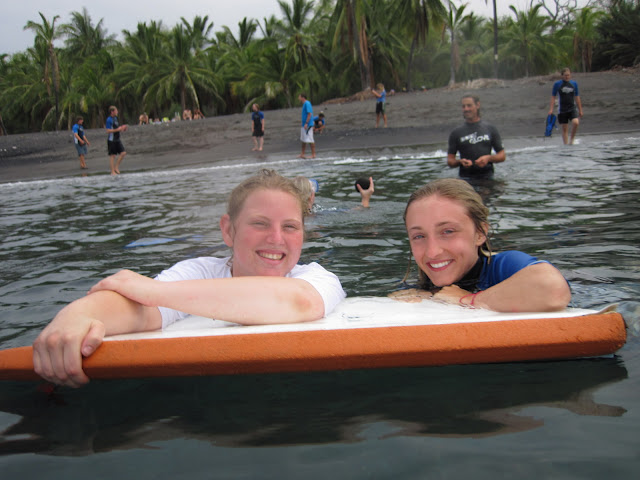 Recently, the Ohana took an adventure to Honomalino Bay which lies 2,000ft down the scenic 5 mile road leading to Miloli’i, one of the last ancient fishing villages to rely on fishing as a way of life. From the town of Miloli’i, the group hiked about a half mile past the ancient ruins ranging from rock walls, fishing heiaus (sacred sites), and old grave sites of Hawaiians who once lived along this coast, possibly during the late 1700’s. Students were intrigued to learn about the Hawaiian Kapu system (law system), and still see people using signs referring to Kapu today.
Swimming, snorkeling, writing PQ in lava rocks on the sand, underwater photos, throwing the football, and knocking coconuts down were all experiences made possible by a choice the students made together before they left camp. With three new members of the group entering camp within the last two days, the elder students wanted to teach the expectations and guidelines by holding a meeting at the Fire Circle.
The Fire Circle is a place for therapeutic groups, curriculum lessons, dinner around a fire, ceremonies, and a safe place to express emotions with intention. Although they were ready to go on time, the Ohana made a choice to role model, mentor, and have fun while accepting that their outing time would be cut short due to their meeting. By choosing to let go of control over time, the Ohana took back control for what they stand for.
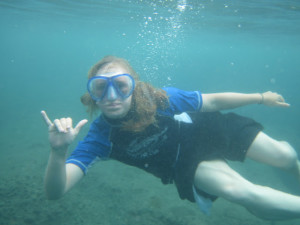 One student stated, “I’m glad we chose to have that meeting this morning. The outing was less stressful for me, we didn’t have to stop and go over anything. We knew why we were there, who we were as students with PQ, and how to act in certain situations.”
Choice gives us control over our lives by allowing us to actively participate in its making. Choice provides us the opportunity to make the most of whatever life throws our way. Pacific Quest wilderness therapy program presents each student with the freedom to make choices for their needs and wants, as well as an opportunity to better understand who they are and what they stand for. Sustainable GrowthTM is a choice. A choice to better ourselves, the Ohana, and the gardens we choose to care for.
A Trademark for the Future
By Travis Slagle, Land Supervisor
Pacific Quest wilderness therapy program announces it has been awarded a registered trademark for Sustainable GrowthTM from the United States Patent and Trademark Office. Pacific Quest has received international recognition for innovative treatment for youth and families in crisis and the recent trademark only confirms its ongoing leadership in the wilderness therapy industry. Sustainable GrowthTM is a holistic treatment model differentiating Pacific Quest from other outdoor therapy programs. When asked to comment on the recent announcement, Mark Agosto, Pacific Quest’s Business Director stated, “Our trademark shows that Pacific Quest is changing the face of outdoor programming.” Much of the Sustainable GrowthTM model is based on the ability to offer outdoor programming that utilizes the nurturing environment of an organic garden in Hawaii, while incorporating the aspects of safety and structure of residential treatment.
Pacific Quest’s position as an industry leader and its success in acquiring a registered trademark is a result of high standards of care including comprehensive health and wellness standards with a full time Nurse and Naturopathic Doctor (ND) on staff as well as a consulting Medical Physician (MD) and Psychiatrist (MD). All students receive multiple sessions of individual and group therapy every week with primary clinicians with a master or doctorate degree, and daily therapeutic encounters that occur naturally while living and working in a group and cultivating an organic garden. Learning how to grow the food they eat, planting food for future generations, and selling their harvest at a local farmers market, students at Pacific Quest develop sustainable life skills that are transferable to a future beyond wilderness therapy. Congratulations to all the hardworking people that helped create the Sustainable GrowthTM model and for delivering such a powerful force of change for youth and their families.
4th Annual Keiki Fishing Tournament
By Yvette Slagle, Outreach Assistant
This weekend, several people from the Pacific Quest team volunteered at the 4th Annual Keiki Fishing Tournament at Punalu’u Beach Park, which is a famous black sand beach approximately 11 miles from our camp. The event was hosted by ‘O Ka’u Kakou, and Pacific Quest wilderness therapy program was one of many sponsors. Volunteers arrived as the sun rose over the ocean; just in time to help with registration and set up for the day’s activities. Approximately 300 kids, between the ages of one and fourteen participated in the catch and release tournament where all the children left with a prize. To get things started, the game warden announced the rules over a microphone along with a brief statement about the importance of spending time with family, being responsible stewards of the land and ocean, and the meaning of aloha. He called it “having the attitude of gratitude.”
Then the kids were given a bamboo fishing pole with bait and a bucket, and they set out with their families to find a fishing spot along the coast. Excitement filled the air! Special volunteers in charge of documenting the catch were scattered along the beach and coastline wearing yellow reflective vests. Each time someone caught a fish, a volunteer would verify the size and species and then help with the release. After two hours of fishing, lunch was served for everyone, and there was even shave ice and a local band. After the volunteers huddled to compare results of the day’s catch, awards were given for a variety of categories including biggest fish, most caught, most colorful, and even the ugliest fish! Pacific Quest wilderness program looks forward to continue promoting family events like these, and we are grateful to all the staff that took time to help make this a lasting memory for the kids.
Hawaiian Preschool Visits PQ
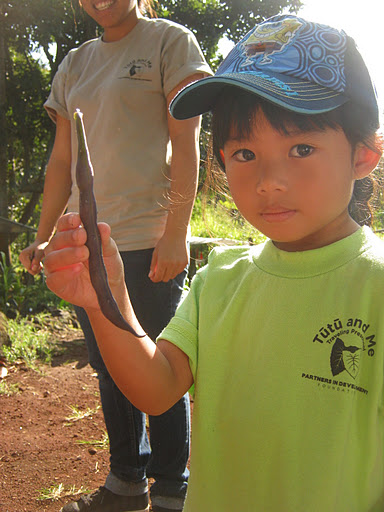 Last week, Pacific Quest wilderness therapy program hosted a preschool field trip, and the gardens were full of laughter and learning for all ages. Children and their caregivers visited our camp and gardens to learn about growing food and healthy eating, and in the process our program was enriched with a reminder of the many cycles of life and the importance of supporting the families in our community. Our preschool guests came from a community based program called Tūtū and Me, which is an innovative traveling preschool that allows educators to visit different areas of our rural Ka’u community to support the developmental needs of native Hawaiian children and their families. Each month the preschool focuses on a specific topic; this month was health and nutrition.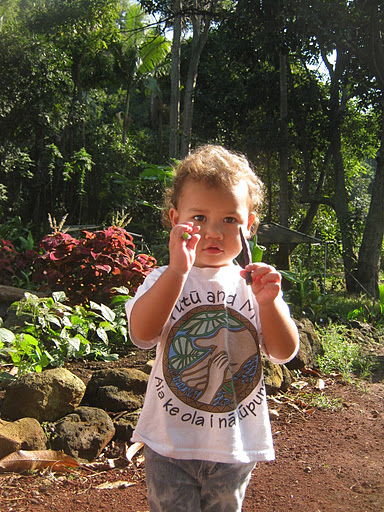
The students at Pacific Quest wilderness therapy made a valuable contribution by providing an interactive garden experience for the preschoolers, which allowed our students to demonstrate how our food comes form the Earth and benefits our body. The PQ students decided to set up three stations each with a fun learning activity. At the first station, PQ students helped the preschoolers plant a bean seed into a small pot so that the kids could take a plant home with them. At the second station, our students taught the preschoolers how to harvest, and then they had the opportunity to pick salad greens and cherry tomatoes for a snack.
At the third station, PQ 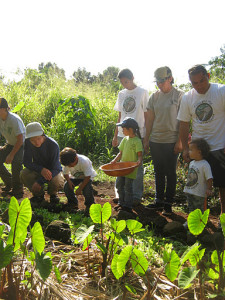 students setup an arts and crafts activity where the preschoolers and their caregivers painted their hands and left their hand-prints on a sign for our camp as well as a Pacific Quest t-shirt so that Tūtū and Me could take home a souvenir. It was a day full of learning and singing songs in Hawaiian. We are grateful for their visit and hope they come back soon!
Letter From a Neighbor
Pacific Quest wilderness therapy program recently hosted a community visit, which allowed our neighbors and residents in Ka’u (Southern Hawaii) to learn more about our program, to interact with the students and staff, to share lunch, and even join in a land project. We received an unexpected letter from a community member and thought our readers might enjoy it.
November 21, 2011
Dear Pacific Quest,
I thank you for the opportunity to attend the community visit and information session on November 19, 2011. This letter is to Whom It May Concern and if desired you may post it. As a current member of the Ka’u community working with the youth of Hawaii Island and the district of Ka’u, I had an interest in what your organization was about. I had been to your web site and spoke with various people I know, but in all honestly I had no idea what to expect, for I am one of those who want to see for myself. Your site is informative but truly doesn’t scratch the surface of what your staff and directors and clinicians do for these youth…
As a martial Artist of 45 years and an instructor of 35 years the benefits to the youth I’ve taught were not only obvious but almost too numerous to mention on a personal level. However across the board, respect to others as well as respect to one’s self, humility, etiquette, physical and mental health, self confidence, and the ability to be environmentally aware carried through to all.
Having said all of this I would have never imagined that tasks as simple as planting, gardening, and environmental clean up could instill such a great level of pride, education, and an awareness of their own lives, community, and environment in these kids. I found the students at Pacific Quest to be extremely polite, courteous, communicative, informed, and downright pleasant to be around. The staff was caring, well selected for their tasks and all have a sincere desire and aptitude for working with the young people of our world. In my opinion Pacific Quest is a top draw organization that continues to develop and is willing to research and check every avenue for the good of these young men and women, I commend them on their success and continuing efforts and it’s a joy as well as a benefit to have them in our community. Kudos to them for what they do so well!
Sincerely,
Gordon B.
Whats FRESH? Pacific Quest at the Farmers Market is FRESH!
Pacific Quest Staff and students have begun participating in the Na’alehu Farmers Market every Wednesday from 8:00-11:30 am. We have been steadily providing lettuce, lemon grass and parsley. Also when in abundance we have provided kale, mint, oregano, bananas, papaya, lemons and hot peppers. The PQ produce are quality and sold at a reasonable price! 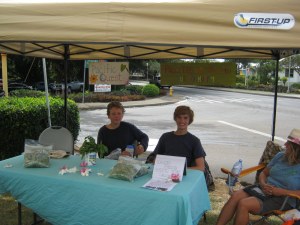
The main purpose of our being at the Na’alehu Farmers Market is to foster a sense of community. When our profits reach over $100 we donate that amount to a local organization. I am proud to announce that everyone’s hard work has “paid off” and we made our first donation to TuTu & Me traveling pre-school, located in our Ka’u town Na’alehu.
TUTU & Me traveling preschool is an educational program that serves the Native Hawaiian and part Hawaiian community. TUTU & Me aims to support the educational needs of these growing children along with their respective families. The program curriculum consists of educational learning themes, cultural aspects as well as values that continue to influence the lives of native Hawaiians.
Lassoing Weeds – Community Service Project
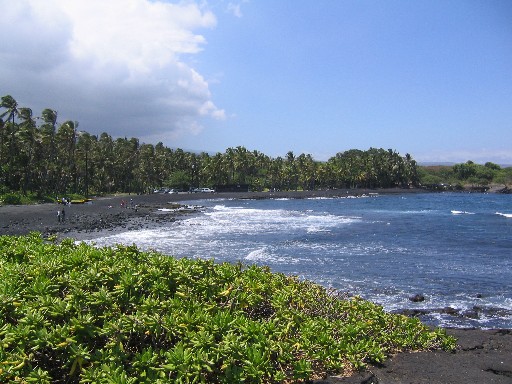
Last Saturday the Ohana group participated in a community service project at Punaluu Beach Park. Punaluu is one of the largest black sand beaches on the Big Island of Hawaii and is located about 30 minutes from the PQ campus. It is most famously known for the green sea turtles that come to rest and raise their body temperatures during the day but has far more historical and cultural significance. Fed by several fresh water springs it is believed that in times of drought Hawaiians would dive with gourds to capture drinking water. There is also a large fresh water pond that is home to many different kinds of fish and wildlife. Unfortunately the pond has been overrun with a noxious plant which suffocates the fish and makes it impossible for other wildlife to enjoy their habitat. Three times a year the community of Kau comes together to clean the water, lassoing the weeds with a water rope and dragging them onto the shore. Our students worked side by side with other community members to care for the land and give back to an area where they often enjoy swimming and viewing marine life.
Tsunami warning in coastal regions of Hawaii is lifted
Photo by Clark Little
While Pacific Quest’s students were nestled in the hills high in Kau and well out of any tsunami danger zones (roughly 1500 feet in elevation), coastal regions in Hawaii today were on high alert. As many followed the news on their computers and televisions many Hawaii residents were forced to evacuate their homes and head for higher ground, relying on radio broadcasts. Luckily the event was not much more than a scare (the above photo is just a cool Hawaii wave). It turned out to be an incredible community building event that actually brought people closer together.
I was awoken to a phone call at 3:15 am this morning from a frantic friend suggesting that I evacuate my house. I live very close to the beach in Hilo, an area particularly prone to tsunami damage. Having visited the Pacific Tsunami Museum on the bay front in Hilo in the past, I new the potential power of the natural phenomenon. Hilo has been struck by tsunamis in 1940’s and 60’s leaving buildings and home completely destroyed. With my adrenaline pumping I threw my valuable belongings in my truck and drove mauka (toward the volcano).
I found a nice view of the bay and backed my truck in next to others who were already parked. We watched the sunrise and talked story as others continued to gather. As the tsunami hour approached more and more people kept coming. The crowd resembled that which one might see at a parade. People were coming down from the volcano to get a better look at the approaching wave. While the wave never really formed, the group enjoyed laughs and stories and it turned out to be a rather nice way to spend a Saturday morning.
For more information on tsunamis visit NOAA Pacific Tsunami warning center. I want to reiterate that the PQ program is well out of harms way of tsunami danger and the students utilized this opportunity to learn more about earth science.
2nd Annual Keiki Fishing Tournament
The malama group woke up bright and early today to head down to Punalu’u to lend our hand in helping to organize and set-up for the 2nd Annual Keiki Fishing Tournament. This is a community event that was taking place near Pacific Quest and offered a perfect opportunity for us to support both the people in the community who volunteer their time to help make this event a reality and the young people who will be fishing. Our early morning contribution was comprised of tasks such as setting up tables and pop-up tents and wiping down tables and chairs that would be used for the day. This event is sponsored by O Ka’u Kakoa (loosely: we are ka’u), a local volunteer organization that helps to provide for the needs of the community through service projects and community events such as this. By volunteering this morning the malama group was able to meet people from the community who are taking part in giving back and to give back to this place in which they are currently living themselves. Before going this morning we also discussed the idea that service is not only giving back, but also receiving, and that no matter how small the individual action each student in the malama group contributed to a child’s fishing tournament experience. Remember how good it felt when people made amazing things happen for you to take part in when you were a small child?
A Day with Ka ‘Ohana O Honu’apo
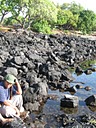 Ka ‘Ohana O Honu’apo motto is three fold: malama ‘aina (care for the land), kupono (honesty) and kuleana (responsibility). The organization was formed to help steward the land at the old village site of Honu’apo (literally caught turtle) after the community banded together to raise monies to purchase the land to ensure it was not developed after this almost occurred in 2003. Honu’apo is now owned and co-managed by a number of organizations, with Ka Ohana O Honu’apo often representing the voice of cultural preservation. Today, members of this organization helped the combined malama / ohana outing group to navigate the cultural, historical and environmental significance of this special place.
We began our day by learning how to introduce ourselves in Hawaiian and learning some Hawaiian words that are significant to the area. This was followed by a tour around the park which showed us evidence of both the human and environmental impacts that have helped to shape the local landscape. Some examples include the need for human and commercial transportation that built the pier and the earthquakes and tsunamis that helped to destroy it, and which washed away the black sand beact that once lined the coast. Another is the coconut grove and the remains of the old stone wall that sits in the shadows of the trees, and which once closed this estuary off as a fish pond. We also learned about the many different uses for the niu (coconut) tree and the lauhala plant.
After learning a mele (song) by Keola Beamer (pupu hinuhinu – shiny shell) and having a snack, we headed to the muliwai (estuary) which was once a loko i’a (fishpond). Only half of the wall that once made this estuary a fishpond still exists and Ka ‘ Ohana O Honu’apo and NOAA are working to restore the area as muliwai. There we learned about ways of testing water for salinity, visibility and ph. We were then able to get in the water to run transect lines and record the fish we encountered.
As this is the season when the humpback whale as in Hawaii to mate and calve, so of us were lucky enough to see whale surfacing throughout the day. Over lunch we talked about the amazing journey the whales make to Hawaii and back without eating, as their main food source, krill, does not live here. We also learned about the great pacific garbage patch, the effects of this human made phenomenon on wildlife, and the importance of picking up trash. We concluded our day with a beach clean up and filled 2 trash bags with debris, both that which had washed in from the ocean and some that we saved from making it there in the first place. This gave us the opportunity to spread out along the shore, see more whales and do our part to keep this rich place so beautiful.
Making biodiesel?

As established in the previous blog post Hawaii’s clean energy intiative, Hawaii is making strides in eliminating the state’s severe dependence on imported oil and working toward shifting to renewable energy resources. In a recent discussion on NPR, experts highlighted that Hawaii is meeting it’s short term goals in utilizing renewable energy resources. The clean energy initiative is being implemented!
Although the initiative calls on the use of the heavies ie. the obvious renewable energy resources such as solar, wind, tidal, and wave energy, other valuable resources exist as well. Biofuels are an important resource for Hawaii, especially because of the tropical growing environment and already existing diesel plants (which can operate with biodiesel). The question is then, which biofuels are a viable resource in Hawaii, and in particular which can be used for biodiesel? Sugar cane is an excellent resource for ethanol, however ethanol has it’s own environmental consequences. Biodiesel is more friendly on CO2 emissions and is possible. Research being carried out at University of Hawaii indicates that local palm, kukui nut, and jatropha are heavy in oils useful in biodiesel production. Please visit the website Hawaii’s Energy Future for further information on biofuels.
Perhaps PQ students could start making biodiesel at the PQ farm? This could serve the students in many ways, including hands on education of renewable energy, participating in the green movement, and utilizing an energy they create. Making biodiesel is fairly simple too – demanding a few barrells and measuring devices. The hardest part would be procuring the biomass (the jatropha, kukui, and palm). Perhaps the students could then use the biodiesel to power a generator on the land, reaping the benefits of their work and feeling connected. This is another connection with the land – similar to the full circle of growing food and then eating it!
Community Service 1/15/10
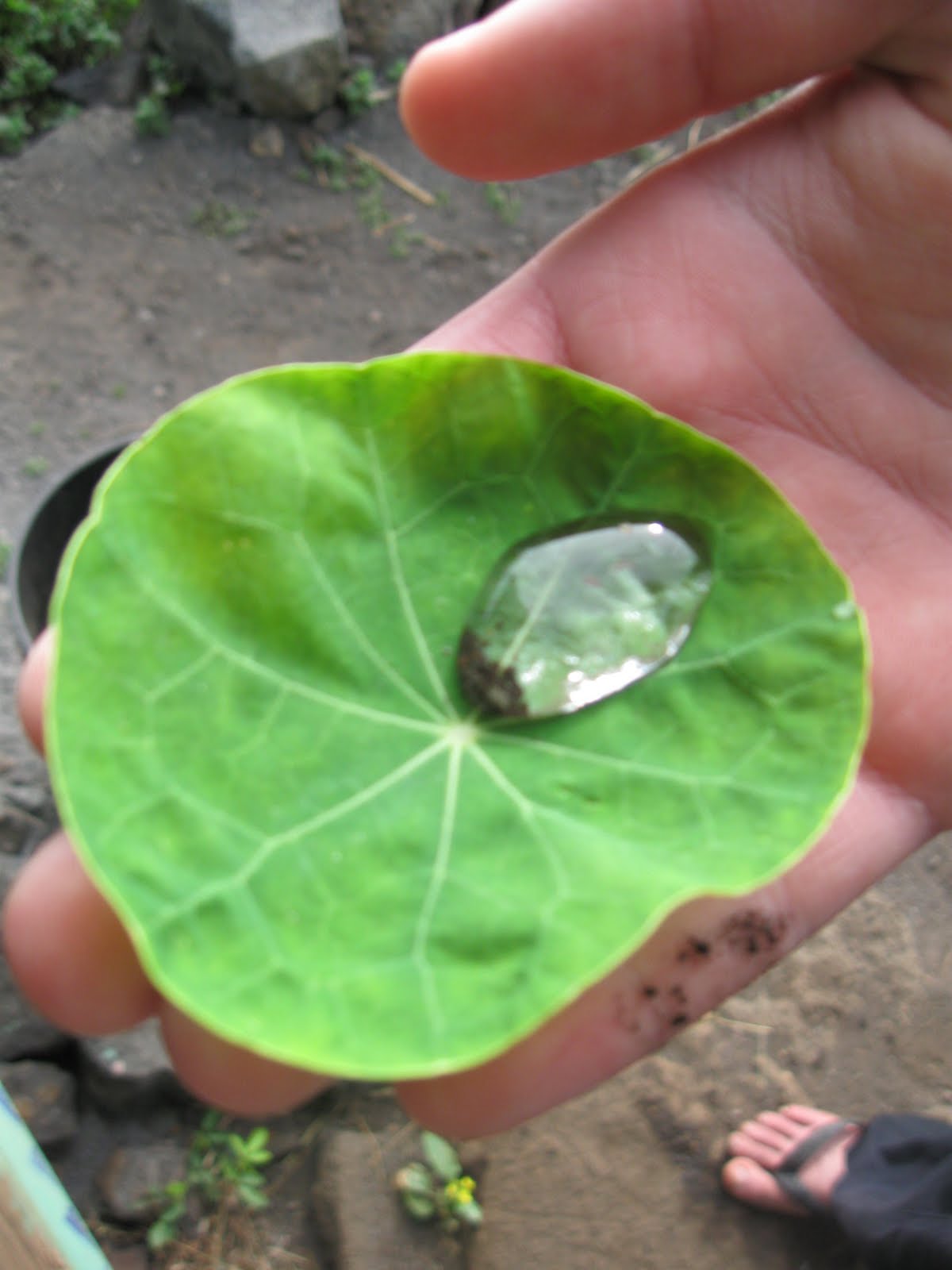
On Friday Jan 15th the group visited the Na’alehu Community Center to help the O Kau Kakou organization set up for the community free dinner. The group was very helpful in arranging tables for the 100 or so people they expected to attend the dinner. The center bustled with the activity of many people preparing to serve the community. Participants of the Boys and Girls Club were there making signs for the evening too. It was truly a community event. Everyone was very appreciative of our effort to help the success of this event.
The group was excited to learn of the pond cleanup that Wayne is coordinating next month. Next, group spoke about leadership and shared about their experience that day. To top off the great day the group went to Honu’apo for lunch and a bit of whale watching.
Service Project with Parks Department
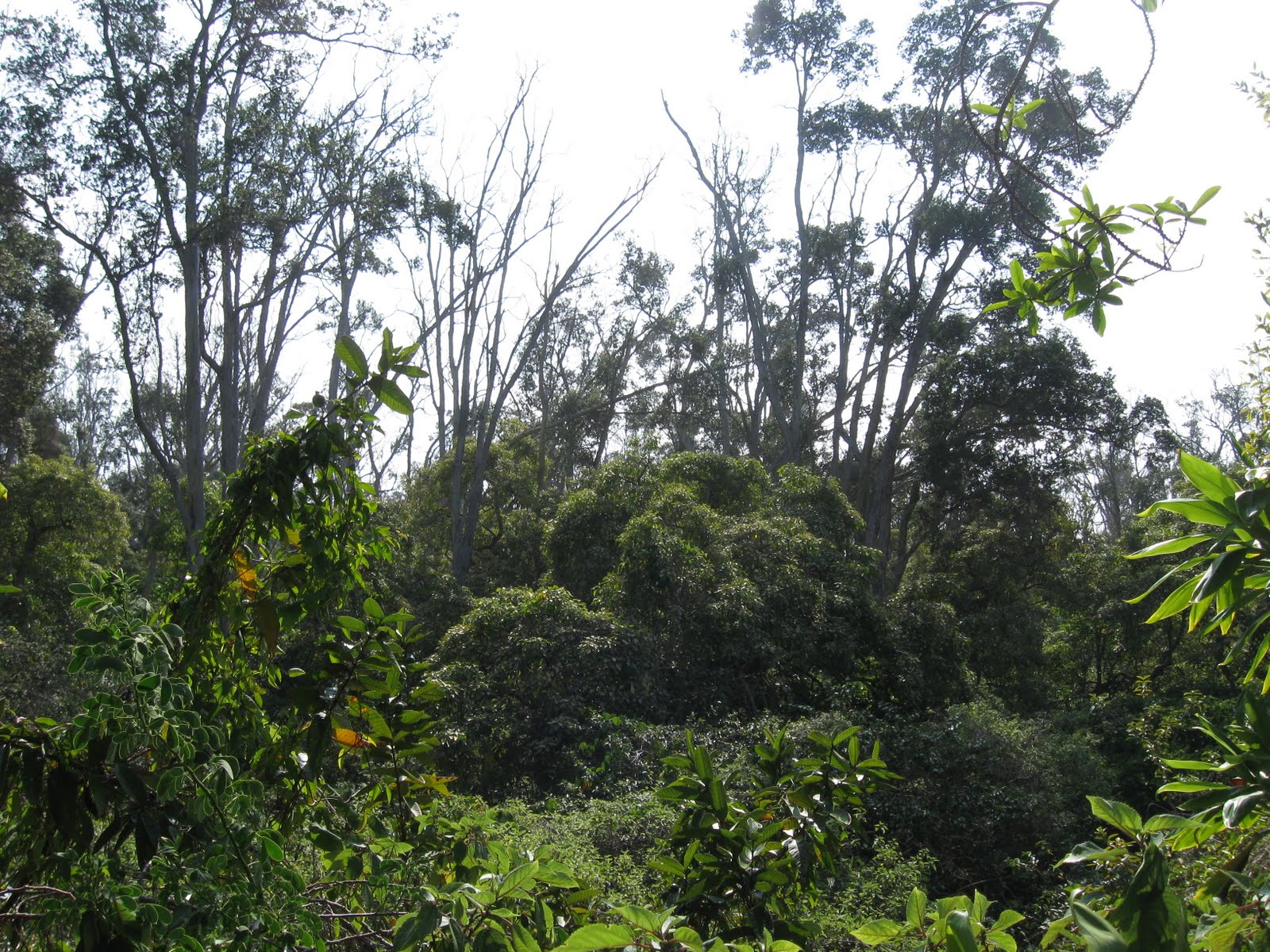
Punalu’u is an area steeped in cultural significance, just minutes from Pacific Quest; some people even claim it may be the real site of the first Polynesian arrival to the island (most often thought to be Ka Lae, South Point). This area is the perfect backdrop in which to explore cultural and environmental issues, while having some fun in the blacksand, rolling surf and Hawaiian sun. On the short drive to Punalu’u the group spoke about the geography of the Ninole Hills which jut out in sharp juxtaposition to the otherwise rolling hillsides in Ka’u. When we arrived we met up with Dennis, the head of the parks department in Ka’u, and he told the group what they would be helping out with for the day. First, the group moved some picnic tables that had been made by local high school students into the pavilion and moved long large tables outside to the rock ocean overlook, so that community members could more easily rearrange the area themselves, for weddings and other festivities often held there.
Dennis then shared a bit about the 7 different parks he and his 3 person crew were in charge of and the large amount of work they do to maintain all these public areas. He then showed the group the petroglyph garden in the park, and to talk about the road (currently closed and covered in sand) that runs through the beach and turtle nesting area. The group then began on the second park of the project were we cleared a large area of naupaka, hou and noni plants that were encroaching on the showers and paths. Everyone worked really hard to see the completion of this major project and it much was accomplished working together with Dennis and his crew, cutting, pulling and loading all this green material that was then brought to compost site. Volunteers are very important to keeping these public areas operational and we estimated that we did work that would have taken the normal one to two person crew about 4 days.
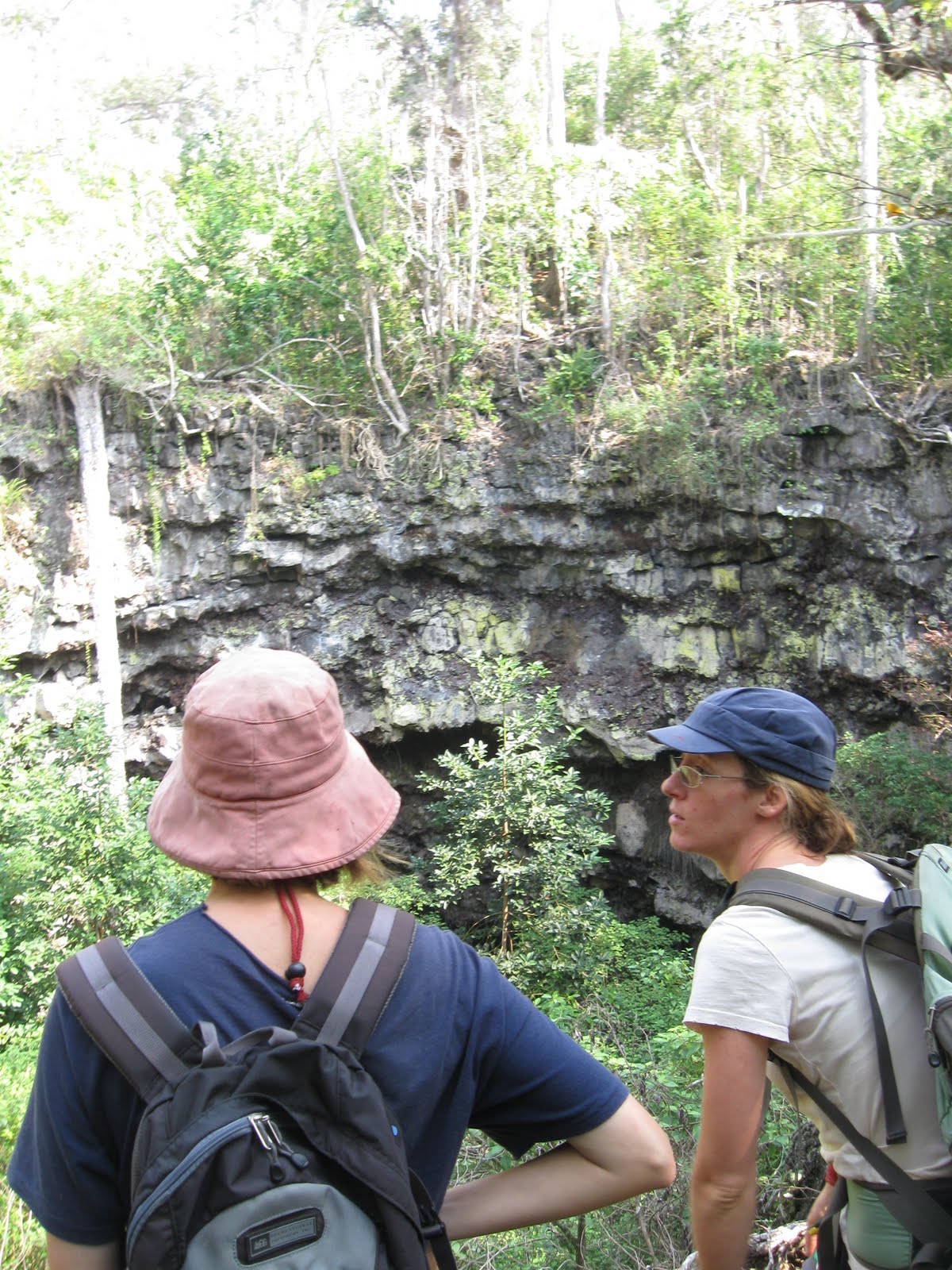
P-Patch YOUTH Gardening Program
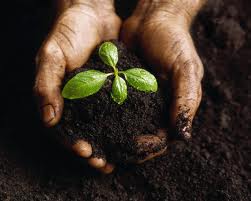
Community gardens are gaining attention nation wide. As highlighted in a blog posting on the new garden at the white house, gardening plays a unique role in building community. While many community gardens draw interest from adult enthusiasts, attention to the youth is sometimes lacking. Schools and programs are springing up around the country incorporating youth into the process (and thus the community!). Connecting the youth in the garden bodes well for community development and personal development, providing youth a sense of belonging.
The P-Patch YOUTH Gardening Program in Seattle is one example. They are “seeding the next generation of organic gardeners!” to quote their website (Good pun). The program identifies social and environmental aspects of their objective, noting gardening as a way of weaving youth into the fabric of the community. The program targets youth of diverse economic, social, and ethnic backgrounds, in its drive to keep the youth active in choosing healthy lifestyles for themselves and the environment.
Youth are faced with many choices when the bell rings at the end of a school day. While some are pulled toward healthy after school activities, others are seduced by a multitude of unhealthy choices. This is where ENGAGING the youth is important. Whether it be after school sports, interesting clubs, or ORGANIC GARDENING, engaging their curious minds is crucial.
Programs such as these inspire me to dream of the possibilities that could arise from motivated PQ alumni. Student’s at PQ hone gardening skills and education around planting and harvesting veggies. Further, PQ students also gain a sense of belonging through their connection with the land and their peers. These students could go on to be stewards of community gardening programs, helping to seed their own generation of organic farmers. Perhaps they already are and I am unaware of it.
Check out other YOUTH community garden projects that I found interesting:
Gardening the Community, Springfield MA
Youth Changing the World, Houston TX
CSC, Corvallis OR
Hawaii’s clean energy initiative

The Big Island of Hawaii gained national attention today in the New York Times. In an article titled Hawaii Tries Green Tools in Remaking Power Grids, author Felicity Barringer focuses on the potential for green energy in Hawaii. The article opens with the mention of a wind farm in Na’alehu (pictured above), located at the south eastern tip of Hawaii. Na’alehu happens to be the home of the Pacific Quest field base. Renewable energy installations such as these are exciting, as they provide evidence that Hawaii is moving toward harnessing green energy.
In January 2008, state governor Linda Lingle created the Hawaii clean energy initiative in response to oil dependence and outrageous electric costs. She hopes to utilize a range of renewable energy sources that we have in this unique location, including wind, sun, land and sea. Drawing on renewable energy resources not only diminishes our ecological footprint, but catalyzes sustainable development.
Right now, imported oil is responsible for producing 77% of Hawaii’s electricity, a figured unparrelled by any other state in the US. Solar power is growing, but still constitutes only 9%. Through agreements reached between the Hawaiian Electric Company and federal government, Hawaii has plans to increase production of renewable energy. If the agreement is upheld, Hawaii will be responsible for generating 40% of its energy through renewable energy technology by 2030.
Should Pacific Quest care about the strive toward utilizing renewable energy? Our dynamic model of therapeutics is heightened by engineering and community planning projects such as these. Through the act of maintaining an organic garden students gain a tangible experience of their connection with the land. When the students sit down to dinner, they eat the salad greens that they grew and nurtured. Energy consumption, while seemingly peripheral, is related. Drawing upon the energy that is created locally, with environmental stewardship in mind, only enhances the connection with the land and others. The emotionally sustainable changes that we incur as individuals is reflected in many ways by our sustainable commitment to our families, communities, and environment at large.
For more pictures of Hawaii’s renewable energy projects visit the New York Times slide show.
Tropical seeds bought locally
Critical to success in organic gardening is seed selection. While tropical climates are generally conducive to many plant varieties, seeds well adapted to the tropical climate thrive better. Pacific Quest’s garden specialist Scott Ricci found a local farmer/seed distributor with twelve years experience of growing on the Big Island of Hawaii. Tom Brannen, owner and operator of Kilohana Farm Seed Company, guided Scott on a personal tour of his farm. Tom pointed out garden beds for the seeds he vends, highlighting the fact that he only sells seeds he has tested for at least two years. Tom was excited to share that all of his seeds come from Thailand, a climate that parallels Hawaii’s in many ways.
Scott purchased a range of seed varieties including tomatoes, radishes, watermelon, squash, pumpkins, cabbages, beans, broccoli, cauliflower and hot peppers! Tom also mentioned giving Scott various Thai plant starts such as green papaya and ginger. Pacific Quest recognizes the importance of buying locally. This not only allows us to stimulate the local economy, but it helps strengthen the relationships within the island community. Perhaps these seeds are a metaphor for the bonds that we are germanating with local farmers and vendors. As we continue to nurture our plant seedlings by giving them the nutrients they need to thrive, we will do the same for our island community through meeting farmers and buying locally.